

TL;DR:
- Most men in 2026 typically spend between $600 and $1,500 on a wedding band, with the median around $930. The ideal budget depends on factors like material, lifestyle, customization, and total wedding expenses, not outdated salary rules. Budgeting about 3% of your overall wedding cost provides a practical guideline, emphasizing quality and personal fit over marketing-driven numbers.
Most men in 2026 spend between $600 and $1,500 on a wedding band, with the sweet spot sitting closer to $930 based on median market data. The question of how much should a man spend on a wedding ring has one honest answer: whatever fits your finances without creating debt or stress. The old “two months’ salary” rule was invented by a diamond marketing campaign, not a financial advisor. This guide uses real data from Jeulia Jewelry, Fidelity, and The Knot to give you a clear, practical wedding ring budget built around your life, not a marketing myth.
What factors influence how much a man should spend on a wedding ring?
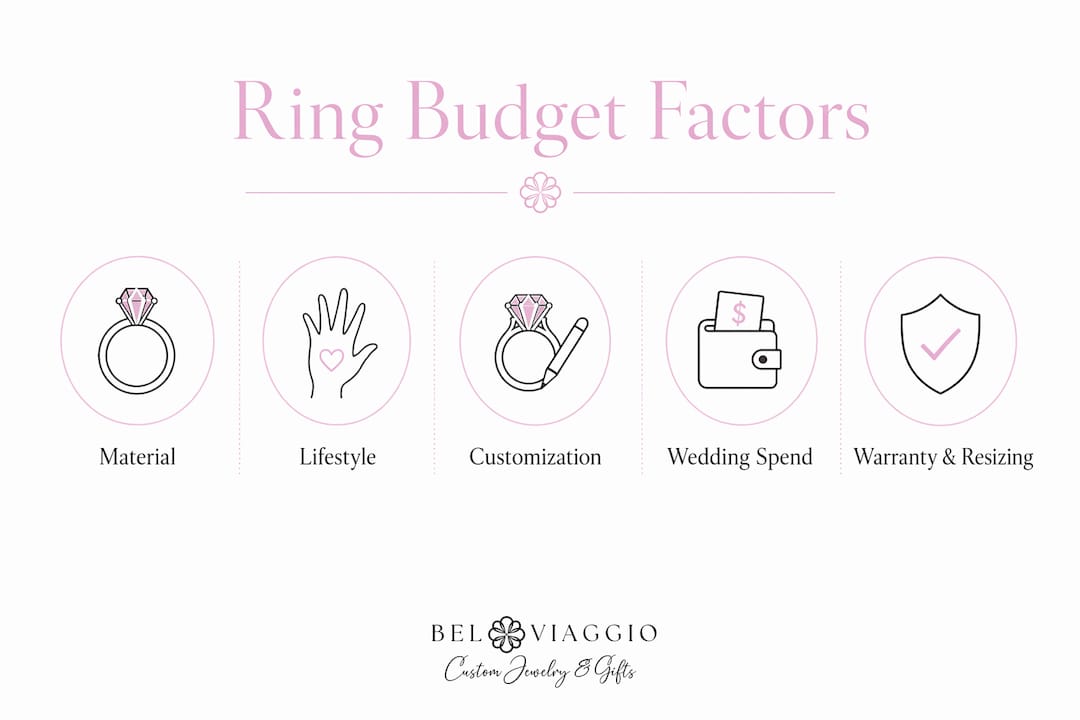
Your ring budget is shaped by four real variables: material, lifestyle, customization, and your total wedding spend. Understanding each one keeps you from overpaying or underpaying for something you will wear every day.
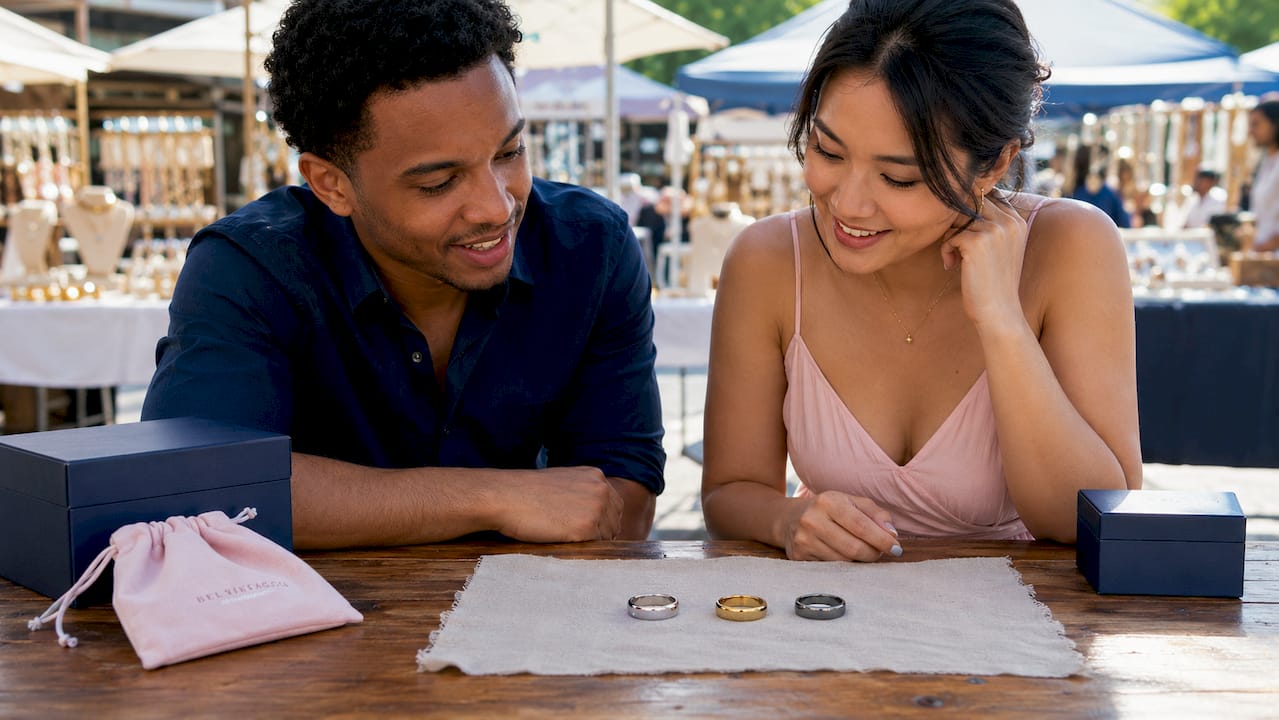
Material choice drives the biggest price difference. Tungsten carbide and titanium sit at the affordable end, typically running $100–$400. Gold bands in 10K to 18K range from $400 to $1,500 or more depending on width and weight. Platinum starts around $1,500 and climbs from there. Each metal has a different feel, weight, and scratch resistance, so price and practicality go hand in hand.
Your lifestyle matters more than most men realize. If you work with your hands, do construction, or train regularly at the gym, a softer metal like 18K gold will show wear fast. Active men benefit from durable metals like tungsten carbide or titanium, which cost $100–$300 and resist daily abuse far better than precious metals. Choosing the wrong material means replacing or resizing sooner, which adds to your total cost.
Customization adds personal value at a modest price. Inlays such as wood, carbon fiber, or meteorite add $100–$300 to the base price. Laser engraving typically costs $25–$50. These upgrades are worth considering because they add sentimental meaning without dramatically changing your budget.
- Tungsten carbide or titanium: $100–$400, best for active lifestyles
- 10K–14K gold: $400–$900, balance of value and appearance
- 18K gold: $900–$1,500+, richer color, softer metal
- Platinum: $1,500+, most durable precious metal
- Customization (inlays): adds $100–$300
- Engraving: adds $25–$50
Pro Tip: Set your material first, then your budget. Choosing platinum when your lifestyle calls for titanium is money spent on the wrong priority.
The 3% wedding budget benchmark is a useful starting point. If your total wedding costs $30,000, that puts your ring budget around $900. This approach ties your ring spend to your actual financial picture rather than an arbitrary rule.
How do average and median wedding ring costs compare?
The average cost for a men’s wedding band is about $1,160, but the median sits at $930, and that gap tells you something important. Luxury and custom rings from high-end retailers pull the average upward, making the typical buyer think he needs to spend more than he actually does.
The median is the more useful number. It reflects what the majority of men actually spend, not what a small group of high spenders skew the data toward. Median price gives you a cleaner market baseline than the average, which is distorted by luxury sales.
| Price Metric | Amount | What It Means |
|---|---|---|
| Average cost | $1,160 | Skewed higher by luxury and custom rings |
| Median cost | $930 | Reflects what most men actually spend |
| Typical range (low) | $620 | Budget-friendly materials like titanium |
| Typical range (high) | $1,550 | Mid-tier gold or lightly customized bands |
| Luxury tier | $2,000+ | Platinum, diamonds, or full custom work |
The common price range of $620–$1,550 captures the spending of the vast majority of men buying wedding bands in 2026. If you are budgeting within that range, you are in good company and have access to quality options across every major material category.
What budgeting strategies should men follow when buying a ring?
Smart ring budgeting follows the same logic as any major purchase: set a ceiling before you shop, and do not move it. Here is a practical framework to follow.
- Set a fixed budget before you visit any store or website. Browsing without a number in mind is how men end up spending $400 more than they planned.
- Use the 3% rule as a starting anchor. Multiply your total wedding budget by 0.03. That number is your ring budget. Adjust up or down based on your priorities.
- Consider 5–10% of annual income if you prefer an income-based approach. Fidelity financial experts suggest this range if you want a percentage-based guide, but only if it does not strain your finances.
- Never go into high-interest debt for a ring. Ring budgets should avoid depleting emergency funds or carrying balances on high-interest credit cards. A ring is meaningful. Financial stress is not.
- Compare price per quality, not price per prestige. A $700 titanium band from a reputable jeweler will outlast a $1,200 gold band worn by someone who works with their hands.
Pro Tip: Ask about warranty and resizing policies before you buy. A ring with a lifetime warranty and free resizing is worth more than a slightly fancier band with no after-sale support.
The traditional “months salary” rule has no basis in financial planning. It was popularized by jewelry industry marketing in the mid-20th century. No credible financial advisor recommends it today. Your ring budget should reflect your income, your savings, and your other wedding expenses, not a number someone else invented to sell more expensive rings.
For men thinking about how to pay for an engagement ring alongside a wedding band, Belviaggiodesigns has a practical guide on smart money moves worth reading before you commit to a number.
What are the popular ring materials and price ranges for men in 2026?
Material selection is the single biggest lever you have on price. The table below covers the most common options, their durability, and what you can expect to pay.
| Material | Durability | Typical Price Range | Best For |
|---|---|---|---|
| Titanium | Very high | $100–$300 | Active lifestyles, lightweight preference |
| Tungsten carbide | Extremely high | $100–$400 | Heavy-duty use, scratch resistance |
| Stainless steel | High | $50–$200 | Budget-conscious buyers |
| 10K–14K gold | Moderate | $400–$900 | Classic look, moderate budget |
| 18K gold | Lower | $900–$1,500+ | Richer color, formal wear |
| Platinum | Very high | $1,500+ | Heirloom quality, long-term investment |
Titanium and tungsten carbide are the clear value leaders for men who prioritize durability. Both metals resist scratching, hold their shape under pressure, and cost a fraction of precious metals. The tradeoff is that tungsten carbide cannot be resized, which matters if your ring size changes over time.
Gold remains the most popular choice for men who want a traditional look. The karat number tells you the gold content: 10K is 41.7% gold, 14K is 58.3%, and 18K is 75%. Higher karat gold is softer and more prone to scratching, which is worth knowing if you are active or work with your hands.
Platinum is the premium option. It is denser than gold, naturally white, and does not require rhodium plating to maintain its color. The higher price reflects genuine material cost and longevity, not just prestige.
Customization adds meaning without breaking the budget. Inlays and engraving are the most affordable ways to personalize a ring. A wood or carbon fiber inlay on a titanium base gives you a unique, handcrafted look for well under $500 total.
How does the ring budget fit into your overall wedding spending plan?
A wedding ring is a planned expense, not an impulse buy. Couples allocate about 3% of their total wedding budget for rings, which keeps the purchase proportional to the rest of the event. If your wedding costs $25,000, that puts both rings combined at around $750, meaning the men’s band might reasonably sit at $300–$500 in that scenario.
The math shifts as wedding budgets grow. A $50,000 wedding budget at 3% gives you $1,500 for rings combined. That is enough for a quality gold or platinum band for him and a matching band for her. The key is treating the ring as a line item in your wedding budget, not a separate financial decision made in isolation.
Overspending on a ring while cutting corners on venue or catering creates an imbalance that most couples regret. The ring matters. So does the experience you create for your guests and yourselves. Balancing both is the smarter financial move.
Pro Tip: Build your ring budget into your wedding spreadsheet from day one. Couples who plan ring spend alongside venue and catering make better decisions than those who treat jewelry as an afterthought.
Key takeaways
A man’s wedding ring budget is best set between $620 and $1,550, guided by personal finances, lifestyle, and total wedding spend rather than outdated salary-based rules.
| Point | Details |
|---|---|
| Realistic spending range | Most men spend $620–$1,550, with a median of $930 in 2026. |
| Ignore the salary rule | The “months salary” rule is a marketing invention with no basis in financial planning. |
| Material drives price | Titanium and tungsten start at $100; platinum starts at $1,500. Match material to lifestyle. |
| Use the 3% benchmark | Allocate about 3% of your total wedding budget to rings as a practical starting point. |
| Avoid debt | Never deplete emergency savings or carry high-interest debt to buy a ring. |
What i’ve learned about ring budgets after years in fine jewelry
The men who make the best ring decisions are the ones who stop asking what they should spend and start asking what makes sense for their actual life. I have seen buyers stretch to $2,000 for a platinum band they are proud of, and I have seen buyers spend $350 on a titanium ring they wear every single day without a second thought. Both made the right call.
The pressure to spend more comes almost entirely from marketing. The “two months’ salary” rule was created to sell diamonds, not to help you build a life. Fidelity’s financial planners say it plainly: prioritize financial health over arbitrary benchmarks.
What I would tell any man shopping for a band: buy the best quality you can afford within a budget that does not cause stress. Choose a material that fits how you actually live. Ask about warranties. And consider a small personalization like an engraving because that $30 addition will mean more in ten years than the extra $200 you might spend upgrading to a heavier gold weight.
The ring is a symbol. The marriage is the investment.
— Stacy
Find your perfect band at Belviaggiodesigns
Belviaggiodesigns carries men’s wedding bands across every major material and budget, from affordable titanium options under $300 to handcrafted gold and platinum bands built to last a lifetime. Every piece is ethically sourced and available with customization options including engraving and inlays.
If you want a durable, lightweight option, the titanium 8mm band is a standout choice for active men who want quality without the precious metal price tag. For buyers ready to invest in something more traditional, the gold and platinum 8mm band delivers classic craftsmanship with modern finishing. Payment plans are available, so your budget does not have to limit your options.
FAQ
What is the average cost of a men’s wedding band in 2026?
The average cost is about $1,160, but the median is $930. Most men spend between $620 and $1,550.
Is the “two months’ salary” rule still valid for wedding rings?
No. The two months’ salary rule is an outdated marketing benchmark. Financial experts at Fidelity recommend spending within your personal financial comfort zone instead.
What is the most durable and affordable men’s ring material?
Tungsten carbide and titanium are the most durable affordable options, typically costing $100–$400. Both resist scratching and hold up well under daily physical activity.
How much should a man budget for ring customization?
Inlays add $100–$300 and engraving costs $25–$50. Both are cost-effective ways to add personal meaning without significantly increasing your total ring budget.
How does a men’s ring fit into the overall wedding budget?
Rings typically represent about 3% of the total wedding budget. On a $30,000 wedding, that puts the combined ring budget around $900.
Recommended
- Men’s Wedding Band Gold or Platinum 8mm, Bel Viaggio Designs – Bel Viaggio Designs, LLC
- Apparently, spending under $1,000 on an engagement ring is commonly ok. – Bel Viaggio Designs, LLC
- Men’s Wedding Band 6mm Lab Grown Diamonds .15 CTW – Bel Viaggio Designs, LLC
- Men’s Wedding Band White and Yellow Gold – Bel Viaggio Designs, LLC