

TL;DR:
- Proper jewelry care begins with a gentle routine using mild soap, a soft toothbrush, and lint-free cloths to maintain brilliance. Regular storage in individual pouches and avoiding harsh chemicals or physical damage helps preserve the integrity of fine, ethical pieces. Consistent habits and thoughtful maintenance reflect the values behind your custom ring and ensure its lasting beauty.
You just got engaged, and your custom ring catches the light every time you move your hand. Then, a few weeks in, you notice it looks just a little less brilliant. A subtle film of lotion, a faint scratch, a hint of dullness where there used to be fire. That moment of worry is real, and it happens to almost every new ring owner. The good news is that keeping your fine jewelry, especially ethically made, custom engagement rings and wedding bands, looking its absolute best is not complicated. It just takes the right tools, a consistent routine, and a few smart habits you can start today.
Table of Contents
- What you need before caring for your fine jewelry
- Step-by-step: How to clean your fine jewelry safely
- Proper ways to store fine and custom jewelry
- Wearing your jewelry: Habits that keep it beautiful
- Troubleshooting: Common mistakes and how to avoid them
- Why caring for ethical, custom jewelry is more than routine: What most guides miss
- Explore rings and custom care with Bel Viaggio Designs
- Frequently asked questions
Key Takeaways
| Point | Details |
|---|---|
| Gentle cleaning works | A mix of warm water, mild dish soap, and a soft toothbrush is all you need for most fine rings and bands. |
| Store pieces separately | Individual storage prevents scratching and damage between different metals and stones. |
| Remove before risky activities | Take off jewelry before swimming, exercising, or using lotions to keep it safe and sparkling. |
| Avoid harsh chemicals | Chemical cleaners can harm gemstones and precious metals—stick to simple, proven methods. |
What you need before caring for your fine jewelry
Now that you know why proper care matters, let’s review what you’ll need before you start cleaning or storing your jewelry. Gathering everything in advance means you won’t be tempted to cut corners or grab something that could damage your piece.
Here’s what belongs in your at-home jewelry care kit:
- Mild dish soap (free of harsh degreasers or bleach)
- Soft-bristle toothbrush (new and never used for anything else)
- Warm water (lukewarm, never hot or boiling)
- Lint-free cloth (microfiber works great; skip paper towels entirely)
- Individual soft pouches or a compartmentalized jewelry box
- Anti-tarnish strips for silver pieces stored long-term
Each item earns its spot. Harsh cleaners like bleach or ammonia-based formulas can strip metal finishes and weaken prong settings over time. Paper towels feel soft but carry tiny wood fibers that leave micro-scratches on polished metal. And that designated jewelry box is doing more than keeping things tidy. It is preventing the kind of abrasion that happens when rings and bracelets knock together in a drawer.
The core routine for most pieces is simple: following fine jewelry care basics starts with a warm water and soap cleaning method, then gentle brushing, rinsing thoroughly, and drying completely with a lint-free cloth.
| Supply | Why you need it | What to avoid |
|---|---|---|
| Mild dish soap | Breaks down oils and grime safely | Bleach, ammonia, acetone |
| Soft toothbrush | Reaches beneath settings gently | Old brushes with worn bristles |
| Warm water | Loosens debris without damage | Hot water (can loosen adhesives) |
| Lint-free cloth | Polishes without scratching | Paper towels, rough fabrics |
| Compartment box | Prevents stone and metal contact | Open drawers with mixed jewelry |
Pro Tip: Invest in a separate soft velvet pouch for your custom engagement ring. Sentimental pieces deserve individual protection, especially if they feature detailed metalwork, engraving, or ethically sourced stones that took time and care to select.
Step-by-step: How to clean your fine jewelry safely
With your cleaning tools ready, here’s how to gently and thoroughly clean your cherished pieces. Follow this process every two weeks for best results, and you will rarely need to worry about stubborn buildup.
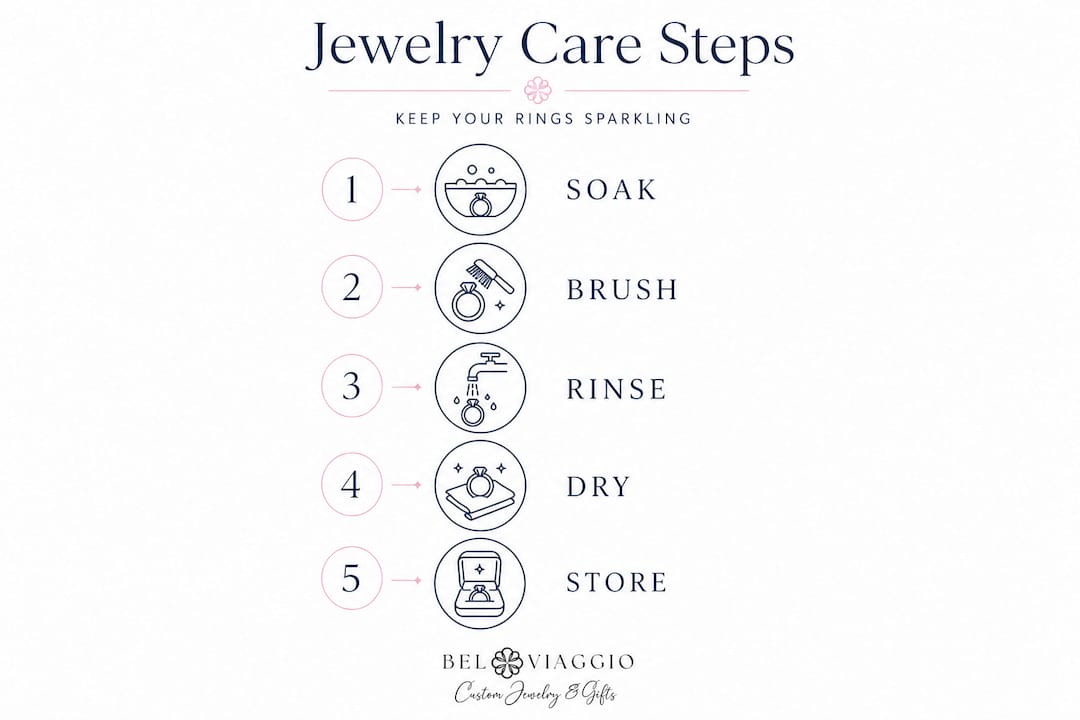
- Fill a small bowl with lukewarm water. Add a single drop of mild dish soap and stir gently to mix.
- Place your ring or band in the solution. Let it soak for three to five minutes. This softens any oils, lotions, or product residue sitting under the stone or around the prongs.
- Gently scrub with a soft toothbrush. Pay special attention to the underside of the stone setting, the area between prongs, and the inner band surface. These spots collect the most grime.
- Rinse under cool running water. Hold the piece securely or use a fine mesh strainer over the drain. Never rinse small pieces directly over an open drain.
- Pat dry with a lint-free cloth. Allow the piece to finish air drying on a clean surface before wearing or storing it.
Important: Never use toothpaste, baking soda, bleach, chlorine, or commercial jewelry dips on fine metal settings or porous gemstones like opals, pearls, or emeralds. These abrasive or chemical compounds can cause permanent surface damage and weaken delicate prong structures. When in doubt, gentle mild cleaning tips are always the safer choice.
This is the same at-home approach recommended for diamond and other fine engagement rings because it is effective without being invasive. But sometimes, home cleaning is not enough.
| Method | Best for | Frequency | When to choose it |
|---|---|---|---|
| At-home soap and water | Daily grime, oils, light residue | Every 1-2 weeks | Regular maintenance |
| Professional cleaning | Heavy buildup, prong check, polish | Every 6-12 months | After heavy use or visible dullness |
| Ultrasonic cleaner | Diamonds in sturdy settings only | Occasional | Only when recommended by a jeweler |
Pro Tip: Always use a brand-new soft toothbrush dedicated solely to your jewelry. Old brushes carry bacteria, and even slightly flattened bristles can drag across polished metal and leave hairline marks you will not see until the light hits just right.
Before buying your piece, understanding the types of ethical rings available can also help you anticipate what kind of care routine your specific stone and metal combination will require.
Proper ways to store fine and custom jewelry
After cleaning, the way you store your jewelry directly impacts how well it stands the test of time. Even the most thoroughly cleaned ring can acquire new scratches overnight if it is tossed into a pile with other pieces.
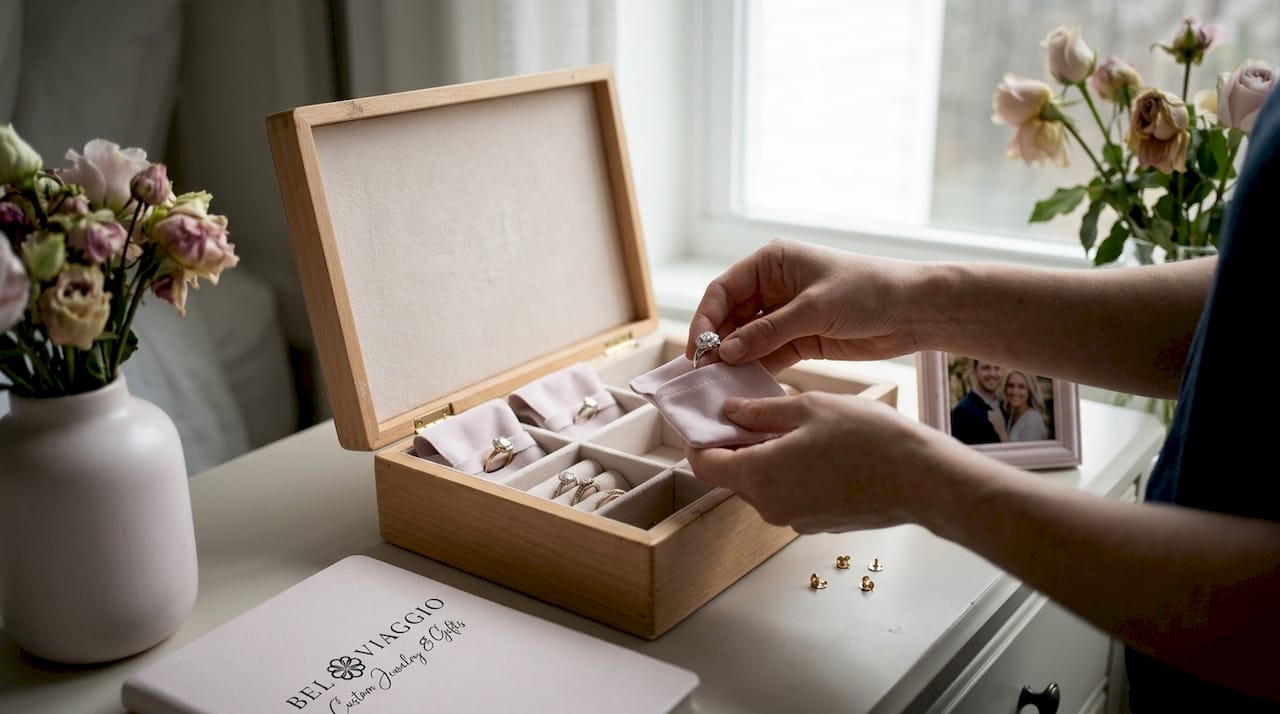
The core principle is simple: store fine jewelry separately rather than in piles, because metal and gemstones can rub together and cause dings, scratches, and surface damage you cannot reverse without professional polishing.
Dos for jewelry storage:
- Store each ring or band in its own soft pouch or compartment
- Use a lined jewelry box with individual slots for rings and earrings
- Wrap delicate chains separately to prevent tangling
- Include anti-tarnish strips in boxes where silver pieces live
- Keep fine jewelry away from direct sunlight and humidity (bathroom counters are a poor choice)
Don’ts for jewelry storage:
- Never pile rings, bracelets, or pendants together in one dish
- Avoid rubber bands, which can cause tarnishing on some metals
- Do not store jewelry near perfume, hairspray, or cleaning product bottles
- Skip plastic bags for long-term storage since they trap moisture
| Storage solution | Best for | Key benefit |
|---|---|---|
| Velvet soft pouch | Custom rings, sentimental pieces | Individual protection, portable |
| Compartment jewelry box | Multiple pieces | Prevents stone-on-metal contact |
| Anti-tarnish pouch | Sterling silver bands | Slows oxidation significantly |
| Travel jewelry case | Honeymoon or destination events | Compact and crush-resistant |
| Wall-mounted organizer | Everyday fashion pieces | Easy access without damage |
For custom ring storage, the original packaging from your jeweler is often the best option for long-term safekeeping. The box or pouch it arrived in was designed with that specific piece in mind.
Wearing your jewelry: Habits that keep it beautiful
Beyond cleaning and storage, daily wear habits play a crucial role in keeping your ethical, custom-made pieces in prime condition. The truth is, most damage to engagement rings does not happen in one dramatic event. It accumulates gradually through small, repeated exposures.
- Remove your ring before exercising. Gym equipment, lifting weights, and yoga poses can all bend prong settings or scratch polished bands. Even low-impact activity can cause the kind of repeated pressure that loosens stones over time.
- Take it off before swimming. Chlorine in pools weakens certain metal alloys and can cause lab-grown diamond or moissanite settings to lose their polish faster. Cold ocean water can also cause fingers to shrink slightly, which increases the risk of losing the ring entirely.
- Skip wearing it in the shower. Shampoo and conditioner film accumulates rapidly on the underside of stone settings. A shower ring dish on the bathroom counter solves this instantly.
- Apply lotions, perfumes, and hairspray first, then put your ring on last. This single habit dramatically reduces the buildup that causes that familiar dullness between cleanings.
- Remove rings before doing dishes, gardening, or any cleaning chores. Household chemicals, soil, and abrasives are among the fastest ways to dull a fine ring’s finish.
Note: Common exposure risks include lotions, cosmetics, chemicals, and physical activities like showering, swimming, and exercising. These increase grime accumulation, chemical exposure, and the chance of physical damage. The more consistently you limit these exposures, the longer your piece retains its original brilliance.
Pro Tip: Designate one consistent spot, like a small ring dish on your nightstand, as the only place your engagement ring lives when it’s off your finger. The habit removes decision fatigue and dramatically reduces the chance of leaving your ring in a risky location.
Troubleshooting: Common mistakes and how to avoid them
Even with the best intentions, mistakes happen. Here’s how to recognize and address them right away before they turn into permanent problems.
The most common fine jewelry care mistakes:
- Using harsh cleaners: Bleach, acetone, chlorine, and even some commercial jewelry cleaners are too aggressive for delicate settings and softer gemstones. Stick to the safe soap and water method as your default.
- Storing pieces together: The most overlooked source of scratches on fine rings is other jewelry. Diamonds are hard enough to scratch other diamonds, let alone softer gemstones or gold settings.
- Wearing jewelry during household chores: Bleach-based cleaners can permanently discolor yellow gold and damage stone surfaces. Even dish soap used while wearing a ring is fine in small doses, but repeated exposure builds up residue in hard-to-reach spots.
- Ignoring loose prongs: If a stone looks even slightly off-center or shifts when you touch it, do not wait. A loose prong can drop a stone in minutes.
- Over-cleaning with harsh tools: Scrubbing too hard with stiff brushes creates surface scratches on metal that dull a ring’s polish over time.
If your piece looks dull despite recent cleaning, soak it for a few extra minutes and re-brush gently. For pieces exposed to chemicals like chlorine or bleach, rinse immediately with clean water and allow the piece to air dry before attempting further cleaning. Do not rub aggressively.
Following the right avoiding jewelry mistakes approach means being proactive, not reactive. Build the right habits before damage occurs.
Additionally, common wear risk factors like chemical contact and physical activity are entirely preventable once you are aware of them. Awareness is the first and most important step.
Pro Tip: After any significant impact, like dropping your ring on a hard floor or snagging it on fabric, take it to a jeweler for a prong and setting inspection. Many professional jewelers offer this service at no charge, and catching a loosened setting early is far less costly than replacing a lost stone.
Why caring for ethical, custom jewelry is more than routine: What most guides miss
Most jewelry care guides treat cleaning and storage as purely mechanical tasks. Polish, store, repeat. But there is a deeper layer worth considering, especially if your piece was ethically sourced or custom-designed with intention.
Every ethical engagement story starts with a decision rooted in values: choosing a lab-grown diamond over a mined one, selecting a stone with a traceable origin, or designing a ring that means something specific to you as a couple. That decision does not end at purchase. It continues in how you care for that piece every single day.
When you take five minutes to clean your ring properly or take it off before a swim, you are not just doing maintenance. You are honoring the intention behind it. You are saying that the craftsmanship matters, that the sourcing story matters, and that this symbol of your relationship deserves the same thoughtfulness that went into creating it.
Most guides miss this. They treat fine jewelry like any other household object. But your custom engagement ring or wedding band is not a household object. It is one of the most meaningful things you will ever own. Treating its care as an extension of your values, rather than a chore, changes how consistently you actually do it.
The couples who keep their pieces looking stunning decades later are not the ones who remember to clean every two weeks out of obligation. They are the ones who genuinely understand what they are protecting. That shift in perspective is worth more than any cleaning kit.
Explore rings and custom care with Bel Viaggio Designs
Your daily habits are crucial, and so is where your jewelry’s story begins, at a jeweler who values care as much as you do.
At Bel Viaggio Designs, every piece is handcrafted with ethical sourcing at the core. Whether you are drawn to the bold drama of a black diamond engagement ring or the timeless elegance of a men’s white and yellow gold band, each piece is built to last, and to be cared for with intention.

Explore our full gemstone rings collection to find pieces designed with the same ethical commitment that inspires great daily care habits. From first purchase to decades of wear, Bel Viaggio Designs is here to help your piece stay as meaningful as the day you chose it.
Frequently asked questions
How often should I clean my engagement ring?
Clean your engagement ring every two weeks using the soap and water method, and schedule a professional cleaning and inspection twice a year for a thorough polish and setting check.
Can I use ultrasonic cleaners for all fine jewelry?
Ultrasonic cleaners can damage porous gemstones, delicate settings, and certain treated stones, so the safest default for most pieces is mild soap and water at home.
What’s the best way to store sentimental jewelry?
Keep sentimental pieces in individual soft pouches or compartmentalized boxes so they never contact other jewelry, which prevents scratches and dings that dull even the hardest stones.
Should I remove my ring before applying lotion or perfume?
Yes, always remove your ring first because lotions and cosmetics leave a residue film that builds up quickly around prong settings and dulls stone brilliance faster than almost any other daily habit.
Recommended
- Caring for Your Fine Jewelry From Bel Viaggio Designs – Bel Viaggio Designs, LLC
- Essential questions to ask your jeweler for custom rings – Bel Viaggio Designs, LLC
- Helpful Tips To Buying Conflict-Free Engagement Rings – Bel Viaggio Designs, LLC
- Why Invest in Fine Jewelry: Ethical, Valuable & Lasting – Bel Viaggio Designs, LLC