

TL;DR:
- Fine jewelry is increasingly regarded as a valuable asset class that appreciates over time.
- Ethical sourcing certifications enhance resale value and align with consumer demand for sustainability.
- Custom and personalized jewelry provide emotional and heirloom value that can surpass pure financial returns.
Fine jewelry has long been dismissed as a luxury expense rather than a serious investment. But that thinking is changing fast. The luxury fine jewelry market is projected to grow from USD 51.8 billion in 2025 to USD 92.8 billion by 2035, signaling that what sits on your finger may be worth far more than sentiment alone. For couples choosing engagement or wedding jewelry, this shift matters. When you invest in a piece that is ethically sourced, beautifully crafted, and deeply personal, you are not just buying jewelry. You are building something that holds financial, ethical, and emotional value for decades.
Table of Contents
- The case for investing in fine jewelry
- Ethical sourcing and sustainability: Adding value and meaning
- Lab-grown, natural, or branded jewelry: Which is right for you?
- Customization, legacy, and emotional ROI
- A fresh perspective on investing in fine jewelry
- Find your perfect ethical investment piece
- Frequently asked questions
Key Takeaways
| Point | Details |
|---|---|
| Jewelry combines value and meaning | Fine jewelry offers both financial appreciation and personal significance for couples. |
| Ethical choices boost returns | Sustainability and certifications can add up to 9% to resale value and attract modern buyers. |
| Customization enhances emotional ROI | Handcrafted, personalized designs build lasting legacy beyond pure investment returns. |
| Choose to align values and investments | Lab-grown, natural, and branded pieces each offer distinct benefits for different priorities. |
The case for investing in fine jewelry
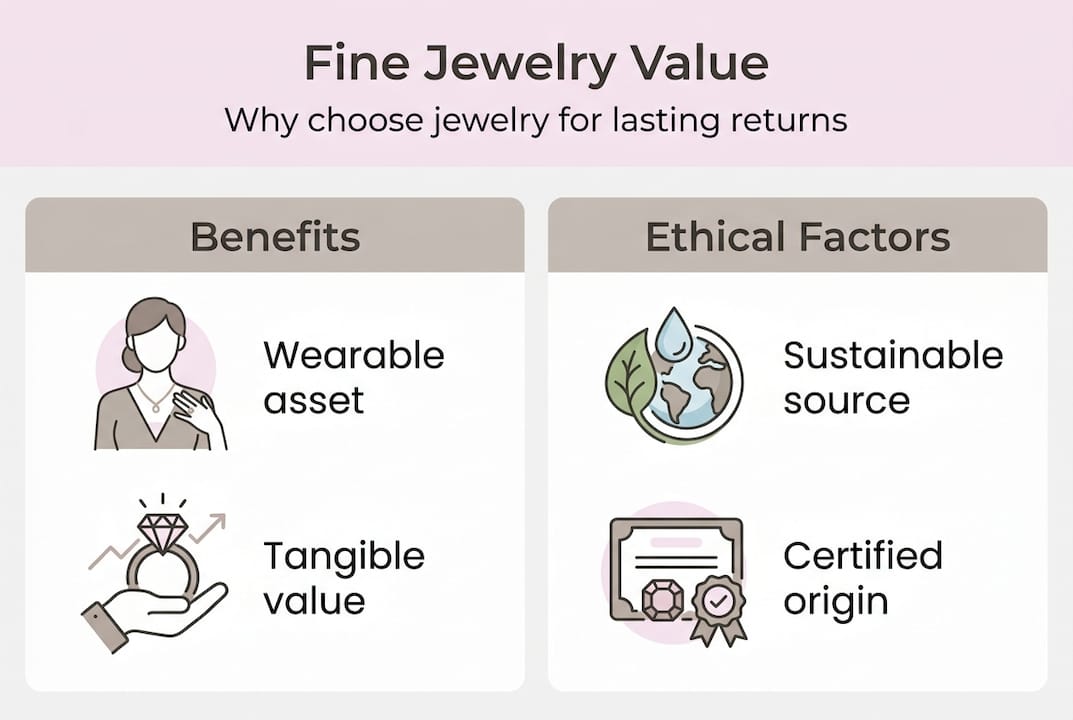
Fine jewelry is no longer just a symbol of love. It has become a recognized asset class, sitting alongside art, watches, and rare collectibles as a form of tangible wealth. Unlike stocks or bonds, jewelry is something you wear, carry with you, and pass down. That combination of portability, beauty, and financial merit is hard to find anywhere else.
The numbers back this up. The luxury jewelry market CAGR sits between 6% and 8.83%, with the global market expected to exceed USD 116.2 billion by 2034. That kind of sustained growth puts fine jewelry ahead of many traditional savings vehicles. Diamonds specifically show a 1-3% annual growth rate, while the broader luxury segment tracks a 5-6% CAGR, making jewelry a genuine hedge against inflation.
Here is a quick look at how fine jewelry stacks up as an investment:
| Asset type | Avg. annual return | Liquidity | Tangible? | Wearable? |
|---|---|---|---|---|
| Fine jewelry | 3-6% | Medium | Yes | Yes |
| Gold bullion | 2-4% | High | Yes | No |
| S&P 500 index | 7-10% | High | No | No |
| Real estate | 3-5% | Low | Yes | No |
| Cash savings | 0.5-2% | Very high | No | No |
What makes jewelry stand out is not just the return. It is the value of fine jewelry as a dual-purpose asset. You enjoy it daily while it appreciates over time. Few investments offer that kind of lived-in return.
For couples, the symbolism of wedding jewelry adds another dimension entirely. A ring that marks your commitment also marks a smart financial decision when chosen thoughtfully.
Key reasons fine jewelry works as an investment:
- Retains value even during economic downturns
- Portable and globally recognized as wealth
- Not correlated with stock market swings
- Grows in value with rarity, craftsmanship, and provenance
- Passes down as heirloom wealth to future generations
Ethical sourcing and sustainability: Adding value and meaning
Beyond financial returns, ethical and sustainable choices further increase the value and meaning of your investment. Couples today are not just asking “Is this beautiful?” They are asking “Where did this come from?” That question, it turns out, has real financial consequences.
Certified ethical jewelry commands a measurable premium. Ethical sourcing boosts resale value by 7-9% compared to non-certified pieces. Fair-mined gold specifically adds a 7.4% premium, while conflict-free diamonds add 9.2%. And with 65% of consumers willing to switch brands for ethics, the demand side is only getting stronger.
“Sustainability is no longer a niche preference. It is a purchasing driver that directly shapes resale premiums and long-term demand for fine jewelry.”
Here is how certified ethical sourcing compares at resale:
| Jewelry type | Resale premium | Certification benefit |
|---|---|---|
| Fair-mined gold | +7.4% | Fairmined certification |
| Conflict-free diamonds | +9.2% | Kimberley Process |
| Standard non-certified | Baseline | None |
| Lab-grown gems | Competitive | Origin transparency |
For couples sourcing wedding jewelry ethically, these numbers translate into real money at resale. They also reflect something deeper: a piece that aligns with your values holds more meaning and more market appeal.
Transparency in jewelry sourcing is becoming a baseline expectation, not a bonus feature. Brands that can trace every stone and metal back to its origin are winning buyer trust and commanding higher prices. If you want to know how to evaluate specific stones, our ethical gemstone guide breaks it down step by step.
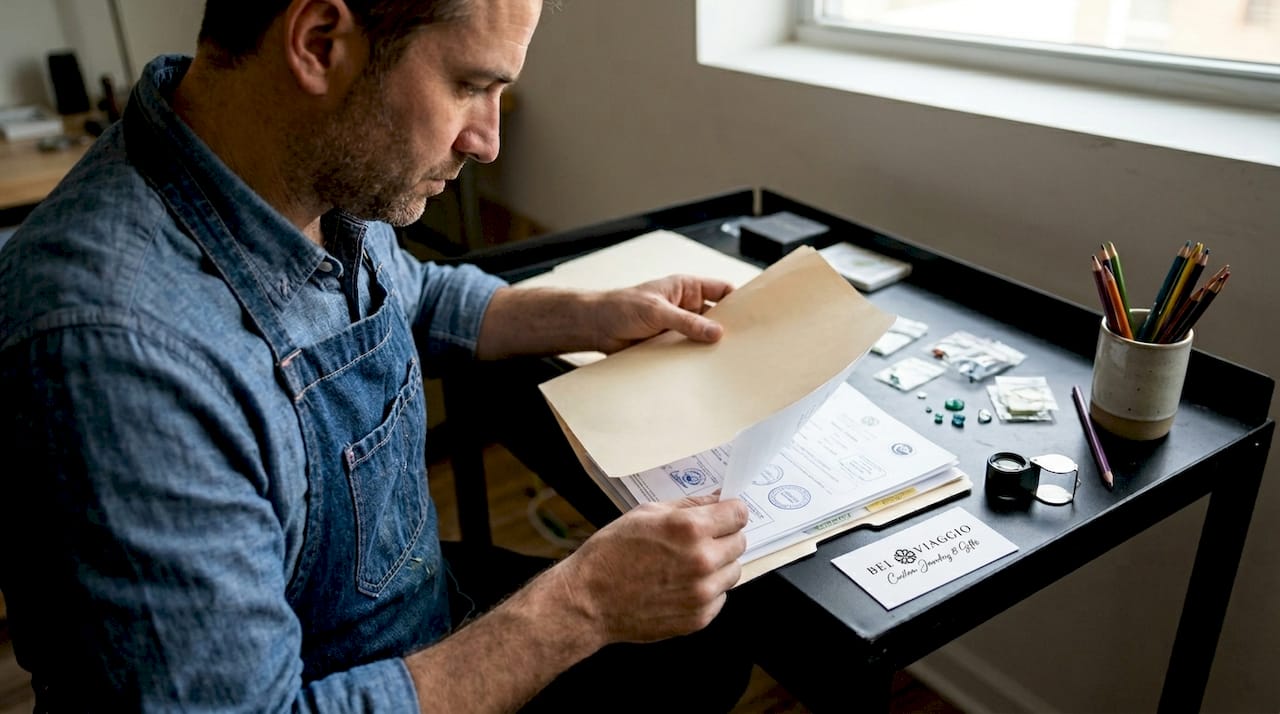
Pro Tip: When shopping for fine jewelry, ask for documentation. Certifications like Fairmined or the Kimberley Process are not just ethical badges. They are financial assets that protect and grow your investment over time.
What to look for in ethically sourced jewelry:
- Fairmined or Fairtrade gold certification
- Kimberley Process certification for diamonds
- Transparent supply chain documentation
- Lab-grown options with verified origin
- Brand commitment to environmental and labor standards
Lab-grown, natural, or branded jewelry: Which is right for you?
With ethical and sustainable options in mind, it is crucial to pick the jewelry type that fits your values and investment goals. The choice between lab-grown, natural, and iconic branded pieces involves real trade-offs, and knowing them upfront saves regret later.
Branded fine jewelry retains 100-113% of its resale value, making it the strongest performer for pure financial return. Natural stones from recognized origins also hold value well, especially when certified. Lab-grown gems, on the other hand, cost 30-40% less upfront and carry a much lighter environmental footprint, though their resale is generally lower than natural or branded alternatives.
| Type | Upfront cost | Resale value | Sustainability | Ethics |
|---|---|---|---|---|
| Natural diamonds | High | Strong | Moderate | Varies |
| Lab-grown gems | 30-40% less | Lower | High | High |
| Branded jewelry | Highest | 100-113% | Varies | Brand-dependent |
| Moissanite | Low | Lower | High | High |
For couples, the right choice depends on what you prioritize. Here is a simple decision checklist:
- Budget first: If upfront cost matters most, lab-grown or moissanite delivers the best value per carat.
- Resale priority: If you plan to sell or upgrade later, branded or natural stones hold value better.
- Ethics above all: If sustainability is non-negotiable, lab-grown gems are the clear winner.
- Legacy planning: If this piece is meant to pass down, natural stones with certified provenance age best.
- Emotional meaning: If the story matters more than the market, custom design wins regardless of material.
Explore the full range of lab-grown diamond benefits if sustainability is your primary driver. For couples still weighing options, our guide to ethical engagement ring options covers the full spectrum. And if you are shopping on a budget without compromising ethics, these ethical jewelry shopping tips are worth reading.
Pro Tip: Consider pairing a lab-grown center stone with natural accent stones. You get the sustainability and cost savings of lab-grown while retaining some of the resale appeal that natural stones provide.
Customization, legacy, and emotional ROI
Choosing the right material is only part of the equation. The story and personalization behind each piece also shape its enduring value. A ring that carries your initials, your grandmother’s stone, or a design no one else in the world owns is not just jewelry. It is a narrative.
Custom handcrafted jewelry occupies a unique space in the investment conversation. Custom jewelry market growth is being driven by personalization demand and high-net-worth buyers who want pieces that reflect their identity, not just their budget. The trade-off is liquidity. A one-of-a-kind piece is harder to sell quickly than a standard solitaire from a well-known brand. But that is not necessarily a disadvantage.
“The best investment you can make in jewelry is one that you would never want to sell.”
Emotional ROI is real. When a piece carries meaning, it is cared for, maintained, and passed down. That kind of stewardship preserves physical condition and provenance, both of which protect financial value over time. A ring that survives three generations is worth more than its metal and stones alone.
What makes custom jewelry a lasting investment:
- Unique design that cannot be replicated or commoditized
- Higher personal attachment leads to better care and maintenance
- Heirloom potential increases perceived and actual value over time
- Provenance story adds collector appeal for discerning buyers
- Reflects your values, ethics, and identity in every detail
The meaning of custom wedding jewelry goes beyond the sentimental. When you invest in a piece designed specifically for you, you are creating something that the market cannot mass-produce. That rarity has value, even when it is hard to put a number on it.
A fresh perspective on investing in fine jewelry
Here is what most jewelry guides get wrong: they treat this as an either-or decision. Either you buy for love or you buy for money. Either you go ethical or you go for resale value. That framing is too narrow, and it leads couples to make choices they later regret.
The truth is that the best jewelry investments happen when all three forces align: personal story, ethical sourcing, and financial sense. A lab-grown sapphire in a custom setting, certified and handcrafted, may not top the resale charts. But it will hold emotional value for a lifetime, cost significantly less upfront, and carry a clean conscience. That is a return no spreadsheet can fully capture.
Conventional financial wisdom rates jewelry below stocks and real estate. But conventional wisdom also ignores the fact that you cannot wear your index fund to a wedding. Fine jewelry occupies a category of its own, and couples who recognize that early make smarter, more satisfying choices.
For a deeper look at how to choose stones that align with both your ethics and your investment goals, our guide to ethical gemstone selection is a strong next step.
Pro Tip: Before you buy, write down your top three priorities: budget, ethics, and resale. Rank them honestly. That ranking should drive every decision you make, from stone type to setting style to brand.
Find your perfect ethical investment piece
Ready to apply what you have learned and invest in an ethical, meaningful piece? At Bel Viaggio Designs, we build custom fine jewelry that brings together handcrafted artistry, ethical sourcing, and designs as unique as your relationship.
Whether you are drawn to the brilliance of lab-grown diamonds, the color of ethically sourced gemstones, or the idea of a fully custom ring designed around your story, we have options that match your values and your vision. Browse our gemstone engagement alternatives for something truly distinctive, or take the first step and begin your custom design today. Your investment in lasting beauty starts here.
Frequently asked questions
Do ethical certifications really increase fine jewelry’s resale value?
Yes. Certified ethical jewelry can boost resale value by 7-9% compared to non-certified pieces, with conflict-free diamonds adding the highest premium at 9.2%.
Are lab-grown diamonds a good investment for couples?
Lab-grown diamonds are excellent for sustainability-focused couples, saving 30-40% in upfront costs, though their resale value typically runs lower than natural or branded stones.
How does fine jewelry compare to traditional investments?
Fine jewelry acts as wearable wealth that hedges inflation and diversifies portfolios, though it is less liquid than stocks or real estate and best viewed as a long-term hold.
Can custom-designed jewelry hold its value?
Custom pieces offer lower liquidity than standard designs, but their uniqueness, provenance, and emotional significance often generate strong demand among discerning buyers and collectors over time.
Recommended
- Why choose fine jewelry online: value, ethics, and design – Bel Viaggio Designs, LLC
- How thoughtful design shapes ethical, unique fine jewelry – Bel Viaggio Designs, LLC
- Smart Tips for Shopping On-Sale Jewelry Ethically and Affordably – Bel Viaggio Designs, LLC
- What is luxury jewelry: bespoke and ethical guide – Bel Viaggio Designs, LLC
- Why Choose Handmade Gothic Jewelry for Self-Expression – GothMarket