

TL;DR:
- Genuine ethical jewelry requires certifications and transparent sourcing, not just discounts.
- Vintage, lab-grown, and custom gemstone rings are the best ethical options on sale.
- Planning purchases around trusted brands’ sales ensures quality, ethics, and lasting value.
Wedding jewelry sales seem like a dream until you realize how hard it is to separate genuine value from hollow discounts. The market is saturated with promotions, but very few on-sale pieces actually meet the bar for ethical sourcing, unique design, and lasting quality. For engaged couples who care about where their jewelry comes from, a sale tag means nothing without the right credentials behind it. This guide walks you through a clear, criteria-first approach so you can shop with confidence, spot the real deals, and find pieces that reflect your values and your love story.
Table of Contents
- Set your standards: How to identify true ethical value in on-sale jewelry
- Explore your options: Top types of on-sale jewelry for engaged couples
- Compare before you buy: Weighing price, sustainability, and personal meaning
- Make it yours: Smart strategies for customizing and safeguarding value
- Our take: Why intentional timing and informed criteria make all the difference
- Ready to find your perfect on-sale ethical jewelry?
- Frequently asked questions
Key Takeaways
| Point | Details |
|---|---|
| Look for certifications | Always verify that sale jewelry comes with recognized ethical certifications and transparent supply chains. |
| Consider vintage or lab-grown | Choose vintage or lab-grown pieces on sale for better sustainability, savings, and unique personal value. |
| Shop intentional sales | Target wedding season or meaningful events, when ethical brands are more likely to offer genuine, high-value deals. |
| Personalize and protect | Customize your on-sale jewelry and ensure it comes with a solid warranty to safeguard your investment. |
Set your standards: How to identify true ethical value in on-sale jewelry
With a mindset to prioritize ethics, let’s lay the foundation for what to look for before you’re tempted by a sale tag.
Before you click “add to cart” on any discounted ring or band, the first question to ask is not “how much am I saving?” It’s “can this jeweler prove where this piece came from?” That single question filters out the vast majority of brands that use vague sustainability language as a marketing tool.
Here’s what to look for when vetting any jeweler before a sale:
- Conflict-free diamond certification. Look for the Kimberley Process certification, which confirms diamonds were not mined in conflict zones. Fairmined and Fairtrade labels on gold confirm fair wages and safe working conditions. Responsible Jewellery Council (RJC) membership means the brand has passed independent audits.
- Supply chain documentation. A trustworthy jeweler can hand you paperwork, not just a promise. Ask for sourcing records, lab certificates, and country-of-origin documentation.
- Consistent messaging. If the brand only mentions ethics in the marketing copy but never in product pages or FAQs, that’s a red flag.
- Intentional sale timing. Brands that discount constantly are often padding margins. Ethical brands tend to run fewer, more meaningful promotions.
Learning how to evaluate ethical jewelry sourcing gives you a real edge when browsing sale events. And when a jeweler actually explains transparency in sourcing, that’s a strong signal they take it seriously.
“A jeweler’s willingness to show their work is the best discount they can offer you.”
Pro Tip: Plan your jewelry shopping around wedding season (spring and early summer) and significant personal milestones like birthdays. Ethical brands often run their most meaningful promotions at these times, and you’ll be in a less pressured mindset to evaluate quality over urgency.
Explore your options: Top types of on-sale jewelry for engaged couples
Now that you know how to screen for ethics, let’s survey the top jewelry types you’ll encounter on sale and their real advantages.
Not all on-sale jewelry is created equal. The category matters as much as the discount. Here are the top types worth exploring, ranked by their unique value for conscious couples:
- Vintage and estate jewelry. Vintage pieces carry real history and charm. They’re often priced lower than new pieces, and vintage jewelry is inherently sustainable because no new mining is required. Sale events at reputable estate dealers can yield stunning finds at 20 to 40 percent below retail.
- Lab-grown diamond rings. These stones are chemically identical to mined diamonds but produced in a controlled environment. They carry a significantly lower environmental impact, and you’ll often find lab-grown diamonds offered at deeper discounts than mined alternatives. The tradeoff is resale value, which we’ll cover in the next section.
- Custom and alternative gemstone rings. Sapphires, morganites, and emeralds are gaining serious traction among engaged couples who want something distinct. Checking a trusted gemstone selection guide helps you identify stones with clean sourcing records. Custom engagement rings built around alternative gems often offer better ethical visibility than mass-produced diamond rings.
“The most sustainable jewelry you can buy is the piece you’ll wear for a lifetime and never want to replace.”
Each category has a sweet spot for on-sale shopping. Vintage works well on estate sale platforms and select boutique jewelers. Lab-grown options go on sale most frequently during spring and holiday windows. Custom gemstone work sometimes includes promotional pricing on specific stone or metal combinations.
Pro Tip: If you find a vintage or custom piece on sale, ask the jeweler about personalization options. Adding an engraving, swapping a setting, or resizing the band at the time of purchase often costs less than doing it later and makes the piece feel completely yours.
Compare before you buy: Weighing price, sustainability, and personal meaning
With the range of options in mind, let’s put them head-to-head to pinpoint what resonates with your priorities.
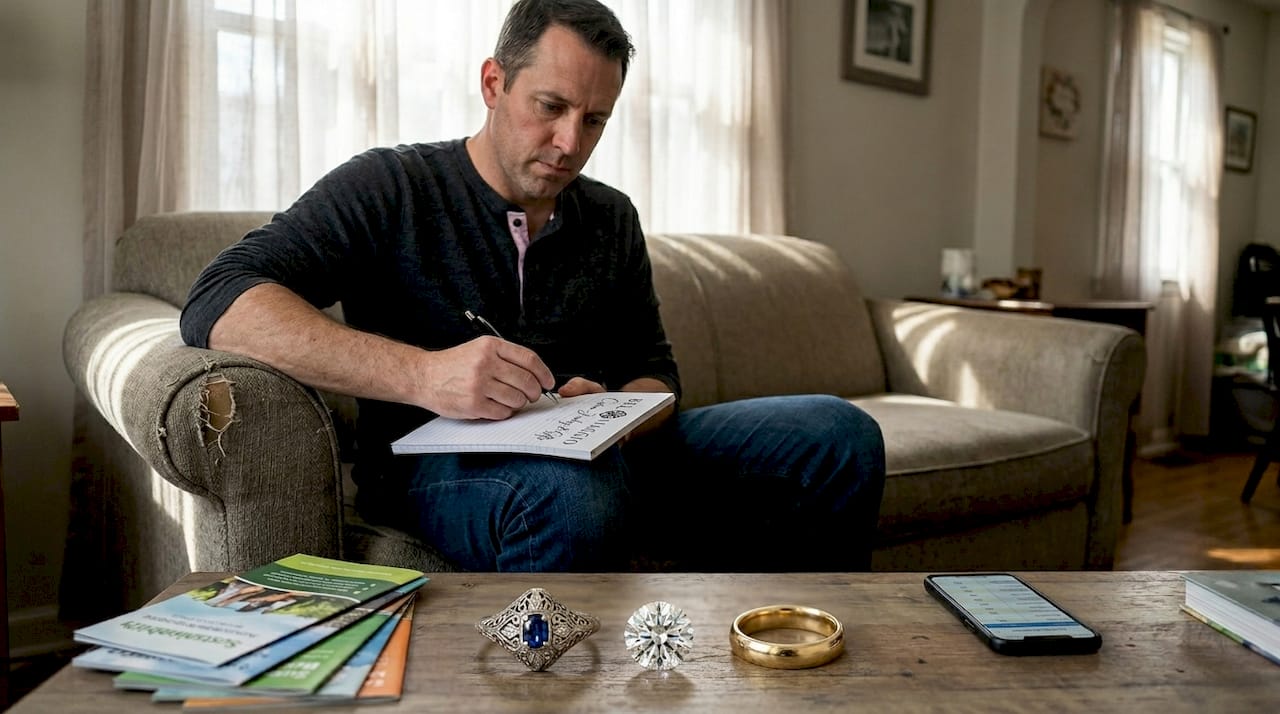
Shopping on-sale jewelry without a comparison framework is like choosing a venue based on photographs alone. The details decide everything. Use this table to match each jewelry type to what matters most to you:
| Jewelry type | Starting price range | Sustainability | Resale value | Design uniqueness |
|---|---|---|---|---|
| Vintage/estate | $300 to $1,500+ | Very high | Moderate to high | Very high |
| Lab-grown diamond | $400 to $3,000+ | High | Lower than mined | Moderate |
| Custom gemstone | $500 to $4,000+ | High (varies by stone) | Moderate | Very high |
| Mined diamond | $1,000 to $10,000+ | Low to moderate | High | Moderate |
One stat worth noting: 65 percent of ethically minded couples say supply chain transparency is their top priority when buying jewelry on sale, even above price. That shifts the conversation from “what can I afford?” to “what can I trust?”
If sustainability is your top value, vintage and lab-grown options win clearly. If long-term resale value matters, mined diamonds or well-maintained vintage pieces hold better. For couples who want a piece that’s truly one-of-a-kind, custom gemstone rings are the strongest choice. The good news: all three ethical options regularly appear in sale collections from reputable jewelers.
Make it yours: Smart strategies for customizing and safeguarding value
You’ve compared types, but final touches and protecting your investment matter just as much. Here’s how to personalize and future-proof your buy.
Finding the right piece on sale is just step one. Making it fully yours and protecting its value over time requires a few smart moves that most couples overlook.
Start with documentation. For any piece you buy on sale, request:
- The original certificate of authenticity for stones (GIA, IGI, or equivalent)
- A supply chain summary confirming source country and any certifications
- A written warranty covering repairs, resizing, and defects
- Metal purity documentation (hallmark or assay certificate)
Don’t settle for vague claims. Verifying transparency before purchase protects you from expensive surprises later. Reputable brands should provide these without hesitation.
Once you have documentation sorted, think about personalization. Here’s a quick overview of options by jewelry type:
| Customization option | Vintage | Lab-grown diamond | Custom gemstone |
|---|---|---|---|
| Resizing | Yes | Yes | Yes |
| Engraving | Yes | Yes | Yes |
| Stone swap | Sometimes | Yes | Yes |
| Setting redesign | Sometimes | Yes | Yes |
| Metal refinishing | Yes | Yes | Yes |
For couples exploring custom jewelry ideas, even a sale piece can become a fully bespoke item with the right jeweler. A setting redesign, a meaningful engraving, or a complementary gemstone accent transforms a discounted ring into something irreplaceable.
Finally, plan ahead for resale or heirloom use. Keep all certificates stored safely. Insure the piece within 30 days of purchase. And review these personalized ethical buying tips to stay informed as your collection grows.
Our take: Why intentional timing and informed criteria make all the difference
Most shopping guides stop at “look for certifications and compare prices.” We think that misses the most important part of the equation.
The couples who feel best about their jewelry years later are not the ones who found the deepest discount. They’re the ones who waited for the right sale from a brand they genuinely trusted. There’s a real difference between a jeweler who discounts constantly (a signal that margins are inflated or quality is inconsistent) and one that runs intentional, limited promotions tied to meaningful moments like wedding season or anniversaries.
Chasing the lowest price across dozens of generic jewelry sites often leads to regret, not savings. You end up with a piece that looks like a compromise. Instead, identify two or three jewelers whose sourcing standards, aesthetic, and transparency genuinely impress you. Then wait. Their sale moments will come, and when they do, you’ll buy with confidence rather than anxiety.
When quality meets value in a piece you already love, no justification is needed. That’s the sweet spot worth waiting for.
Ready to find your perfect on-sale ethical jewelry?
You now have the framework, the comparison tools, and the personalization strategies to shop smarter. The next step is finding a brand that actually meets the bar you’ve set.
At Bel Viaggio Designs, every piece in our collection is handcrafted, ethically sourced, and built for lasting meaning. You can explore custom rings on sale and browse our full range of lab-grown diamond options with confidence. For couples who want something truly distinctive, our unique gemstone rings offer one-of-a-kind alternatives that align with both your values and your budget. Our team is ready to help with certifications, personalization, and finding the best moment to buy.
Frequently asked questions
How can I be sure on-sale jewelry is truly ethical?
Always ask for recognized certifications such as Kimberley Process, Fairmined, or RJC labels along with written supply chain documentation, not just marketing language.
Is buying vintage jewelry better for sustainability and savings?
Yes, vintage pieces require no new mining, often cost less than new equivalents, and can be resized or personalized to feel entirely custom.
Do lab-grown diamonds hold their value if I buy on sale?
Lab-grown diamonds offer strong upfront savings, but their resale value is typically lower than mined stones, so they’re best viewed as a wear-forever choice rather than an investment.
Why do ethical jewelry brands offer fewer discounts?
Frequent discounting signals inflated original prices or inconsistent quality, so ethical brands protect their credibility by running intentional, event-based promotions rather than constant sales.
Recommended
- Affordable on-sale engagement rings: quality meets value – Bel Viaggio Designs, LLC
- Affordable on-sale engagement rings: quality meets value – Bel Viaggio Designs, LLC
- How to ethically source jewelry for your wedding – Bel Viaggio Designs, LLC
- Custom jewelry ideas for ethical engagement rings 2026 – Bel Viaggio Designs, LLC
- Fine Jewelry Buying Tips for High-Quality Selections – Malibu Vibes Jewelry