

Luxury jewelry is often misunderstood as simply expensive brands or high price tags, but true luxury encompasses far more. For couples planning engagements or weddings, understanding what defines luxury jewelry means recognizing exceptional craftsmanship, rare materials, and ethical sourcing practices that align with your values. This guide explores the essential elements that make jewelry genuinely luxurious, from handcrafted artistry to sustainable practices, helping you choose bespoke pieces that reflect both your style and principles. Whether you’re seeking an engagement ring or wedding bands, knowing these distinctions empowers you to make informed, meaningful choices that honor tradition while embracing modern ethical standards.
Table of Contents
- Key takeaways
- Defining luxury jewelry: craftsmanship, rarity, and exclusivity
- Understanding high jewelry and fine jewelry differences
- Sustainability in luxury jewelry: ethical sourcing and modern values
- Choosing bespoke luxury jewelry for your engagement: practical tips and personalization
- Discover bespoke ethical engagement rings at Bel Viaggio Designs
- Frequently asked questions
Key Takeaways
| Point | Details |
|---|---|
| Craftsmanship and rarity | True luxury combines exceptional hand craftsmanship, rare materials, and exacting quality standards. |
| Ultra exclusive high jewelry | High jewelry is typically fewer than ten pieces worldwide and involves ninety percent or more handcrafting by master artisans. |
| Rigorous gemstone standards | Only a small fraction of gemstones meet luxury quality after careful evaluation of color, clarity, cut, and carat. |
| Sustainable sourcing trends | Sustainability now includes recycled metals and lab grown gems as increasingly important options. |
| Bespoke personalization and certification | Bespoke pieces let buyers personalize designs with sourcing certified by recognized ethical standards. |
Defining luxury jewelry: craftsmanship, rarity, and exclusivity
What separates luxury jewelry from ordinary pieces comes down to three fundamental elements that transform metal and stone into wearable art. Luxury jewelry combines exceptional craftsmanship, rarity, and premium materials like 18k gold, platinum, and meticulously selected gemstones that meet exacting standards. The creation process often requires hundreds to thousands of hours of skilled handwork by master artisans who have spent decades perfecting their techniques.
The rarity factor extends beyond just materials to include the expertise required to work with them. Less than 1% of gemstones mined worldwide meet the stringent quality standards demanded by luxury jewelry houses. These exceptional stones undergo rigorous evaluation for color, clarity, cut, and carat weight before being deemed worthy of incorporation into high-end pieces. This selectivity ensures that every gemstone in a luxury piece represents the pinnacle of natural beauty and perfection.
Iconic luxury brands like Cartier, Van Cleef & Arpels, and Tiffany & Co. exemplify how exclusivity and heritage contribute to luxury status. These houses maintain their prestige through limited production, signature design elements, and cultural significance built over generations. Their pieces often become heirlooms, carrying emotional weight that transcends monetary value and connects families across time.
For couples seeking custom jewelry ideas for ethical engagement rings, understanding these luxury markers helps distinguish genuine quality from marketing hype. Key indicators of luxury craftsmanship include:
- Hand-finishing techniques visible under magnification, showing individual artisan touches rather than machine uniformity
- Precise stone setting methods like pavé or micro-pavé requiring exceptional skill and patience
- Seamless metalwork with no visible solder marks or rough edges, demonstrating mastery of fabrication
- Proprietary design elements or techniques unique to specific luxury houses, representing innovation and tradition
High jewelry pieces represent the absolute pinnacle of this craft, with many being entirely bespoke or produced in quantities of fewer than ten pieces worldwide. This extreme limitation ensures that owning such a piece means possessing something truly irreplaceable, crafted specifically for an individual client or exclusive collection.
“The true measure of luxury jewelry lies not in its price tag but in the irreplaceable combination of human artistry, natural rarity, and cultural significance that cannot be mass-produced or replicated.”
Understanding high jewelry and fine jewelry differences
The jewelry world contains important distinctions that affect both value and exclusivity, particularly relevant when choosing engagement pieces. High jewelry represents the pinnacle with bespoke creation and 90% or more handcrafting by master artisans, while fine jewelry uses precious materials but allows for repeatable production in larger quantities. This fundamental difference impacts everything from pricing to personalization options available to couples.
High jewelry, known as haute joaillerie in French, typically exists in editions of ten pieces or fewer worldwide. Each creation undergoes extensive hand-finishing, with artisans spending months on a single piece to achieve perfection in every detail. The gemstones selected for high jewelry undergo even stricter evaluation than standard luxury pieces, with only the rarest specimens making the cut. These pieces often debut at exclusive events or private showings, never appearing in regular retail environments.
Fine jewelry, while still crafted from precious metals and genuine gemstones, follows more standardized production methods that allow for collection-based creation. A jeweler might produce fifty or several hundred pieces of a popular fine jewelry design, making it accessible to more customers while maintaining quality standards. This approach balances craftsmanship with availability, offering couples beautiful options without the extreme exclusivity of high jewelry.
| Feature | High Jewelry | Fine Jewelry |
|---|---|---|
| Production volume | Fewer than 10 pieces worldwide | Collections of 50-500+ pieces |
| Handcraft percentage | 90-100% hand-finished | 40-70% hand-finished |
| Gemstone rarity | Top 0.1% of all stones | Top 5-10% of stones |
| Customization | Fully bespoke or highly limited | Limited modifications available |
| Price range | $50,000-$5,000,000+ | $1,000-$50,000 |
For couples exploring top gemstone choices for ethical engagement rings, understanding these categories helps set realistic expectations. The bespoke process for creating luxury engagement jewelry typically follows these steps:
- Initial consultation to discuss design vision, budget parameters, and ethical sourcing requirements
- Gemstone selection from certified suppliers with full traceability documentation
- Design development using CAD technology to visualize the piece before production begins
- Master artisan fabrication with regular progress updates and approval checkpoints
- Final finishing, quality inspection, and certification documentation delivery
Pro Tip: When commissioning bespoke luxury jewelry, request detailed documentation of craftsmanship hours, artisan credentials, and gemstone provenance certificates to verify authenticity and ensure you receive genuine luxury quality rather than premium-priced fine jewelry.
The distinction matters because some retailers market fine jewelry as high jewelry to justify elevated pricing. Couples should ask specific questions about production numbers, handcraft percentages, and artisan involvement to confirm they receive the exclusivity level they’re paying for. Consulting ethical engagement ring buying tips provides additional guidance on verifying claims and selecting trustworthy jewelers who transparently represent their work.
Sustainability in luxury jewelry: ethical sourcing and modern values
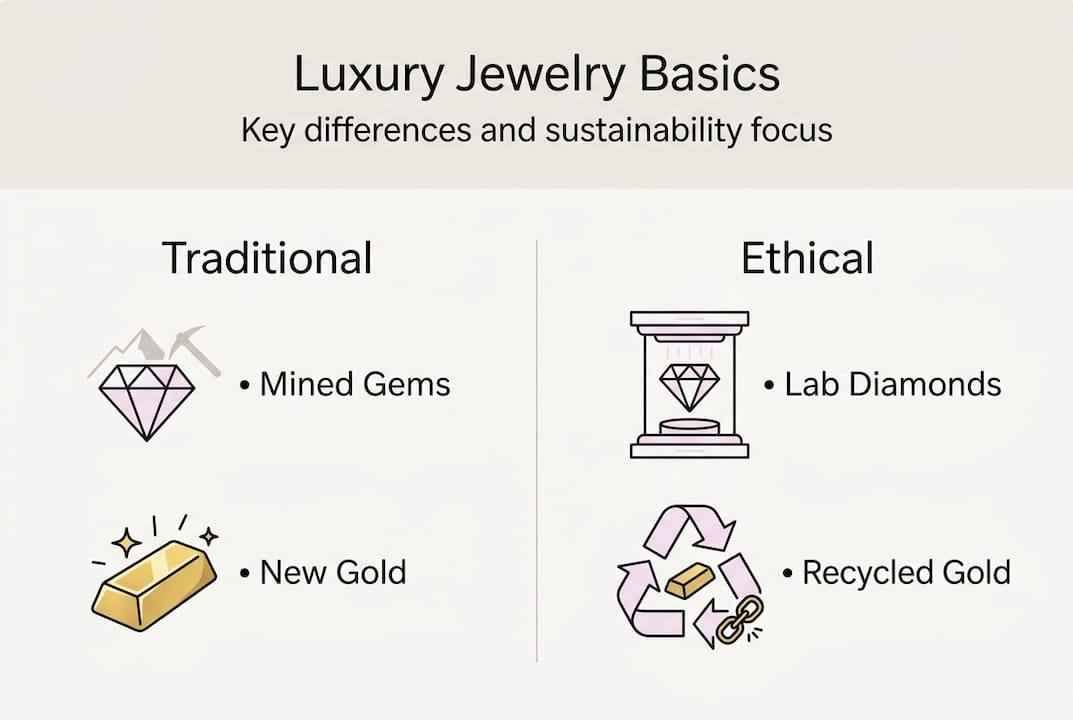
Modern luxury increasingly intertwines with environmental responsibility and ethical practices, reshaping how couples approach engagement ring selection. Recycled gold reduces carbon footprint by 99% compared to newly mined gold, making it the most impactful sustainable choice available in luxury jewelry today. This dramatic reduction comes from eliminating energy-intensive mining operations, ore processing, and associated transportation while maintaining identical quality and appearance to virgin gold.

Lab-grown diamonds have transformed the engagement ring market over the past five years, with prices dropping 70% while representing 20% of all engagement rings sold in 2023. These stones possess identical physical, chemical, and optical properties to mined diamonds, making them indistinguishable without specialized equipment. Younger consumers particularly favor lab-grown options, valuing both the environmental benefits and cost savings that allow for larger stones or more elaborate designs within budget constraints.
Key certifications provide verification of ethical practices, though navigating them requires understanding what each represents. The Responsible Jewelry Council (RJC) includes over 1,500 member companies committed to responsible business practices throughout the supply chain. Fairmined and Fairtrade certifications specifically address mining conditions, ensuring fair wages and safe working environments for miners. However, only 20% of luxury brands publish full sustainability reports, revealing a transparency gap in the industry despite widespread sustainability claims.
Couples seeking custom ethical engagement rings should prioritize these verification points:
- RJC certification demonstrating commitment to responsible sourcing across the entire supply chain
- Specific material sourcing documentation showing recycled metal percentages or lab-grown diamond origins
- Third-party audits confirming claims rather than relying solely on brand self-reporting
- Blockchain or digital traceability systems allowing customers to track materials from source to finished piece
Key Statistic: About 85% of luxury jewelry brands now incorporate recycled gold in at least some product lines, but transparency varies dramatically, with many providing minimal detail about sourcing percentages or verification methods.
The contrast between traditional mining and lab-grown alternatives extends beyond environmental impact to include social considerations. Traditional diamond mining has historically involved conflict financing, labor exploitation, and community displacement in certain regions. Lab-grown diamonds eliminate these concerns entirely while offering identical beauty and durability. This shift allows couples to choose luxury pieces that align with their values without compromising on quality or appearance.
Pro Tip: Request specific percentages of recycled content in metals and ask for certification numbers you can independently verify online. Vague sustainability claims without documentation often indicate greenwashing rather than genuine ethical practices.
When exploring ethical gemstone selection guides, pay attention to traceability systems that track stones from mine or laboratory to final setting. Blockchain technology increasingly enables this transparency, allowing you to verify the complete journey of your engagement ring’s materials. This level of documentation represents the gold standard in ethical luxury jewelry, providing peace of mind that your symbol of commitment was created responsibly.
Choosing bespoke luxury jewelry for your engagement: practical tips and personalization
Selecting the perfect engagement ring combines emotional significance with practical decision-making, especially when prioritizing ethical sourcing and personalization. Bespoke luxury jewelry creation allows couples to incorporate meaningful elements like heirloom stones, custom engravings, or design motifs that tell their unique story. Modern CAD technology enables you to visualize the finished piece before production begins, ensuring the final ring matches your vision perfectly while allowing adjustments during the design phase.
Brands like Brilliant Earth lead sustainable rankings with blockchain traceability and recycled metals, demonstrating how luxury and ethics successfully combine in contemporary jewelry. Their approach includes detailed documentation of every material’s origin, third-party certification verification, and transparent pricing that shows exactly what you’re paying for. This model represents the future of luxury jewelry, where exclusivity and responsibility coexist rather than conflict.
The process of creating bespoke ethical engagement rings follows a structured path that balances creativity with verification:
- Define your priorities by ranking factors like sustainability certifications, design uniqueness, budget flexibility, and timeline requirements
- Research jewelers specializing in ethical practices, checking for RJC membership, Fairmined partnerships, or lab-grown diamond expertise
- Schedule consultations with 2-3 finalists to compare approaches, review portfolios, and assess communication styles
- Request detailed quotes including material sourcing documentation, certification costs, and timeline estimates
- Review CAD designs thoroughly, asking questions about structural integrity, wearability, and maintenance requirements
- Approve production only after confirming all ethical certifications and traceability documentation
- Inspect the finished piece with the jeweler present, verifying quality standards and receiving all certificates
Personalization options in bespoke luxury jewelry extend far beyond simple engraving. Couples can integrate family heirlooms by resetting grandmother’s diamond in a modern design, combine birthstones representing both partners, or incorporate symbolic elements reflecting shared interests or cultural heritage. These customizations transform a beautiful ring into a deeply personal artifact that carries meaning beyond its material value.
When exploring ethical engagement rings, consider these verification steps:
- Request copies of all certifications before making final payment, not just at delivery
- Ask for detailed breakdowns of material costs versus labor and design fees
- Verify certification numbers directly with issuing organizations using their online databases
- Confirm warranty terms covering both craftsmanship defects and stone security
- Understand maintenance requirements and whether the jeweler offers complimentary cleaning or inspection services
The balance between traditional luxury exclusivity and modern accessibility through sustainable options creates unprecedented opportunities for couples. You can commission a truly unique piece using lab-grown diamonds and recycled platinum, achieving high jewelry quality at fine jewelry pricing. This democratization of luxury allows more couples to access bespoke craftsmanship while supporting ethical practices that align with their values.
Consulting resources on custom ethical engagement rings and reviewing ethical engagement ring buying tips provides additional frameworks for decision-making. These guides help you ask the right questions, recognize quality indicators, and avoid common pitfalls when commissioning bespoke pieces. The investment of time in research and verification pays dividends in confidence that your engagement ring represents both luxury and responsibility.
Discover bespoke ethical engagement rings at Bel Viaggio Designs
After exploring what defines true luxury jewelry and how to choose ethically, you need a trusted partner who embodies these principles in practice. Bel Viaggio Designs specializes in custom luxury engagement rings crafted with meticulous attention to ethical sourcing and sustainable materials. Their collections feature lab-grown diamonds, recycled precious metals, and responsibly sourced gemstones, all backed by comprehensive certification and a lifetime warranty that protects your investment.
Their bespoke design process puts you in the creative driver’s seat, working with experienced artisans to bring your vision to life through CAD technology and collaborative refinement. Whether you’re drawn to the dramatic elegance of a black diamond engagement ring or the vibrant beauty of a green emerald diamond engagement ring, their portfolio demonstrates the stunning possibilities when luxury meets ethics. Explore Bel Viaggio Designs’ custom rings to discover how bespoke craftsmanship, transparent sourcing, and personalized service create engagement jewelry that honors both your love story and your values.
Frequently asked questions
What is the difference between luxury and fine jewelry?
Luxury jewelry refers to exclusive, often bespoke pieces made with rare materials and exceptional craftsmanship, typically involving 90% or more handwork by master artisans. Fine jewelry uses precious materials like gold and genuine gemstones but is produced in larger, repeatable collections with less exclusivity. The key distinction lies in production volume, with luxury pieces existing in editions of ten or fewer worldwide, while fine jewelry collections may include hundreds of pieces.
How can I verify if luxury jewelry is ethically sourced?
Check for certifications from recognized organizations like RJC, Fairmined, and Fairtrade, which verify responsible practices throughout the supply chain. Request transparency reports or proof of material traceability directly from the jeweler, including specific percentages of recycled content and documentation of gemstone origins. Verify certification numbers independently through the issuing organizations’ online databases rather than relying solely on the jeweler’s claims.
Why choose lab-grown diamonds for engagement rings?
Lab-grown diamonds have a significantly lower environmental impact, reducing carbon footprint by up to 99% compared to mined alternatives while costing 70% less than they did five years ago. They possess identical physical, chemical, and optical properties to mined diamonds, making them indistinguishable without specialized equipment. This combination of ethical production, environmental responsibility, and cost savings allows couples to choose larger stones or more elaborate designs while supporting sustainable practices.
What should I expect during the bespoke jewelry process?
You collaborate closely with designers to select materials, finalize design details, and ensure proper fit through multiple consultation stages. The process typically includes CAD previews that allow you to visualize the finished piece before production begins, with opportunities for adjustments and refinements. Many jewelers offer heirloom integration services, allowing you to incorporate family stones into new designs, and provide regular progress updates throughout the 6-12 week creation timeline typical for custom luxury pieces.
Recommended
- Custom jewelry ideas for ethical engagement rings 2026 – Bel Viaggio Designs, LLC
- Custom jewelry ideas for ethical engagement rings 2026 – Bel Viaggio Designs, LLC
- Ethical gemstone selection guide for engagement rings 2026 – Bel Viaggio Designs, LLC
- Ethical gemstone selection guide for engagement rings 2026 – Bel Viaggio Designs, LLC