

Choosing an engagement ring gemstone that reflects your values while honoring your unique style can feel overwhelming. With over 55% of couples now prioritizing sustainable engagement ring options, the demand for ethically sourced stones has never been higher. This guide breaks down the essential criteria for evaluating gemstones and explores the top choices combining environmental responsibility, durability, and beauty. You’ll discover how lab-grown diamonds, moissanite, and other alternatives stack up against traditional options, empowering you to make a confident, values-aligned decision for your engagement ring.
Table of Contents
- How To Evaluate Ethical And Style Criteria For Gemstone Selection
- Lab-Grown Diamonds: The Top Sustainable Gemstone Choice
- Moissanite And Lab-Created Sapphires And Emeralds As Ethical Alternatives
- Natural Diamonds: Prestige And Resale Value With Ethical Considerations
- Comparing Top Gemstone Choices For Ethical Engagement Rings
- Explore Custom, Ethically Crafted Rings At Bel Viaggio Designs
Key takeaways
| Point | Details |
|---|---|
| Lab-grown diamonds lead sustainability | They produce 80-97% fewer emissions and cost 60-85% less than mined diamonds while offering identical beauty and durability. |
| Moissanite and lab sapphires shine bright | These alternatives deliver exceptional brilliance, near-diamond hardness, and full traceability at budget-friendly prices. |
| Certification matters for natural diamonds | Kimberley Process and RJC labels help verify conflict-free status, though environmental and labor transparency remain limited. |
| Resale value varies significantly | Natural diamonds retain 20-60% value compared to 10-40% for lab-grown, but ethical risks require careful vetting. |
| Balance ethics with personal meaning | Choose stones aligning with your environmental priorities, budget constraints, and the symbolic story you want your ring to tell. |
How to evaluate ethical and style criteria for gemstone selection
Before diving into specific gemstone options, you need a clear framework for assessing both ethical sourcing and personal style preferences. Ethical sourcing encompasses three core pillars: conflict-free origins, environmentally responsible extraction or creation, and fair labor practices throughout the supply chain. Understanding these foundations helps you identify genuinely sustainable options rather than falling for greenwashing marketing.
Key certification schemes provide verification checkpoints. The Kimberley Process addresses conflict diamonds but has significant traceability limitations, covering only 11% of diamonds with full supply chain transparency. The Responsible Jewellery Council (RJC) offers broader standards for ethical business practices. For lab-grown stones, IGI and GIA certifications confirm authenticity and quality. Fairmined and Fairtrade Gold labels ensure responsible metal sourcing for your ring setting.
Environmental impact measurements matter deeply when comparing options. Consider carbon footprint per carat, water consumption during production, and land disruption from mining operations. Lab-grown diamonds use approximately 70 liters of water per carat compared to 480 liters for mined stones, illustrating the dramatic difference sustainable choices can make.
Personal style considerations include durability for daily wear, brilliance and fire, color preferences, and the rarity or uniqueness factor. The Mohs hardness scale rates scratch resistance, with diamonds at 10 and softer stones like emeralds at 7.5-8. Your lifestyle and wearing habits should guide durability requirements.
Pro Tip: Request detailed sourcing documentation from jewelers and verify their transparency claims through third-party reviews to spot greenwashing and ensure your ethical gemstone selection meets genuine sustainability standards. Look for jewelers who openly share supplier relationships and provide conflict-free engagement guidance.
Lab-grown diamonds: the top sustainable gemstone choice
Lab-grown diamonds have captured over 55% of the engagement ring market in 2026, and the numbers reveal why. These stones produce 20-50 kg CO2 emissions per carat versus 160 kg for mined diamonds, representing an 80-97% reduction in carbon footprint. The water savings prove equally dramatic, with lab creation using just 70 liters per carat compared to 480 liters for mining operations.
Beyond environmental benefits, lab-grown diamonds eliminate the social concerns plaguing traditional mining. No land disruption occurs, no mining-related labor exploitation exists, and full traceability comes standard with IGI or GIA certification. You know exactly where your diamond originated and under what conditions it was created.
The financial advantages make larger or more elaborate designs accessible. Lab-grown diamonds cost 60-85% less than natural diamonds, with prices ranging from $800 to $1,500 per carat compared to $4,000+ for mined stones of equivalent quality. This price difference means you can choose a larger center stone, add accent diamonds, or invest in a more intricate custom setting while staying within budget.
| Feature | Lab-Grown Diamond | Mined Diamond |
|---|---|---|
| CO2 emissions per carat | 20-50 kg | 160 kg |
| Water usage per carat | 70 liters | 480 liters |
| Price per carat (avg) | $800-$1,500 | $4,000+ |
| Traceability | 100% certified | 11% fully traceable |
| Hardness (Mohs scale) | 10 | 10 |
Lab-grown diamonds share identical physical, chemical, and optical properties with natural diamonds. They rate 10 on the Mohs hardness scale, ensuring durability for daily wear over decades. The brilliance, fire, and scintillation match natural stones perfectly because they are real diamonds, just created in controlled laboratory conditions rather than deep underground.
Pro Tip: The cost savings from choosing loose lab grown diamonds allow you to select a larger stone or add a lab grown diamond wedding band that perfectly complements your engagement ring, creating a cohesive bridal set. Learn more about the truth behind lab grown diamonds to understand why they represent the future of sustainable diamond jewelry.
Moissanite and lab-created sapphires and emeralds as ethical alternatives
Beyond lab-grown diamonds, several gemstone alternatives deliver exceptional beauty, durability, and ethical credentials at even more accessible price points. Moissanite stands out with a 9.25 Mohs hardness rating, making it nearly as scratch-resistant as diamonds and perfectly suited for daily wear. Its refractive index actually exceeds diamonds, creating more colorful fire and brilliance that many couples find even more captivating.
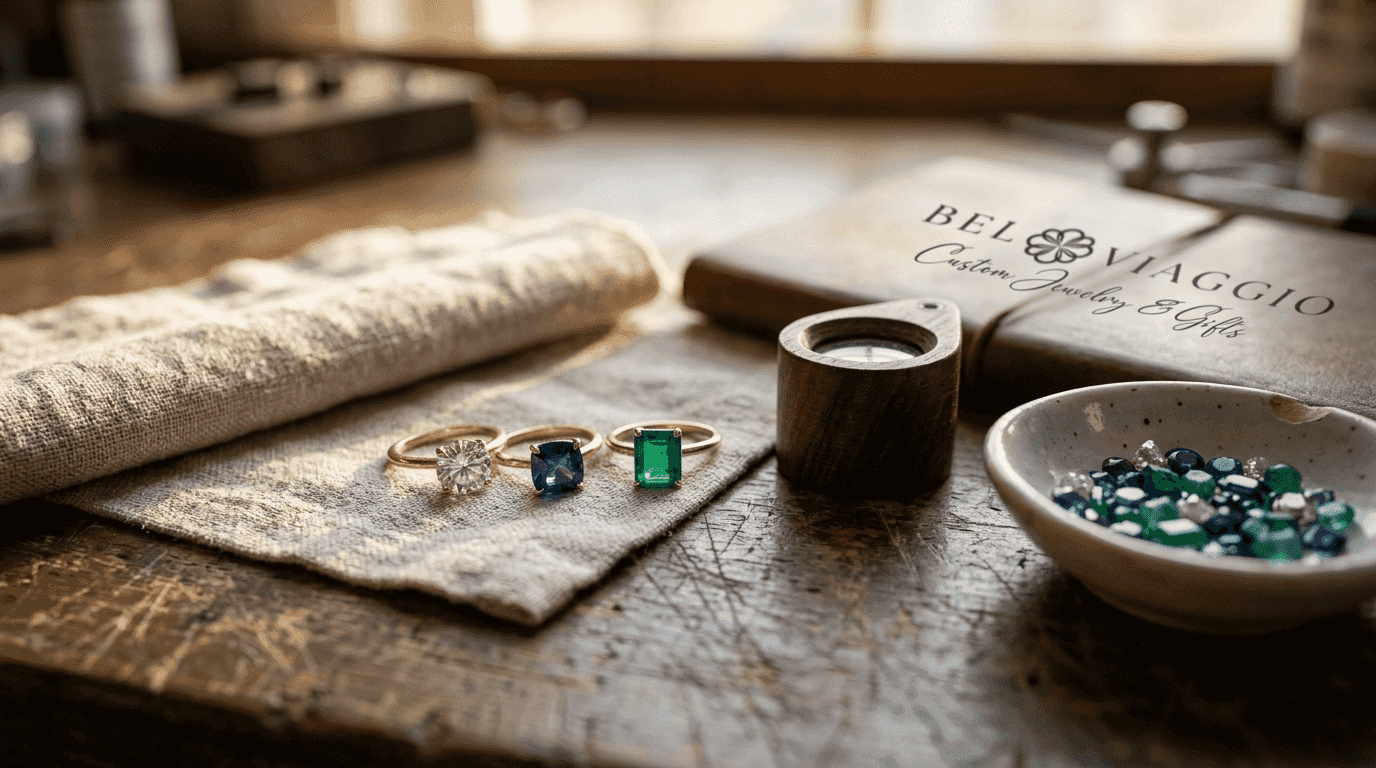
Lab-created sapphires and emeralds offer identical chemical composition and physical properties to their natural counterparts, but with dramatically lower environmental impact and guaranteed traceability. These stones provide rich color options, from deep blue sapphires to vivid green emeralds, allowing personalized expression that colorless diamonds cannot match. The controlled laboratory creation ensures consistent quality and eliminates the mining concerns associated with natural colored gemstones.
These sustainable alternatives come with full lab certification, providing the same authentication and quality assurance as lab-grown diamonds. You receive detailed documentation of origin, treatment history, and specifications. The transparency extends throughout the supply chain, from creation to your jeweler’s showcase.
| Gemstone | Mohs Hardness | Price Range (per carat) | Environmental Impact | Best For |
|---|---|---|---|---|
| Moissanite | 9.25 | $400-$600 | Minimal (lab-created) | Maximum brilliance, budget-conscious |
| Lab Sapphire | 9.0 | $500-$1,200 | Very low (lab-created) | Color preference, durability |
| Lab Emerald | 7.5-8.0 | $300-$800 | Very low (lab-created) | Unique color, vintage aesthetic |
| Lab Diamond | 10.0 | $800-$1,500 | Low (lab-created) | Traditional look, maximum hardness |
The affordability of these alternatives opens creative design possibilities. You might choose a larger moissanite center stone surrounded by lab-grown diamond accents, or select a vibrant lab sapphire as a colorful twist on tradition. The cost savings allow investment in intricate metalwork, hand engraving, or other custom details that make your ring truly one of a kind.
Explore custom rings and handcrafted gifts featuring these ethical alternatives, or browse the gemstone rings collection showcasing the stunning variety of sustainable options available for your engagement ring.
Natural diamonds: prestige and resale value with ethical considerations
Natural diamonds maintain cultural cachet and financial advantages that some couples still prioritize. These stones retain 20-60% resale value compared to 10-40% for lab-grown diamonds, offering better long-term investment potential if resale matters to you. The rarity factor and billions of years of geological formation create a romantic narrative and traditional prestige that resonates with many buyers.
However, ethical complexities demand careful consideration. Despite certification schemes, natural diamond mining carries significant risks including conflict financing, labor exploitation, and severe environmental degradation. The Kimberley Process certifies conflict-free status but provides limited oversight of labor conditions and environmental practices. Only 11% of natural diamonds offer full supply chain traceability, leaving substantial uncertainty about true origins and impacts.
Mining does provide employment in regions with few alternatives, creating economic benefits for local communities. Yet these jobs often come with considerable environmental and labor concerns including unsafe working conditions, inadequate wages, and lasting ecological damage. The trade-offs require honest evaluation of your priorities.
“Choosing a natural diamond means accepting some ethical ambiguity even with certification. Buyers must weigh traditional prestige and resale value against the superior transparency and lower impact of lab-grown alternatives. There’s no perfect answer, only the choice that aligns with your personal values.”
If you decide natural diamonds fit your values, insist on comprehensive certification from reputable jewelers. Request Kimberley Process documentation, RJC membership verification, and any available supply chain information. Transparency separates responsible dealers from those hiding questionable sourcing. Understanding the truth about lab grown diamonds helps contextualize the ethical differences and make an informed comparison.
The prestige versus sustainability tension defines the natural diamond decision. Some couples find the geological rarity and traditional symbolism worth the ethical compromises. Others prioritize environmental responsibility and supply chain transparency above resale value. Neither choice is wrong, but understanding the full picture ensures your decision reflects your authentic values.
Comparing top gemstone choices for ethical engagement rings
With individual gemstone profiles established, a direct comparison clarifies which option best matches your specific priorities. The following table synthesizes key decision factors across sustainability metrics, durability, cost, and practical considerations.
| Criteria | Lab-Grown Diamond | Moissanite | Lab Sapphire/Emerald | Natural Diamond |
|---|---|---|---|---|
| Carbon footprint | Very low (20-50 kg/carat) | Minimal | Very low | High (160 kg/carat) |
| Cost per carat | $800-$1,500 | $400-$600 | $300-$1,200 | $4,000+ |
| Mohs hardness | 10 | 9.25 | 7.5-9.0 | 10 |
| Resale value | 10-40% | 5-20% | 5-15% | 20-60% |
| Traceability | 100% certified | 100% certified | 100% certified | 11% fully traceable |
| Market share 2026 | 55% | 15% | 8% | 22% |
The trade-offs become clear when examining specific scenarios. Lab-grown diamonds dominate the 2026 engagement ring market with 55% share because they balance traditional diamond aesthetics with superior ethics and affordability. Moissanite appeals to couples maximizing brilliance and budget, accepting slightly lower hardness for exceptional fire. Lab-created colored stones suit those wanting unique personalization through sapphire blues or emerald greens while maintaining ethical standards.
Natural diamonds serve couples prioritizing resale value, traditional prestige, or family expectations despite higher costs and ethical concerns. The key lies in honest self-assessment of what matters most to you as a couple.
Best use cases for each gemstone:
- Choose lab-grown diamonds for traditional diamond look with maximum sustainability and cost savings
- Select moissanite for exceptional brilliance, near-diamond durability, and the lowest price point
- Pick lab sapphires or emeralds for vibrant color, unique personalization, and ethical sourcing
- Consider natural diamonds only with comprehensive certification if resale value and traditional prestige outweigh ethical concerns
Pro Tip: Many couples create distinctive designs by combining different ethical gemstones, such as a lab sapphire center stone with lab grown diamond accents, or moissanite paired with colored lab gemstones for symbolic meaning. Explore diamond alternatives to discover creative combinations that tell your unique love story while honoring your sustainability values.
Explore custom, ethically crafted rings at Bel Viaggio Designs
Now that you understand the ethical gemstone landscape, the next step is finding a jeweler who shares your values and can bring your vision to life. Bel Viaggio Designs specializes in handcrafted, custom rings that prioritize ethical sourcing and sustainability without compromising on beauty or quality.

Every piece reflects a commitment to responsible practices, from lab-grown diamonds and moissanite to ethically sourced metals and transparent supply chains. The design process centers on your unique story, creating rings that capture your personal style and values. Whether you envision a classic solitaire with a lab-grown diamond or a colorful design featuring lab-created sapphires, expert craftspeople transform your ideas into wearable art.
Browse the gemstone rings collection to see the stunning variety of ethical options available, and learn how to maintain your investment’s lasting beauty through proper fine jewelry care. Your engagement ring should reflect both your love and your values, and choosing ethically sourced gemstones ensures it does exactly that.
Frequently asked questions
What are the top ethically sourced gemstones for engagement rings?
Lab-grown diamonds lead ethical engagement ring choices with 55% market share in 2026, offering identical beauty to natural diamonds with 80-97% lower emissions. Moissanite provides exceptional brilliance at budget-friendly prices with a 9.25 Mohs hardness rating. Lab-created sapphires and emeralds deliver vibrant color options with full traceability and minimal environmental impact, making all three excellent sustainable alternatives to mined stones.
How do I verify that a gemstone is ethically sourced?
Request certification from recognized organizations including the Kimberley Process for conflict-free status, Responsible Jewellery Council membership for ethical business practices, and Fairmined or Fairtrade labels for responsible metal sourcing. Lab-grown stones should include IGI or GIA certification confirming authenticity. Ask jewelers for detailed supply chain documentation and verify transparency claims through independent reviews, as recommended in this ethical gemstone selection guide.
Are lab-grown diamonds as durable as natural diamonds?
Yes, lab-grown diamonds possess identical physical, chemical, and optical properties to natural diamonds, including a perfect 10 rating on the Mohs hardness scale. They withstand daily wear for decades without scratching or dulling, making them equally suitable for engagement rings worn every day. The only difference lies in origin, not performance or longevity, as detailed in resources about lab grown diamond durability.
What budget-friendly ethical gemstone alternatives exist besides diamonds?
Moissanite offers outstanding brilliance exceeding diamonds at $400-$600 per carat with sustainable lab creation and 9.25 Mohs hardness. Lab-grown sapphires provide rich blue hues at $500-$1,200 per carat with identical properties to natural sapphires but superior traceability. Lab-created emeralds deliver vibrant green color at $300-$800 per carat with minimal environmental impact, all available through budget-friendly gemstone alternatives that don’t compromise ethics or beauty.
Recommended
- Ethical gemstone selection guide for engagement rings 2026 – Bel Viaggio Designs, LLC
- Custom jewelry ideas for ethical engagement rings 2026 – Bel Viaggio Designs, LLC
- Helpful Tips To Buying Conflict-Free Engagement Rings – Bel Viaggio Designs, LLC
- Gemstone Rings, Diamond Alternatives | Bel Viaggio Designs – Bel Viaggio Designs, LLC
- How to Select Engagement Opals for Unique Rings - Australian Opal Direct