

TL;DR:
- Genuine jewelry sales often stem from overstock, seasonal trends, or new collections, not flaws.
- Ethically sourced options include Kimberley-certified diamonds, Fairmined metals, and lab-grown stones.
- Focus on value, authenticity, and matching your standards rather than just seeking the lowest price.
Not every sale tag signals a smart deal, and nowhere is that more true than in the world of engagement and wedding jewelry. Couples searching for ethical, one-of-a-kind pieces face a layered challenge: the jewelry market blends genuine clearance opportunities with misleading discounts, mass-produced designs with handcrafted originals, and ethically sourced stones with ones that carry a murkier history. This guide walks you through exactly what to look for, what questions to ask, and how to confidently shop for on-sale engagement and wedding jewelry that reflects both your values and your love story.
Table of Contents
- What on-sale jewelry really means
- How to identify ethical and unique options on sale
- Comparing engagement and wedding jewelry on sale: What to look for
- Making your on-sale purchase count: Practical tips for couples
- Rethinking on-sale jewelry: The value goes beyond price tags
- Explore unique, ethical on-sale options with Bel Viaggio Designs
- Frequently asked questions
Key Takeaways
| Point | Details |
|---|---|
| Not all sales are equal | Genuine deals are different from schemes—know how to spot the difference. |
| Ethics matter | Look for certification and credible lab-grown or fairmined sourcing to ensure your piece aligns with your values. |
| Unique choices exist | With research, you can find distinctive and meaningful jewelry—often at a discount during holiday sales. |
| Ask the right questions | Always request documentation and clarify policies before you buy on-sale jewelry. |
| Value goes beyond price | The best pieces combine personal significance, ethical sourcing, and a price you feel good about. |
What on-sale jewelry really means
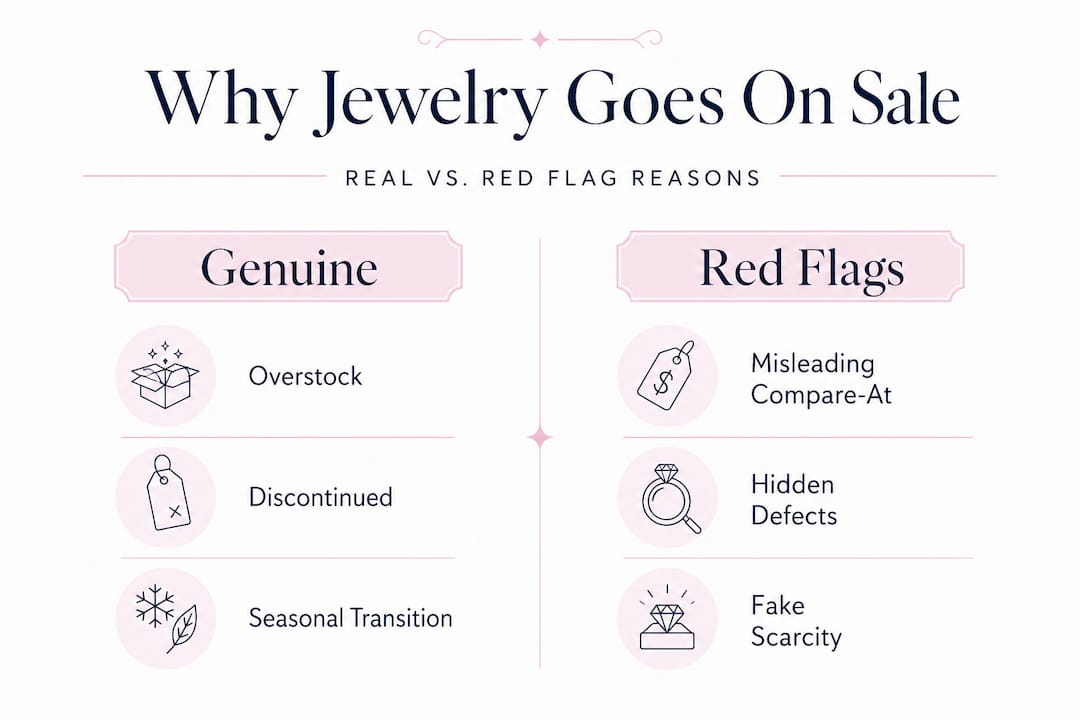
Understanding why jewelry goes on sale is the first step to separating real opportunities from traps. Jewelers reduce prices for several legitimate reasons, and knowing those reasons gives you the upper hand before you even start browsing.
The most common driver is overstock. A jeweler orders more inventory than they can sell in a season, and reducing the price moves product without requiring a total loss. Similarly, shifting design trends push older styles off the shelves. When a new collection launches, the previous season’s rings and bands often drop in price significantly, even if they are beautiful and well-made. This is actually one of the best times to find high-quality pieces at a lower cost, because the craftsmanship has not changed, only the style timing.
Independent jewelers operate on tighter margins than large retail chains, which means their sales tend to be more meaningful. When a small studio marks something down, it is usually because they need to move inventory, not because the piece has a hidden flaw. That said, smart shopping tips always apply regardless of where you shop.
The scale of jewelry sales is worth understanding. Holiday jewelry sales showed mixed results in late 2025, with Birks recording a 12% increase in November and December, U.S. sales rising 20% in the early holiday period, while many independents reported soft foot traffic offset by higher average ticket prices. That data tells a clear story: buyers are spending more per transaction but shopping more selectively. This means jewelers are stocking up on fewer but better pieces, and the sale items that surface are often genuinely worth considering.
“Not every markdown means something is wrong with a piece. Sometimes a ring is simply ahead of its time or behind a trend, and that is exactly where a discerning buyer finds lasting value.”
- Signs of a genuine sale: Seasonal timing, new collection releases, overstock clearance, and documented original pricing
- Red flags to avoid: Discounts exceeding 70% with no explanation, no clear original price history, pressure to “buy now before it’s gone,” and vague sourcing claims
Pro Tip: Search for a jeweler’s pricing history using tools like the Wayback Machine or by asking directly for the original invoice price. A reputable retailer will not hesitate to share this.
How to identify ethical and unique options on sale
Once you know what a genuine sale looks like, the next question is whether the piece meets your ethical standards. This is where many couples get overwhelmed, because the certifications and terminology can feel like a foreign language.
The Kimberley Process is the most widely recognized certification for natural diamonds, designed to prevent the sale of conflict diamonds. However, it has real limitations. Critics note it does not account for labor conditions or environmental impact, only whether a stone funded armed conflict. The Fairmined certification goes further, covering artisanal mining operations that meet rigorous environmental and social standards.
Lab-grown diamonds take a different approach entirely. They are created in controlled environments using significantly less land disruption, and they carry a much lighter environmental footprint than most mined stones. Lab-grown diamonds account for a growing share of the market, with 61% of lab-grown sales representing a notable shift in consumer preference toward lower-impact options. For couples prioritizing ethics alongside affordability, lab-grown is often the most straightforward path.
Here is a side-by-side comparison to help you think through your options clearly:
| Feature | Natural ethical (Kimberley/Fairmined) | Lab-grown | Conventional (uncertified) |
|---|---|---|---|
| Ethical assurance | High, with certification | High, by nature of production | Low to unknown |
| Uniqueness | Very high | Moderate to high | Low to moderate |
| Environmental impact | Moderate (mining involved) | Low | High |
| Typical sale discount range | 10 to 30% | 20 to 50% | 30 to 70%+ |
| Traceability | Full chain of custody | Production facility traceable | Often untraceable |
Before buying, ask any retailer these questions directly:
- What certification does this stone carry, and can I see the documentation?
- Where was the metal sourced, and is it recycled or responsibly mined?
- Is the discount based on a verified original retail price?
- What is your return policy, and does the sale affect it?
- Can I see independent gemological grading reports?
For a deeper foundation on responsible buying, our ethical sourcing guide covers every layer of what traceability actually means in practice.
Pro Tip: For any ethical claim, ask for written documentation before purchasing. A reputable jeweler will provide GIA or IGI grading reports, Kimberley Process certificates, or Fairmined paperwork without hesitation. If they stall or redirect, walk away.
Comparing engagement and wedding jewelry on sale: What to look for
Not all on-sale jewelry categories carry the same risk or reward. Engagement rings, wedding bands, and keepsake pieces each come with their own purchasing considerations, especially when a discount is involved.
| Type | Uniqueness | Price flexibility | Return policy risk |
|---|---|---|---|
| Custom designed | Very high | Moderate | High (often final sale) |
| Ready-made / in-stock | Moderate | High | Low to moderate |
| Vintage / estate | Very high | Variable | Moderate to high |
Custom designs are rarely discounted unless a jeweler is clearing a canceled order or a sample piece. When they are, the opportunity is exceptional because you are getting a one-of-a-kind piece at a lower price. However, custom pieces often come with final-sale terms, so sizing and personal fit matter enormously upfront.
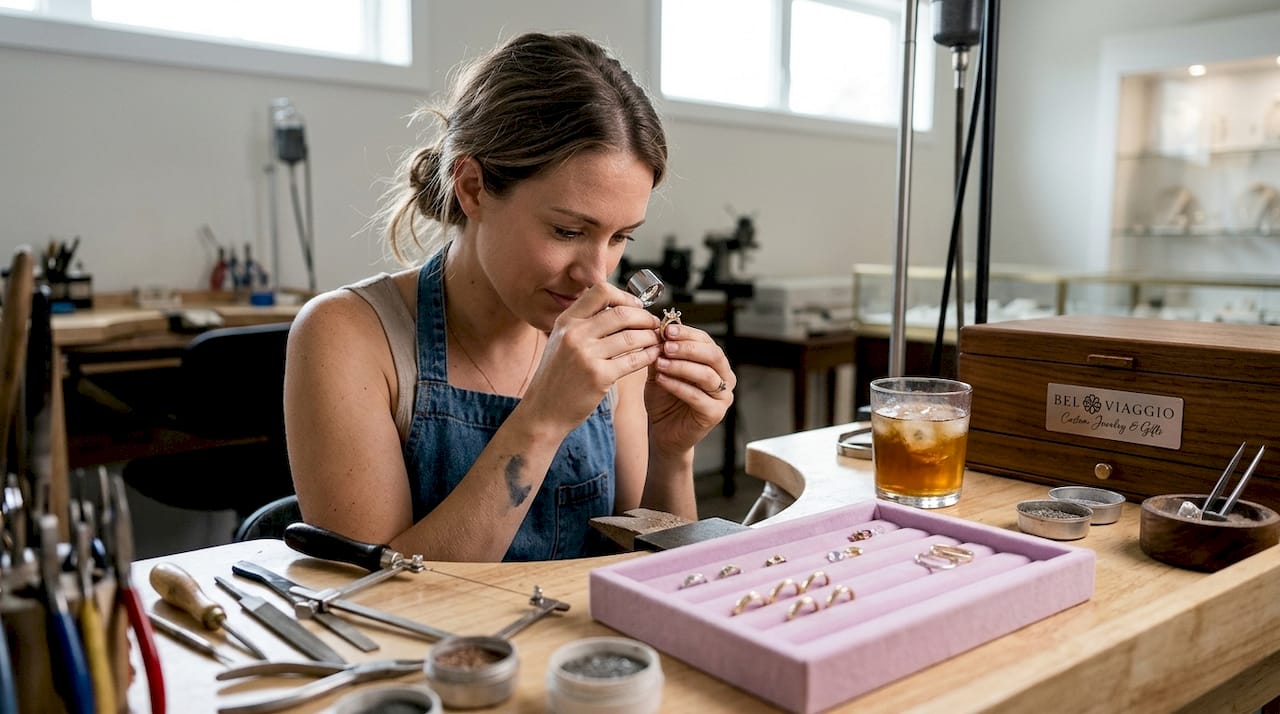
Ready-made rings carry the most predictable return policies and are the easiest to evaluate for value. Vintage and estate jewelry sits somewhere in between: the uniqueness is often unmatched, but authenticity verification and sizing adjustments can add cost that offsets the original discount.
When lab-grown options go on sale, they tend to offer the most room for negotiation because the underlying stone cost is more transparent and production is scalable. This makes them a particularly smart target for buyers working with a defined budget.
Here is a practical numbered checklist for evaluating any on-sale engagement or wedding piece:
- Confirm the original price is documented and verifiable, not just stated by the seller
- Read the return and exchange policy in full before paying anything
- Request the grading report for the center stone, regardless of whether it is mined or lab-grown
- Ask if sizing is included in the sale price or charged separately
- Verify the metal hallmark (925 for sterling silver, 750 for 18k gold, 950 for platinum)
- Research the retailer independently through reviews, social media, and industry associations
- Clarify what warranty or repair coverage applies to a sale-priced piece
One common pitfall with on-sale engagement jewelry is limited sizing availability. A ring might be listed at a fantastic price, but if it is only available in a size 6 and you need a size 4, resizing costs can quietly erode your savings. For affordable on-sale jewelry tips specific to ring sizing, factor in any resizing fees before celebrating that discount.
Making your on-sale purchase count: Practical tips for couples
With a clear comparison framework in hand, the final step is making sure your actual purchase is protected, documented, and genuinely suited to your relationship.
Before you finalize anything, work through these essential questions with your retailer:
- Returns and exchanges: Is this piece eligible for a full return or only store credit? How many days do you have?
- Warranty coverage: Does the sale price affect the warranty on the setting or the stone?
- Sizing: Is alteration included, and if not, what is the cost estimate?
- Authentication: Can you provide a third-party appraisal or grading certificate?
- Custom engraving: If you want personalization, does that affect the return eligibility?
Timing matters more than most buyers realize. Holiday sales data consistently shows that the early holiday season, roughly November through early December, brings strong selection and genuine markdowns. By mid-January, jewelers often clear remaining inventory from the holiday season, creating a second wave of opportunities. Post-Valentine’s Day is another underrated window, especially for ready-made rings that did not sell during the peak gifting period.
Supply and demand shifts also affect lab-grown stone pricing throughout the year. As production capacity grows and technology improves, prices on lab-grown diamonds have trended downward, meaning a piece purchased during a sale event today may genuinely represent a better price than the same piece at full retail six months ago. This is a real advantage for buyers who are flexible on timing.
For wedding jewelry sourcing that involves multiple pieces like a matching band and engagement ring set, ask whether purchasing together at a sale price includes any additional negotiation room. Bundling purchases often creates informal leverage that a single-item buyer would not have.
Pro Tip: Document every step of your purchase. Save email conversations, take screenshots of the listing price and description before you buy, and store digital copies of all certificates. If a dispute arises later, this record protects you completely.
Rethinking on-sale jewelry: The value goes beyond price tags
Here is something we genuinely believe, and it comes from years of working with couples at every budget level: chasing the lowest number is one of the fastest ways to end up with a ring that means very little.
That might sound counterintuitive for a guide about on-sale jewelry, but stay with us. The couples who feel the best about their purchase years later are almost never the ones who found the deepest discount. They are the ones who found a piece that actually reflected who they are, and they happened to find it at a price that worked.
The difference is in the approach. A bargain-first mindset leads you to filter by price, then compromise on everything else. A values-first mindset leads you to filter by what matters, whether that is ethical sourcing, a specific stone, a meaningful design, and then celebrate when a great option is also on sale. That sequence changes everything.
We have seen couples buy a ring on sale and feel genuine excitement because it met every one of their standards. We have also seen couples buy the cheapest available option and feel a quiet disappointment they can never quite name. The ring is fine. The price was great. But it does not feel like them.
Personalized ethical sourcing is not a luxury consideration. It is how you make sure the piece you choose has a story you are proud to tell. When a ring with that kind of intentionality also happens to be on sale, that is the real win.
Explore unique, ethical on-sale options with Bel Viaggio Designs
You have done the work of understanding what to look for. Now it is time to actually see what is available.
At Bel Viaggio Designs, every piece in our collection is handcrafted with traceable sourcing and real transparency. Our on-sale pieces are not afterthoughts or flawed rejects. They are beautifully made rings and jewelry that deserve to find the right home. Browse our unique black diamond ring for a bold, one-of-a-kind statement, or discover the vibrant color story of our emerald and diamond ring. For something soft, luminous, and distinctly personal, our aquamarine engagement ring is a stunning option. Each piece comes with full sourcing transparency and the craftsmanship that makes your jewelry worth keeping forever.
Frequently asked questions
How can I tell if on-sale jewelry is authentic and not a scam?
Look for third-party grading certificates, a clear documented original price, and a transparent return policy. Deep discounts without explanation are one of the clearest warning signs that something is off.
Are lab-grown diamonds a good choice for on-sale engagement rings?
Absolutely. Lab-grown diamonds carry a lower environmental impact, are fully traceable, and are more frequently offered at discounted prices without sacrificing quality or beauty.
What’s the best time of year to find high-quality on-sale jewelry?
The early holiday season and post-Valentine’s Day window tend to yield the best combination of quality and genuine savings. Holiday data shows U.S. jewelry sales rose 20% in the early holiday period, meaning retailers stock more and have more to clear afterward.
Can I still get custom or one-of-a-kind jewelry on sale?
Yes, particularly through independent jewelers who occasionally discount custom sample pieces or canceled orders. These are rare finds, but they represent some of the most exceptional value available in the on-sale jewelry market.
Recommended
- Smart Tips for Shopping On-Sale Jewelry Ethically and Affordably – Bel Viaggio Designs, LLC
- Stunning gemstone jewelry examples for ethical couples – Bel Viaggio Designs, LLC
- Personalized ethical rings: 40% savings, unique designs – Bel Viaggio Designs, LLC
- Minimalistic Jewelry Explained: Modern, Ethical Choices for Couples – Bel Viaggio Designs, LLC