

TL;DR:
- A solitaire setting features a single gemstone held in a minimal metal mount to highlight its brilliance and clarity. It is a timeless and versatile design, with various styles like prong, bezel, and cathedral, suited for different lifestyles and aesthetic preferences. Proper maintenance, including regular prong inspections and cleaning, is essential to preserve the ring’s beauty and security over time.
A solitaire setting is a jewelry design featuring a single gemstone held in a minimal metal mounting, built to maximize the stone’s visibility and brilliance. According to Merriam-Webster, “solitaire” means a single gem set alone, which is exactly what this style delivers. The solitaire ring design strips away everything except the stone and its mount, making the gemstone the undisputed focal point. From the iconic Tiffany® six-prong setting introduced in 1886 to modern bezel and cathedral styles, the solitaire remains the most recognized engagement ring format in the world.
What is a solitaire setting, exactly?
A solitaire setting holds one center stone in a metal frame with no side stones, no surrounding halos, and no competing design elements. The entire ring is built around that single gem. This simplicity is not a limitation. It is a deliberate choice that forces the stone’s cut, color, and clarity to do all the work.
The metal used in solitaire settings typically includes platinum, 14k or 18k white gold, yellow gold, and rose gold. Each metal affects how the stone reads visually. White gold and platinum reflect cool light back into a diamond, amplifying its brightness. Yellow gold warms the stone’s appearance, which works especially well with champagne diamonds or colored gemstones.
The Tiffany® six-prong setting, introduced in 1886, set the industry standard for what a solitaire engagement ring should look like. It elevated the diamond above the band on six slender prongs, allowing light to enter from every angle. That design philosophy still drives most solitaire ring designs made today.
What are the main types of solitaire settings?
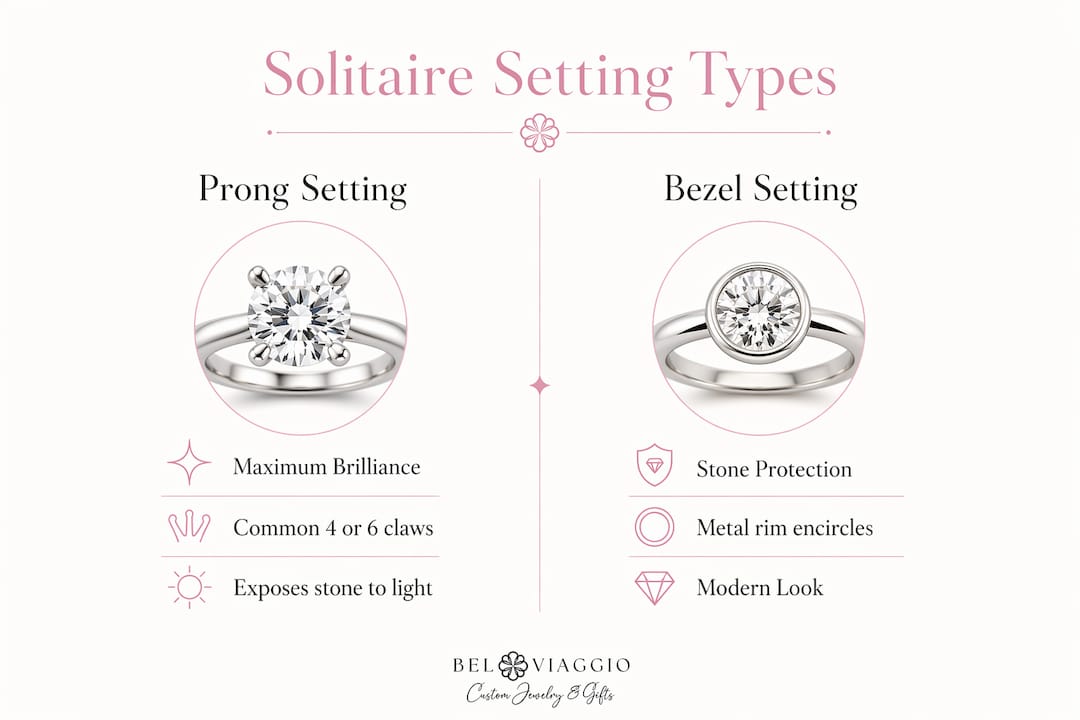
The classic prong setting uses metal claws, typically four or six, to grip the stone at its girdle and lift it above the band. This maximizes light entry from the sides and bottom of the stone, producing the most brilliance of any setting type. Four-prong settings show more of the stone; six-prong settings offer slightly more security.
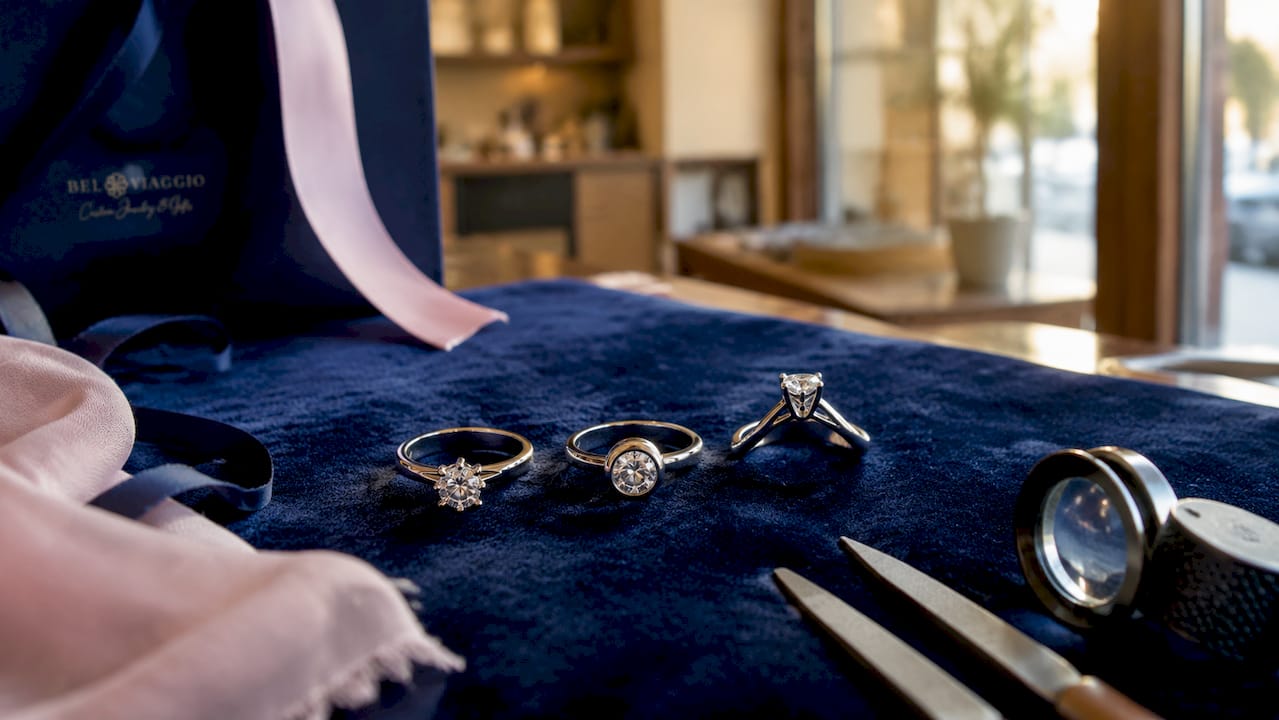
Bezel settings surround the gemstone with a continuous metal rim that wraps around the entire circumference of the stone. This style is more secure than prong settings and gives the ring a clean, modern look. The tradeoff is reduced light entry, which can subtly lower a diamond’s visual sparkle. Bezel settings work especially well for active wearers who need extra stone protection.
Cathedral and tension settings offer additional variations. Cathedral settings arch the metal band upward on both sides to cradle the stone, adding height and visual drama. Tension settings grip the stone between two ends of the band using pressure alone, creating a floating effect. Twisted solitaire designs feature crossover bands, sometimes set with pavé diamonds, while still keeping a single center stone as the focus.
Solitaire setting types at a glance
| Setting Type | Visual Appeal | Durability | Best For |
|---|---|---|---|
| Prong (4 or 6 claw) | Maximum brilliance, classic look | Moderate (prongs can snag) | Traditional styles, round diamonds |
| Bezel | Sleek, modern, minimal | High (stone fully protected) | Active lifestyles, colored gems |
| Cathedral | Elevated, architectural, dramatic | High (solid metal support) | Larger center stones |
| Tension | Floating, contemporary, bold | Moderate (requires precision fit) | Modern aesthetics |
| Twisted/Crossover | Romantic, unique, textured | Moderate to high | Distinctive personal styles |
Pro Tip: If you choose a prong setting, inspect the prong tips every six months. Prongs wear down over time, and a loose prong is the leading cause of lost stones in solitaire rings.
How does a solitaire compare to halo or multi-stone rings?
A solitaire setting focuses entirely on one stone, while a halo style surrounds that stone with a ring of smaller diamonds to increase overall sparkle. The visual difference is significant. A halo ring can make the center stone appear up to 30% larger, but the effect comes from the surrounding stones, not the center gem itself. A solitaire makes no such compromise. What you see is exactly what you have.
Solitaire rings emphasize elegance and simplicity, while multi-stone and halo rings add sparkle through additional stones. That distinction matters when you are choosing between the two styles. A solitaire rewards investment in a high-quality center stone. A halo can allow a slightly smaller or lower-grade center stone while still producing a visually impressive ring.
Solitaire vs. Multi-Stone: Key Differences
- Visual focus: Solitaire puts all attention on one stone; multi-stone spreads it across several
- Maintenance: Solitaire settings have fewer prongs and settings to check; multi-stone rings require more frequent inspection
- Cost: A solitaire’s price is driven almost entirely by the center stone; multi-stone rings add cost through additional gems and metalwork
- Customization: Solitaire settings are easier to customize with different band styles and metal choices
- Timelessness: Solitaire designs rarely go out of style; some multi-stone trends date more quickly
The right choice depends on what you want the ring to say. A solitaire says the stone speaks for itself. A halo or three-stone ring says more is more.
How to choose the perfect solitaire setting
Choosing the right solitaire setting depends on the stone’s shape, size, lifestyle factors, and aesthetic preferences. There is no universal answer, but there is a clear process for narrowing it down.
Follow these steps to find the right match:
-
Start with your stone shape. Round brilliant cuts work with every setting type. Oval, pear, and marquise shapes benefit from prong settings that protect their pointed ends. Emerald and cushion cuts look striking in bezel or cathedral settings.
-
Consider your lifestyle. Active wearers, people who work with their hands, or anyone who exercises frequently should prioritize bezel or cathedral settings. Prong settings catch on fabric and can bend with repeated impact.
-
Choose your metal. White gold and platinum complement colorless diamonds. Yellow gold pairs well with warmer-toned stones like morganite, citrine, and champagne sapphires. Rose gold works across nearly every gemstone color.
-
Think about band width. A narrow band makes the center stone look larger. A wider band creates a more balanced, substantial look. Match band width to your finger size for the most flattering proportion.
-
Decide on prong count. Four prongs expose more of the stone and create a cleaner look. Six prongs add security and give the ring a more traditional feel. For stones over 1.5 carats, six prongs are the safer choice.
-
Explore customization. A custom solitaire lets you control every detail, from the prong shape to the band finish to any engraving on the interior. Belviaggiodesigns specializes in exactly this kind of bespoke design work.
Pro Tip: Ask your jeweler to show you the same center stone in both a four-prong and six-prong setting before you decide. The difference in appearance is more dramatic than most buyers expect.
How do you care for a solitaire setting ring?
Routine maintenance includes checking prongs for wear and cleaning with appropriate methods to preserve both the stone and the metal. A well-maintained solitaire ring can last generations without losing its brilliance or structural integrity.
Follow these care practices to protect your ring:
- Clean regularly. Soak the ring in warm water with a few drops of mild dish soap for 20–30 minutes, then gently scrub with a soft toothbrush. Rinse thoroughly and dry with a lint-free cloth. Do this every two to four weeks.
- Inspect prongs every six months. Prong tips flatten and wear down with daily use. A jeweler can re-tip prongs for a small fee, which is far less costly than replacing a lost stone.
- Avoid harsh chemicals. Chlorine in pools and bleach in cleaning products degrade metal alloys over time. Remove your ring before swimming, cleaning, or applying lotion.
- Store it separately. Diamonds scratch other gemstones and even other metals. Store your solitaire ring in its own pouch or compartment.
- Get it insured. A solitaire ring’s value is concentrated in one stone. Jewelry insurance through providers like Jewelers Mutual or a homeowner’s policy rider protects against loss, theft, and accidental damage.
The most common mistake solitaire ring owners make is skipping the six-month prong inspection. Prong failure is gradual and invisible until a stone shifts or falls out entirely. Regular professional checks prevent that outcome.
Key takeaways
A solitaire setting is the most direct way to showcase a single gemstone, and choosing the right type comes down to stone shape, lifestyle, and personal style.
| Point | Details |
|---|---|
| Core definition | A solitaire setting holds one center stone with no side stones, maximizing the gem’s visibility. |
| Setting variety | Prong, bezel, cathedral, tension, and twisted styles each offer different looks and durability levels. |
| Solitaire vs. halo | Solitaires highlight one stone; halos add surrounding diamonds to increase perceived size and sparkle. |
| Selection factors | Match setting type to stone shape, lifestyle, metal preference, and desired prong count. |
| Maintenance priority | Inspect prongs every six months and clean every two to four weeks to preserve brilliance and security. |
Why i think the solitaire setting is still the smartest choice
After years of working with engagement ring shoppers, I keep coming back to the same observation: people who choose solitaire settings almost never regret it. People who choose trendy multi-stone styles sometimes do.
The solitaire is not the “safe” choice in a boring sense. It is the choice that ages best. A halo ring from 2010 looks like a ring from 2010. A well-cut solitaire from 1990 looks exactly as good today. That staying power matters when you are buying something meant to be worn every day for decades.
What surprises most buyers is how much personality a solitaire can carry. The band profile, the prong style, the metal color, the stone shape, and any custom engraving all contribute to a ring that feels completely personal. Solitaire rings are prized for their simple yet striking appearance, adaptable to different fashion tastes and budgets. That adaptability is not a compromise. It is the whole point.
My honest advice: invest in the best center stone you can afford, choose a setting that fits your lifestyle, and do not overthink the rest. The solitaire will do the work.
— Stacy
Find your solitaire ring at Belviaggiodesigns
Belviaggiodesigns crafts handmade solitaire and custom engagement rings using ethically sourced gemstones and conflict-free diamonds. Every ring is built to your specifications, from stone shape and setting type to metal color and band finish.

Whether you are drawn to a classic black diamond halo ring or prefer a colorful gemstone solitaire collection featuring aquamarine, emerald, or morganite, Belviaggiodesigns offers designs that stand apart from mass-produced options. You can also explore the full range of ring settings and styles to compare solitaire options side by side before committing. Custom orders are welcome, and the team works directly with you to bring your vision to life.
FAQ
What does “solitaire” mean in jewelry?
Solitaire means a single gem set alone, with no additional stones in the setting. The term applies to any ring style built around one center gemstone.
Which solitaire setting is the most popular?
The four-prong and six-prong settings are the most common solitaire styles. The Tiffany® six-prong design, introduced in 1886, remains the most recognized version in the engagement ring market.
Is a bezel setting better than a prong setting?
Bezel settings offer more stone protection and a modern look, but they reduce light entry compared to prong settings. Prong settings maximize brilliance; bezel settings prioritize security and a sleek profile.
How often should i have my solitaire ring inspected?
A professional prong inspection every six months is the standard recommendation. Worn prongs are the leading cause of stone loss in solitaire rings, and re-tipping costs far less than replacing a lost gemstone.
Can i customize a solitaire setting ring?
Yes. Solitaire settings are among the most customizable ring styles available. You can adjust prong count, band width, metal type, stone shape, and interior engraving to create a ring that reflects your personal style.
Recommended
- Design a Ring Online Free: Your Complete 2026 Guide – Bel Viaggio Designs, LLC
- What Is Pavé Setting? Your 2026 Jewelry Guide – Bel Viaggio Designs, LLC
- Engagement Ring Finding the Perfect One - Bel Viaggio – Bel Viaggio Designs, LLC
- Engagement Ring Finding the Perfect One - Bel Viaggio – Bel Viaggio Designs, LLC