

TL;DR:
- A pavé setting involves tiny gemstones set closely together with minimal metal, creating continuous sparkle. It maximizes brilliance and makes the center stone appear larger through various placements like halos and shoulders. Durability depends on band width, metal choice, and maintenance, with platinum being the strongest option for long-term wear.
A pavé setting is a jewelry technique where small gemstones are set tightly together across a metal surface, with each stone secured by tiny metal beads or prongs, creating an unbroken surface of continuous sparkle. The word “pavé” comes from the French word for “paved,” which describes exactly what you see: a road of diamonds covering the band. This technique is the industry’s standard term for what buyers often search as “pave setting,” and both refer to the same design approach. Vogue describes the effect as adding light without excess, making it one of the most refined ways to maximize brilliance on an engagement or wedding ring.
What is pavé setting and how does it work?
A pavé setting works by setting small stones close together with minimal visible metal between them, so the eye reads the entire band surface as one continuous shimmer. Each stone sits in a small seat drilled into the metal, then tiny beads or prongs of metal are raised around it to hold it in place. The result is a surface where diamonds dominate and metal nearly disappears.
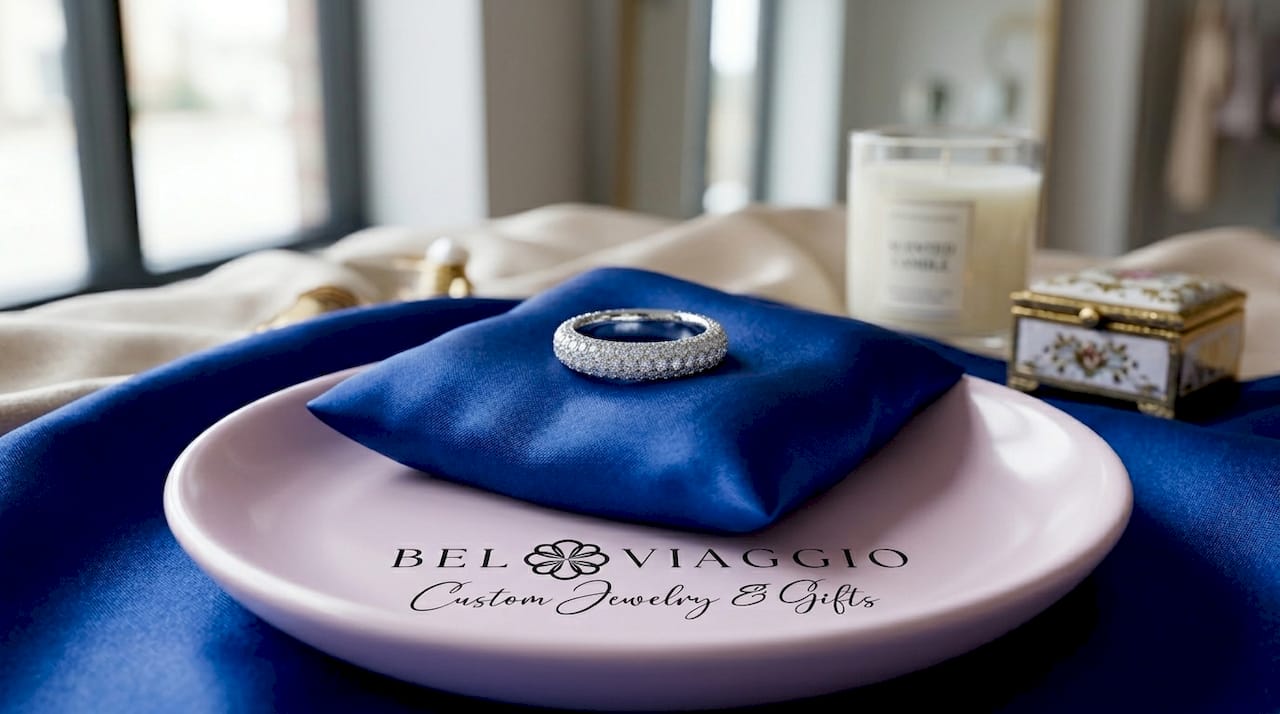
The optical effect is significant. By packing multiple small stones across the band, a pavé design multiplies the number of light-catching facets on the ring. A single center stone reflects light from one point. A pavé band reflects light from dozens of points simultaneously, which is why pavé rings appear to glow from every angle.
Common placements include pavé shoulders (the sides of the shank leading to the center stone), pavé halos (a ring of stones encircling the center stone), and full pavé bands on wedding rings. Each placement serves a different visual purpose. Shoulders draw the eye toward the center stone. Halos make the center stone appear larger. Full bands create a uniform sparkle from every viewing angle.
Pro Tip: If you want your center stone to look larger without buying a bigger diamond, a pavé halo is the most cost-effective way to achieve that visual effect.
- Pavé shoulders add sparkle along the shank without competing with the center stone
- Pavé halos frame the center stone and increase its perceived size
- Full pavé bands create a continuous diamond surface ideal for wedding rings
- Half pavé bands add sparkle on the visible top portion while keeping the underside smooth for comfort
What are the types of pavé settings?
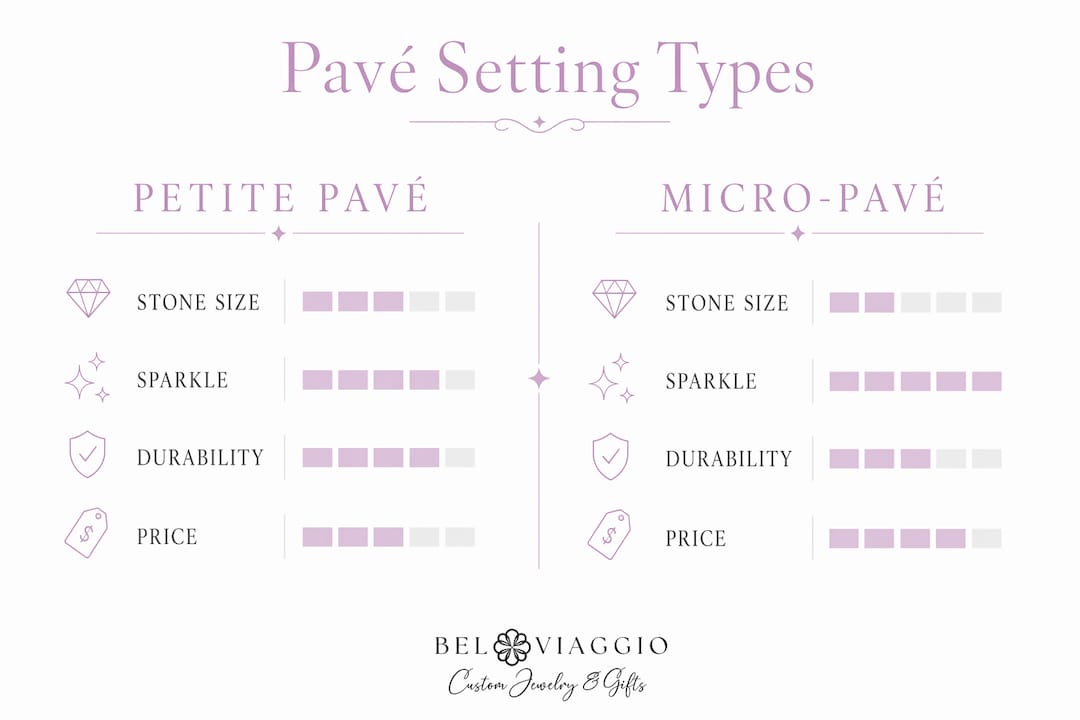
Not all pavé settings are the same. The two most common variations are petite pavé and micro-pavé, and the distinction matters for both appearance and budget.
Petite pavé uses small diamonds, typically 1.3mm to 1.7mm in diameter, set with small prongs. The stones are visible and create a classic, textured sparkle. This style is more forgiving to produce and generally more affordable.
Micro-pavé uses even smaller stones, often under 1.3mm, set under magnification with precision tools. The stones sit so close together that the metal between them is nearly invisible to the naked eye. Micro-pavé requires more skill and labor, and luxury mountings can exceed $2,200 due to the specialized craftsmanship involved. The payoff is a surface that looks almost entirely made of diamonds.
| Pavé type | Sparkle level | Durability | Price range |
|---|---|---|---|
| Petite pavé | High | Moderate to high | $820 to $1,800 |
| Micro-pavé | Very high | Moderate | $1,500 to $3,500+ |
| Full pavé band | Maximum | Lower (more metal removed) | $1,200 to $3,500 |
| Half pavé band | High | Higher (metal intact underneath) | $820 to $2,500 |
Full pavé bands cover the entire circumference of the ring with stones. They deliver maximum sparkle but require more metal removal, which affects structural integrity. Half pavé bands only cover the top half of the shank, preserving more metal on the underside and making the ring more comfortable and durable for daily wear.
Pro Tip: For active lifestyles or hands-on jobs, a half pavé band in platinum gives you the sparkle of a full pavé design with significantly better long-term durability.
You can also explore how pavé compares to other setting styles in this ring settings overview to understand where it fits within the broader world of fine jewelry design.
What are the benefits and drawbacks of pavé settings?
The core appeal of a pavé setting is that it adds dimension and sparkle while remaining cost-effective compared to simply buying a larger center stone. Buyers get more visible diamond surface for their budget, and the refined texture of a pavé band complements virtually every center stone shape.
Benefits of pavé settings:
- Maximized sparkle from multiple light-catching stones across the band
- Makes the center stone appear larger, especially in halo configurations
- Adds texture and visual interest without adding bulk to the ring profile
- More affordable way to increase total diamond surface area compared to upsizing the center stone
- Works beautifully with lab-grown diamonds, as Vogue notes in its coverage of considered ring design
Drawbacks to consider:
- Pavé settings remove metal to seat each stone, which weakens the band structurally if the band is too thin. A minimum band width of 1.8mm is the standard recommendation for durability.
- Small stones can loosen over time, especially with daily wear and impact. Annual professional inspections are advisable.
- Resizing is more complex than with plain bands. A full eternity pavé band is particularly risky to resize because bending the ring distorts the stone seats and can cause stones to pop out.
- The labor-intensive setting process adds to the overall cost, particularly for micro-pavé designs.
The fragility concern is real but manageable. Choosing a wider band, a harder metal like platinum, and a reputable jeweler who sets stones with proper depth all reduce the risk of stone loss significantly.
How to choose the right pavé setting for your ring
Choosing the right pavé setting comes down to four factors: lifestyle, band width, metal type, and the style of your center stone. Work through these in order and the decision becomes straightforward.
-
Assess your lifestyle first. If you work with your hands, exercise frequently, or prefer low-maintenance jewelry, a half pavé band in platinum is the most practical choice. If you wear your ring primarily for special occasions or have a desk-based lifestyle, a full micro-pavé band is a realistic option.
-
Choose band width carefully. Bands under 1.8mm are at higher risk of structural damage over time. For pavé designs, 2mm to 3mm is the sweet spot. It provides enough metal to hold stones securely while keeping the ring proportional.
-
Select your metal type. Platinum is the strongest and most recommended metal for pavé settings because it holds prongs and beads more securely than gold. White gold is a close second. Yellow and rose gold are softer and may require more frequent prong checks.
-
Match the pavé style to your center stone. Round brilliant and oval center stones pair naturally with pavé halos and shoulders. Emerald and cushion cuts look striking with clean pavé bands that frame the geometric shape. For 2025 and 2026, engagement ring trends show strong demand for pavé halos around colored gemstones like morganite and aquamarine.
-
Set a realistic budget. A pavé mounting alone costs roughly $820 to $3,500 in 2026, before the center stone. Factor this into your total ring budget from the start.
How to care for pavé-set jewelry
Pavé settings require more attentive care than plain bands because the small stones and tiny prongs are vulnerable to impact, buildup, and improper cleaning. The good news is that a consistent routine keeps them looking pristine.
Daily wear do’s and don’ts:
- Remove pavé rings before swimming, gardening, or any activity involving impact or chemicals
- Avoid applying lotions, perfumes, or cleaning products while wearing the ring, as residue builds up between stones and dulls sparkle
- Store pavé rings in a soft-lined box or pouch, separate from other jewelry that could scratch the stones or bend prongs
- Check for loose stones monthly by gently tapping the ring near your ear. A rattling sound means a stone needs to be re-secured immediately
For cleaning at home, a soft toothbrush with warm water and a drop of mild dish soap is the safest method. Ultrasonic cleaners can dislodge stones in pavé settings and are best left to professionals. You can find detailed guidance in Belviaggiodesigns’ fine jewelry care guide and their ring cleaning tips for keeping pavé sparkle intact long term.
Professional inspections once a year are not optional for pavé rings. A jeweler can re-tip worn prongs, re-seat loose stones, and polish the metal before small issues become costly repairs.
Key takeaways
A pavé setting delivers maximum sparkle per dollar by multiplying light-catching stones across the band, but durability depends entirely on band width, metal choice, and consistent maintenance.
| Point | Details |
|---|---|
| Core definition | Pavé sets small stones with metal beads, minimizing visible metal for continuous sparkle. |
| Best metal choice | Platinum holds pavé prongs more securely than gold and is the top recommendation for durability. |
| Band width minimum | Choose a band of at least 1.8mm to prevent structural weakness from stone-seat drilling. |
| Resizing risk | Full eternity pavé bands are risky to resize; half pavé designs offer better long-term flexibility. |
| Cost range in 2026 | Pavé mountings range from $820 to $3,500 depending on style, stone size, and labor complexity. |
Why pavé still earns its place on the most meaningful rings
I have spent years looking at fine jewelry, and the pavé setting is the one technique that consistently punches above its weight. A plain solitaire is beautiful, but a solitaire with a pavé halo or pavé shoulders reads as a completely different category of ring. The sparkle is not louder. It is more dimensional.
What I find most underappreciated is the proportion argument. Pavé is not about adding more stones for the sake of it. The best pavé designs use stone size and placement to direct the eye, not overwhelm it. A micro-pavé halo on a 1.5-carat oval center stone does not compete with the center stone. It frames it, the way a good mat frames a photograph.
The fragility concern is legitimate but often overstated. I have seen pavé rings worn daily for a decade without a single lost stone, and I have seen rings fail in six months. The difference is almost always band width and metal choice, not the pavé technique itself. If a jeweler recommends a 1.5mm platinum band for a full pavé design, find a different jeweler.
For first-time buyers, my honest recommendation is to start with a half pavé band or pavé shoulders rather than a full eternity pavé ring. You get the visual impact with significantly less maintenance anxiety. If you fall in love with the look and want more coverage, you can always add a matching pavé wedding band later.
— Stacy
Find your perfect pavé ring at Belviaggiodesigns
Belviaggiodesigns handcrafts pavé-set engagement rings and wedding bands using ethically sourced diamonds, lab-grown stones, and premium metals including platinum and 14k gold. Every ring is made to order, which means you can specify band width, metal type, and stone placement to match your lifestyle and aesthetic exactly.

Whether you are drawn to a bold pavé halo engagement ring or a delicate pavé shoulder design, Belviaggiodesigns offers custom options at transparent pricing. Browse the collection to see how pavé settings transform both classic and colored-stone rings into something genuinely extraordinary. Custom design consultations are available for buyers who want a ring built entirely around their vision.
FAQ
What is the difference between pavé and micro-pavé?
Petite pavé uses stones around 1.3mm to 1.7mm set with small visible prongs, while micro-pavé uses stones under 1.3mm set under magnification for an almost all-diamond surface. Micro-pavé costs more due to the skilled labor required.
Is a pavé setting durable enough for everyday wear?
A pavé setting on a band of at least 1.8mm in platinum or white gold is durable for daily wear, but it requires annual professional inspections to check for loose stones and worn prongs.
Can a pavé ring be resized?
Half pavé rings can be resized with care, but full eternity pavé bands are highly risky to resize because the process can distort stone seats and cause stones to fall out.
How much does a pavé setting cost in 2026?
A pavé engagement ring mounting costs roughly $820 to $3,500 in 2026, depending on the design, metal, and whether it uses petite or micro-pavé stones. This price does not include the center stone.
What metal is best for a pavé setting?
Platinum is the best metal for pavé settings because it is harder than gold and holds the tiny beads and prongs more securely over time, reducing the risk of stone loss with regular wear.
Recommended
- Payment plan jewelry: steps, pitfalls, and smart choices – Bel Viaggio Designs, LLC
- Modern Engagement Ring Elements That Define 2026 – Bel Viaggio Designs, LLC
- Custom Jewelry Guide: Meaning, Magic & Your Perfect Ring – Bel Viaggio Designs, LLC
- What is diamond clarity? A 2026 guide to quality – Bel Viaggio Designs, LLC