

Choosing an engagement ring can feel overwhelming, especially when you encounter technical terms like diamond clarity. Many buyers assume clarity directly determines how much a diamond sparkles, or that only flawless stones look beautiful. The truth is more nuanced. Diamond clarity measures internal and external imperfections, but understanding which grades deliver the best balance of beauty, value, and ethical sourcing empowers you to make a confident choice. This guide explains clarity grading, why it matters for your ring, and how to select the perfect stone for your handcrafted, conflict-free engagement ring.
Table of Contents
- What Diamond Clarity Means And Why It Matters
- How Clarity Grades Compare: Visual Impact And Price Considerations
- Ethical Sourcing And Handcrafted Rings: Why Clarity Still Matters In 2026
- Choosing The Right Clarity For Your Engagement Ring: Practical Steps
- Explore Handcrafted, Ethically Sourced Rings At Bel Viaggio Designs
- Frequently Asked Questions About Diamond Clarity
Key takeaways
| Point | Details |
|---|---|
| Clarity measures imperfections | Diamond clarity grades describe the visibility of internal inclusions and surface blemishes that affect appearance and value. |
| Grades range from flawless to included | The GIA scale runs from Flawless (no imperfections) to Included (visible flaws), with most engagement rings using VS1 to SI1 grades. |
| Higher clarity increases price | Flawless diamonds cost significantly more, but many lower grades look identical to the naked eye and offer better value. |
| Ethical sourcing applies to all grades | Conflict-free and lab-grown diamonds are available across the clarity spectrum, supporting responsible purchasing. |
| Handcrafted settings enhance clarity | Artisan designs can strategically hide minor inclusions, maximizing your diamond’s beauty regardless of grade. |
What diamond clarity means and why it matters
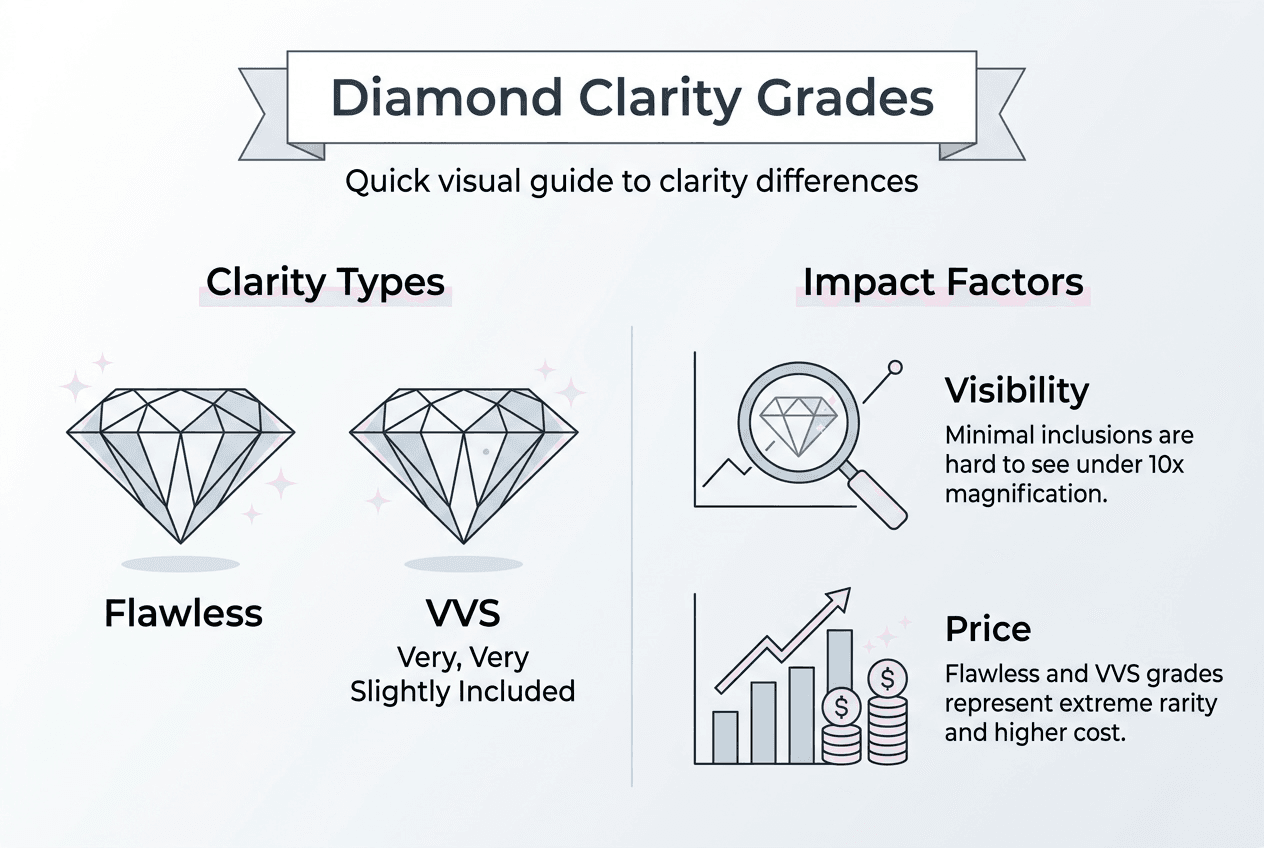
Diamond clarity measures the presence and visibility of imperfections inside and on the surface of a diamond. These imperfections fall into two categories: inclusions, which are internal characteristics like crystals, feathers, or clouds, and blemishes, which are external marks such as scratches or chips. The Gemological Institute of America (GIA) developed the industry standard clarity grading system to evaluate these features under 10x magnification.
The GIA clarity scale includes eleven grades:
- Flawless (FL): No inclusions or blemishes visible under 10x magnification
- Internally Flawless (IF): No inclusions, only minor surface blemishes visible under magnification
- Very Very Slightly Included (VVS1, VVS2): Inclusions extremely difficult to see under magnification
- Very Slightly Included (VS1, VS2): Inclusions minor and difficult to see under magnification
- Slightly Included (SI1, SI2): Inclusions noticeable under magnification, sometimes visible to the naked eye
- Included (I1, I2, I3): Inclusions obvious under magnification and visible to the naked eye, potentially affecting durability
Clarity influences both the visual appeal and structural integrity of a diamond. Most inclusions in higher clarity grades remain invisible without magnification, meaning they do not diminish the stone’s sparkle or brilliance. However, larger or more numerous inclusions in lower grades can interfere with light performance, reducing the diamond’s fire and scintillation. In rare cases, severe inclusions near the surface or along stress points can compromise durability.
“The best clarity grade for your engagement ring depends on your priorities: if you value perfection and have the budget, choose VVS or higher; if you seek maximum value without sacrificing beauty, VS2 to SI1 often delivers stunning results.”
Understanding how clarity works helps you evaluate whether a diamond will meet your expectations. For most engagement rings, clarity grades between VS1 and SI1 offer the ideal balance of beauty and affordability. These diamonds appear flawless to the naked eye while costing significantly less than higher grades. Knowing this empowers you to allocate your budget toward other priorities, such as carat weight, cut quality, or ethical sourcing.
How clarity grades compare: visual impact and price considerations
Different clarity grades produce varying visual effects and price points. The table below summarizes how each grade typically appears and its relative cost:
| Clarity Grade | Visibility of Inclusions | Relative Price Range |
|---|---|---|
| FL, IF | None visible even under magnification | Highest (premium 30-40% over VS1) |
| VVS1, VVS2 | Extremely difficult to detect under 10x | High (premium 15-25% over VS1) |
| VS1, VS2 | Minor inclusions, invisible to naked eye | Moderate (baseline for comparison) |
| SI1, SI2 | Noticeable under magnification, sometimes visible without | Lower (10-30% below VS1) |
| I1, I2, I3 | Obvious inclusions affecting appearance | Lowest (40-60% below VS1) |
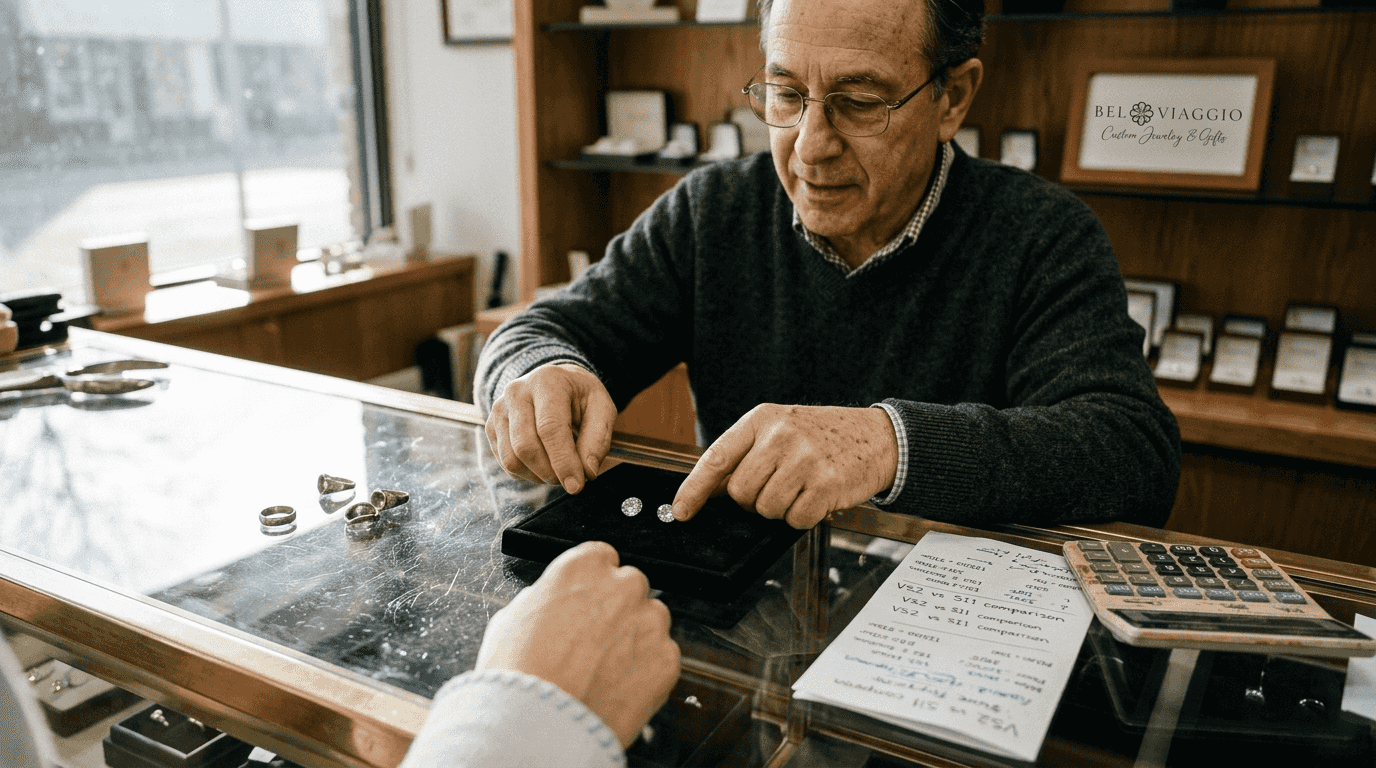
For engagement rings, VS1 and VS2 grades represent the sweet spot where clarity and price align optimally. These diamonds look flawless without magnification, making them indistinguishable from higher grades in everyday wear. Moving up to VVS or IF grades increases cost substantially without improving visible beauty. Conversely, SI1 diamonds can offer excellent value if inclusions are small and positioned away from the table facet, where they remain hidden.
Several factors influence how noticeable inclusions appear:
- Diamond shape: Step cuts like emerald or asscher reveal inclusions more easily than brilliant cuts like round or cushion
- Carat size: Larger diamonds magnify inclusions, making higher clarity more important above 1.5 carats
- Setting style: Bezel, halo, or pave settings can strategically conceal inclusions near the edges
- Inclusion type and location: Dark crystals near the center are more visible than white feathers near the girdle
Pro Tip: Choose SI1 or SI2 clarity for fancy shapes or intricate settings that naturally hide inclusions, maximizing your budget for a larger or better-cut diamond.
Beyond VS1, the visual differences between clarity grades become negligible to the unaided eye. A flawless diamond and a VS2 diamond set side by side will look identical in normal lighting. This reality allows savvy buyers to prioritize cut quality, which has a far greater impact on sparkle, while selecting a slightly lower clarity grade that still appears pristine. By understanding these trade-offs, you can make informed decisions that align with your aesthetic preferences and financial goals.
Ethical sourcing and handcrafted rings: why clarity still matters in 2026
Ethical sourcing refers to diamonds that are conflict-free, responsibly mined, or lab-grown, ensuring your purchase supports fair labor practices and environmental sustainability. In 2026, consumers increasingly prioritize these values alongside traditional quality factors like clarity. The good news is that ethically sourced diamonds are available across the entire clarity spectrum, from flawless to included grades, allowing you to align your values with your budget.
Lab-grown diamonds, which are chemically identical to mined stones, often offer higher clarity at lower prices because the controlled growth environment produces fewer inclusions. This makes it easier to find VS or VVS lab-grown diamonds within a moderate budget. Certified conflict-free mined diamonds also span all clarity grades, with organizations like the Kimberley Process and Responsible Jewellery Council providing transparency and accountability.
Handcrafted engagement rings elevate the importance of clarity by showcasing your diamond’s unique characteristics through custom settings. Artisan jewelers design each ring to complement the stone’s natural beauty, using techniques that either highlight exceptional clarity or strategically conceal minor inclusions. Benefits of handcrafted rings include:
- Custom bezels that frame the diamond and hide edge inclusions
- Halo designs that draw attention to the center stone’s brilliance rather than imperfections
- Prong placement optimized to cover or minimize visible inclusions
- Metal choices like rose gold or yellow gold that mask slight color or clarity variations
Pro Tip: Work with a jeweler who specializes in handcrafted designs to select a clarity grade that maximizes sparkle while incorporating setting features that enhance the diamond’s appearance.
Current trends in 2026 favor sustainable and personalized jewelry choices. Couples increasingly seek rings that tell a story, combining ethical sourcing with artisan craftsmanship. Clarity remains a key consideration because it affects both the diamond’s visual impact and its long-term durability. By choosing a clarity grade that balances beauty and responsibility, you invest in a ring that reflects your values and stands the test of time.
Choosing the right clarity for your engagement ring: practical steps
Selecting the ideal diamond clarity requires balancing beauty, ethics, and budget. Follow these steps to make a confident decision:
- Set your budget: Determine how much you can allocate to the diamond itself versus the setting, keeping in mind that clarity is just one of the four Cs (cut, color, clarity, carat).
- Decide on ethical sourcing preferences: Choose between lab-grown, certified conflict-free mined, or vintage diamonds based on your values and priorities.
- Review clarity grades and expected visual impact: Use the GIA scale to identify which grades appear flawless to the naked eye within your budget, typically VS2 to SI1.
- Consider ring design that complements clarity: Select a setting style that either showcases high clarity or strategically hides minor inclusions through bezels, halos, or prong placement.
- Request certification and viewing options: Insist on GIA or AGS certification and ask to view the diamond under magnification and in natural light to assess inclusions firsthand.
Common mistakes to avoid when choosing clarity include:
- Overpaying for flawless or internally flawless grades that offer no visible advantage over VS grades
- Ignoring inclusion type and location, which matter more than the grade itself
- Choosing clarity based solely on certification without viewing the diamond in person or through high-resolution images
- Neglecting to consider how the setting will interact with the diamond’s clarity
Pro Tip: Request magnified images or schedule an in-person inspection to ensure the clarity grade meets your expectations, as some SI1 diamonds look cleaner than others depending on inclusion characteristics.
Communicate openly with your jeweler about your priorities. Handcrafted ring specialists can guide you toward clarity grades that optimize your budget while delivering the visual impact you desire. They can also recommend design features that enhance the diamond’s appearance, such as a halo that amplifies brilliance or a bezel that conceals edge inclusions. By taking a strategic approach, you ensure your engagement ring combines beauty, ethics, and value.
Explore handcrafted, ethically sourced rings at Bel Viaggio Designs
Now that you understand diamond clarity, it is time to find the perfect ring that reflects your values and style. Bel Viaggio Designs specializes in custom handcrafted rings featuring ethically sourced diamonds, including lab-grown and conflict-free mined stones across all clarity grades. Each piece is designed by skilled artisans who prioritize sustainability, personalization, and quality craftsmanship.

Our collections include stunning black diamond engagement rings that showcase unique clarity characteristics, as well as lab-grown diamond wedding bands that pair perfectly with your chosen center stone. Whether you prefer a classic solitaire, a vintage-inspired halo, or a modern bezel setting, our team works with you to create a ring that highlights your diamond’s ideal clarity. Explore our collections today and discover how personalized service and ethical sourcing come together to create the engagement ring of your dreams.
Frequently asked questions about diamond clarity
What does diamond clarity grade FL mean?
Flawless (FL) clarity means a diamond has no inclusions or blemishes visible under 10x magnification. These diamonds are extremely rare and command premium prices, but they look identical to lower clarity grades like VVS or VS to the naked eye.
How much does clarity affect diamond sparkle visibly?
Clarity has minimal impact on sparkle unless inclusions are large or numerous enough to interfere with light performance. Most diamonds graded VS2 or higher appear flawless without magnification and sparkle brilliantly. Cut quality influences sparkle far more than clarity.
Can I get an ethically sourced diamond with high clarity?
Yes, both lab-grown and certified conflict-free mined diamonds are available in high clarity grades like VVS and VS. Lab-grown diamonds often offer better clarity at lower prices due to controlled production. Certifications from organizations like the Kimberley Process ensure ethical sourcing.
Is it worth paying more for flawless clarity?
For most buyers, flawless clarity is not worth the premium because the visual difference compared to VS or VVS grades is undetectable without magnification. Investing in a better cut or larger carat size typically delivers more noticeable beauty. Flawless diamonds are best suited for collectors or those who value absolute perfection.
How do handcrafted settings enhance less than perfect clarity?
Handcrafted settings use strategic design elements like bezels, halos, and optimized prong placement to hide or minimize visible inclusions. Artisan jewelers can position the diamond to conceal edge inclusions or use metal and accent stones to draw attention away from imperfections. This allows you to choose a lower clarity grade without sacrificing visual appeal.
What clarity grade is best for a 2-carat diamond?
For a 2-carat diamond, aim for VS2 or higher clarity because larger stones magnify inclusions, making them more visible. VS1 or VVS grades ensure the diamond appears flawless to the naked eye. If budget is a concern, a well-selected SI1 with inclusions positioned away from the table can still look beautiful in the right setting.
Recommended
- Blog: “Will it Look Like a Diamond?" – Bel Viaggio Designs, LLC
- Black Diamond Ring Halo Cathedral Set-Bel Viaggio Designs – Bel Viaggio Designs, LLC
- Ethical gemstone selection guide for engagement rings 2026 – Bel Viaggio Designs, LLC
- Black Diamond Ring, Diamond Anniversary Ring 2.06 CTW – Bel Viaggio Designs, LLC
- Versace Yellow Diamond Intense Eau de Parfum for Women
- Diamond collection – House Coffee