

TL;DR:
- Verify certification and sourcing documentation to avoid greenwashing when shopping for ethical rings.
- Clearly define and rank your core values to make informed, intentional decisions.
- Use a detailed, step-by-step workflow to ensure transparency and alignment throughout the purchase process.
Finding an engagement ring that’s both deeply personal and genuinely ethical sounds simple until you’re standing in a showroom, listening to a jeweler use words like “sustainable” and “conflict-free” with zero documentation to back them up. The stakes are high: you want a ring that reflects your values and your story, not just a marketing label. Greenwashing is real, and it’s common across both lab-grown and mined diamond markets. This guide walks you through every stage of the process, from clarifying what you actually care about to verifying the paperwork before you sign anything, so you can shop with confidence and zero regret.
Table of Contents
- Define your values and ring priorities
- Prepare: Research jewelers and gather essentials
- Step-by-step engagement ring shopping workflow
- Verify, finalize, and avoid common pitfalls
- Why most couples settle and how a workflow transforms results
- Personalize your ethical ring journey with Bel Viaggio Designs
- Frequently asked questions
Key Takeaways
| Point | Details |
|---|---|
| Clarify your values | Start by identifying your priorities like ethics, style, and sustainability before shopping for an engagement ring. |
| Research and verify | Choose jewelers who provide transparent documentation and combine multiple certifications for real ethical assurance. |
| Follow a workflow | A step-by-step engagement ring shopping process ensures you avoid pitfalls and secure a ring that reflects your values. |
| Beware of greenwashing | Demand specific proof of ethical sourcing to steer clear of vague or misleading claims in both lab-grown and mined gems. |
Define your values and ring priorities
Before you look at a single ring, you need to know what matters most to you. This isn’t just about aesthetics. It’s about understanding which principles you’re unwilling to compromise on, because when budget, ethics, and design preferences collide, you’ll need a clear hierarchy to make decisions without second-guessing yourself.
Here are the core values most couples weigh when searching for ethical ring style options:
- Ethical sourcing: Where does the metal and gemstone come from, and can the jeweler prove it?
- Environmental impact: How much land, water, and carbon went into producing this ring?
- Artisan craftsmanship: Is this handcrafted by skilled makers, or mass-produced in a factory?
- Budget: What’s your realistic ceiling, and are you flexible for the right piece?
- Unique design: Do you want something custom, or is a modified standard design enough?
Conflicting values are normal. For example, lab-grown diamonds score better on environmental metrics, but some couples feel strongly about supporting ethical mining communities. Neither position is wrong. What matters is that you make the call intentionally, not by default.
Here’s the critical issue: greenwashing affects both lab-grown and mined diamonds when there’s no third-party verification. A jeweler can call a stone “eco-friendly” without a single document to support that claim. The label means nothing without proof.
Pro Tip: When a jeweler uses words like “sustainable” or “ethical,” immediately ask: “What certification or documentation supports that?” If they can’t name a specific body or hand you a document, that’s your first red flag. Use ethically sourced ring buying tips as a reference before your first conversation with any retailer.
Writing down your values in ranked order before you shop is one of the most underrated moves you can make. It turns a vague feeling into a decision-making tool.
Prepare: Research jewelers and gather essentials
With your values ranked, the next step is building your research toolkit. Showing up prepared separates confident buyers from people who get talked into something they’ll question later.
Start by assembling these essentials before any jeweler conversation:
| Essential | Why it matters |
|---|---|
| Values priority list | Keeps decisions aligned with what you care about |
| Ring size information | Avoids costly resizing and delays |
| Inspiration photos | Communicates style preferences clearly |
| Budget estimate | Prevents emotional overspending |
| Certification checklist | Filters out jewelers who can’t meet your standards |
Knowing which certifications to look for is non-negotiable. Here’s a quick breakdown of the most important ones:
- Fairmined: Certifies that gold was mined responsibly with fair pay and safe conditions for artisan miners.
- Kimberley Process (KP): Designed to block conflict diamonds, though it has known gaps around labor rights and environmental standards.
- SCS-007: A rigorous sustainability standard that covers environmental, social, and supply chain criteria for diamonds.
No single certification is perfect. Full supply chain documentation from your jeweler matters more than any one label. A jeweler who holds multiple certifications and can show you the paperwork is far more credible than one relying on a single badge.
When researching jewelers, look at their custom ring portfolios. A strong portfolio tells you whether their craftsmanship matches their claims. Check for verified gemstone suppliers and read up on conflict-free ring tips to sharpen your questions. For broader guidance on identifying quality jewelers, look for transparency as the baseline, not the bonus.
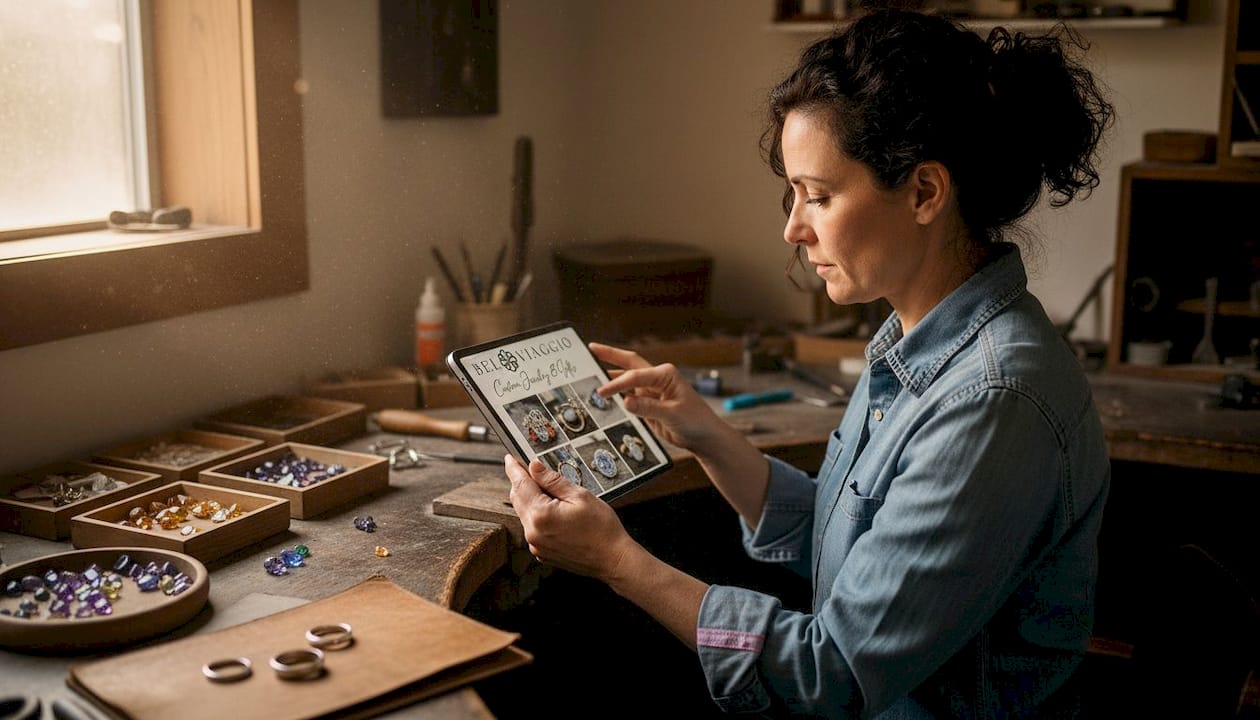
Organize everything in a simple folder, digital or physical. Having your inspiration photos, budget range, and certification checklist in one place means you walk into every consultation ready to evaluate, not just admire.
Step-by-step engagement ring shopping workflow
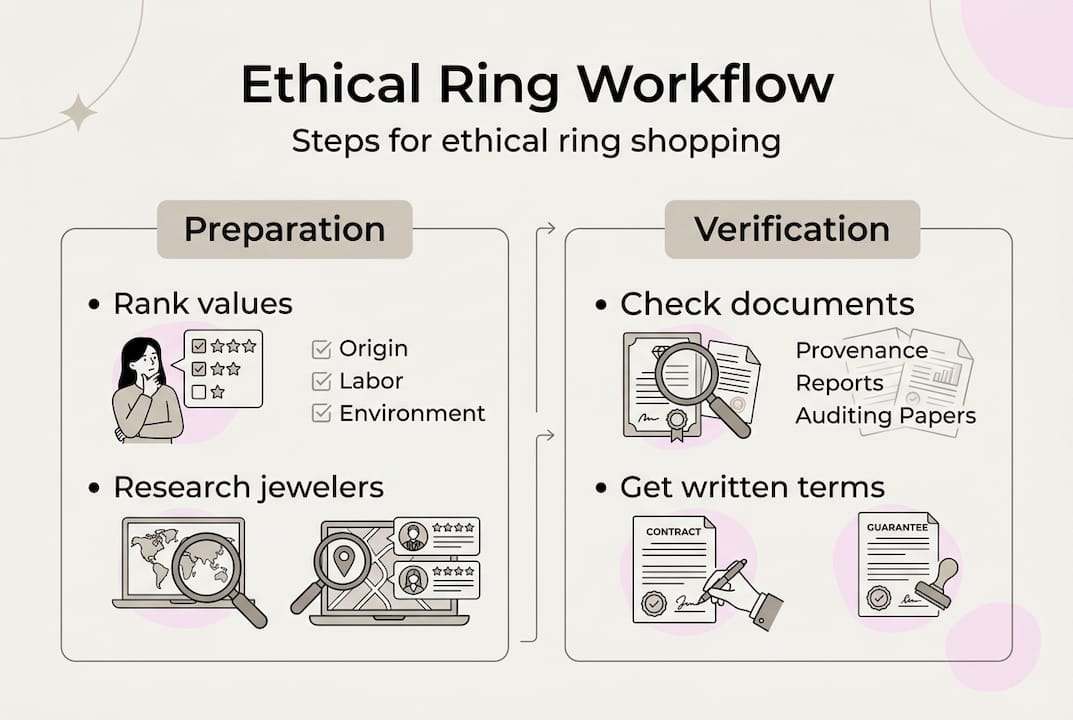
With your research materials ready and a shortlist of jewelers who passed your initial screening, follow this workflow to stay grounded and value-aligned at every stage.
- Set your budget range. Define a firm ceiling and a comfortable midpoint. This prevents emotional decisions in the moment.
- Shortlist jewelers. Use your certification checklist and portfolio review to narrow down to two or three candidates.
- Review certifications in detail. Ask for physical or digital copies. Don’t accept verbal assurances.
- Compare gem options. Evaluate lab-grown vs. mined based on your priorities.
- Request transparency documents. Supply chain records, origin reports, and any third-party audits.
- Finalize your custom design. Work through the detailed custom ring process with your chosen jeweler.
- Review all terms. Delivery timeline, return policy, warranty, and payment plan details in writing.
Here’s a comparison to help with step four:
| Factor | Lab-grown diamonds | Mined diamonds |
|---|---|---|
| Environmental impact | Lower CO2, water, land use | Higher extraction footprint |
| Socioeconomic impact | No mining community benefit | Can support ethical mining jobs |
| Traceability | Generally easier to document | Depends heavily on certifications |
| Price | Typically 40-70% lower | Higher due to rarity and supply chain |
For couples prioritizing environmental metrics, lab-grown diamond pros are significant. But don’t let price or environmental data alone drive the decision without checking traceability.
Expert note: No single certification covers all ethical issues. The Kimberley Process, for instance, focuses on conflict diamonds but does not address labor conditions or environmental damage. Always combine certifications and independent documentation.
Pro Tip: When you request transparency documents, be specific. Ask for the mine or lab of origin, the refinery used for the metal, and any third-party audit reports. A jeweler with nothing to hide will answer without hesitation.
Verify, finalize, and avoid common pitfalls
Completing the workflow is only meaningful if the final verification step is thorough. This is where many couples relax too early and miss details that matter.
Before you finalize anything, check that you have:
- A detailed receipt listing every specification: metal type, gemstone origin, carat weight, and cut
- An independent appraisal document from a certified gemologist
- Supply chain evidence tied to the specific stone and metal in your ring
- Written confirmation of the return policy, warranty terms, and delivery date
Common pitfalls to watch for:
- Incomplete certificates: A certificate that covers the diamond but not the metal is only half the story.
- Ambiguous return policies: “Satisfaction guaranteed” means nothing without a defined time window and process.
- No warranty on craftsmanship: Handcrafted rings should come with a warranty covering setting integrity and finishing.
- Vague sourcing language: Phrases like “responsibly sourced” without documentation are marketing, not ethics.
For the best ethical assurance, combine multiple certifications and demand transparency at every level of the supply chain. Reviewing top gemstone choices can also help you understand what documentation should accompany different stone types.
Pro Tip: Get every agreement in writing before any payment clears. This includes the exact design specifications, the delivery date, and what happens if the ring doesn’t match what was agreed. A reputable jeweler will not hesitate to put it all in writing.
Know when to walk away. If a jeweler becomes evasive when you ask for sourcing documentation, or if they pressure you to decide before you’ve reviewed the paperwork, that’s your signal. No ring is worth compromising your values or your peace of mind.
Why most couples settle and how a workflow transforms results
Here’s something most engagement ring guides won’t tell you: the majority of couples don’t get the ring they truly wanted. Not because they couldn’t afford it, but because they trusted claims instead of demanding proof. They heard “ethical” and stopped asking questions.
A structured workflow isn’t a bureaucratic exercise. It’s the only reliable way to filter out half-measures and surface what a jeweler actually stands behind. When you ask for specific documentation and a jeweler hesitates, you’ve learned something critical that no amount of browsing reviews would have told you.
The couples who skip documentation often find out later that “conflict-free” meant the jeweler hadn’t heard of any conflicts, not that they’d verified the supply chain. That distinction is everything.
We believe that making personalized, ethical choices isn’t about being difficult or distrustful. It’s about respecting the significance of what you’re buying. A ring you’ll wear for decades deserves the same rigor you’d apply to any major investment. Process isn’t the enemy of romance. It’s what makes the final choice feel completely right.
Personalize your ethical ring journey with Bel Viaggio Designs
Ready to put your workflow into practice? At Bel Viaggio Designs, every ring starts with a conversation about what matters to you, not just what’s in stock.
We specialize in custom ethical rings built around your values, with full sourcing documentation and artisan craftsmanship at every step. Browse our gemstone ring collection for ethically sourced options across a range of styles and budgets, or explore statement pieces like our black diamond halo ring for something truly distinctive. Our team guides you through certification, design, and final verification so nothing gets missed. This is exactly the kind of transparent, personalized process this guide describes.
Frequently asked questions
What makes a jeweler truly ethical when shopping for an engagement ring?
A truly ethical jeweler provides transparent supply chain documentation and holds multiple certifications that together cover environmental, labor, and sourcing standards. Vague claims without paperwork are not enough.
How do lab-grown diamonds compare with mined diamonds for environmental impact?
Lab-grown diamonds have lower carbon, water, and land impact than mined diamonds, but both require credible third-party certification to avoid greenwashing. The stone’s origin story matters as much as the label.
Which certifications should I look for to ensure ethical sourcing?
Seek a combination of certifications such as Fairmined, Kimberley Process, and SCS-007, since no single certification covers every ethical dimension including labor, environment, and conflict prevention.
What’s the biggest mistake couples make when buying engagement rings?
Most couples trust verbal assurances and skip verifying sourcing documentation, which means greenwashing risks go undetected until it’s too late to change course.
How can I personalize my ring while staying sustainable?
Work with a custom jeweler that supports artisan craftsmanship and provides documented ethical sourcing for both the gemstone and the metal, so your unique design is backed by real accountability.
Recommended
- Custom ring guide: step-by-step ethical luxury (2026) – Bel Viaggio Designs, LLC
- Ethical engagement ring buying tips for personalized 2026 – Bel Viaggio Designs, LLC
- Ethical engagement ring buying tips for personalized 2026 – Bel Viaggio Designs, LLC
- Custom jewelry ideas for ethical engagement rings 2026 – Bel Viaggio Designs, LLC