

Most couples assume their engagement ring is ethically made, but the reality is far more complex. The journey from mine to finger involves intricate supply chains where ethical standards vary dramatically. Responsible jewelry follows strict ethical, social, human rights, and environmental practices as standardized by the Responsible Jewellery Council. This guide helps you understand what truly makes jewelry responsible and how to choose wedding and engagement rings that reflect your values while ensuring the people and planet behind your purchase are treated with dignity and care.
Table of Contents
- Defining Responsible Jewelry And Its Standards
- How Responsible Jewelry Certifications And Audits Protect Consumers
- Challenges And Nuances In Responsible Jewelry Sourcing
- Applying Responsible Jewelry Knowledge To Choosing Your Wedding And Engagement Rings
- Explore Bel Viaggio Designs’ Ethically Crafted Wedding Jewelry
- Frequently Asked Questions About Responsible Jewelry
Key takeaways
| Point | Details |
|---|---|
| Responsible jewelry standards | Follows strict ethical, environmental, and social standards verified through comprehensive supply chain oversight and regular third-party audits. |
| Certification verification | Programs like RJC, Fairmined, and Kimberley Process provide independent verification of responsible practices through documented chain-of-custody tracking. |
| Transparency requirements | Third-party audits and traceability systems ensure accountability from mine to retail, giving couples confidence in their jewelry’s origins. |
| Sourcing challenges | Artisanal mining and recycled metals present nuanced ethical considerations requiring informed consumer evaluation beyond simple certifications. |
| Growing market impact | Ethical jewelry market grows 15% faster than traditional segments, demonstrating consumer power to drive positive industry change. |
Defining responsible jewelry and its standards
Responsible jewelry represents more than a marketing claim. It embodies a commitment to verifiable ethical practices throughout the entire production process. The Responsible Jewellery Council established the Code of Practices covering legal compliance, labor standards, environmental protection, and product transparency as the industry’s benchmark. This framework creates accountability where none previously existed.
The COP includes 45 specific provisions aligned with six core objectives. These requirements set minimum standards that participating companies must meet to earn certification. The framework addresses everything from worker safety to environmental impact, creating a comprehensive approach to responsible production. For couples seeking ring certification guidance, understanding these standards provides the foundation for informed choices.
The six core objectives of the RJC Code of Practices include:
- Respect human rights and labor standards throughout operations
- Minimize environmental impact and promote sustainable resource use
- Ensure product disclosure and transparency for consumers
- Maintain ethical business practices and legal compliance
- Protect indigenous peoples’ rights and community welfare
- Implement responsible supply chain management and traceability
These objectives translate abstract concepts into concrete requirements. Companies must demonstrate compliance through documented policies, regular audits, and transparent reporting. The framework recognizes that responsible jewelry requires systemic change, not isolated improvements.
“The RJC Code of Practices establishes industry-wide standards ensuring jewelry businesses operate responsibly across their supply chains, from mine to retail, protecting people and planet.”
This standardization matters because it creates a common language for responsibility. Before these frameworks existed, each company defined ethical practices differently, making meaningful comparison impossible. Now couples can evaluate jewelry against consistent criteria, understanding exactly what responsible sourcing means in practice.
How responsible jewelry certifications and audits protect consumers
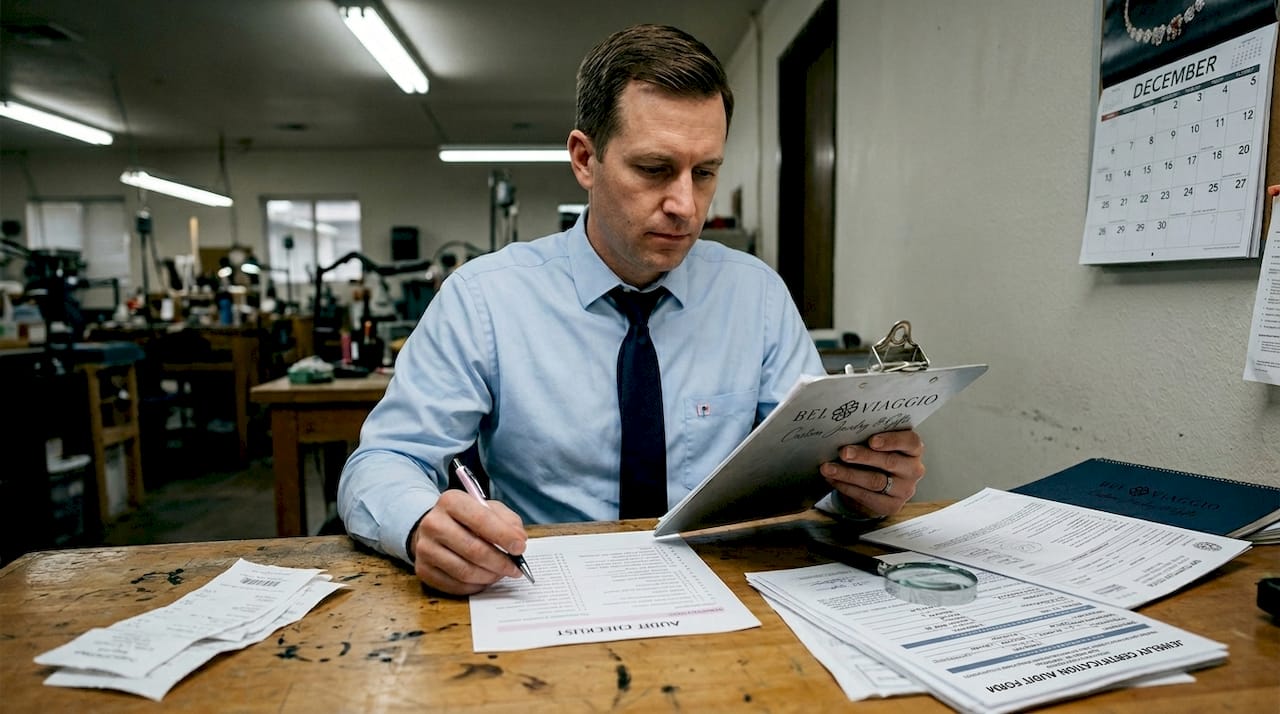
Certifications transform abstract promises into verifiable facts. The RJC certification process requires on-site audits every three years plus surveillance audits to maintain compliance. These audits involve independent third parties examining company practices against specific criteria. The process creates accountability that self-certification cannot match.
Chain-of-custody systems track precious metals from extraction through manufacturing to final sale. These systems document each transfer, creating an unbroken record of a metal’s journey. For gold, silver, and platinum, this traceability ensures ethical sourcing claims can be verified. The documentation provides proof that goes beyond trust.
The certification and audit process follows these key steps:
- Company submits application and undergoes initial assessment of policies and procedures
- Independent auditor conducts comprehensive on-site inspection of facilities and documentation
- Auditor evaluates compliance with all 45 COP provisions and interviews workers and management
- Certification body reviews audit findings and issues certification for compliant companies
- Surveillance audits occur between full audits to verify ongoing compliance
- Companies must address any non-conformances within specified timeframes to maintain certification
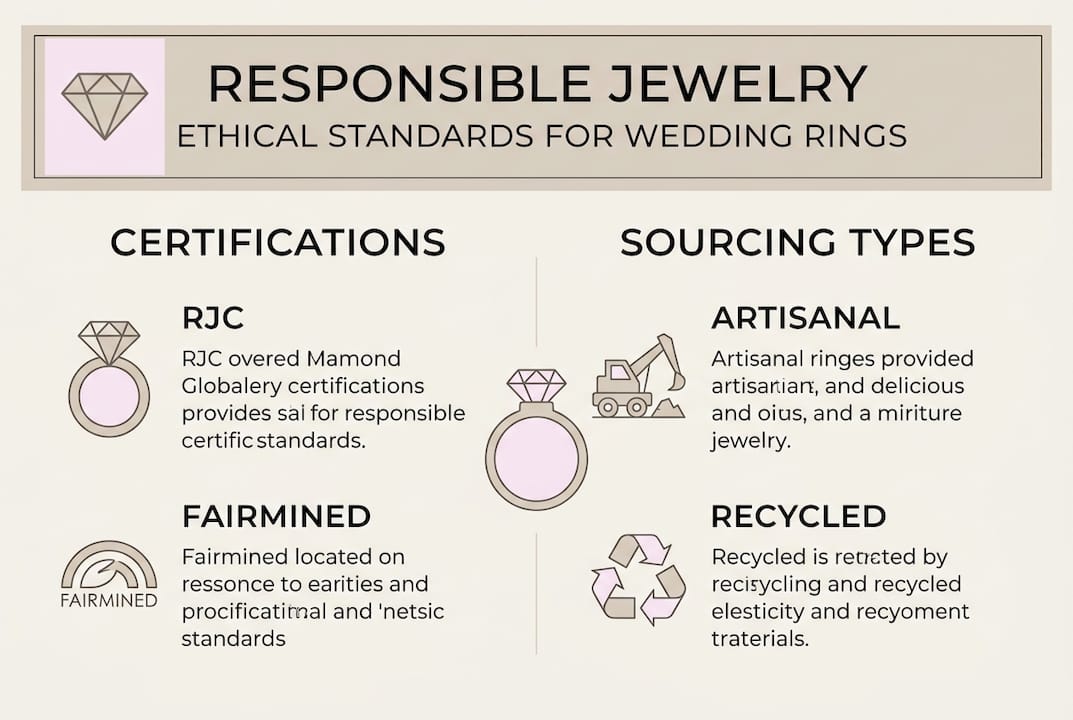
Multiple certification programs serve different aspects of responsible jewelry. Understanding their distinctions helps couples choose jewelry aligned with specific values. Each program emphasizes different priorities while sharing the common goal of improving industry practices.
| Certification | Primary Focus | Scope | Key Verification |
|---|---|---|---|
| RJC Code of Practices | Comprehensive supply chain ethics | Mining to retail | Third-party audits every 3 years |
| Fairmined | Artisanal miner welfare and premiums | Small-scale mining | Direct miner support and fair wages |
| IRMA | Environmental and social mining standards | Large-scale mining | Detailed environmental protections |
| Kimberley Process | Conflict diamond prevention | Diamond rough trade | Government certification systems |
These certifications complement rather than compete with each other. A fully responsible piece might carry multiple certifications addressing different supply chain stages. For couples seeking ethical gemstone selection, combining certifications provides the strongest assurance.
Pro Tip: Ask jewelers for mine-specific traceability documentation showing exactly where metals and gems originated, not just general certification statements.
The audit process reveals whether companies truly implement their stated policies. Auditors examine worker conditions, environmental controls, and business practices in detail. This scrutiny catches gaps between marketing claims and operational reality. The result is consumer protection grounded in verification rather than trust.
Challenges and nuances in responsible jewelry sourcing
Responsible jewelry faces real-world complications that certifications alone cannot solve. Artisanal mining supplies 70-90% of colored gems but is linked to high child labor risks, creating ethical dilemmas for couples wanting colored gemstone rings. These small-scale operations often lack resources for certification, yet provide livelihoods for millions. The situation demands nuanced understanding rather than simple rejection.
Recycled gold presents another complexity. The term encompasses everything from manufacturing scrap to truly reclaimed jewelry. Pre-consumer scrap from manufacturing offers minimal ethical benefit since it never left the industry. Post-consumer recycled gold from old jewelry provides genuine resource conservation. Yet many recycled gold claims lack specificity, making evaluation difficult. The debate over recycled gold definitions highlights how terminology shapes ethical impact.
The Kimberley Process covers 99.8% of diamond production, yet gaps remain. The system focuses narrowly on conflict financing, missing other ethical concerns like worker rights and environmental damage. Diamonds can be Kimberley compliant while still involving problematic practices. This limitation matters for couples seeking truly conflict-free ring options beyond basic conflict diamond prevention.
Key challenges in responsible jewelry sourcing include:
- Artisanal mining operations lacking resources for formal certification despite providing essential livelihoods
- Inconsistent definitions of recycled metals allowing greenwashing without genuine ethical improvement
- Limited traceability for colored gemstones compared to diamonds and precious metals
- Kimberley Process gaps failing to address labor rights and environmental impacts
- Cost barriers preventing small ethical producers from accessing certification programs
- Mixed-source supply chains where certified and uncertified materials combine
These challenges require informed consumer choices rather than perfect solutions. Understanding limitations helps couples ask better questions and make decisions aligned with their priorities. Ethical jewelry nuances demand engagement beyond checking certification boxes.
“The most responsible jewelry often combines multiple certifications and transparent sourcing documentation, addressing different supply chain stages and ethical dimensions for comprehensive assurance.”
Navigating these complexities means recognizing that responsible jewelry exists on a spectrum. Perfect ethical sourcing remains elusive, but meaningful improvement is achievable. Couples can prioritize transparency and continuous improvement over claims of absolute purity. This realistic approach drives industry progress while acknowledging current limitations.
Applying responsible jewelry knowledge to choosing your wedding and engagement rings
Understanding responsible jewelry standards empowers practical decision making. The choice between certified responsible jewelry and alternatives involves weighing multiple factors beyond simple good versus bad categorization. Each option offers distinct benefits and trade-offs worth careful consideration.
| Option | Benefits | Trade-offs | Best For |
|---|---|---|---|
| RJC Certified New | Comprehensive verification, traceable supply chain, supports ethical mining | Higher cost, limited design options from certified suppliers | Couples prioritizing verified ethical standards |
| Fairmined Gold | Direct artisanal miner support, premium payments to communities, social impact | Very limited availability, premium pricing, fewer design choices | Supporting small-scale mining communities |
| Recycled Metals | Resource conservation, lower environmental impact, often cost effective | Variable ethical benefit depending on source, limited traceability | Environmental focus with transparency about recycling source |
| Vintage/Antique | No new mining, unique designs, resource reuse | Unknown original sourcing, potential ethical issues from original production | Historical significance and resource conservation |
When evaluating jewelers, specific questions reveal their commitment to responsible practices. These inquiries move beyond marketing language to substantive information about sourcing and verification.
Practical questions to ask jewelers about responsible sourcing:
- What specific certifications do your suppliers hold and can you provide documentation?
- Can you trace this metal or gemstone to its specific mine or recycling source?
- How do you verify ethical practices for uncertified materials in your supply chain?
- What percentage of your inventory meets RJC or equivalent certification standards?
- Do you provide written sourcing documentation with purchases for future reference?
- How do you handle supply chain transparency for colored gemstones versus diamonds?
Pro Tip: Prioritize jewelers with transparent written sourcing policies posted publicly and willingness to provide specific certification details before purchase, not vague ethical claims.
Your purchasing decisions carry real impact. Studies show ethical jewelry market grows 15% faster than traditional, with documented improvements in labor rights and gender equality. This growth signals to the industry that consumers value responsibility, encouraging broader adoption of ethical practices. Each purchase represents a vote for the jewelry industry you want to support.
Couples seeking custom ethical jewelry ideas can specify responsible sourcing requirements from the design phase. Custom creation allows direct input on materials and sourcing, ensuring your values integrate into every aspect of your ring. This personalization extends beyond aesthetics to ethical alignment.
Exploring ethical gemstone options reveals alternatives to traditional diamonds that may offer stronger ethical credentials. Lab-grown diamonds, moissanite, and carefully sourced colored gems provide beautiful choices with different ethical profiles. Understanding these options expands possibilities while maintaining responsible standards.
The ethical ring buying tips you apply today shape industry practices tomorrow. As demand for responsible jewelry grows, more suppliers invest in certification and traceability. Your informed choices contribute to systemic change, making ethical sourcing increasingly accessible and affordable for future couples.
Explore Bel Viaggio Designs’ ethically crafted wedding jewelry
Your journey toward responsible jewelry deserves a partner committed to ethical excellence. Bel Viaggio Designs creates custom engagement and wedding rings where responsible sourcing meets exceptional craftsmanship and personalized design.

Every piece reflects our commitment to transparent sourcing, quality materials, and designs as unique as your love story. We provide detailed information about the origins of metals and gemstones, ensuring you understand exactly what you’re purchasing. Our custom rings with lifetime warranty combine ethical principles with lasting quality, protecting your investment for generations.
Begin your custom design journey with a custom engagement ring design deposit, working directly with our artisans to create a ring reflecting your values and vision. We guide you through material selection, design options, and sourcing transparency, ensuring every decision aligns with your ethical priorities. Once you receive your responsibly sourced ring, our fine jewelry care guide helps preserve its beauty and meaning for a lifetime of wear.
Frequently asked questions about responsible jewelry
What does responsible jewelry mean?
Responsible jewelry follows verified ethical, social, and environmental standards throughout its supply chain from mining to retail. This includes fair labor practices, environmental protection, transparent sourcing, and respect for human rights as defined by frameworks like the RJC Code of Practices. Certification requires regular third-party audits proving compliance with specific requirements.
How can I verify if my jewelry is responsibly sourced?
Request specific certification documentation from your jeweler showing RJC, Fairmined, or equivalent credentials with audit dates and scope. Ask for chain-of-custody paperwork tracing metals to specific mines or recycling sources. Legitimate responsible jewelers provide this documentation willingly and maintain transparent sourcing policies posted publicly on their websites.
Are recycled metals always ethical?
Recycled metals offer environmental benefits but ethical impact varies significantly by source and definition. Post-consumer recycled gold from reclaimed jewelry provides genuine resource conservation. Pre-consumer manufacturing scrap offers minimal ethical benefit since it never left the industry. Always ask jewelers to specify recycling sources and whether materials are truly post-consumer to evaluate actual ethical impact.
What certifications should I look for when buying responsible jewelry?
Look for RJC Code of Practices certification covering comprehensive supply chain ethics, Fairmined for artisanal miner support, IRMA for environmental mining standards, and Kimberley Process for conflict-free diamonds. The strongest assurance comes from combining multiple certifications addressing different supply chain stages. Request documentation proving current certification status, not expired credentials.
How does responsible jewelry impact communities and the environment?
Responsible jewelry provides fair wages, safe working conditions, and community development funding in mining regions. Environmental benefits include reduced pollution, habitat protection, and sustainable resource management. Research shows ethical jewelry operations improve labor rights and gender equality while reducing environmental damage. Your purchase directly supports these improvements by rewarding companies investing in responsible practices.
Why should I choose conflict-free engagement rings?
Conflict-free engagement rings ensure your symbol of love doesn’t finance violence or human rights abuses. Beyond basic conflict diamond prevention, truly ethical rings address labor conditions, environmental impact, and community welfare throughout the supply chain. Choosing conflict-free jewelry aligns your purchase with your values, creating positive impact from the moment you say yes.
Recommended
- Ethical gemstone selection guide for engagement rings 2026 – Bel Viaggio Designs, LLC
- What is ring certification? Guide to ethical rings 2026 – Bel Viaggio Designs, LLC
- Custom jewelry ideas for ethical engagement rings 2026 – Bel Viaggio Designs, LLC
- Ethical engagement ring buying tips for personalized 2026 – Bel Viaggio Designs, LLC
- Sustainable Wedding Photography: Eco Impact for UK Couples