

TL;DR:
- Ethical wedding jewelry emphasizes responsible sourcing, fair labor, and low environmental impact.
- Verify claims through third-party certifications and detailed provenance documentation.
- Vintage, recycled, and lab-grown materials with transparency are the most sustainable options.
Finding wedding jewelry that is genuinely beautiful and genuinely good for the planet feels harder than it should be. You fall in love with a ring, then discover the sourcing story is murky or the “green” label is little more than marketing. The good news is that ethical, stunning wedding jewelry is absolutely within reach when you know what to look for. This guide walks you through the core principles of eco-friendly jewelry, how to prepare before you shop, how to choose the right materials, and how to verify every claim a retailer makes so you can exchange rings with total confidence.
Table of Contents
- Understanding what makes jewelry eco-friendly and ethical
- What you’ll need before you shop: requirements, questions, and documents
- How to identify and select sustainable materials and gemstones
- Verifying claims and ensuring authenticity
- A fresh perspective: Why true eco-friendliness means embracing vintage, small-batch artistry, and radical transparency
- Your next steps: Explore ethical and eco-friendly wedding jewelry options
- Frequently asked questions
Key Takeaways
| Point | Details |
|---|---|
| Third-party certifications matter | Always prioritize jewelry brands with independent certifications like RJC and full material transparency. |
| Sustainable materials save resources | Vintage, recycled metals, and renewable-powered lab-grown gems minimize environmental footprint for wedding jewelry. |
| Prepare with the right questions | Arrive ready with specific sustainability questions and request documentation before you buy. |
| Combining traditions with innovation | Eco-friendly wedding jewelry can be both meaningful and modern by mixing vintage, artisan, and lab-grown elements. |
Understanding what makes jewelry eco-friendly and ethical
Eco-friendly jewelry is not just about one ingredient. It is the full picture: responsibly sourced materials, fair wages and safe working conditions for every person in the supply chain, and a production process that keeps environmental damage as low as possible. When all three of those elements line up, you have something genuinely worth wearing on your finger for the rest of your life.
Certifications are your first line of defense. The RJC certification (Responsible Jewellery Council) is one of the most respected third-party audits in the industry, covering human rights, labor practices, environmental impact, and business ethics. A brand that carries RJC status has been evaluated by an independent body, not just by its own marketing team. Always request provenance docs and prioritize brands with third-party audits over self-certified claims.
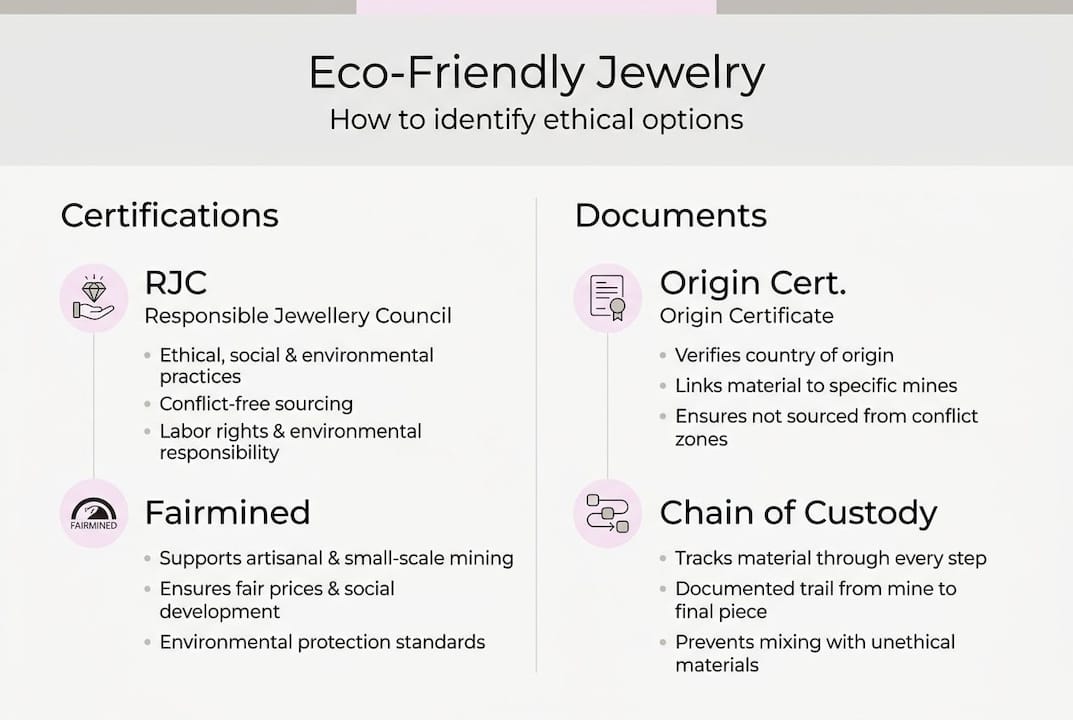
Here is a quick comparison of the most common material choices:
| Material | Environmental impact | Ethical risk | Cost range |
|---|---|---|---|
| Mined diamond | Very high | High without certification | High |
| Lab-grown diamond | Low to moderate | Low | Moderate |
| Vintage/antique gem | Net zero new impact | Very low | Varies |
| Recycled metal | Very low | Low | Moderate |
| Fairmined gold | Low with certification | Low | Moderate to high |
The numbers behind mined diamonds are striking. Mining 1 carat moves roughly 250 tons of earth, while lab-grown diamonds avoid that displacement entirely. That is not a small difference.
Key traits to look for in any eco-friendly jeweler:
- Transparent supply chain documentation available on request
- Use of recycled or Fairmined metals
- Lab-grown or vintage gemstones as standard options
- Small-batch or handmade production to reduce material waste
- Third-party audit status (RJC or equivalent)
Small-batch and handmade production matters more than most people realize. Mass manufacturing creates excess material that often ends up as waste. A jeweler who makes pieces to order, like the approach behind sustainable wedding jewelry basics, produces only what is needed. That alone is a meaningful step toward reducing environmental footprint. Learning how to ethically source wedding jewelry before you start shopping puts you miles ahead of most buyers.
What you’ll need before you shop: requirements, questions, and documents
Walking into the jewelry market without preparation is how couples end up with beautiful rings and regret. A little groundwork makes the entire experience smoother and ensures you never have to take a retailer’s word for anything.
Start by locking in your priorities. Here is a numbered checklist to work through before you contact a single jeweler:
- Set a realistic budget that accounts for custom work or certification premiums
- Decide on your preferred stone type (lab-grown, vintage, moissanite, or other alternatives)
- Identify must-have certifications (RJC, Fairmined, GIA grading report)
- Determine how much customization you want, from a simple band to a fully bespoke design
- List any designer preferences or aesthetic styles you have already identified
Once your priorities are clear, prepare your questions. The table below covers what to ask and what documents to request:
| Question to ask | Document to request |
|---|---|
| Where were the stones mined or grown? | Certificate of origin or lab-grown certification |
| Who manufactured the metal components? | Recycled metal or Fairmined documentation |
| Has your business been third-party audited? | RJC or equivalent audit certificate |
| What are your labor and wage standards? | Supplier code of conduct or ethics policy |
| Can I trace this specific piece back to its source? | Full provenance chain documentation |
Provenance documents are essentially a paper trail for your jewelry. A certificate of origin for a gemstone, for example, names the specific mine or lab, the date of production, and any relevant grading details. For recycled metals, you want a statement from the refiner confirming the recycled content percentage. Full transparency in these documents is a strong signal that a jeweler takes ethics seriously.
Pro Tip: Create a dedicated folder (digital or physical) to store every document you receive from jewelers. When you find your final ring, you will have a complete record of its ethical story, which is a meaningful thing to pass down alongside the piece itself.
For couples exploring conflict-free engagement ring tips or dreaming about custom ethical engagement ring ideas, having this documentation ready also speeds up the custom design process considerably.
How to identify and select sustainable materials and gemstones
Not all eco-friendly materials are equal, and the best choice for you depends on your values, your aesthetic, and your budget. Here is an honest breakdown of each major option:
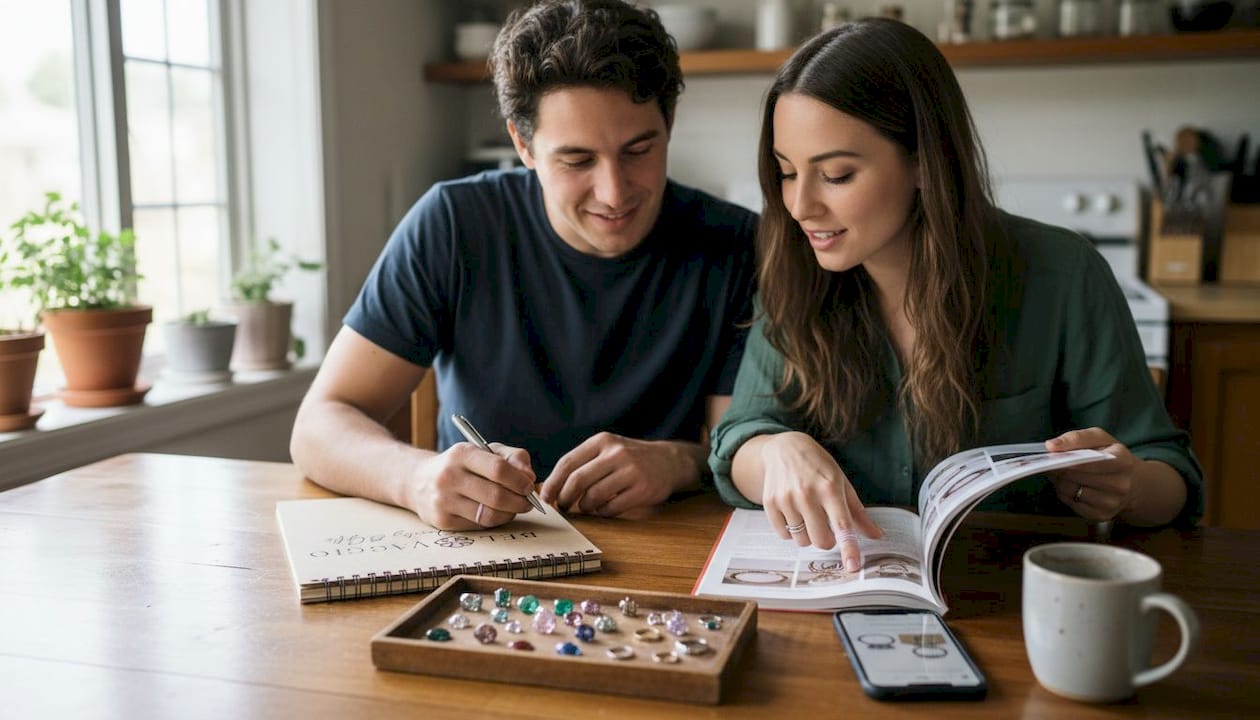
- Vintage and antique gems: These have net-zero new environmental impact because no new mining or lab energy is required. The stone already exists. The trade-off is that selection is limited and resizing or resetting can add cost.
- Lab-grown diamonds: These are superior environmentally if renewable-powered, but the energy source of the lab matters enormously. Always ask whether the facility uses renewable energy.
- Recycled metals: Using recycled gold or platinum cuts energy use by up to 90% compared to newly mined metal. This is one of the easiest swaps to make without changing the look of your ring at all.
- Regulated mined stones with certification: If you want a natural mined gem, look for Kimberley Process certification for diamonds and Fairmined or Fairtrade Gold for metals. These are not perfect systems, but they set a meaningful floor.
- Moissanite: Lab-created and visually stunning, moissanite is an increasingly popular diamond alternative with a very low environmental footprint.
“The greenest gem is often the one that already exists.” Vintage jewelry carries no new mining cost and no new lab energy cost. Its story is already written.
Balancing material choice with style and budget is easier than it sounds. A vintage stone set in a recycled metal band, for example, gives you two layers of sustainability without sacrificing any visual impact. You can explore lab-grown diamond options that pair beautifully with recycled settings, or look at customization for ethical rings to see how designers combine materials creatively.
Pro Tip: Ask your jeweler specifically whether their lab-grown diamonds are produced using renewable energy. Some labs still rely heavily on fossil fuels, which significantly changes the environmental math.
Verifying claims and ensuring authenticity
Once you have chosen your materials and found a jeweler you like, the final step is confirming that their claims hold up under scrutiny. Greenwashing (making misleading environmental claims) is common in the jewelry industry, and the stakes are high when you are making a significant purchase.
Here is a step-by-step process for verifying eco and ethical claims:
- Search the jeweler’s name in the RJC member directory to confirm active certification status
- Request the original audit report, not just a logo on the website
- Ask for the specific provenance document for your piece, not a general company policy
- Cross-reference any gemstone certificates with the issuing lab (GIA, IGI, or equivalent)
- Look for specificity in sustainability claims. Vague language like “responsibly made” without documentation is a red flag
Here is a quick reference table to help you distinguish real certifications from questionable ones:
| Certification | Issued by | Third-party verified | What it covers |
|---|---|---|---|
| RJC | Responsible Jewellery Council | Yes | Full supply chain |
| Fairmined | Alliance for Responsible Mining | Yes | Gold sourcing |
| Kimberley Process | Government bodies | Yes (limited) | Conflict diamonds only |
| “Eco-friendly” label | Self-issued | No | Nothing verifiable |
| “Sustainably sourced” | Self-issued | No | Nothing verifiable |
Transparent provenance documentation includes specific names: the mine or lab, the refiner, the date, and the chain of custody. If a document is vague or generic, it is not a true provenance record. Ethical jewelers expect these questions. Asking for proof is not rude; it is standard practice. You can verify a retailer’s ethical claims and use a sustainable jewelry verification guide to cross-check your findings before committing.
A fresh perspective: Why true eco-friendliness means embracing vintage, small-batch artistry, and radical transparency
Here is something the mainstream conversation about sustainable jewelry tends to skip: the trendiest material is not always the greenest choice. Lab-grown diamonds get a lot of attention right now, and for good reason. But vintage jewelry has net-zero new impact, which means it beats every newly produced option on the environmental scorecard, full stop.
What we find most meaningful at Bel Viaggio Designs is not the material category itself but the story behind the piece and the transparency of the person selling it. A jeweler who can walk you through every step of their supply chain, who makes pieces by hand in small batches, and who welcomes your questions is doing something more valuable than simply offering a lab-grown stone.
Radical transparency is the real green standard. It means a jeweler has nothing to hide and everything to share. When you find that, you have found something rare. Vintage pieces and small-batch artisan work carry stories that mass-produced rings simply cannot replicate. Explore real-world custom ring stories and you will see how meaningful that combination of ethics and craft can be.
Your next steps: Explore ethical and eco-friendly wedding jewelry options
You now have a clear framework for finding wedding jewelry that is as ethical as it is beautiful. The next step is putting it into practice with a retailer you can trust.
At Bel Viaggio Designs, every piece is handcrafted with ethical sourcing and customization at the center of the process. Browse striking options like the black diamond halo ring for a bold, unique statement, or explore the full range of diamond alternative gemstone rings for eco-conscious sparkle. Ready to design something completely your own? Visit Bel Viaggio Designs to start a custom consultation and find the piece that tells your story the right way.
Frequently asked questions
What materials are the most eco-friendly for wedding rings?
Vintage gems, recycled metals, and lab-grown diamonds from renewable energy labs are the top eco-friendly choices, with recycled metals cutting energy use by up to 90% compared to newly mined alternatives.
How do I verify if a jeweler’s eco-friendly claim is authentic?
Request third-party certifications like RJC membership and original provenance documents, then cross-check the certification status directly with the issuing organization rather than relying on the jeweler’s website alone.
Are lab-grown diamonds better than mined?
Lab-grown diamonds are superior environmentally when produced with renewable energy, but vintage gems carry net-zero new impact, making them the lowest-footprint option overall.
What questions should I ask a jeweler about sustainability?
Ask about the origin of every material, labor and wage standards, third-party audit status, and always request provenance documentation specific to your piece rather than a general company policy statement.
Recommended
- Wedding jewelry guide: Meaning, sustainability, custom design – Bel Viaggio Designs, LLC
- How to ethically source jewelry for your wedding – Bel Viaggio Designs, LLC
- Custom jewelry ideas for ethical engagement rings 2026 – Bel Viaggio Designs, LLC
- Custom jewelry ideas for ethical engagement rings 2026 – Bel Viaggio Designs, LLC