

Choosing between lab-grown and natural diamonds for your engagement ring feels overwhelming when both sparkle identically under showroom lights. Yet beneath their shared brilliance lies a world of difference in origin, ethics, cost, and environmental impact that directly affects your budget and values. Lab-grown diamonds form in weeks through controlled processes, while natural diamonds crystallize over billions of years deep in Earth’s mantle. Understanding these distinctions empowers you to select a stone that aligns with your priorities, whether that’s maximizing size within budget, ensuring conflict-free sourcing, or honoring tradition. This guide breaks down formation methods, visual properties, ethical considerations, pricing structures, and practical selection tips to help you make an informed decision that celebrates your unique love story.
Table of Contents
- Understanding The Origins And Formation Of Diamonds
- Visual And Physical Properties: Identical Yet Distinctive
- Ethical, Environmental, And Cost Considerations For Engagement Couples
- Choosing The Right Diamond For Your Engagement Ring: Practical Tips
- Discover Custom Engagement Rings At Bel Viaggio Designs
- Frequently Asked Questions
Key takeaways
| Point | Details |
|---|---|
| Identical appearance | Lab-grown and natural diamonds share the same chemical composition, hardness, and brilliance, making them visually indistinguishable without specialized equipment. |
| Formation timeline | Natural diamonds require 1-3 billion years of extreme pressure deep underground, while lab diamonds grow in weeks using HPHT or CVD technology. |
| Cost advantage | Lab-grown diamonds cost 60-85% less than natural diamonds, allowing couples to choose larger stones or better clarity within the same budget. |
| Ethical sourcing | Lab diamonds offer guaranteed conflict-free origins with transparent supply chains, while natural diamonds support mining communities but carry some ethical risks. |
| Resale considerations | Natural diamonds retain 30-50% resale value compared to 10-20% for lab-grown stones, appealing to investment-minded buyers. |
Understanding the origins and formation of diamonds
The journey of a natural diamond begins 1-3 billion years ago in Earth’s mantle, where carbon atoms crystallize under extreme conditions. These conditions require pressure exceeding 725,000 psi and temperatures above 2000°F, found only 90-120 miles beneath the surface. Volcanic eruptions then transport these crystallized gems upward through kimberlite pipes, a rare geological event that brings them within reach of mining operations. This ancient process creates the rarity and mystique that have captivated humans for centuries.
Lab-grown diamonds compress this billion-year timeline into mere weeks using two primary methods. HPHT technology mimics natural conditions by subjecting diamond seeds to 5-6 GPa pressure and 1300-1600°C heat in specialized presses. The CVD process takes a different approach, depositing carbon atoms layer by layer onto seeds inside vacuum chambers filled with carbon-rich gas plasma. Both methods produce chemically identical diamonds that meet the same quality standards as their natural counterparts.
Understanding these formation differences helps couples appreciate why pricing and ethical considerations vary so dramatically:
- Natural diamonds carry geological rarity from their billion-year formation and limited volcanic transport events
- HPHT diamonds show cubic or cuboctahedral growth patterns from the press environment
- CVD diamonds display tabular or columnar structures from the layered deposition process
- Production method influences the types of inclusions and trace elements present in finished stones
The controlled environment of lab-grown diamond production eliminates many variables that affect natural diamond quality. Manufacturers can adjust pressure, temperature, and gas composition to optimize clarity and color. This precision explains why lab diamonds often achieve higher grades at lower price points. Natural diamonds, conversely, reflect the chaotic beauty of geological processes, with each stone bearing unique characteristics from its ancient journey.
Pro Tip: Ask your jeweler which production method (HPHT or CVD) was used for lab-grown options, as this affects the diamond’s growth patterns and potential inclusions visible under magnification.
Visual and physical properties: identical yet distinctive
Both diamond types share identical chemical composition of pure carbon arranged in the same cubic crystal structure. This molecular similarity gives them matching hardness ratings of 10 on the Mohs scale, identical refractive indices of 2.42, and the same brilliant sparkle that makes diamonds the premier choice for engagement rings. You cannot distinguish them by appearance, weight, or durability without professional equipment.
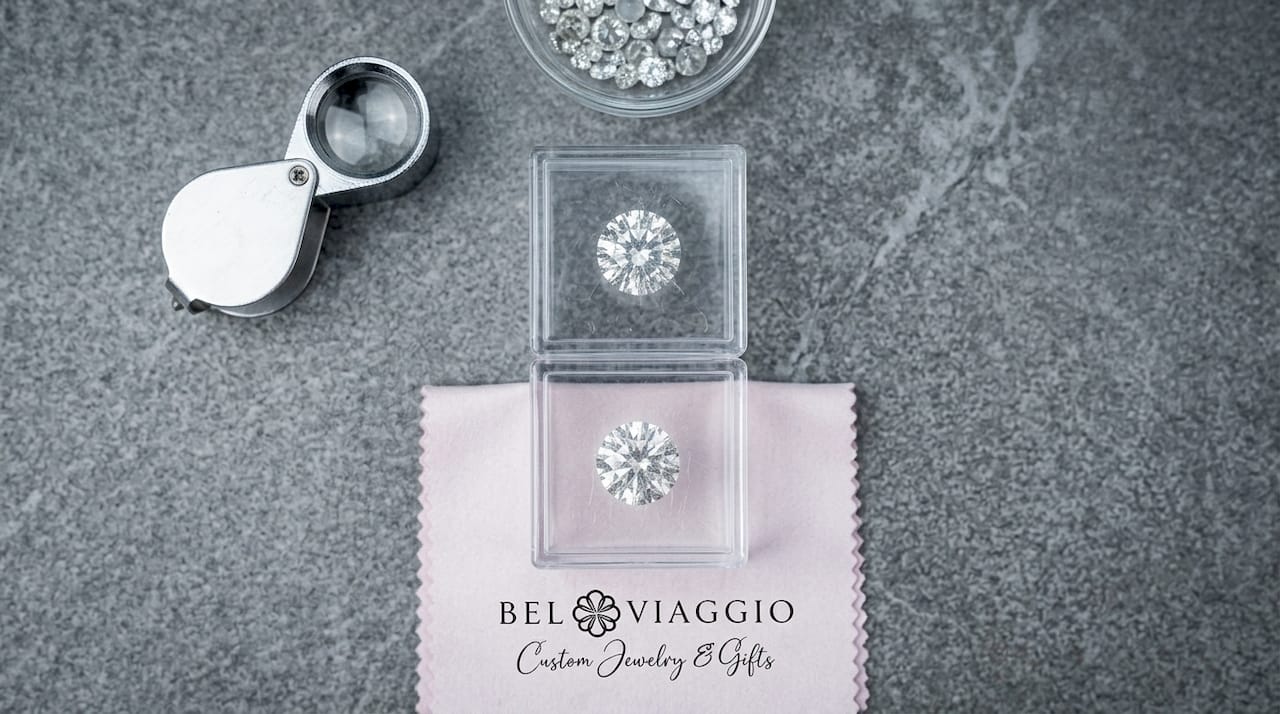
The differences emerge only under specialized gemological analysis. Advanced lab tools like Raman spectroscopy, X-ray diffraction, and polarized light microscopy reveal subtle distinctions in growth patterns and strain. Natural diamonds typically show octahedral crystal structures from their mantle formation, while lab diamonds display the geometric patterns of their production method. These microscopic signatures serve as fingerprints that certified gemologists use to verify origin.
Inclusion patterns provide another key differentiator:
- HPHT diamonds may contain metallic flux inclusions from the growth medium
- CVD diamonds often show graphite or dark inclusions in specific patterns
- Natural diamonds feature unique mineral inclusions like garnet or olivine
- Each inclusion type tells the story of the diamond’s formation environment
| Property | Lab-Grown | Natural | Detection Method |
|---|---|---|---|
| Chemical composition | Pure carbon © | Pure carbon © | Identical |
| Hardness | 10 Mohs | 10 Mohs | Identical |
| Refractive index | 2.42 | 2.42 | Identical |
| Growth patterns | Cubic/tabular | Octahedral | Microscopy |
| Typical inclusions | Metallic/graphite | Mineral crystals | Magnification |
| Strain patterns | Manufacturing stress | Geological stress | Polarized light |
Certification from reputable labs like GIA or IGI becomes essential for buyers who want origin verification. These organizations use multiple testing methods to provide definitive identification and grade the diamond’s quality characteristics. The truth about lab-grown diamonds is that their physical perfection often surpasses natural stones, yet professional documentation ensures transparency about what you’re purchasing.
Pro Tip: Always request a certification that explicitly states whether your diamond is lab-grown or natural, as this disclosure protects your investment and ensures you receive exactly what you paid for.
Ethical, environmental, and cost considerations for engagement couples
Ethical sourcing ranks high for couples seeking engagement rings that reflect their values. Lab-grown diamonds offer guaranteed conflict-free origins with complete supply chain transparency from production facility to retail counter. Natural diamonds have improved dramatically through the Kimberley Process, yet this certification system has documented gaps that allow some conflict stones to enter the market. The choice between guaranteed ethical sourcing and supporting mining communities creates a nuanced decision that depends on your priorities.
Environmental footprints vary significantly between production methods. Mining operations emit approximately 160 kg of CO2 per carat while disturbing vast land areas and consuming enormous water volumes. Lab-grown diamonds produce 6-50 kg CO2 per carat depending on the energy source powering the facility. Manufacturers using renewable energy achieve the lowest environmental impact, while those relying on coal-fired electricity may approach mining’s carbon footprint. This variability makes it essential to research your jeweler’s production practices.
The price difference transforms what couples can afford within their budget. Lab-grown diamonds cost 60-85% less than comparable natural stones, enabling you to choose a larger carat weight, better clarity grade, or more elaborate setting design. A 1-carat natural diamond might cost $5,000-$8,000, while an identical lab-grown stone runs $1,000-$2,000. This savings lets budget-conscious couples allocate funds toward customization or other wedding expenses.
Resale value considerations favor natural diamonds for investment-minded buyers:
- Natural diamonds retain 30-50% resale value due to established secondary markets
- Lab-grown diamonds hold 10-20% resale value as supply increases and prices decline
- Traditional appeal and rarity drive natural diamond demand in resale markets
- Lab diamonds prioritize initial affordability over long-term investment potential
| Factor | Lab-Grown Diamonds | Natural Diamonds |
|---|---|---|
| Ethical assurance | Guaranteed conflict-free | Kimberley Process certified |
| Carbon emissions | 6-50 kg CO2/carat | ~160 kg CO2/carat |
| Water usage | Minimal | Extensive |
| Land disturbance | None | Significant |
| Price per carat | 60-85% lower | Premium pricing |
| Resale value | 10-20% | 30-50% |
| Community impact | Manufacturing jobs | Mining employment |
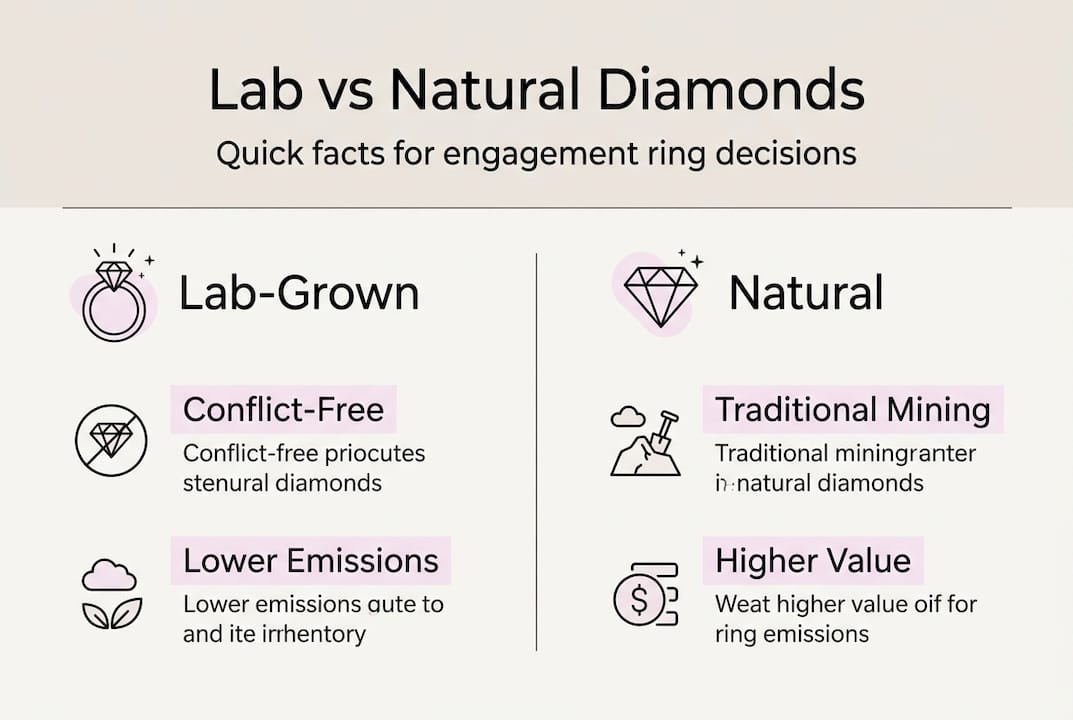
Couples prioritizing ethical gemstone selection should weigh these factors against personal values. Lab diamonds excel for maximum size and guaranteed ethics, while natural diamonds appeal to those valuing tradition, rarity, and resale potential. Neither choice is inherently superior; the right decision aligns with your specific priorities and budget constraints.
Pro Tip: If choosing lab-grown for environmental reasons, verify that your jeweler sources from facilities using renewable energy, as this dramatically reduces the carbon footprint compared to conventional power sources.
Choosing the right diamond for your engagement ring: practical tips
Start by identifying your non-negotiable priorities among budget, ethics, size, and tradition. Couples with firm budget limits find lab-grown diamonds enable them to purchase larger stones or upgrade to higher clarity grades without financial strain. Those valuing traditional symbolism or long-term resale potential lean toward natural diamonds despite higher upfront costs. Ethical engagement ring buyers who prioritize guaranteed conflict-free sourcing typically choose lab-grown options for peace of mind.
Certification verification protects your investment regardless of which type you select. Reputable labs like GIA and IGI provide detailed reports that disclose diamond origin alongside the four Cs grading. These documents serve as proof of authenticity and quality, essential for insurance purposes and future resale. Never purchase a diamond without independent third-party certification, as this leaves you vulnerable to misrepresentation or inflated quality claims.
Maximizing value with lab-grown diamonds requires strategic selection:
- Choose fancy shapes like oval, pear, or emerald cuts that show more surface area per carat
- Prioritize excellent cut grades over slightly higher color or clarity for maximum brilliance
- Consider near-colorless grades (G-H) that appear white when set but cost less than colorless (D-F)
- Explore loose lab-grown diamonds to compare options before committing to a setting
Sustainability-focused couples should investigate the energy sources powering lab-grown production facilities. Manufacturers using hydroelectric, solar, or wind power achieve dramatically lower carbon footprints than those relying on fossil fuels. Some jewelers provide transparency about their supply chain’s environmental practices, while others remain vague. Direct questions about energy sourcing separate truly sustainable options from greenwashing marketing claims.
Customization capabilities matter significantly for couples seeking personalized designs. Working with experienced jewelers who offer lifetime warranties and ongoing care ensures your ring remains beautiful for decades. Personalized engagement ring tips emphasize the importance of selecting a partner who will support your vision through design consultation, expert craftsmanship, and post-purchase services like cleaning, inspection, and repairs.
Pro Tip: Visit jewelers with both lab-grown and natural diamonds in identical settings to compare them side by side, as this hands-on experience often clarifies which option feels right for your specific situation and values.
Discover custom engagement rings at Bel Viaggio Designs
Your engagement ring should reflect your unique love story and personal values. Bel Viaggio Designs specializes in custom rings with lifetime warranty that combine ethical sourcing with handcrafted artistry. Whether you choose lab-grown or natural diamonds, our expert team guides you through every design decision to create a ring that exceeds your vision.

Explore our lab-grown diamond rings collection featuring conflict-free stones in stunning settings tailored to your style preferences. Budget-conscious couples discover exceptional value through our discounted engagement rings without sacrificing quality or beauty. Our lifetime warranty and ongoing care ensure your precious ring maintains its brilliance through every anniversary celebration.
Frequently asked questions
Can you tell natural and lab-grown diamonds apart without special equipment?
No, lab-grown and natural diamonds appear identical to the naked eye because they share the same chemical composition, crystal structure, and optical properties. Only advanced gemological testing using spectroscopy, microscopy, and strain analysis can definitively identify origin by detecting subtle growth patterns and inclusion types. This is why certification from reputable labs like GIA or IGI is essential for verifying what type of diamond you’re purchasing.
Are lab-grown diamonds truly more ethical than natural diamonds?
Lab-grown diamonds eliminate mining-related concerns like conflict financing, child labor, and community displacement through transparent production facilities. Natural diamonds support mining communities with employment but carry some ethical risks despite Kimberley Process regulations, which have documented enforcement gaps. Choosing certified ethical gemstones from reputable jewelers who verify their supply chains helps ensure responsible sourcing regardless of diamond type.
How does the price difference affect engagement ring choices?
Lab-grown diamonds cost 60-85% less than natural diamonds, enabling couples to purchase larger stones, better clarity grades, or more elaborate custom settings within the same budget. Natural diamonds command premium pricing but retain 30-50% resale value compared to 10-20% for lab-grown stones, appealing to buyers who view their ring as a long-term investment. Balancing upfront affordability against potential resale value helps couples make decisions aligned with their financial priorities and timeline.
Do lab-grown diamonds have the same durability as natural diamonds for daily wear?
Yes, both diamond types share identical hardness ratings of 10 on the Mohs scale and the same resistance to scratching, chipping, and heat damage. The chemical and structural similarities mean lab-grown diamonds withstand daily wear exactly like natural diamonds. Proper care practices like regular cleaning, avoiding harsh impacts, and professional inspections apply equally to both types for maintaining long-term beauty and structural integrity.
Will lab-grown diamond prices continue to drop and affect my ring’s value?
Lab-grown diamond prices have declined as production efficiency improves and supply increases, a trend likely to continue as technology advances. This benefits new buyers but reduces resale value for existing owners, making lab diamonds better suited for couples prioritizing initial affordability and personal significance over investment potential. Natural diamond prices remain more stable due to controlled supply and established secondary markets, though they also fluctuate with economic conditions and consumer demand trends.
Recommended
- Loose Lab Grown Diamonds – Bel Viaggio Designs, LLC
- Ethical gemstone selection guide for engagement rings 2026 – Bel Viaggio Designs, LLC
- Top gemstone choices for ethical engagement rings 2026 – Bel Viaggio Designs, LLC
- Lab Grown Diamond Bar Set Wedding Band .40 ctw – Bel Viaggio Designs, LLC
- Comprehensive lab-grown vs natural diamonds comparison 2026 – Eternal Carat