

Recycled-metal jewelry uses metal that’s already been mined and refined once, then melted down and reshaped into something new. It comes from three sourcing streams: pre-consumer (manufacturing scrap that never reached a customer), post-consumer (old jewelry, coins, or dental gold traded in for reuse), and waste (industrial byproducts and other reclaimed material). Both the Responsible Jewellery Council and CIBJO now use these same three categories in their official guidance, which gives shoppers a real vocabulary to check against maker claims.
Once you know what to look for, recycled-metal pieces show up everywhere:
- Reclaimed sterling silver stackable rings with a slightly matte, hand-finished surface
- Mixed-metal statement necklaces built from soldered scrap fragments
- Bracelets and cuffs upcycled from old flatware, spoons, or forks
- Post-consumer gold wedding bands remelted from estate jewelry
- Sculptural pendants made from industrial metal offcuts
Key Takeaways
Recycled-metal jewelry is chemically equivalent to newly mined metal once refined, and the real differentiator for buyers is whether the maker discloses the pre-consumer, post-consumer, or waste category and names their refining process.
| Point | Details |
|---|---|
| Three sourcing categories | Recycled metal falls into pre-consumer, post-consumer, or waste, per RJC and CIBJO definitions. |
| Refined metal has no visual tell | Post-consumer gold looks identical to newly mined gold once properly refined and hallmarked. |
| Verify with specifics, not labels | Ask for the refiner’s name and material category; vague “eco-friendly” claims signal a weak disclosure. |
| Price and care match new metal | Recycled sterling silver and gold clean and wear the same as new metal of equal purity. |
| Belviaggiodesigns offers verified custom sourcing | Custom consultations let buyers confirm recycled metal category and pair settings with lab-grown diamonds. |
Table of Contents
- 1. Reclaimed Sterling Silver Classics
- 2. Mixed-Metal Sculptural Jewelry
- 3. Upcycled Flatware and Utensil Pieces
- 4. Hammered Scrap-Metal Rings
- 5. Post-Consumer Gold Wedding Bands
- 6. Remade Vintage Settings With Recut Stones
- 7. Industrial-Scrap Statement Pieces
- 8. Thin Delicate Recycled-Metal Chains
- How Is Scrap Metal Turned Into Jewelry?
- What Standards and Labels Actually Confirm a Recycled Claim?
- What Should You Expect to Pay, and How Do You Care for These Pieces?
- Where Do You Find Makers Who Actually Use Recycled Metal?
- Sources
- FAQ
1. Reclaimed Sterling Silver Classics
These are the easiest recycled pieces to spot because they look almost identical to new silver jewelry. Reclaimed sterling silver typically comes from post-consumer sources: old flatware, decommissioned jewelry, even silverware from estate sales. Look for a soft, slightly warmer patina than brand-new silver and ask the maker whether the silver was re-refined (melted and purified again) or simply repolished. Expect prices comparable to standard sterling silver, since the metal itself carries the same market value either way.
2. Mixed-Metal Sculptural Jewelry
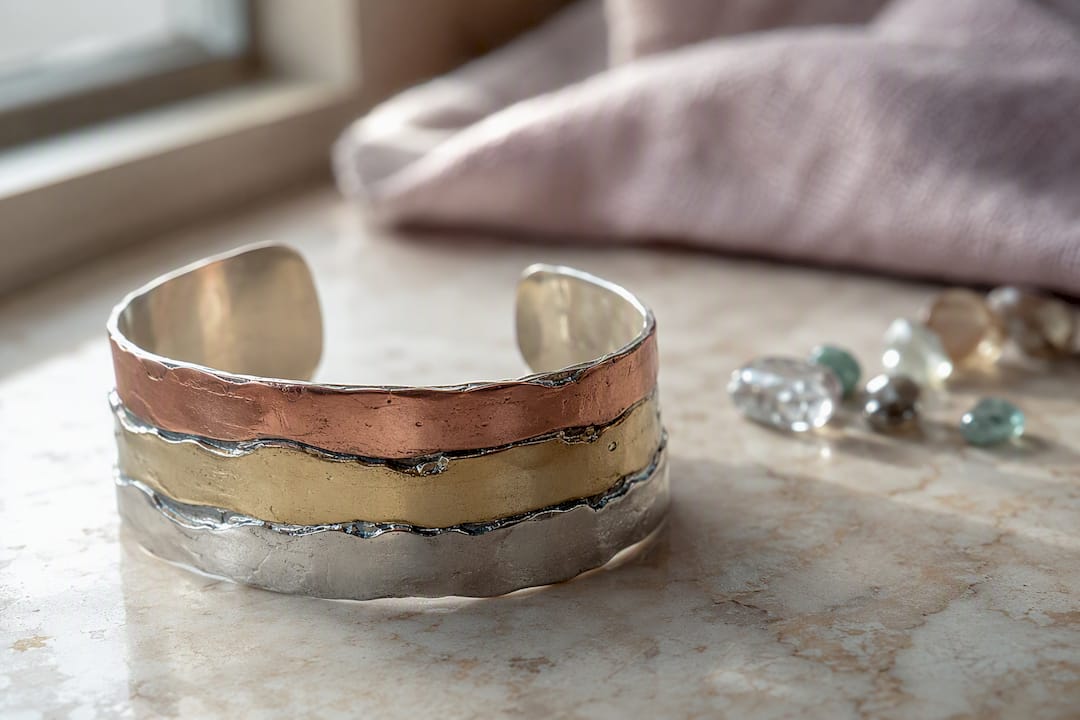
This category leans into visible seams and contrast rather than hiding them. Designers combine copper, brass, and silver scrap into layered cuffs, earrings, and pendants where the joins are part of the design, not a flaw. One gallery feature on recycled-metal designers shows how varied this category gets, ranging from delicate remade fine jewelry to bold industrial statement pieces. If a listing shows uneven color transitions between metals, that’s usually intentional, not a defect.
3. Upcycled Flatware and Utensil Pieces
Spoon rings and fork bracelets are a genre of their own. Makers take vintage silver-plated or sterling utensils and hand-forge them into wearable shapes, often leaving the original spoon bowl or fork tines partially visible. Prices run lower than fine jewelry, usually because the base metal is silver-plated brass rather than solid silver. Ask directly whether the piece is plated or solid; the visual difference is nearly impossible to tell from a photo alone.
4. Hammered Scrap-Metal Rings
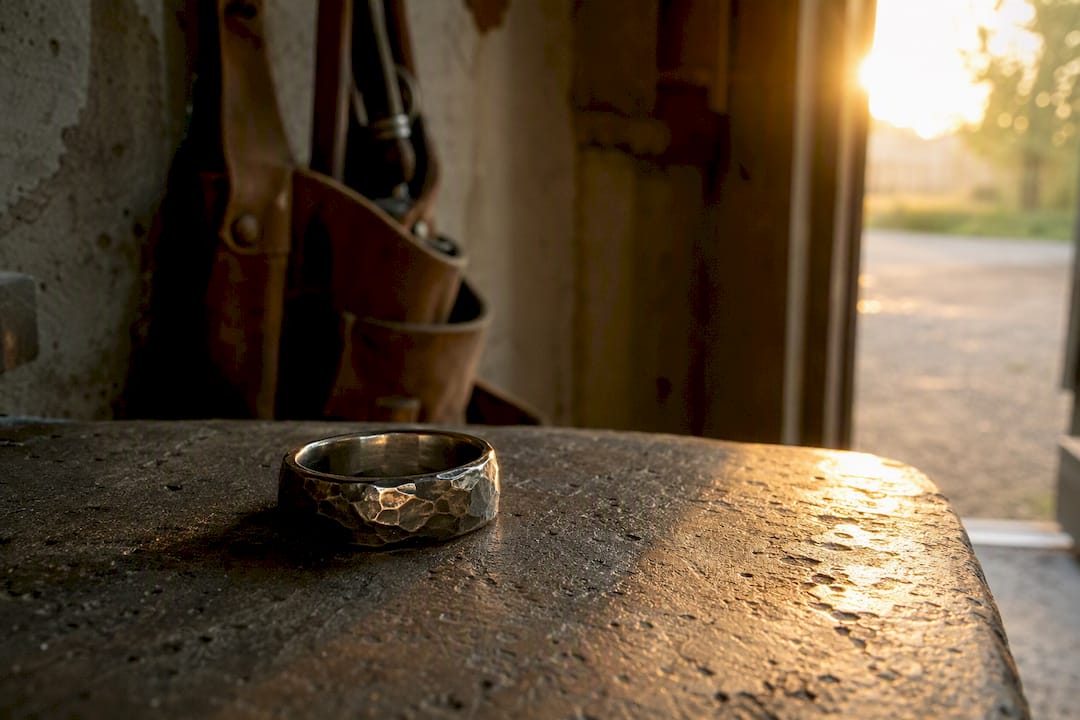
Hammered texture on a recycled ring often comes from the actual forging process, not decoration applied afterward. The surface catches light unevenly, with small dents and facets that vary piece to piece. This is one of the more affordable recycled categories because the labor is simpler than casting, and no two rings look exactly alike.
5. Post-Consumer Gold Wedding Bands
Estate gold, old rings, and even dental gold get remelted and recast into new bands. Visually, there’s no way to distinguish post-consumer gold from freshly mined gold once it’s refined. That’s the point: refining strips a metal down to its elemental purity, erasing its history. What you’re paying for here is the sourcing story, not a different look.
6. Remade Vintage Settings With Recut Stones
Some makers salvage old settings, melt the metal, and recast it around newly cut or reused stones. These pieces often carry a slightly heavier, denser feel than mass-produced modern settings, a byproduct of older casting techniques.
7. Industrial-Scrap Statement Pieces
Large, bold cuffs and pendants built from architectural or industrial offcuts fall into this category. Expect visible weld lines, oxidized color variation, and a raw, unpolished finish. These run on the higher end price-wise because of the metalwork skill involved, not the material cost.
8. Thin Delicate Recycled-Metal Chains
Not every recycled piece is chunky. Fine chains in reclaimed gold or silver look identical to new fine jewelry, and the recycled sourcing is invisible until you ask. This is often the easiest entry point for buyers who want the ethics without changing their aesthetic at all.
A few visual notes worth keeping in mind: recycled silver often runs slightly warmer in tone than brand-new silver, recycled gold shows no visual difference once refined, and price ranges for handmade recycled pieces tend to sit anywhere from $40 for small silver items to several thousand dollars for gold pieces with gemstones.
Pro Tip: A rough, uneven surface on a recycled piece is usually intentional texture from hand-forging, while a dull, grayish film is tarnish that cleans off. If a listing photo shows visible solder seams on a “seamless” design claim, ask the maker directly before buying.
When you’re browsing an online gallery or a maker’s product photos, treat the images as a starting point, not the full picture. A single photo can’t tell you whether a metal is solid or plated, so always pair what you see with a direct question to the seller.
How Is Scrap Metal Turned Into Jewelry?
Recycled jewelry metal moves through four basic stages: collection, sorting, refining, and remaking, ending with hallmarking to confirm purity. Each step matters for the quality of what ends up on your finger or around your neck.
- Collection. Scrap comes from manufacturing offcuts, traded-in jewelry, dental gold, coins, and industrial byproducts. The USGS tracks these secondary metal streams as a meaningful part of overall supply.
- Sorting. Refiners separate metals by type and estimated purity, often using X-ray fluorescence (XRF) testing to get a fast, non-destructive read on metal content.
- Refining. The metal is melted down and chemically purified to remove alloy contaminants, stripping it back to a near-pure elemental state.
- Alloying and making. Refined metal gets mixed with other elements to hit a target purity, like 14k or 18k gold, then cast, forged, or hand-worked into a finished piece.
- Hallmarking. A stamp (925, 14K, 18K) confirms the final purity, giving buyers a verifiable marker independent of the metal’s origin.
Once refined, recycled metal is not materially different from newly mined metal. Peer-reviewed research on jewelry manufacturing confirms that properly refined recycled precious metals are equivalent in composition to newly mined material, and that recycling typically uses far less energy and water than mining new ore. Silver and gold get recycled at much higher rates than many other metals, partly because end-of-life recovery rates vary significantly by metal type, and precious metals are simply worth the effort to reclaim.
Pro Tip: A maker who can name their refiner, or point to a hallmark plus a sourcing statement, is giving you something you can verify. Vague language like “eco-friendly materials” with no specifics is a sign to ask more questions before buying.
What Standards and Labels Actually Confirm a Recycled Claim?
The two references that matter most right now are the Responsible Jewellery Council’s chain-of-custody standard and CIBJO’s recommended definition of recycled metal, both of which now recognize the same three categories: pre-consumer, post-consumer, and waste. The RJC requires its member companies to declare which category their recycled material falls into as part of chain-of-custody documentation, rather than using “recycled” as a blanket term. This shift matters because vague labeling used to let pre-consumer scrap and genuine post-consumer material get marketed identically.
When you’re evaluating a maker’s claim, look for:
- A stated material category (pre-consumer, post-consumer, or waste), not just the word “recycled”
- Named refining partners or a described chain-of-custody process
- Hallmarks and assay information on the finished piece
- Third-party certification where the maker claims it, with a way to verify membership
A short list of questions works better than trying to judge sourcing from a product description alone:
- “Is this metal pre-consumer or post-consumer recycled, or a mix?”
- “Who refines your metal, and can I see documentation?”
- “Is this piece hallmarked, and what purity does it carry?”
A credible answer names a specific refiner or process. A vague one repeats the word “sustainable” without ever explaining where the metal actually came from.
What Should You Expect to Pay, and How Do You Care for These Pieces?
Recycled-metal jewelry generally costs about the same as comparable new-metal pieces, since the metal’s market value doesn’t change based on its history, though handmade recycled pieces sometimes carry a premium for labor-intensive techniques like hand-forging or reclaimed flatware work. Durability is also comparable once the metal is properly refined and alloyed. A recycled 14k gold band wears exactly like a newly mined 14k gold band, because it’s chemically the same thing.
Before buying, confirm:
- The purity hallmark (925 for silver, 10k/14k/18k for gold)
- Whether the piece is solid metal or plated over a base metal
- The maker’s repair and resizing policy
- A return policy that covers you if the fit or finish isn’t right
- Multiple photo angles, especially for hand-forged or textured pieces
For care, most recycled sterling silver and gold respond to the same gentle cleaning as new metal: a soft cloth, mild soap, and warm water. Avoid ultrasonic cleaners on pieces with visible solder joins or delicate texture work, since vibration can loosen older repairs. A little surface darkening on silver is normal tarnish, not damage, and it polishes right off.
If you have sensitive skin, ask specifically about nickel content. Recycled metal isn’t inherently more or less allergenic than new metal, but alloy mixes vary by maker, and “hypoallergenic” claims should come with a stated alloy composition, not just a label on the listing.
Where Do You Find Makers Who Actually Use Recycled Metal?
Specialist ethical-jewelry marketplaces and individual maker websites are the two most reliable discovery channels, and local craft fairs or studio visits are worth the trip if you want to see texture and finish in person before buying. Search terms like “recycled gold ring pre-consumer” or “recycled sterling silver handmade gallery” tend to surface makers who are specific about sourcing, rather than general jewelry retailers using “recycled” as a marketing word.
Once you’ve found a few options, vet them the same way every time:
- Ask for a written sourcing disclosure, not just a verbal claim
- Request the name of their refiner or recycling partner
- Ask whether they can provide assay or hallmark documentation
- Check their return and repair policy before ordering
- Look for real customer photos showing the piece in different lighting
Belviaggiodesigns publishes sourcing details for its ethically made pieces and offers custom design consultations for readers who want a vetted starting point rather than searching cold. If you’re weighing recycled metal against other ethical options, the ethical gemstone selection guide covers how stone sourcing pairs with metal choices.
When Recycled Metal Is the Right Call
Recycled metal is a strong choice for anyone who wants a lower environmental footprint without giving up quality, since properly refined recycled metal performs identically to newly mined metal in durability and finish. It makes the most sense when ethical sourcing is your top priority, when you’re drawn to the slightly irregular character of hand-forged or vintage-remade pieces, or when you’re cost-conscious but still want verified, documented sourcing rather than a vague green claim. Bel Viaggio Designs’ educational content on recycled gold reflects the same standard this article uses: name the category, name the refiner, and let the buyer verify.
A Vetted Path to Ethically Sourced Custom Jewelry
Belviaggiodesigns offers custom, ethically sourced jewelry and will confirm recycled metal sourcing details on request, so you’re not left guessing what “sustainable” actually means on a product page.
Every custom piece starts with a design consultation where you can ask directly about pre-consumer or post-consumer metal sourcing, alloy content, and hallmarking. Recycled-metal settings pair especially well with lab-grown diamonds, giving you a fully traceable, ethically sourced piece from the metal to the stone. If you’d rather start with something ready-made, the lab-grown diamond stud earrings show what a finished ethical piece looks like before you commit to a custom order. For general guidance on what to ask any jeweler about sourcing, the ethical sourcing buyer’s guide is a useful starting reference. Start a custom consultation with Belviaggiodesigns to get a recycled-metal piece with sourcing you can actually verify.
Sources
- CIBJO recommends new definition of ‘recycled gold’ for use by global jewellery and watch industry
- RJC updates standard definition for recycled precious metal
- USGS publication (relevant to recycled metals and supply data)
- End-of-life recycling rates for selected metals — IEA data
- Relevant peer-reviewed article on recycled metal quality and environmental impact
FAQ
What kind of jewelry is made from recycled metal?
Nearly every category exists in recycled form, including stackable silver rings, gold wedding bands, mixed-metal statement necklaces, upcycled spoon bracelets, and sculptural pendants made from industrial scrap.
What household items contain the most gold?
Old jewelry, dental work, and coins are the most accessible high-value sources of gold in a typical home; electronics contain small amounts too, but recovering it yourself isn’t practical or safe.
What is the most commonly recycled metal in jewelry?
Gold and silver are recycled at higher rates than most other metals, largely because their market value makes reclaiming them worthwhile even at small scales.
What kind of jewelry can be made from waste materials?
Industrial offcuts and scrap metal get reworked into bold cuffs, textured rings, and statement pendants, often with visible weld lines and raw finishes that highlight the material’s origin rather than hide it.
How can I verify a maker’s recycled metal claim?
Ask the maker to name their material category (pre-consumer, post-consumer, or waste) and their refining partner; a specific answer with documentation is far more reliable than a general “eco-friendly” label.
Recommended
- What is repurposed jewelry? Ethical beauty with a unique story – Bel Viaggio Designs, LLC
- Decode jewelry metal titles: purity, ethics, and meaning – Bel Viaggio Designs, LLC
- Custom jewelry ideas for ethical engagement rings 2026 – Bel Viaggio Designs, LLC
- Vintage-inspired jewelry: design, ethics, and modern beauty – Bel Viaggio Designs, LLC