

TL;DR:
- An engagement ring symbolizes a proposal promise, while a wedding ring marks the marriage commitment. The two rings differ in design, cost, timing, and daily wear purpose, with lab-grown diamonds offering a more affordable and ethical option. Choosing the right rings involves balancing style, practicality, and budget to ensure long-lasting satisfaction.
An engagement ring is defined as a ring given at the moment of proposal, symbolizing a promise to marry, while a wedding ring is exchanged during the marriage ceremony as a formal seal of vows. The wedding ring vs engagement ring distinction matters more than most couples expect, because the two rings differ in design, cost, timing, and meaning. Knowing the difference helps you budget accurately, choose the right styles, and avoid surprises at the jeweler. This guide covers everything you need to make a confident decision in 2026, including current pricing data and the growing impact of lab-grown diamonds on what your money can buy.
What are the key design differences between engagement rings and wedding rings?
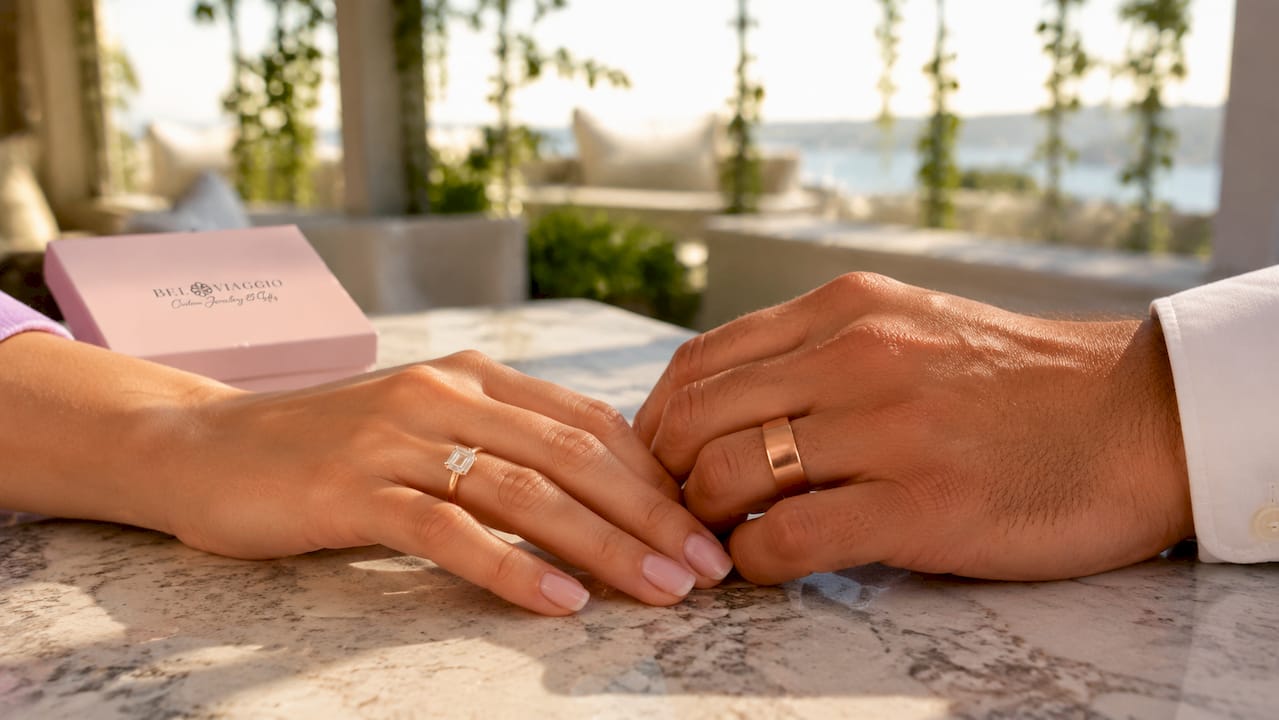
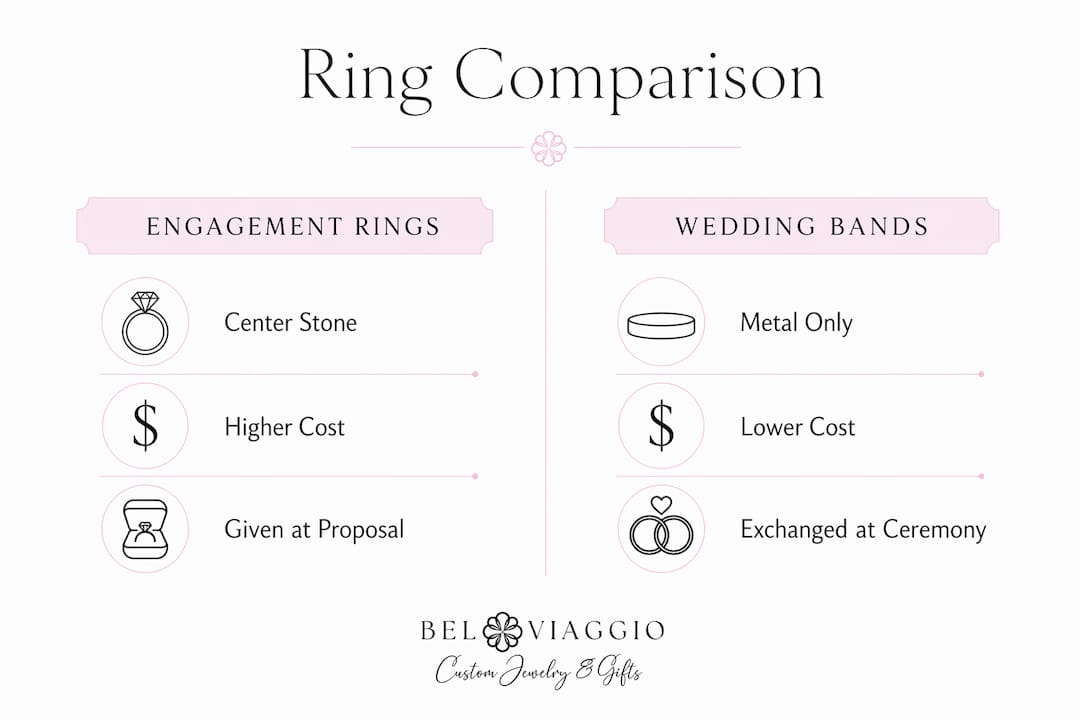
Engagement rings almost always feature a prominent center stone, and that stone drives both the visual impact and the price. The center stone’s 4Cs, meaning carat, cut, clarity, and color, largely determine the ring’s cost and character. Styles range from classic solitaires and cathedral settings to halo designs and three-stone rings. Each style carries a different visual weight, so your choice signals personal taste before you say a word.
Wedding bands take the opposite approach. They tend to be simpler, built for daily wear, and designed to sit flush alongside the engagement ring. Common wedding band options include:
- Plain metal bands in yellow gold, white gold, rose gold, or platinum
- Diamond-accented bands with small stones set in pavé, channel, or bar settings
- Matching bridal sets where the engagement ring and band are designed as a pair
- Textured or engraved bands with milgrain edges, hammered finishes, or custom inscriptions
Metal choice matters for both ring types. Platinum adds durability and hypoallergenic benefits but carries a higher price. Gold at 14k or 18k balances hardness with beauty. Titanium and stainless steel cost less and resist scratching, making them practical for active lifestyles.
Pro Tip: If you plan to stack your engagement ring and wedding band, try them together before buying. Some ring profiles sit flush naturally; others create an awkward gap that requires a custom contoured band.
How do costs compare for engagement rings vs wedding bands?
The price gap between the two ring types is significant. As of 2026, the average engagement ring costs about $4,600. That figure reflects the weight of the center stone, the metal, and the setting design. Combined wedding bands for both partners typically run between $900 and $2,200, making the total jewelry budget for a couple roughly $5,500 to $6,800.
Breaking that down further helps with planning. Men’s wedding bands average $400 to $1,000, while women’s bands average $600 to $1,800, with diamond-accented options sitting at the higher end. A platinum upgrade on either ring adds $800 to $1,500 over a comparable gold version. That premium buys superior scratch resistance and a naturally white color that never fades.
Lab-grown diamonds have changed the math considerably. They cost 50–73% less than natural diamonds of comparable quality. A couple who chooses a lab-grown center stone can either stay within a tight budget or upgrade to a larger stone for the same price. Many couples now prioritize a 2.0+ carat lab-grown diamond and redirect the savings toward the wedding itself.
One cost that couples frequently overlook is insurance. Dedicated jewelry insurance typically costs 1%–2% of the ring’s value annually. On a $4,600 engagement ring, that works out to under $100 per year. Standard homeowners or renters policies cover jewelry but often cap payouts at amounts too low to replace a quality ring.
| Ring Type | Average Cost (2026) | Key Cost Driver |
|---|---|---|
| Engagement ring | ~$4,600 | Center stone (4Cs) |
| Women’s wedding band | $600–$1,800 | Metal type, diamond accents |
| Men’s wedding band | $400–$1,000 | Metal type, width |
| Platinum upgrade | +$800–$1,500 | Metal premium over gold |
Understanding the current engagement ring trends helps you see where the market is moving and where the best value sits right now.
When and how are engagement rings and wedding rings worn?
Timing and placement are where the two rings differ most visibly. Engagement rings are worn from the day of the proposal onward. Wedding bands are added on the wedding day during the exchange of vows, and both rings are then worn together from that point forward.
The most common wearing tradition in Western cultures places both rings on the left hand’s ring finger. The wedding band goes on first, closest to the heart, with the engagement ring stacked on top. Some people switch the engagement ring to the right hand during the ceremony so the wedding band slides on first, then move it back afterward.
Cultural traditions vary widely. A few patterns worth knowing:
- In many European countries, including Germany and the Netherlands, wedding rings are worn on the right hand.
- Some cultures use a single ring for both engagement and marriage, skipping the two-ring tradition entirely.
- Men’s engagement rings are increasingly common, with many couples choosing matching sets for both partners.
- Some people choose to solder their rings together after the wedding to prevent shifting and simplify daily wear.
Pro Tip: If you have an active job or work with your hands, consider wearing your engagement ring only for evenings and weekends. A plain wedding band holds up better to daily physical wear and reduces the risk of stone damage.
What should couples consider when choosing ring styles and metals?
Choosing the right rings requires balancing personal style, practical wear needs, and budget. Working through these factors in order prevents regret later.
-
Assess your lifestyle first. A nurse, chef, or construction worker needs a low-profile, durable band. Platinum or titanium resists scratching better than yellow gold. A high-set solitaire catches on gloves and equipment, so a bezel or flush setting works better for active hands.
-
Decide between natural and lab-grown diamonds. Lab-grown diamonds are physically identical to mined stones and cost dramatically less. The savings allow you to choose a larger stone, a better cut grade, or a more elaborate setting without exceeding your budget.
-
Consider a matching bridal set. Bridal sets are designed so the engagement ring and wedding band fit together perfectly. They eliminate the guesswork of finding a band that sits flush, and they often cost less than buying two rings separately. The tradeoff is less flexibility if your taste changes.
-
Think about personalization. Engraving a date, initials, or a short phrase inside the band adds meaning at minimal cost. Gemstone alternatives like sapphire, emerald, morganite, or aquamarine offer color and individuality. A morganite three-stone ring or a colored gemstone center stone can cost significantly less than a diamond while making a stronger visual statement.
-
Align your budget across both rings. Most couples spend the majority of their jewelry budget on the engagement ring and keep the wedding bands modest. That ratio makes sense, but it is not a rule. Some couples prefer a simple engagement ring and invest in beautifully crafted bands they will wear every day for decades.
Knowing how to buy designer jewelry well also helps you avoid overpaying for branding when the craftsmanship and materials are what actually matter. The same principle applies to wedding jewelry: focus on quality of construction and stone grading, not just the name on the box.
Key Takeaways
The clearest rule in the engagement ring vs wedding ring decision is this: the engagement ring marks the promise, the wedding band marks the commitment, and both deserve choices that reflect your real life, not just the moment.
| Point | Details |
|---|---|
| Purpose differs by timing | Engagement rings mark the proposal; wedding bands are exchanged at the ceremony. |
| Design follows function | Engagement rings feature center stones; wedding bands prioritize durability for daily wear. |
| Budget both rings together | Expect roughly $5,500–$6,800 total for engagement ring and both partners’ bands in 2026. |
| Lab-grown diamonds shift value | Choosing lab-grown cuts cost by 50–73%, freeing budget for size, quality, or other priorities. |
| Insurance is worth the cost | Dedicated jewelry insurance runs 1%–2% of ring value annually, under $100 for a $4,600 ring. |
Why the “right” ring is simpler than the industry makes it seem
Couples often walk into a jewelry store believing they need to master an entire vocabulary before they can make a good decision. The truth is simpler. The engagement ring vs wedding ring distinction comes down to two questions: when is it given, and what does it need to do every day?
What I find most couples get wrong is treating the engagement ring as the only ring that matters. The wedding band is the ring you will actually wear every single day for the rest of your life. A poorly chosen band that pinches, catches, or tarnishes becomes a daily frustration. The engagement ring gets admired; the band gets lived in.
The lab-grown diamond shift has genuinely changed what is possible at every price point. Couples who would have settled for a half-carat natural diamond five years ago can now choose a 2.0-carat lab-grown stone with an excellent cut grade and spend less. That is not a compromise. That is a better ring. The stone is chemically and physically identical. The only difference is where it was made.
My honest advice: spend less time worrying about what tradition says you should spend and more time thinking about what you will love wearing in 20 years. A ring that fits your life, your style, and your budget will always feel more meaningful than one that checks a conventional box.
— Stacy
Rings worth wearing every day, from Belviaggiodesigns
Belviaggiodesigns handcrafts engagement rings and wedding bands built for real life, not just the proposal moment. Every piece is made with ethically sourced materials, and the full collection includes lab-grown diamond options that deliver exceptional quality at a fraction of the cost of mined stones.
Whether you are drawn to a black diamond halo engagement ring or a classic men’s gold and platinum band, Belviaggiodesigns offers custom design consultations and flexible payment plans. The team works with couples to match rings to their lifestyle, budget, and personal style. Browse the full collection at belviaggiodesigns.com to find the combination that fits both of you.
FAQ
What is the main difference between an engagement ring and a wedding ring?
An engagement ring symbolizes the promise to marry and is given at the proposal, while a wedding ring is exchanged during the marriage ceremony as a formal commitment. The two rings differ in timing, design, and symbolic purpose.
Can you wear an engagement ring as a wedding ring?
Some couples choose a single ring for both purposes, but the tradition calls for separate rings. Wedding bands are typically simpler and more durable, designed for daily wear alongside the engagement ring.
How much should you budget for both rings combined?
The average engagement ring costs about $4,600 in 2026, and combined wedding bands for both partners typically run $900 to $2,200. A realistic total budget for both rings is $5,500 to $6,800.
Are lab-grown diamonds a good choice for engagement rings?
Lab-grown diamonds are physically and chemically identical to mined diamonds and cost 50–73% less for comparable quality. They allow couples to choose a larger stone or a more detailed setting without increasing their budget.
Which finger do you wear engagement and wedding rings on?
In most Western cultures, both rings are worn on the left hand’s ring finger, with the wedding band placed closest to the hand and the engagement ring stacked on top.
Recommended
- Top Unique Engagement Ring Trends for Brides in 2025 – Bel Viaggio Designs, LLC
- Top Unique Engagement Ring Trends for Brides in 2025 – Bel Viaggio Designs, LLC
- Ethical engagement ring buying tips for personalized 2026 – Bel Viaggio Designs, LLC
- Ethical engagement ring buying tips for personalized 2026 – Bel Viaggio Designs, LLC