

TL;DR:
- Artisanal gold mining accounts for 80% of global mercury pollution, challenging assumptions about gold’s ethics. Ethical gold sourcing involves responsible practices ensuring human rights, environmental protection, transparency, and traceability from mine to market. Verifiable certifications like Fairmined, RJC, LBMA, and RGMPs help couples choose jewelry that genuinely reflects responsible mining and processing standards.
Artisanal gold mining accounts for 80% of global mercury pollution, a fact that quietly challenges the assumption that all gold is created equal. When you choose a ring to mark one of life’s most meaningful moments, the metal carrying that stone has a story, and not always a good one. Understanding ethical gold mining is not just for activists or policy makers. It is for couples who want their engagement or wedding jewelry to genuinely reflect their values, not just a marketing promise stamped on a tag.
Table of Contents
- What makes gold mining ethical?
- Certifications and standards for ethical gold
- How ethical gold is mined: methodologies and real-world impacts
- Nuances and challenges: recycled gold, ASM, and certification limitations
- Making ethical gold part of your engagement or wedding jewelry
- A fresh perspective: why evidence matters more than labels
- Discover ethical gold jewelry for your engagement or wedding
- Frequently asked questions
Key Takeaways
| Point | Details |
|---|---|
| Ethical gold criteria | Ethical gold mining requires transparent standards and supply-chain traceability. |
| Certifications matter | Trusted certifications and audits signal responsible practices when buying jewelry. |
| Environmental impacts | Responsible mining minimizes chemical use and supports social development. |
| Challenges exist | Mixing, ASM limits, and recycled gold present real-world trade-offs for couples. |
| Actionable steps | Request documentation, review certifications, and align choices with your values. |
What makes gold mining ethical?
The word “ethical” gets used loosely in jewelry marketing, so let’s define it precisely. Ethical gold mining involves sourcing and processing gold under responsible standards that address human rights, environmental impact, labor conditions, fair payment, and supply chain due diligence with full traceability.
That definition covers a wide range of practices. An ethical mine does not use child or forced labor. Workers earn fair wages in safe conditions. The surrounding environment is protected, and any damage is actively managed or restored. And critically, the gold can be tracked from the point of extraction all the way to the finished ring on your finger.
Key distinguishing practices in ethical gold mining include:
- Fair labor and wages: All workers, regardless of gender, receive equal, fair pay with safe working conditions and freedom of association.
- Human rights protections: Mines operate without fueling conflict and maintain zero tolerance for trafficking or exploitation.
- Environmental stewardship: Responsible mines manage waste, protect water sources, and commit to land rehabilitation after extraction ends.
- Supply chain transparency: Every step from mine to market is documented and auditable by third parties.
- Chemical management: Toxic chemicals like mercury and cyanide are either tightly regulated or actively phased out.
“Ethical gold mining is not simply about avoiding harm. It is about actively creating positive outcomes for the people and ecosystems involved in every step of gold production.”
This is very different from conventional mining, where cost pressures routinely lead to cutting corners on worker safety or waste disposal. When you explore ethical jewelry sourcing, you quickly realize the difference between aspirational language and documented practice.
Certifications and standards for ethical gold
Knowing what ethical mining looks like is helpful. But in practice, couples need a way to verify those claims before spending thousands of dollars. That’s where certifications come in. Key certifications include the LBMA Responsible Gold Guidance, the World Gold Council Responsible Gold Mining Principles (RGMPs), the RJC Chain of Custody standard, and Fairmined certification for artisanal and small-scale mining (ASM).
Here is a breakdown of what each one covers and how useful it is for you as a couple:
| Certification | Focus area | Who it applies to | Key requirement |
|---|---|---|---|
| LBMA Responsible Gold | Refiner due diligence | Refiners and bullion banks | Supply chain risk assessment and audit |
| World Gold Council RGMPs | ESG principles | Large-scale mining companies | 51 principles covering safety, environment, rights |
| RJC Chain of Custody | Jewelry supply chain | Manufacturers and retailers | Traceability through certified supply chain |
| Fairmined | Artisanal small-scale mining | Small cooperatives | Social development, mercury phase-out, premium payments |
Each of these plays a different role. The LBMA standard is upstream, ensuring refiners screen for conflict gold and human rights violations. The RGMPs offer a broad framework for large corporate mines. The RJC Chain of Custody (COC) is particularly relevant when buying jewelry because it traces gold through the manufacturing and retail supply chain, not just back to the mine.
Fairmined is arguably the most transformative for small communities. It does not just certify a process. It requires miners to invest premiums into community development projects such as schools, clinics, and clean water, while actively replacing mercury use with safer alternatives.
Pro Tip: When evaluating a jeweler’s ethical claims, ask whether their certification covers the full supply chain or just one segment. A retailer can hold an RJC membership while sourcing from non-certified suppliers unless they specifically hold the Chain of Custody certification.
Understanding diamond certification importance alongside gold certification gives you a complete picture of what it means to buy truly verified ethical jewelry. For a step-by-step breakdown of ring verification, the ring certification guide is a solid resource.
How ethical gold is mined: methodologies and real-world impacts
Certifications are only as strong as the practices behind them. So what does ethical gold mining actually look like on the ground? The methodologies go far beyond paperwork.
Ethical mining methodologies include organizational formalization into cooperatives, elimination of child and forced labor, safe working conditions, equal pay, regulated use and phase-out of mercury and cyanide, environmental management including reforestation, full traceability via audits and blockchain, third-party verification, and progressive development levels such as Development Gold’s Level 1 through Level 3.
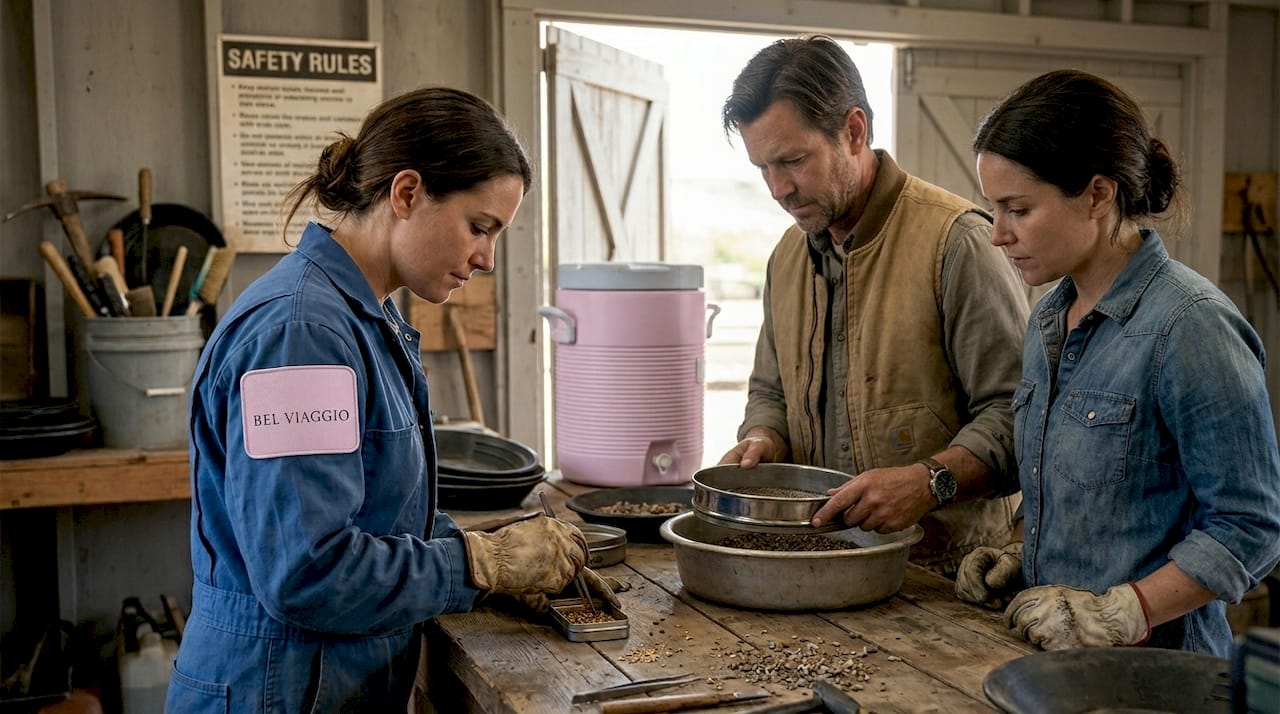
The Level 1 to Level 3 model is particularly smart. It recognizes that many small-scale miners cannot reach full certification overnight. Level 1 sets baseline requirements, while Level 3 represents best-in-class practices. This graduated approach brings more miners into the ethical system rather than excluding those who are improving but not yet perfect.
Real-world impacts of unethical mining make the case for these standards clearly. Empirical data from mining studies shows soil erosion in Ethiopian artisanal mining reaching 13.2 tons per hectare per year, mercury contamination in Zimbabwe’s artisanal sector exceeding safe thresholds, and widespread deforestation creating serious public health risks.
In contrast, large corporate operations that conform to the World Gold Council’s Conflict-Free Gold Standard, such as Newmont, implement comprehensive human rights policies and undergo third-party audits. The difference in environmental and social outcomes is stark.
Here is a practical numbered view of how ethical mining practices protect both people and landscapes:
- Formation of cooperatives: Informal miners join regulated bodies that can be audited and supported with training.
- Chemical transition programs: Mines receive technical and financial support to shift from mercury to safer processes like gravity separation or borax.
- Environmental baseline assessments: Before and after data tracks soil, water, and biodiversity impacts.
- Community reinvestment: Fairmined and similar programs require a percentage of premiums to fund local health and education projects.
- Blockchain traceability: Emerging tools tag gold batches from point of origin, making mixing with non-certified gold detectable.
Pro Tip: Ask your jeweler whether they can provide a mine-to-market trace for the gold in your ring. Brands that genuinely practice ethical sourcing will have documentation ready. Those that do not may be relying on general supplier assurances rather than verified data.
Selecting an ethical gemstone guide alongside ethical gold standards helps ensure both the metal and the center stone in your ring are responsibly sourced. For visual inspiration on what ethical rings actually look like, ethical ring inspiration is worth a browse.
Nuances and challenges: recycled gold, ASM, and certification limitations
Even the best certification systems have real limitations, and couples deserve to know them. Current certifications face challenges including the mixing of non-certified gold with certified batches, difficulties in verifying ASM supply chains, contradictions in voluntary programs for artisanal and small-scale gold mining (ASGM), and the distinction between ethical gold and eco gold, where social and environmental priorities differ.
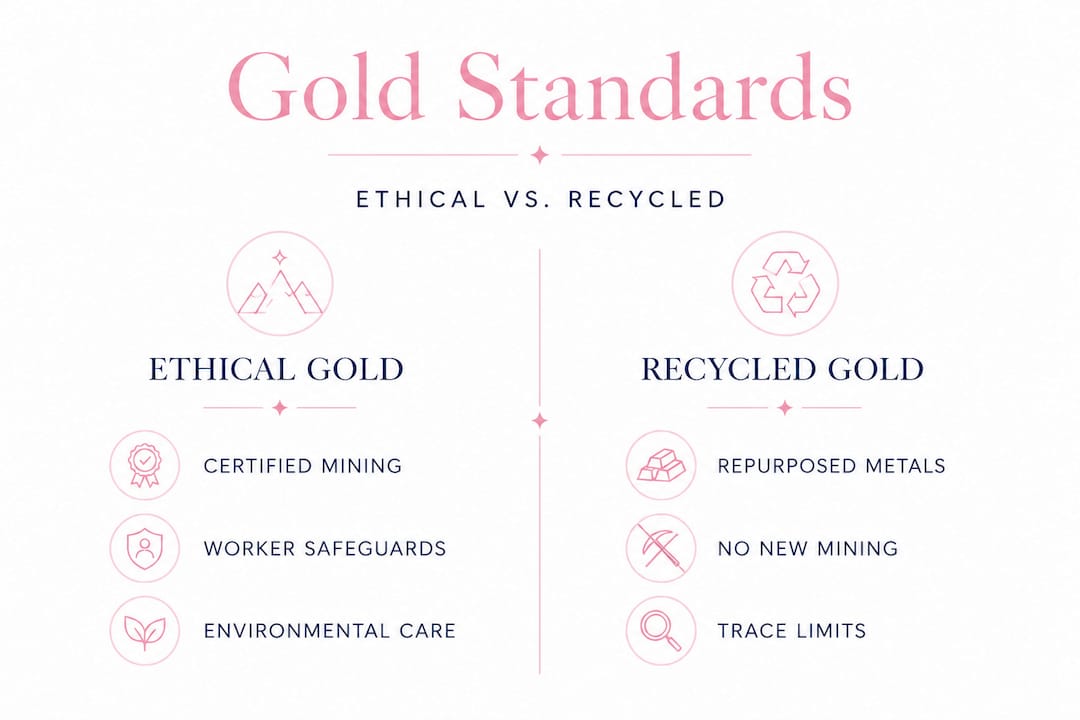
Let’s unpack those one by one.
Mixing and dilution: Even certified refiners sometimes process batches that blend certified and uncertified gold. When this happens, the certification on the final product overstates its actual integrity. The RJC COC and Fairmined both have protocols to prevent this, but enforcement gaps exist in regions with weak regulatory oversight.
ASM verification complexity: Artisanal miners often operate across shifting locations with informal record-keeping. Standard audit methods built for large mines do not transfer easily. New models like Fairmined Credits and book-and-claim systems allow buyers to financially support ethical ASM without requiring physical traceability, but this is still an evolving space.
Ethical gold vs. eco gold: These two labels are not interchangeable. Eco gold focuses primarily on environmental outcomes like reduced chemical use and land restoration. Ethical gold prioritizes social outcomes like fair wages, worker rights, and community development. A mine can qualify as eco gold without paying workers fairly, and vice versa. Couples who care about both dimensions need to verify both.
Recycled gold: This is often marketed as the most responsible option, and it does carry real environmental advantages. Using recycled gold avoids new mining entirely, reducing energy use, land disruption, and chemical exposure. However, recycled gold does not support the communities dependent on artisanal mining for their livelihoods. Choosing recycled over Fairmined has different social trade-offs.
Key considerations when evaluating recycled gold versus mined ethical gold:
- Recycled gold reduces new mining demand and associated environmental costs.
- It does not generate premiums for ASM communities or fund local development.
- Fairmined gold actively improves conditions for some of the world’s most vulnerable mining families.
- Both can be “ethical” depending on how you define the term.
For conflict-free ring tips, understanding these distinctions helps you ask the right questions and avoid oversimplified answers.
Making ethical gold part of your engagement or wedding jewelry
With all this context, here is how to translate it into actual decisions when shopping for your ring.
Practical guidance for couples suggests prioritizing jewelry brands with verifiable certifications such as LBMA, RJC, or Fairmined, requesting traceability documents and supply chain audits, considering recycled or Fairmined gold depending on whether social or environmental outcomes matter most to you, and understanding that no single universal standard exists, making evidence review more important than label recognition.
Follow these steps when shopping:
- Ask for certification specifics. Don’t accept “ethically sourced” without asking which certifying body and which year the certification was last audited.
- Request the chain of custody document. Any retailer holding RJC COC certification can produce this. If they cannot, their ethical claims are unverified.
- Understand where the gold came from. Large-scale mine or ASM? Each has different risks and different certifying bodies.
- Compare your priorities. If supporting small-scale mining communities matters most, look for Fairmined. If minimizing environmental impact is the priority, recycled gold may suit you better.
- Check for independent audits. Self-reported ethical practices are far weaker than third-party verified ones. Look for audit dates and auditor names.
Pro Tip: When reviewing a jeweler’s ethical sourcing page, look for named certifying bodies, specific audit years, and links to certification databases. Vague language like “responsibly sourced” with no documentation is a warning sign, not a guarantee.
Custom ethical engagement rings give couples the added benefit of choosing metal type and sourcing with greater specificity than off-the-shelf designs allow. And the value of ethical jewelry goes beyond the purchase itself, representing a lasting investment that holds its meaning over time.
A fresh perspective: why evidence matters more than labels
Here is something that most ethical jewelry articles won’t say directly: a label is not the same as accountability.
The jewelry industry has adopted ethical branding enthusiastically, but the gap between aspiration and implementation remains wide. Expert guidance from the World Gold Council emphasizes that implementation matters far more than aspiration, that risk-based due diligence per OECD guidelines is the benchmark, that collaboration between industry players drives real formalization, and that blockchain and physical tagging are emerging as the most reliable verification tools.
What does this mean for you as a couple? It means that buying from a brand that uses the word “ethical” in its marketing is not the same as buying from a brand that can show you a mine-to-market supply chain document. Voluntary programs can have real gaps. Self-reporting is not the same as third-party verification.
The most responsible approach is to treat ethical sourcing like any other significant purchase decision. Ask questions. Expect documentation. Value transparency over polish.
Blockchain tagging in particular is exciting because it makes mixing certified and non-certified gold visible. When a gold batch is tagged at the mine level, any deviation in the chain becomes detectable. This is not yet universal, but it is the direction the industry is moving, and forward-looking brands are already adopting it.
We believe couples deserve more than good intentions from their jeweler. They deserve verifiable proof that the gold carrying their commitment was produced without harming people or the planet. The ethical gemstone guide extends that same standard to every component of your ring.
Discover ethical gold jewelry for your engagement or wedding
Knowing what to ask for is the first step. The next is finding a jeweler who can actually deliver.

At Bel Viaggio Designs, ethical sourcing is built into how we design and make every piece, not added as a marketing footnote. From a classic white and yellow gold wedding band to a dramatic black diamond engagement ring, each design reflects the same commitment to responsible materials and transparent sourcing. If you are drawn to something beyond traditional diamonds, our gemstone ring alternatives offer distinctive, vibrant options with the same ethical foundation. Your ring should tell your story, and we make sure the story behind the metal is one you can be proud of.
Frequently asked questions
How can I tell if my engagement ring gold is ethically sourced?
Request documentation of certifications like LBMA, RJC, or Fairmined, and ask for traceability reports or supply chain audits directly from the jeweler. Genuine certifications will include audit dates and auditing body names.
What is the difference between ethical gold and recycled gold?
Ethical gold is mined under strict social and environmental standards, while recycled gold is repurposed from existing products, avoiding new mining but not generating premiums for artisanal mining communities.
Why is artisanal or small-scale gold mining hard to certify?
ASM is difficult to certify because of informal practices and complex, shifting supply chains, but new tools like Fairmined Credits and blockchain tracking are steadily improving traceability.
What are the key certifications for ethical gold?
The main certifications include LBMA Responsible Gold Guidance, RJC Chain of Custody, Fairmined for artisanal mining, and the World Gold Council’s Responsible Gold Mining Principles.
Does ethical gold mining eliminate environmental hazards like mercury?
Ethical gold mining regulates and phases out mercury and cyanide through structured programs supported by environmental management plans and mandatory third-party verification.
Recommended
- Ethical gemstone selection guide for engagement rings 2026 – Bel Viaggio Designs, LLC
- Ethical gemstone selection guide for engagement rings 2026 – Bel Viaggio Designs, LLC
- How to Choose Gemstone Jewelry: An Ethical, Custom Guide – Bel Viaggio Designs, LLC
- Why Invest in Fine Jewelry: Ethical, Valuable & Lasting – Bel Viaggio Designs, LLC
- The Surprising Impact of Ethical Sourcing in Jewelry – Malibu Vibes Jewelry
- Can I Use My Own Gold to Create a New Piece? – blackwellonline