

A handcrafted ring’s value comes down to six measurable, documentable factors: stone quality and certification, metal type and purity, craftsmanship and finish, designer or era provenance, documentation completeness, and verified ethical sourcing. Every price tag you see reflects some combination of those six points. The ones you can prove with paperwork hold their value; the ones you can’t are largely a seller’s word.
Here are the core handcrafted ring value points to confirm before any purchase:
- Stone quality and certification (4Cs for diamonds; color, origin, and treatment for colored stones)
- Metal type, purity, and weight (platinum, 18K, or 14K; confirmed by hallmarks and scale weight)
- Craftsmanship and finish (hand fabrication, milgrain, hand-set pavé, hand-cut seats)
- Designer or era provenance (maker’s marks, serial numbers, original receipts and boxes)
- Documentation (GIA or AGS lab reports, independent appraisals, purchase receipts)
- Ethical sourcing verification (chain-of-custody records, RJC COP membership, supplier audits)
Pro Tip: When a seller uses phrases like “conflict-free” or “sustainably sourced,” ask for the specific lab report number or chain-of-custody document tied to that exact stone or metal batch, not a general company policy statement.
Key Takeaways
A handcrafted ring’s value is provable only when stone certification, metal hallmarks, craftsmanship documentation, and ethical sourcing records are all present and verifiable.
| Point | Details |
|---|---|
| Stone certification is the biggest value lever | A certified 1.0 ct G/VS2/Excellent diamond resells for $3,000–$5,000; missing certification cuts that by 20–30%. |
| Metal hallmarks set the melt floor | Platinum, 18K, and 14K stamps are verifiable; always confirm with weight and current spot price. |
| Documentation converts beauty into value | Lab reports, receipts, and appraisals are what make a ring’s stated value provable at resale or for insurance. |
| Ethical sourcing requires product-level COC records | RJC COP membership is a company standard; chain-of-custody documents prove an individual ring’s provenance. |
| Belviaggiodesigns | Provides itemized cost breakdowns, GIA/IGI reports, and COC documentation for custom handcrafted rings. |
Table of Contents
- How do gemstones drive so much of a ring’s value?
- How does the setting’s metal and craftsmanship affect price?
- When does designer provenance or vintage era multiply value?
- What does “ethical” actually mean and how do you verify it?
- What certificates, hallmarks, and appraisals should you collect?
- How do handcrafted rings actually resell?
- What quick checks can you do before paying for an appraisal?
- When is a paid appraisal or lab report worth it?
- Your buyer checklist for handcrafted, ethically sourced rings
- How Belviaggiodesigns prices and documents its rings
- Why documentation is the part most buyers undervalue
- Custom handcrafted rings with full documentation, built for you
- Sources
- FAQ
How do gemstones drive so much of a ring’s value?
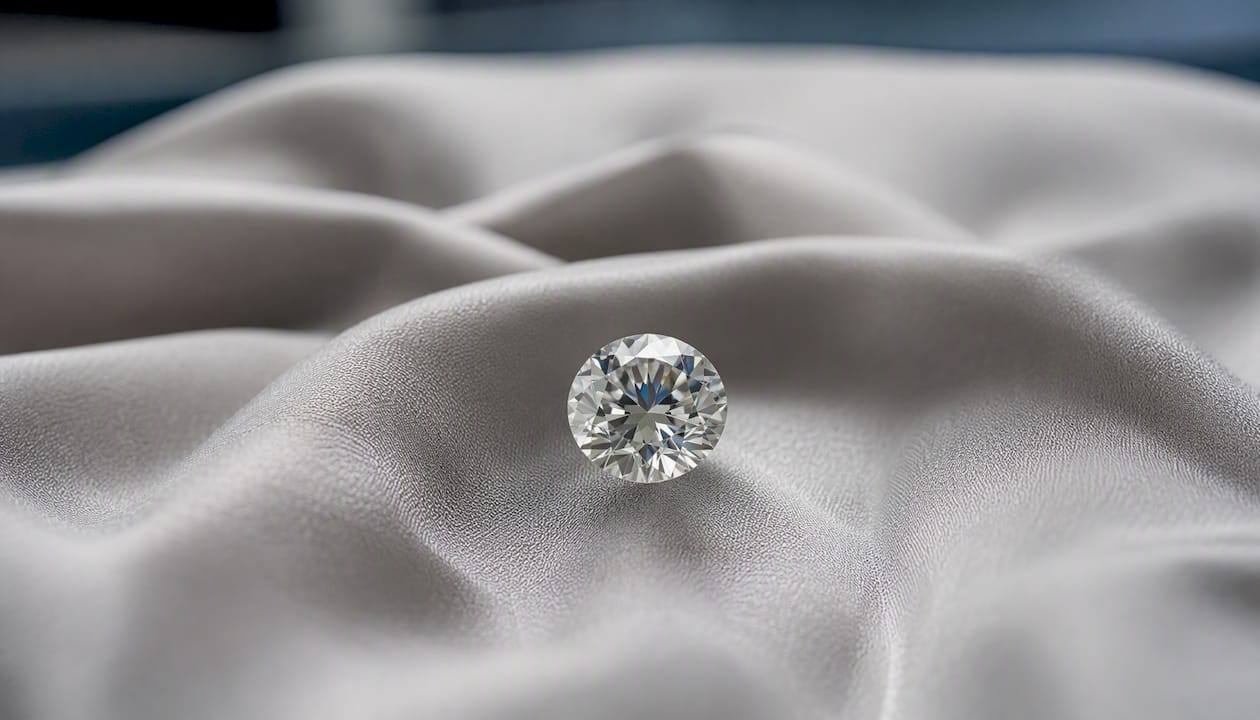
The center stone is usually the largest single cost contributor, often 40–70% of total price depending on custom choices. For diamonds, that value is set by the 4Cs. Cut is the most price-sensitive of the four. Color grades run from D (colorless) to Z; most buyers land in the G–I range, where the difference from D is invisible to the naked eye but meaningful to the wallet. Clarity measures internal inclusions; VS2 and SI1 are the practical sweet spots for eye-clean stones. Carat is weight, not diameter, and price jumps sharply at the 0.5, 1.0, and 2.0 ct thresholds.
For colored stones, the value factors shift: color intensity and saturation matter most, followed by origin (Burmese rubies and Colombian emeralds carry origin premiums), and treatment status.
Certification is what converts a verbal description into a verifiable fact. A certified 1.0 ct round brilliant with G color, VS2 clarity, and Excellent cut typically resells for $3,000–$5,000 on the secondary market.
| Stone Type | Key Value Factors | Certification Standard |
|---|---|---|
| Natural diamond | 4Cs, fluorescence, origin | GIA, AGS |
| Lab-grown diamond | 4Cs, growth method | GIA, IGI |
| Colored gemstone | Color intensity, origin, treatment | GIA, AGL |
| Moissanite | Cut, color grade | Charles & Colvard, GIA |
Pro Tip: For colored stones, request an origin and treatment report from GIA or the American Gemological Laboratories (AGL), not just a seller’s verbal description. Treatment disclosure is a legal requirement in U.S. trade, but enforcement depends on documentation you hold.
How does the setting’s metal and craftsmanship affect price?
Metal type and purity set the baseline “melt” floor. Craftsmanship adds a premium above that floor, and the two are not interchangeable.
- Platinum (950 or 900 purity): densest and most durable; melt value runs highest, and hand-fabricated platinum settings can add $800–$1,500 or more to a ring’s cost
- 18K gold (75% pure): the standard for fine jewelry; yellow, white, and rose variants carry similar melt values, typically $300–$700 for a finished solitaire setting
- 14K gold (58.3% pure): more durable for daily wear; lower melt floor, usually $200–$450 for a standard setting
Stamps to look for: “PT950” or “PLAT” for platinum; “750” or “18K” for 18-karat gold; “585” or “14K” for 14-karat. A jeweler can weigh the ring on a gram scale and cross-reference the current spot price in under five minutes.
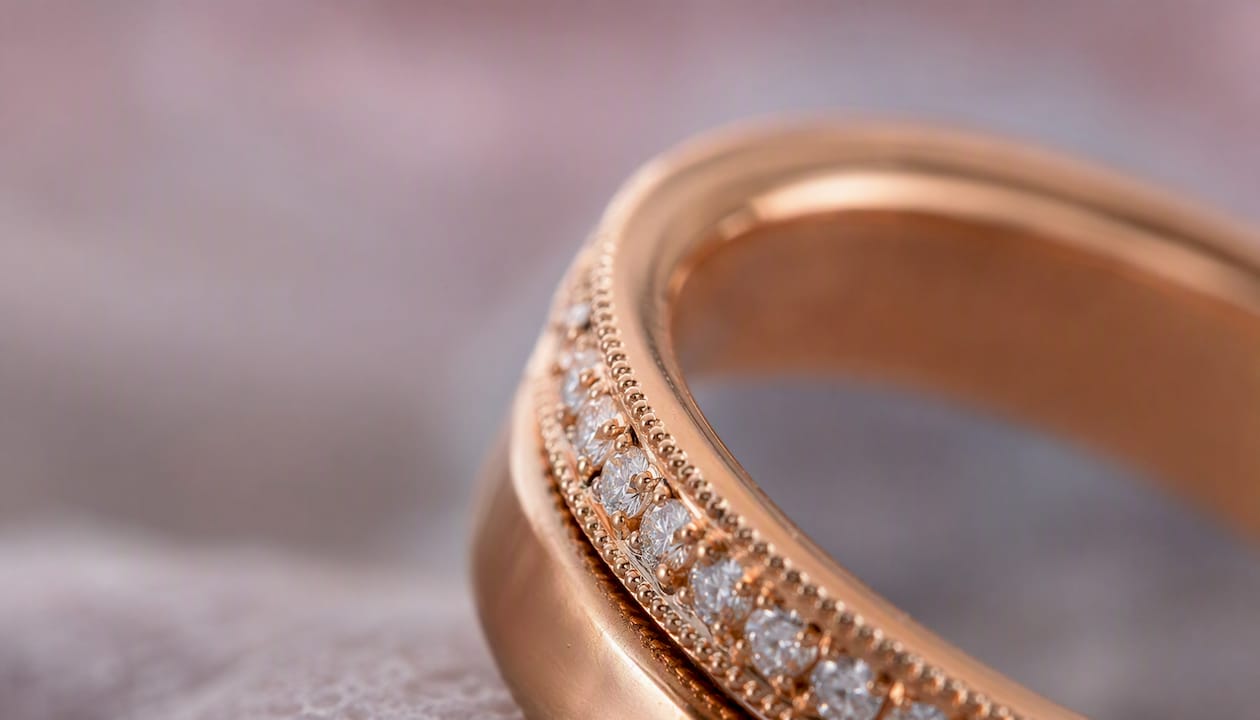
Hand fabrication, milgrain borders, hand-cut stone seats, and hand-set pavé each add labor hours that mass-produced rings skip entirely. A hand-fabricated band that takes 12–15 hours of bench time carries a labor premium that a cast ring simply doesn’t. That labor doesn’t show up in melt value, but it does show up in durability, finish quality, and the price a knowledgeable buyer will pay.
Pro Tip: Ask the jeweler for the finished weight of the setting in grams before purchase. That single number lets you calculate the melt floor yourself using the current gold or platinum spot price, so you know exactly what the raw material is worth.
When does designer provenance or vintage era multiply value?
Provenance and era can push a piece’s market price well beyond its melt value. Signed or period-desirable pieces commonly sell for multiples of their raw material value when documentation is complete.
What to look for and verify:
- Maker’s marks and hallmarks: stamped inside the shank; photograph under magnification
- Serial numbers: format varies by house; cross-reference with the brand’s authentication resources
- Original box and papers: Tiffany & Co., Cartier, Van Cleef & Arpels, and Harry Winston pieces with original packaging and receipts consistently command higher secondary-market prices
- Era indicators: Art Deco milgrain, Edwardian filigree, and Retro bold gold settings each have identifiable construction signatures
Forged signatures exist. Physical authentication should always be paired with provenance paperwork. A piece claiming a prestigious house without a serial number, original receipt, or box should be treated as unverified until a qualified appraiser confirms it.
Pro Tip: Before paying a provenance premium, request the serial number and verify it through the brand’s own customer service or authentication program. Tiffany, Cartier, and similar houses maintain records.
What does “ethical” actually mean and how do you verify it?
Company-level certifications are a starting point, not a finish line. RJC COP membership requires third-party audits and public reporting, which improves industry-wide practices. It does not, by itself, prove the provenance of the specific ring you are buying. Product-level chain-of-custody (COC) documentation is what actually traces a stone or metal batch from source to setting. Vague labels like “eco-friendly” or “conflict-free” are insufficient; request the actual documents.
Documents to request in writing:
- RJC COP membership certificate and most recent audit date
- Chain-of-custody records for the specific stone and metal
- Supplier audit reports or origin certificates for colored stones
- Laser inscription number on diamonds (cross-referenceable with the GIA database)
- Recycled metal certification (SCS Global or equivalent) if recycled content is claimed
Pro Tip: Lab-grown diamonds, recycled metals, and vintage pieces offer the most traceable provenance because the supply chain is shorter or already documented. If traceability is a core priority, these options reduce uncertainty more reliably than mined-stone claims alone. See Belviaggiodesigns’ ethical sourcing guide for a practical breakdown.
What certificates, hallmarks, and appraisals should you collect?
Documentation converts subjective beauty into verifiable value. Collect lab reports, receipts, maker’s marks, and appraisals from the start; replacing them later is expensive and sometimes impossible.
How to photograph hallmarks: use a macro lens or phone camera in portrait mode, shoot under a bright direct light at a 45-degree angle, and capture the full stamp in one frame. Save images with the date and ring description in the filename.
| Document | What It Proves | Typical Cost |
|---|---|---|
| GIA diamond grading report | 4Cs, fluorescence, treatments | $50–$150 (stone-size dependent) |
| AGS diamond grading report | Cut grade, 4Cs | $50–$150 |
| Independent appraisal (standard) | Replacement value for insurance | $50–$150 |
| Independent appraisal (complex/high-value) | Detailed valuation for estate/resale | $200–$500 |
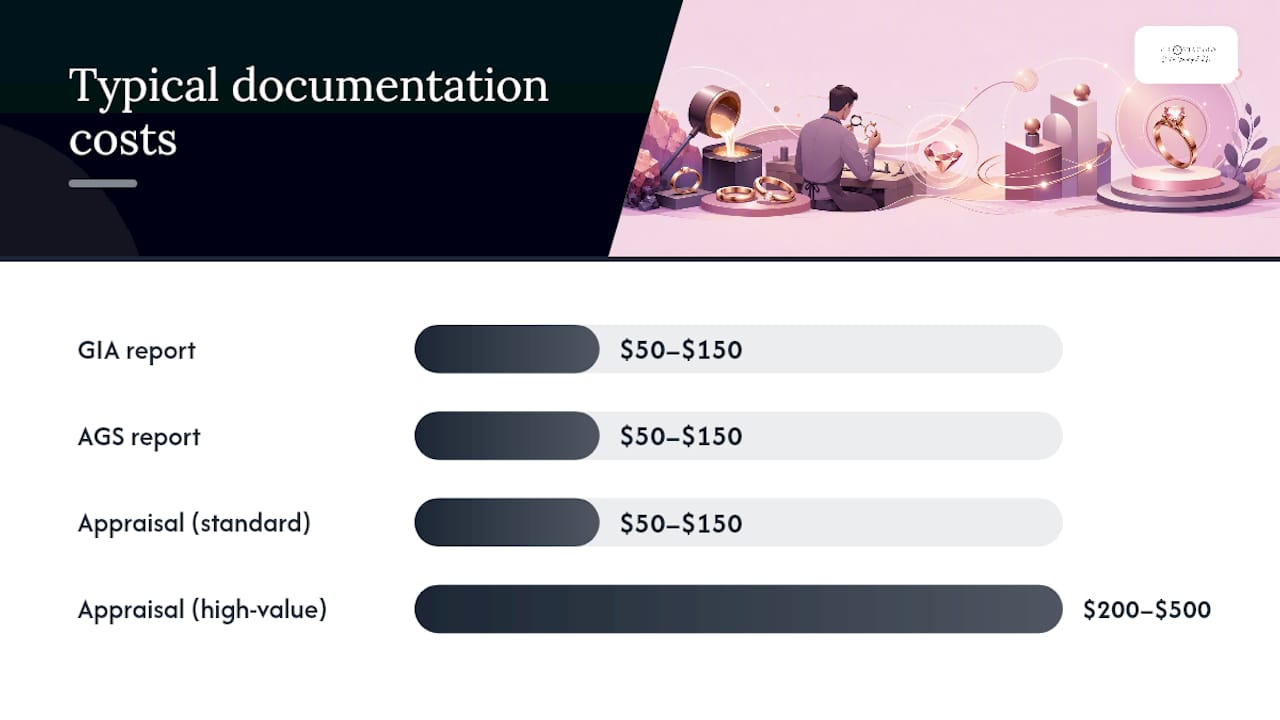
Professional appraisals typically cost $50–$150 for standard pieces and $200–$500 for complex or high-value items. Avoid appraisers who charge a percentage of the appraised value; that fee structure creates an incentive to inflate the number.
Pro Tip: Every GIA and AGS report has a unique report number. Verify it on the issuing lab’s website before finalizing a purchase. A ring certification guide can walk you through what each document type actually confirms.
How do handcrafted rings actually resell?
Resale typically falls below retail, but the gap varies significantly by category. Certified stones and complete documentation consistently command higher secondary-market prices than uncertified or undocumented pieces.
Realistic resale ranges by category:
- Certified natural diamond solitaire (1.0 ct, G/VS2/Excellent): $3,000–$5,000, roughly 50–70% of current retail
- Lab-grown diamond: resale market is thinner; expect 20–40% of original retail in most cases
- Signed designer piece (with box and papers): can exceed retail in collector markets for sought-after eras
- Unsigned handmade ring: typically 30–50% of retail; melt value sets the floor
Condition and completeness matter more than most sellers expect. A ring with original box, GIA report, and purchase receipt will draw meaningfully higher offers than the same ring sold loose with no paperwork.
Pro Tip: Before listing a ring for resale, gather every document you have, photograph the hallmarks, and get a current independent appraisal. Buyers on secondary platforms discount heavily for missing paperwork because they cannot verify the claims themselves.
What quick checks can you do before paying for an appraisal?
A few low-cost checks will tell you whether a ring warrants a paid appraisal or whether the basics are already missing.
- Look for stamps: examine the inside of the shank under magnification for karat marks, purity stamps, and maker’s marks
- Photograph everything: macro shots of hallmarks, inscriptions, and any visible wear or repairs
- Request the lab report number: ask the seller for the GIA or AGS report number and verify it on the lab’s website before the appointment
- Ask for COC documentation: request chain-of-custody records in writing; a seller who cannot produce them is selling on trust alone
- Use a preliminary AI scanner: tools like Jewelry Identifier can analyze photos to identify stamps and provide a preliminary value range, helping you decide whether a paid appraisal is warranted
- Weigh the ring: a gram scale and the current spot price give you the melt floor in minutes
Photo guidelines: shoot in natural light, use a white background, capture the full ring plus close-ups of each hallmark. Include a ruler or coin for scale. These images are useful for both appraisers and resale buyers.
Pro Tip: A preliminary AI scan costs nothing and takes under five minutes. If the tool flags inconsistencies between the claimed metal and the stamp, or cannot identify a hallmark, that is a clear signal to invest in a paid professional opinion before proceeding.
When is a paid appraisal or lab report worth it?
Get a formal lab report for any diamond above approximately 0.5 ct, or whenever resale, insurance, or estate planning depends on precise grading. For colored stones, a GIA or AGL origin and treatment report is worth the cost any time the seller is claiming an origin premium.
Decision triggers for a paid appraisal or lab report:
- Stone is above 0.5 ct and lacks existing certification
- Origin or treatment status is uncertain or verbally claimed only
- The piece is attributed to a designer or era and carries a provenance premium
- You are buying for insurance, estate, or resale purposes
- The seller cannot produce a lab report number you can verify online
Appraiser credentials to look for: Graduate Gemologist (GG) from GIA, Certified Gemologist Appraiser (CGA) from AGS, or a member of the American Society of Jewelry Appraisers (ASJA). Avoid appraisers who charge a percentage of value.
Turnaround times: GIA mail-in reports typically take 15–25 business days; expedited service is available. Independent appraisals from a local GG usually take 1–5 business days.
Pro Tip: For a vintage or designer piece, hire an appraiser who specializes in estate jewelry, not just diamonds. A general gemologist may not recognize period construction signatures or know current collector market prices for specific eras.
Your buyer checklist for handcrafted, ethically sourced rings
Use this checklist in any consultation or when comparing final offers.
Stone verification
- [ ] GIA or AGS report number confirmed on the lab’s website
- [ ] 4Cs stated in writing, not just verbally
- [ ] Treatment status disclosed in writing
- [ ] Origin documentation provided (for colored stones)
Metal and hallmarks
- [ ] Karat/purity stamp photographed and confirmed
- [ ] Finished weight in grams provided
- [ ] Metal type matches stamp (platinum vs. white gold)
Documentation
- [ ] Original purchase receipt or invoice
- [ ] Lab report PDF or numbered certificate
- [ ] Independent appraisal (for insurance or resale)
Ethical sourcing
- [ ] RJC COP membership confirmed with audit date
- [ ] Chain-of-custody records for stone and metal
- [ ] Recycled metal certification if claimed
Condition and completeness
- [ ] Repair history disclosed
- [ ] Original box and papers present
- [ ] No missing stones or unrepaired damage
Warranty and service
- [ ] Warranty terms in writing
- [ ] Repair and resizing policy confirmed
Record each seller’s response in writing. “Verbally confirmed” is not verified. “Document provided” is. Use missing documentation as a negotiation point: stone substitutions, CAD revisions, or warranty extensions are reasonable asks when paperwork is incomplete.
Pro Tip: Download Belviaggiodesigns’ ethical engagement ring buying tips to get a printable version of these questions formatted for in-store consultations.
How Belviaggiodesigns prices and documents its rings
Belviaggiodesigns builds price from measurable components: stone cost (typically 50–55% of total), metal cost calculated by weight and purity, labor hours for hand fabrication and finishing, accent stones, CAD design, and documentation. Each component is itemized.
A typical custom ring breakdown looks like this:
| Component | Typical Share of Cost | Documentation Provided |
|---|---|---|
| Center stone | 50–55% | GIA/AGS report number |
| Metal (by weight/purity) | 15–20% | Hallmark stamp, weight certificate |
| Labor and hand finishing | 15–20% | Bench hours noted on order |
| Accent stones and design | 5% | Lot documentation where available |
| Certification and appraisal | 3–5% | Lab report PDF, appraisal document |
Sourcing notes accompany each component. Lab-grown diamonds come with GIA or IGI reports. Recycled metal is certified where available. COC documentation is provided for stones where the supply chain supports it.
Pro Tip: Ask any custom jeweler to provide this same component breakdown in writing before you commit to a deposit. A seller who cannot itemize the cost by component is either working from a retail markup model or cannot verify the sourcing claims they are making.
Why documentation is the part most buyers undervalue
Most buyers focus on the stone and the setting, which makes sense because those are the most visible. What gets underestimated is how much documentation changes the financial outcome later.
A ring without a GIA report, original receipt, or COC paperwork is not just harder to resell. It is harder to insure at the right value, harder to authenticate for estate purposes, and harder to verify if a stone is ever swapped during a repair. The paperwork is not bureaucratic overhead. It is the mechanism by which a ring’s stated value becomes a ring’s provable value.
The brands that command the highest secondary-market prices, whether Tiffany & Co., Cartier, Van Cleef & Arpels, or Harry Winston, do so partly because their documentation practices are consistent and verifiable. An unsigned handmade ring from a skilled artisan can be equally well-made, but without equivalent documentation, the market will price it as if it is not.
The practical takeaway: treat documentation as a non-negotiable part of the purchase, not an optional add-on. If a seller cannot provide it, factor the cost of obtaining it yourself (appraisal, lab report) into your offer.
Custom handcrafted rings with full documentation, built for you
Every ring Belviaggiodesigns makes starts with a transparent cost breakdown: stone, metal, labor, and documentation, each itemized before you commit. Lab-grown diamonds come with GIA or IGI reports. Recycled metals are certified. COC documentation is provided where the supply chain supports it, and every piece ships with an appraisal-ready paper trail.
Whether you want a gemstone engagement ring with full ethical sourcing documentation or a lab-grown diamond three-stone ring at a fraction of natural-stone retail, Belviaggiodesigns builds each piece to order with the paperwork to back it. Contact Belviaggiodesigns directly to request a custom quote with a full component breakdown.
Sources
- Ethical Jewelry Buying Guide: What to Verify
- How to Value a Diamond Ring: A Step-by-Step Guide | Jewelry Identifier
- Custom Engagement Rings: Cost, Timeline and Process
- Jewelry value guide — what makes jewelry worth more than melt
Save every lab report number and verify it directly on the issuing lab’s website before finalizing any purchase.
FAQ
What are the most important handcrafted ring value points?
The six core value points are stone quality and certification (4Cs for diamonds), metal type and purity, craftsmanship and finish, designer or era provenance, documentation completeness, and verified ethical sourcing. Each is measurable and documentable.
How much does a certified 1.0 ct diamond ring resell for?
Does RJC certification prove a ring is ethically sourced?
RJC COP membership confirms a company meets responsible business practice standards through third-party audits, but it does not prove the provenance of an individual ring. Request chain-of-custody documentation for the specific stone and metal to verify product-level sourcing.
What documentation should I insist on when buying a custom ring?
At minimum: a GIA or AGS lab report with a verifiable report number, a purchase receipt or invoice, hallmark photographs, and chain-of-custody records for the stone and metal if ethical sourcing is claimed.
How does Belviaggiodesigns document its custom rings?
Belviaggiodesigns provides an itemized cost breakdown by component (stone, metal, labor, finishing, certification), GIA or IGI reports for lab-grown diamonds, recycled metal certification where available, and COC documentation where the supply chain supports it.
Recommended
- Why buy handcrafted rings? Unique value & lasting quality – Bel Viaggio Designs, LLC
- Ring settings explained: types, styles & custom options – Bel Viaggio Designs, LLC
- The Role of Personalized Design in Meaningful Rings – Bel Viaggio Designs, LLC
- Design Your Own Diamond Ring: a Personalized Guide – Bel Viaggio Designs, LLC