

Not all rings are created equal, and the difference goes far deeper than price tags or sparkle. When you choose a handcrafted ring, you’re choosing a piece built by skilled hands, inspected individually, and made with materials selected for quality rather than cost efficiency. Mass-produced rings move through automated assembly lines where speed is the priority, and individual artisan attention is simply not part of the equation. For couples who want a ring that reflects their values, their story, and their commitment to quality, understanding this distinction is the first step toward making a choice you’ll never regret.
Table of Contents
- Handcrafted vs. mass-produced rings: What sets them apart?
- Superior quality and craftsmanship you can feel
- Sustainability, ethics, and personal values
- Your story, your ring: Uniqueness and personalization
- How to choose the right artisan ring for your values
- Start your handcrafted ring journey with Bel Viaggio Designs
- Frequently asked questions
Key Takeaways
| Point | Details |
|---|---|
| Lasting quality | Handcrafted rings are denser, more durable, and built to become heirlooms for generations. |
| Ethical assurance | You can choose rings made with ethically sourced materials and support responsible artisans. |
| Personalization | Handcrafted rings allow for unique designs that reflect your love story and values, not mass trends. |
| Growing trend | More couples now prioritize custom, sustainable jewelry when selecting engagement and wedding rings. |
Handcrafted vs. mass-produced rings: What sets them apart?
Now that you’re thinking about the difference between generic and artisan rings, let’s take a closer look at what really makes these approaches unique. The gap between handcrafted and mass-produced rings isn’t just about aesthetics. It’s about process, accountability, and the physical properties of the metal itself.
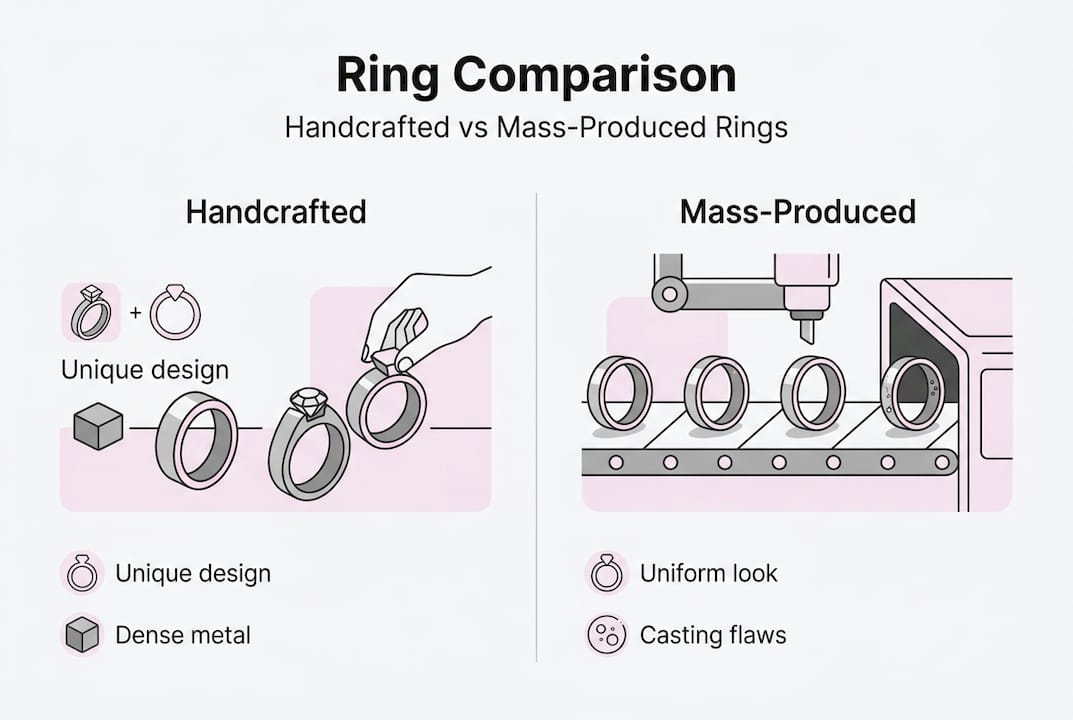
Mass-produced rings are manufactured in large batches using casting machines and automated polishing equipment. Quality checks happen on samples, not on every single ring. That means your ring could have a tiny flaw that was never caught because it wasn’t individually inspected. Handcrafted rings work differently. Every piece is examined by the artisan who made it, from the setting of each stone to the smoothness of the band.
Forged metal in handmade rings is denser and work-hardened, which means it resists bending, scratching, and cracking far better than cast metal. Artisans use centuries-old techniques like hand-forging, hand-engraving, and stone-setting by eye, which produce refined finishes that machines simply can’t replicate. Mass methods prioritize speed and lower costs, but that trade-off often shows up in thinner bands, rough interior edges, and stones that aren’t as securely set.
Here’s a quick comparison to make this concrete:
| Feature | Handcrafted rings | Mass-produced rings |
|---|---|---|
| Quality inspection | Every single piece | Sample batch only |
| Metal density | Denser, work-hardened | Cast, less dense |
| Finishing | Hand-refined | Machine-polished |
| Customization | Fully bespoke | Limited options |
| Durability | Higher | Variable |
| Ethical sourcing | Often prioritized | Rarely guaranteed |
“When you wear a handcrafted ring, you’re wearing the result of someone’s full attention and skill, not a product that rolled off a conveyor belt.”
For couples who care about responsible jewelry basics, understanding this process difference is foundational to making a purchase that aligns with your values.
Superior quality and craftsmanship you can feel
With clear differences in how rings are constructed, it’s helpful to know how these distinctions show up in your daily life and lasting memories. A ring isn’t just worn on your wedding day. It’s worn every single day for decades. That’s why the physical quality of your ring matters more than most people realize.
Handcrafted rings receive individual attention and work hardening during the forging process, making each piece stronger and longer-lasting than its mass-produced counterpart. The denser metal structure means the band is less likely to warp over time, even with daily wear. This is especially important for rings worn alongside engagement rings, where constant contact can cause softer metals to wear down faster.
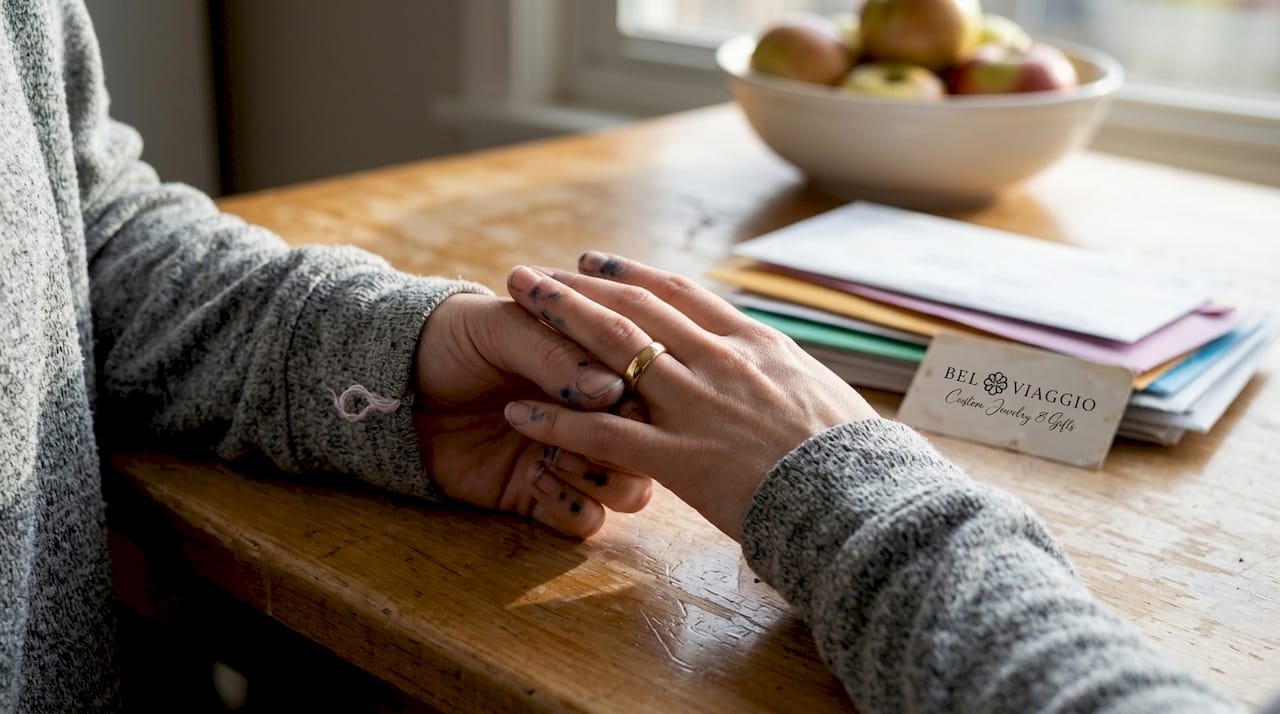
Comfort is another area where handcrafted rings stand out. Artisans smooth interior edges so the band sits flush against your finger without irritation. They balance the weight distribution so the ring doesn’t spin or feel heavy on one side. Skin-friendly finishes are applied with care, reducing the risk of reactions for people with sensitive skin.
Pro Tip: Ask your artisan about the specific metal alloy used in your ring. Some alloys are naturally more hypoallergenic and durable than others, and a skilled jeweler will guide you toward the best option for your lifestyle.
Here’s what you gain with handcrafted quality:
- Stronger structure from work-hardened, denser metal
- Smoother interior for all-day comfort
- Balanced weight that keeps the ring in place
- Secure stone settings checked by the artisan personally
- Refined surface finishes that last longer between polishing
Exploring custom jewelry design options gives you a clear picture of how these quality details translate into real design choices you can make for your own ring.
Sustainability, ethics, and personal values
Quality and artistry matter, but for many couples, how a ring was sourced is just as important as how it’s made. The jewelry industry is undergoing a real shift. Consumers are asking harder questions about where their stones come from, who mined them, and what environmental impact the production process left behind.
78% of consumers now prioritize ethical sourcing in jewelry purchases, and the sustainable jewelry market is expected to reach $21.3 billion by 2033. That’s not a niche trend. That’s a fundamental change in how people think about what they wear.
Handcrafted jewelers are far more likely to use recycled metals, conflict-free stones, and lab-grown diamonds or moissanite as ethical alternatives to mined gems. Small workshops also tend to have shorter, more transparent supply chains, which makes it easier to verify where your materials came from. You can look at ethical ring options and use an ethical gemstone guide to understand what certifications and sourcing standards actually mean.
Here’s a quick guide to verifying a maker’s ethical credentials:
- Ask for documentation on metal sourcing, including whether recycled gold or platinum is used.
- Request stone certification, such as the Kimberley Process for diamonds or equivalent for colored gems.
- Check if the jeweler supports fair-trade or fair-wage practices in their workshop.
- Look for transparency about their environmental footprint, including waste reduction and energy use.
- Read reviews from past customers about the jeweler’s communication and sourcing honesty.
| Ethical practice | What to look for |
|---|---|
| Recycled metals | Certified recycled gold, silver, or platinum |
| Conflict-free stones | Kimberley Process or equivalent certification |
| Lab-grown options | GIA or IGI certified lab diamonds or moissanite |
| Fair labor | Workshop transparency and fair-wage commitments |
Your story, your ring: Uniqueness and personalization
While sustainability and ethics offer peace of mind, customization is where handcrafted rings truly shine for couples wanting something personal. No two love stories are identical, and your ring shouldn’t be either.
Handcrafted rings embody individual attention, reflecting personal stories and design preferences in ways that mass-produced jewelry simply cannot. You can choose a stone that holds personal meaning, whether that’s a sapphire in your partner’s favorite color, a family heirloom gem reset into a new setting, or a lab-grown diamond that aligns with your ethics. You can request engravings of dates, coordinates, or phrases that only the two of you understand.
The collaborative creation process is something couples consistently describe as one of the most meaningful parts of getting engaged. Working with an artisan to sketch, refine, and finalize a design makes the ring feel like a shared creation, not just a purchase. Many couples use the process to commemorate specific milestones, like incorporating the birthstone of a meaningful month or designing a band that mirrors a pattern from a special place.
Pro Tip: Bring reference images, fabric swatches, or even a sketch of your own to your first consultation. Artisans work best when they understand your visual language, not just your words.
Here’s what true personalization looks like in practice:
- Unique stone selection from ethically sourced options
- Custom engravings inside or outside the band
- Bespoke silhouettes that don’t exist in any catalog
- Mixed metal combinations for a signature look
- Design elements that reference personal milestones or places
For inspiration, custom engagement ring ideas can help you visualize what’s possible before you even speak to an artisan.
How to choose the right artisan ring for your values
Ready to explore handcrafted rings for your big day? Use these actionable tips to confidently choose the right artisan and design for you. The process doesn’t have to feel overwhelming. With the right questions and a clear sense of your priorities, finding your perfect ring is genuinely exciting.
52% of consumers now express concern about the environmental impact of their jewelry purchases, which means more artisans are stepping up with transparent, responsible practices. Here’s how to find the ones who truly deliver:
- Review their portfolio for variety and consistency in craftsmanship quality.
- Ask about their sourcing for both metals and stones before committing to anything.
- Request a timeline so you understand how long the handcrafting process takes.
- Discuss your budget openly so the artisan can guide you toward the best materials within your range.
- Ask about revisions and whether you can see a wax model or digital render before the final piece is made.
- Check certifications for both the jeweler and the materials they use.
- Read independent reviews from couples who have commissioned custom work.
For more guidance, ethical ring buying tips walk you through the vetting process in detail, and a ring certification guide explains exactly what certifications mean and which ones matter most.
Start your handcrafted ring journey with Bel Viaggio Designs
Once you know why handcrafted rings make a difference, finding skilled artisans makes the dream a reality. At Bel Viaggio Designs, every ring is made by hand with ethically sourced materials and a commitment to designs that feel as personal as the love they represent.

Whether you’re drawn to a classic solitaire or something completely one of a kind, our custom rings collection gives you a starting point that’s anything but ordinary. Browse our gemstone ring collection for ethically sourced stones in every color and cut, or explore statement pieces like our black diamond ring for a bold, modern look. Our team is ready to guide you through every step of the design process, from your first idea to the moment you open the box.
Frequently asked questions
Are handcrafted rings more expensive than mass-produced rings?
Handcrafted rings can cost more due to artisan labor and premium materials, but superior durability and quality often make them a better long-term investment than a cheaper ring you’ll need to repair or replace.
How do I know if a ring is truly ethically sourced?
Ask for sourcing documentation and certifications, and use trusted guides to verify practices. With 78% of consumers prioritizing ethical sourcing, reputable jewelers now make this information easy to access.
What makes a handcrafted ring more durable?
Forged metal is denser and work-hardened in handmade rings, and each piece is personally inspected by the artisan, which minimizes structural flaws before the ring ever reaches you.
Why are more couples choosing handcrafted rings now?
Couples today want rings that reflect their values, and 78% now prioritize ethical sourcing alongside a growing desire for personalized, meaningful designs that mass production simply can’t deliver.
Recommended
- Bel Viaggio Designs | Custom Rings | Lifetime Warranty – Bel Viaggio Designs, LLC
- Unique custom jewelry designs for your engagement 2026 – Bel Viaggio Designs, LLC
- Why Choose a Custom Engagement Ring? 5 Reasons to Make It Yours – Bel Viaggio Designs, LLC
- Why Choose a Custom Engagement Ring? 5 Reasons to Make It Yours – Bel Viaggio Designs, LLC