

TL;DR:
- Designing your own diamond ring allows you to personalize every detail, from shape to material, reflecting your values and style.
- The process involves key decisions about diamond shape, 4Cs, setting, and band material, guided by quality and structural considerations.
When you design your own diamond ring, you take full control of the most personal piece of jewelry you will ever own. Custom ring design, the industry term for this process, lets you choose every detail from diamond shape to band material, guided by your taste and values. CAD technology now makes it possible to preview your ring in real time before a single metal is cast. Ethical sourcing options, including lab-grown diamonds and recycled gold, mean your ring can reflect your values as clearly as your style. This guide walks you through every decision you will face.
What are the key design elements when you design your own diamond ring?
The four design decisions that matter most are diamond shape, the 4Cs, setting style, and band material. Getting these right together produces a ring that looks intentional, wears comfortably, and holds up over decades.
Diamond shapes and current trends
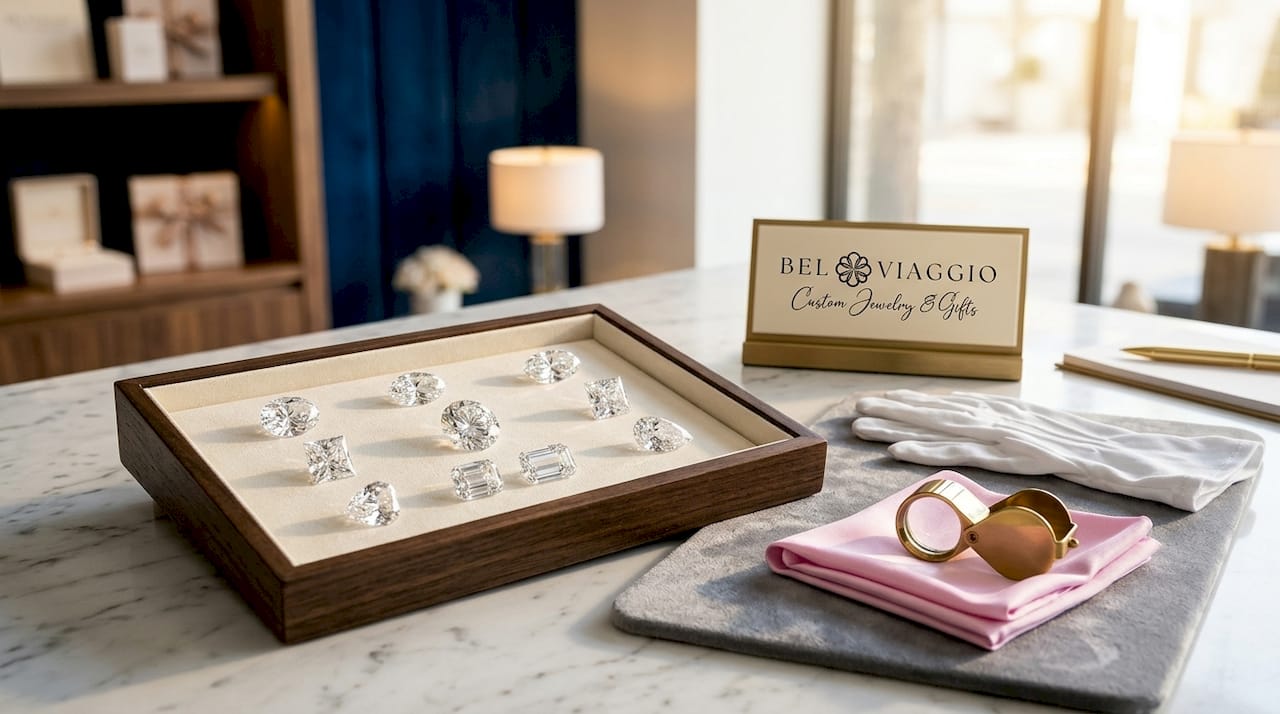
Shape is the first choice most couples make, and it sets the visual tone for everything else. Oval-cut diamonds now account for 25% of engagement ring purchases globally, with some retailers reporting over 33% of inquiries for this shape alone. That dominance reflects a broader shift toward shapes that look larger per carat and flatter a wide range of hand types. Round brilliants remain the classic standard, while cushion, pear, and emerald cuts each carry distinct personalities worth considering.
Understanding the 4Cs
Cut, clarity, color, and carat weight together determine how a diamond performs visually and how much it costs. Cut is the most critical variable. Prioritizing cut quality over raw carat weight produces a more brilliant, visually striking stone. A well-cut 1.2-carat diamond will outshine a poorly cut 1.5-carat stone of the same price, which is a fact that surprises most first-time buyers. Color and clarity grades matter more in step-cut shapes like emerald and Asscher, where the open facet structure makes inclusions more visible.
Setting styles compared
| Setting style | Best for | Trade-off |
|---|---|---|
| Prong | Maximum light entry, classic look | Prongs can snag on fabric over time |
| Bezel | Secure hold, modern aesthetic | Slightly reduces visible stone size |
| Halo | Makes center stone appear larger | Adds complexity and cost |
| Pavé band | Adds sparkle along the shank | Requires more maintenance |
Structural stability is a primary design constraint in custom rings, meaning the setting must physically support the chosen stone shape. Elongated shapes like pear and marquise, for example, require protective prongs at their pointed tips to prevent chipping.
Band material options
- Platinum: The most durable option, naturally white, and hypoallergenic. Higher upfront cost but requires less maintenance.
- 14k or 18k white gold: More affordable than platinum, but requires rhodium plating every few years to maintain its white finish.
- Yellow or rose gold: Warmer tones that complement lower color-grade diamonds beautifully.
- Recycled gold: Functionally identical to newly mined gold but sourced responsibly.
Pro Tip: If you choose a yellow or rose gold band, consider a diamond in the G to J color range. The warm metal tone masks slight color tints in the stone, letting you allocate more budget toward cut quality.
How does the custom ring design process actually work?
The custom ring creation process follows a clear sequence, and understanding it removes most of the anxiety couples feel before their first consultation. CAD technology enables clients to view and adjust their ring design in real time, which dramatically reduces guesswork and revision cycles. Clients increasingly want a collaborative experience, not just a finished product, and modern jewelers have built their workflows around exactly that.
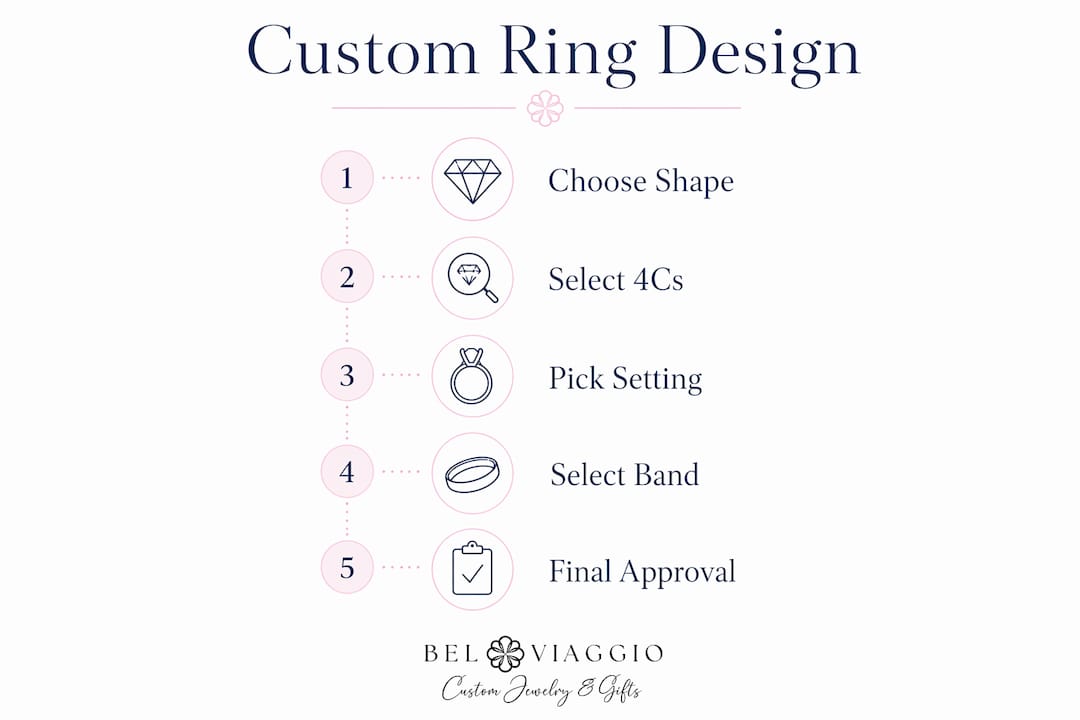
Here is the standard process from start to delivery:
- Set your budget. Decide on a total number before any design conversations begin. This prevents scope creep and helps your jeweler recommend the right stone grades.
- Initial consultation. Share inspiration images, describe your lifestyle, and discuss stone preferences. A good jeweler asks as many questions as they answer.
- Design sketches. The jeweler produces hand or digital sketches to establish proportions and overall silhouette.
- CAD modeling. A three-dimensional model is built and rendered so you can see the ring from every angle before production begins.
- Prototype review. Some jewelers produce a wax or resin prototype you can physically try on. This step catches fit and proportion issues that even detailed renders can miss.
- Final approval and production. Once you sign off, the ring is cast, set, and finished by hand.
- Delivery and sizing check. The finished ring is inspected, sized, and delivered with documentation.
Lead times for custom rings typically range from 4 to 8 weeks, with complex designs requiring 10 to 12 weeks or more. Plan for at least two to three months if your proposal date is fixed.
Pro Tip: Ask your jeweler whether they offer online design consultations. Many skilled studios now conduct the entire process remotely, which opens access to specialists who match your stone type rather than limiting you to local options.
Custom engagement rings typically cost only 10 to 20% more than comparable ready-made rings, because the custom process eliminates showroom overhead and inventory markups. That premium buys you a ring built to your exact specifications rather than a compromise pulled from a display case.
How to incorporate ethical sourcing into your custom ring design
Ethical sourcing is no longer a niche concern. It is a mainstream expectation among couples who want their ring to reflect their values as well as their aesthetic. The good news is that responsible choices are now available at every price point and do not require sacrificing design quality.
Your two primary stone options are certified natural diamonds and lab-grown diamonds.
- Natural diamonds with GIA certification: The Gemological Institute of America grades natural diamonds on the 4Cs and verifies origin documentation. A GIA certificate is the industry standard for confirming you know exactly what you are buying.
- Lab-grown diamonds: Physically and chemically identical to mined diamonds, lab-grown stones carry a significantly lower price per carat and a smaller environmental footprint. They are graded using the same 4Cs scale.
- Colored lab-grown diamonds: ALTR’s Precision Color Faceting technique maps light paths before cutting to maximize visible color in fancy colored lab-grown stones. This approach prioritizes color richness over carat retention, which requires advanced craftsmanship that differs substantially from traditional white diamond cutting.
- Moissanite and colored gemstones: For couples designing a unique gemstone ring, stones like aquamarine, emerald, and sapphire offer vivid color with strong ethical sourcing credentials when purchased from reputable suppliers.
For the band, recycled gold is the most practical sustainable choice. It carries the same purity grades as newly mined gold and is available in yellow, white, and rose tones. Platinum is also a responsible option because it is rarely alloyed with conflict-linked metals.
Matching your jeweler’s specialty to your chosen stone type yields better sourcing and value than working with a generalist. A studio that specializes in colored gemstones will have established supplier relationships that a general jeweler simply cannot match. You can review Belviaggiodesigns’ ethical sourcing workflow for a practical framework on how to vet suppliers and certifications before committing.
What mistakes should you avoid when designing your own diamond ring?
Most custom ring regrets trace back to a handful of predictable errors. Knowing them in advance is the clearest path to a result you will love for decades.
- Underestimating the timeline. Couples who begin the custom process six weeks before a proposal date routinely face rushed decisions or delayed deliveries. Start at least three months out.
- Overspending on carat weight at the expense of cut. A larger stone with a mediocre cut looks dull next to a smaller stone with an excellent cut. Cut drives brilliance. Carat drives size on paper.
- Ignoring structural requirements. Elongated shapes and large center stones in delicate settings are a durability risk. Your jeweler should flag any design combination where the setting cannot adequately protect the stone.
- Skipping the prototype step. Renders look different on screen than metal looks on a hand. If your jeweler offers a wax or resin prototype, take it.
- Treating resale value as a primary metric. Customization delivers emotional value far beyond financial calculation, but resale value for custom pieces is generally lower than the purchase price. Design for meaning, not for the secondary market.
“The most common mistake I see is couples who fall in love with a design image online without asking whether that design is structurally sound for their chosen stone. A beautiful render is not a guarantee of a wearable ring.”
Clear, ongoing communication with your jeweler prevents most of these issues. Request written design summaries after each consultation, and never approve a CAD model you have not reviewed in detail.
Key takeaways
Designing your own diamond ring produces the most personally meaningful result when you prioritize cut quality, plan your timeline early, and align your stone and setting choices with both your aesthetic and your values.
| Point | Details |
|---|---|
| Cut quality over carat | A well-cut smaller diamond outshines a larger, poorly cut stone of the same price. |
| Plan for 3 months | Custom lead times run 4 to 12 weeks; start early to avoid rushed decisions. |
| Match jeweler to stone type | Specialists in your chosen stone yield better sourcing and value than generalists. |
| Ethical options are mainstream | Lab-grown diamonds and recycled gold deliver responsible choices without design compromise. |
| Structural stability matters | Your setting must physically support your chosen diamond shape for long-term durability. |
Why the design process matters as much as the ring itself
I have worked with enough couples to know that the ones who are most satisfied with their custom rings are rarely the ones who spent the most. They are the ones who stayed curious throughout the process. They asked their jeweler why a particular prong configuration was recommended. They tried on the wax prototype even when they felt confident in the render. They made one or two changes after seeing the CAD model and felt ownership over every millimeter of the final piece.
The conventional advice is to focus on the 4Cs and pick a setting you like. That is not wrong, but it misses the deeper point. When you create your own engagement ring, you are building a story around an object that will be worn every day for the rest of your life. The design process is where that story starts. A jeweler who rushes you through consultations or discourages questions is not the right partner for that story, regardless of how impressive their portfolio looks.
My honest recommendation: prioritize cut quality and ethical sourcing first, then let the aesthetic decisions follow from those anchors. A GIA-certified or lab-grown stone in an excellent cut, set in recycled platinum or gold, will look extraordinary in almost any design. The shape, the setting style, the band profile, those are expressions of personality. The foundation is quality and integrity.
— Stacy
Start your custom ring journey with Belviaggiodesigns
Belviaggiodesigns specializes in handcrafted, ethically sourced custom rings built around your exact vision. Whether you are drawn to a black diamond halo setting, a vivid colored gemstone, or a classic oval diamond in recycled gold, the team works with you from first sketch through final delivery. Every design begins with a custom design deposit that locks in your consultation and starts the collaborative process. Belviaggiodesigns offers lab-grown diamonds, moissanite, natural gemstones, and a full range of metal options, all sourced responsibly. Book your consultation to begin designing a ring that is genuinely yours.
FAQ
How much does it cost to design your own diamond ring?
Custom engagement rings typically cost 10 to 20% more than comparable ready-made rings, because custom production eliminates showroom and inventory overhead. Your total cost depends on stone grade, metal choice, and design complexity.
How long does the custom ring design process take?
Most custom rings require 4 to 8 weeks from design approval to delivery, with complex designs taking 10 to 12 weeks or more. Start at least three months before your intended proposal date.
What is the most popular diamond shape for custom engagement rings?
Oval-cut diamonds hold 25% of the global engagement ring market and are the fastest-growing shape in custom design requests. Their elongated silhouette maximizes visual size per carat and flatters most hand types.
Are lab-grown diamonds a good choice for a personalized engagement ring?
Lab-grown diamonds are physically and chemically identical to mined diamonds, graded on the same 4Cs scale, and carry a lower price per carat. They are an excellent choice for couples who want to allocate more budget toward cut quality or unique design elements.
Can I design my own gemstone ring instead of a diamond ring?
Yes. Colored gemstones like aquamarine, emerald, and sapphire are fully compatible with custom ring design and often pair well with diamond accents. Matching your jeweler’s specialty to your chosen gemstone type produces better sourcing outcomes and stronger design results.
Recommended
- Design a Ring Online Free: Your Complete 2026 Guide – Bel Viaggio Designs, LLC
- Custom ring guide: step-by-step ethical luxury (2026) – Bel Viaggio Designs, LLC
- The Role of Personalized Design in Meaningful Rings – Bel Viaggio Designs, LLC
- Personalized ethical rings: 40% savings, unique designs – Bel Viaggio Designs, LLC