

TL;DR:
- Cut quality is the key factor that ensures a diamond’s brilliance, with GIA grades and certifications providing reliable assessment. Only round brilliants receive an official cut grade, while fancy shapes depend on polish and symmetry grades, requiring visual evaluation. Maximize sparkle by prioritizing certified, expertly cut stones, including lab-grown options, for confident, ethical, and value-driven purchases in 2026.
Choosing a diamond is one of the most meaningful purchases you’ll ever make, and cut quality is the single factor that determines whether a stone truly lights up a room. The debate around ideal cut diamonds trips up even well-researched buyers because the terminology is inconsistent across labs, retailers, and marketing copy. This article cuts through that confusion. You’ll learn the specific criteria that define a truly excellent cut, the five diamond shapes worth considering, how they compare side by side, and exactly how to shop with confidence in 2026.
Table of Contents
- Key takeaways
- 1. What makes ideal cut diamonds truly exceptional
- 2. Only round brilliants get an official cut grade
- 3. Round brilliant: the gold standard of diamond cut quality
- 4. Princess cut: geometric sparkle with some caveats
- 5. Cushion cut: romantic sparkle with modern versatility
- 6. Radiant cut: brilliance meets durability
- 7. Emerald cut: the connoisseur’s choice
- 8. Comparison of the five cuts: a side-by-side look
- 9. How to buy ideal cut diamonds with confidence in 2026
- My honest take on chasing the “perfect” cut
- Find your ideal cut diamond at Belviaggiodesigns
- FAQ
Key takeaways
| Point | Details |
|---|---|
| Cut quality drives brilliance | An expertly cut diamond sparkles even at lower color or clarity grades; poor cut dulls even the finest stones. |
| GIA grades only round brilliants | Fancy shapes receive only polish and symmetry grades, so you must assess them differently. |
| “Ideal” is not a universal term | The label varies by retailer and lab. Always verify with certification reports, not marketing claims. |
| Lab-grown cuts deliver real value | Lab-grown ideal cuts often match or exceed natural diamonds in specifications at a lower price point. |
| Face-up appearance is the final test | Certificates are a starting point. What you see in person or via light performance imaging is what matters. |
1. What makes ideal cut diamonds truly exceptional
Before you spend a dollar, you need to understand what cut grade actually measures. The GIA rates diamonds from Excellent to Poor, with brightness, fire, and scintillation as the three core beauty factors. Brightness is the white light reflected from within and around the stone. Fire is the dispersion of light into the colors of the spectrum. Scintillation is the sparkle pattern you see as the diamond moves.
What makes the GIA system genuinely reliable is its scope. The grading system was built on 15 years of research and over 70,000 human observations, modeling tens of thousands of proportion combinations. That is not a marketing figure. It means the grade you read on a certificate reflects real, measurable light performance.
The GIA evaluates seven components in total: brightness, fire, scintillation, weight ratio, durability, polish, and symmetry. Of these, proportions such as table size, crown angle, and pavilion angle have the most direct effect on light return. A shallow pavilion angle lets light escape through the bottom of the stone rather than reflecting back to your eye. A table that is too large kills fire. These are the craft details that separate a dazzling diamond from a flat one.
One important distinction: “Ideal” and “Excellent” are often used interchangeably, but they are not identical labels. GIA uses “Excellent” as its top cut grade. The AGS (American Gem Society) uses “Ideal” as its equivalent. Both represent peak cut quality, and experts widely recognize both as the best diamond cut grades available.
Pro Tip: When reading a GIA certificate, check that both polish and symmetry are rated Excellent or Very Good alongside the overall cut grade. These two scores reflect the cutter’s craftsmanship and directly affect how clean and sharp the sparkle pattern appears.
2. Only round brilliants get an official cut grade
This is the fact most buyers do not know until after they have already fallen in love with a non-round shape. Only round brilliant diamonds receive an official overall cut grade from GIA. Every other shape, called a fancy shape, gets polish and symmetry grades instead.
Why? Because the round brilliant has a standardized facet pattern. That consistency allows GIA to model light performance across the entire cut range and assign a reliable grade. Fancy shapes have too many variations in facet arrangement to apply the same system.
For fancy shapes, polish, symmetry, and facet precision on the certificate become your primary quality indicators. You need to look for Very Good or Excellent ratings in both categories, and then confirm the face-up appearance yourself. This is not a flaw in the system. It just means fancy shape buyers need to apply a slightly different evaluation approach.
3. Round brilliant: the gold standard of diamond cut quality
The round brilliant is the most scrutinized diamond shape in existence, and for good reason. Round brilliants account for the majority of diamonds sold globally and deliver unmatched fire and brilliance compared to any other shape.
With 58 precisely arranged facets and a symmetrical structure, the round brilliant is the only shape engineered specifically around light performance. When you buy a GIA Excellent cut round brilliant, you know exactly what you are getting. No guesswork, no ambiguity.
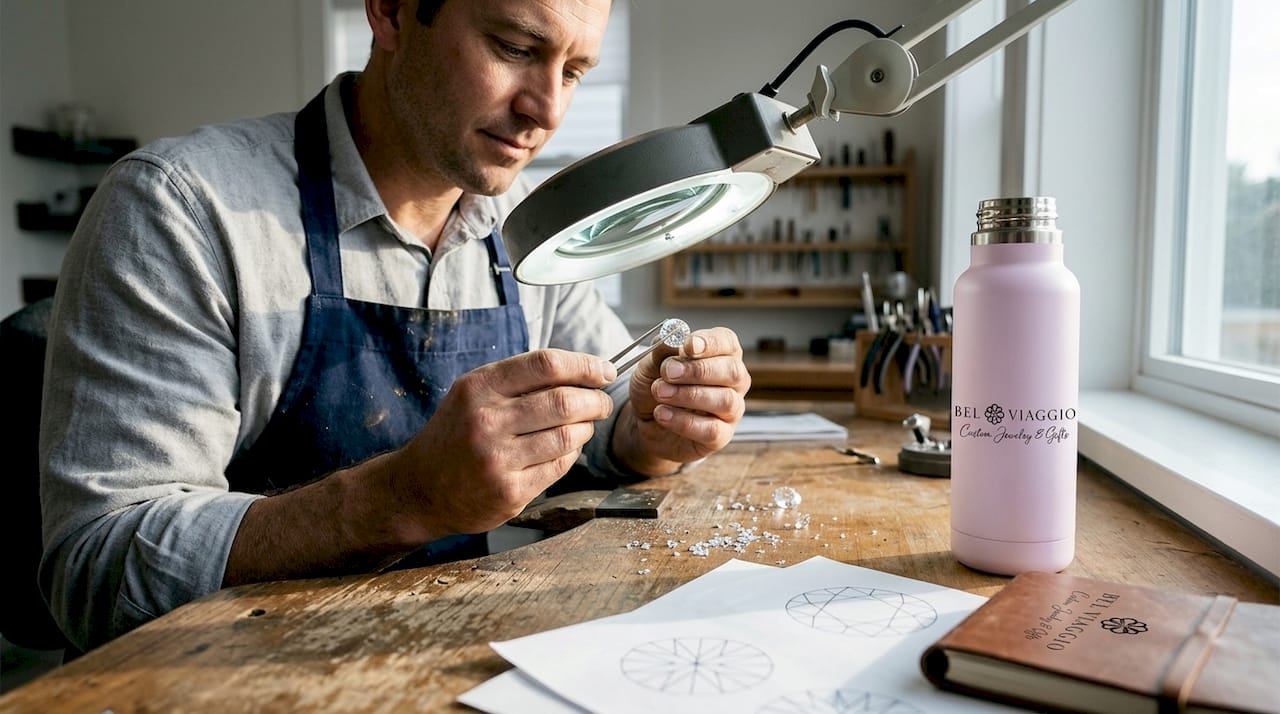
The trade-off is price. Round brilliants carry a premium because demand is highest and the cutting process wastes more rough diamond material than other shapes. If maximum brilliance with certification certainty is your priority, the round brilliant is the right choice.
4. Princess cut: geometric sparkle with some caveats
The princess cut is the second most popular shape, and it offers high brilliance in a square silhouette that photographs beautifully. It has a modern, architectural feel that appeals to buyers who want sparkle without the traditional round shape.
The challenge with princess cuts is that “ideal cut” interpretations vary significantly by seller. There is no standardized ideal cut princess certificate the way there is for rounds. You must rely on Very Good or Excellent polish and symmetry grades and confirm the sparkle in person or through imaging.
One practical note: princess cuts have sharp corners. Those corners are more vulnerable to chipping than a round edge, so the setting matters. A four-prong setting that protects all four corners is the standard recommendation.
5. Cushion cut: romantic sparkle with modern versatility
The cushion cut sits at the intersection of vintage romance and modern appeal. Its rounded corners and larger facets produce a softer, chunkier sparkle pattern that reads very differently from the sharp scintillation of a round brilliant. Many buyers prefer this warmer, more intimate light performance.
The elongated cushion cut surged in popularity after several high-profile celebrity engagements made the shape a cultural moment. Beyond trend appeal, the elongated version flatters a wide range of hand shapes by visually lengthening the finger.
Pro Tip: When comparing cushion cuts, look for stones labeled “cushion brilliant” rather than “cushion modified brilliant” if maximum sparkle is your goal. The modified version can produce a crushed ice effect that some buyers love but others find overly busy.
6. Radiant cut: brilliance meets durability
The radiant cut is arguably the most underrated option in this category. It combines the trimmed corners of an emerald cut with a brilliant facet pattern similar to a round, producing exceptional scintillation with high polish and symmetry across the stone’s surface.
Those trimmed corners are not just aesthetic. They reduce the risk of chipping that comes with sharper corner shapes, making the radiant a practical choice for active wearers. You get strong light performance and real-world durability in one package.
The radiant tends to hide inclusions and slight color tints well due to its busy facet pattern, which means you can often choose a slightly lower color or clarity grade without sacrificing visual beauty.
7. Emerald cut: the connoisseur’s choice
The emerald cut operates by completely different principles. Its step-cut facets create a “hall of mirrors” effect rather than the bright flash of a brilliant cut. This is a stone that rewards stillness and elegance over movement and sparkle.
Because the emerald cut has fewer, larger facets, it shows inclusions and color tints more readily than other shapes. For an emerald cut setting to look its best, you generally need to prioritize higher clarity and color grades.
The payoff is a sophisticated, long-fingered aesthetic that has been the signature of some of the most celebrated engagement rings in history. If you value clarity of design and understated luxury over maximum sparkle, the emerald cut is worth serious consideration.
8. Comparison of the five cuts: a side-by-side look
Understanding how these shapes compare helps you match the right stone to your lifestyle, budget, and aesthetic. Here is a practical breakdown across the factors that matter most:
| Shape | Brilliance | Fire | Best for | Price relative to round |
|---|---|---|---|---|
| Round brilliant | Highest | Highest | Maximum sparkle, certified grading | Premium (highest) |
| Princess | High | Moderate to high | Modern style, square shape | 10–20% less than round |
| Cushion | Soft, chunky | Moderate | Vintage feel, versatile settings | 20–30% less than round |
| Radiant | High | High | Durability, active lifestyles | 20–30% less than round |
| Emerald | Low (step-cut) | Low | Elegance, clarity showcase | 25–35% less than round |
The round brilliant costs more per carat because the cutting process discards a larger portion of the rough stone. Fancy shapes like the cushion, radiant, and emerald allow cutters to retain more weight, which is reflected in lower per-carat prices. That price difference can give you a significantly larger stone for the same budget.
Durability follows setting compatibility. Pointed corners (princess) need protective prong placement. Trimmed corners (radiant, emerald) and curved edges (cushion, round) are naturally more forgiving in everyday wear.
9. How to buy ideal cut diamonds with confidence in 2026
You have the knowledge. Now here is how to apply it at the point of purchase.
Start with the lab certificate. For round brilliants, look for GIA Excellent cut with Very Good or Excellent polish and symmetry. For fancy shapes, Very Good or better in both polish and symmetry is your benchmark. Cut grade captures both the light performance and the craftsmanship. It is your most reliable tool.
Beyond the certificate, ask for light performance imaging. Hearts and arrows imaging (for rounds) shows whether the facet alignment is precise and symmetrical. Many reputable online sellers provide this as a standard service, and any seller hesitant to offer it is a seller worth avoiding.
When balancing the 4Cs against your budget, cut is the one factor you should never downgrade. An expertly cut diamond at a lower color or clarity grade will outshine a poorly cut stone with perfect grades. A GIA Very Good cut is a defensible choice for budget reasons. Anything below that is a meaningful sacrifice in appearance.
Consider ethical sourcing practices as a real part of value, not just a marketing point. Certification of origin and ethical sourcing transparency tells you something about the seller’s overall standards.
For buyers looking to maximize specifications within a budget, lab-grown diamonds offer ideal cut quality at meaningfully lower prices than natural stones of equivalent grade. A one-carat lab-grown ideal cut often delivers superior specifications at a price that allows you to invest in a better setting or larger carat weight.
Pro Tip: When a seller uses “ideal cut” as a marketing label without a corresponding GIA or AGS certificate, ask for the specific polish and symmetry grades. Vague ideal cut claims are common. Certified grades are not.
My honest take on chasing the “perfect” cut
I’ve spent years helping buyers work through diamond decisions, and the pattern I see most often is this: people become so focused on hitting specific ideal cut specifications that they walk away from genuinely beautiful stones.
Here is what I’ve learned. Multiple proportion combinations can produce excellent light performance. The GIA’s research confirmed this. A stone that sits just outside a narrow “ideal” range by one or two proportion points can still be breathtaking in person.
My advice is to use the certificate as a filter, not a finish line. Start with GIA Excellent (or Very Good if budget requires it). Then look at the actual stone. If the face-up appearance is lively, well-balanced, and makes you stop and look twice, that is your diamond. Numbers on paper do not wear on your hand. Light and sparkle do.
I’ve also seen how ethical sourcing factors into the full value of a purchase. A beautifully cut stone from a certified, transparent supply chain is worth more in a real sense than a marginally better-graded stone with no accountability behind it.
Lab-grown ideal cuts have changed the conversation for many of my clients. For buyers who want the best cut quality at the best price, the lab vs. natural diamond comparison is essential reading before you commit.
— Stacy
Find your ideal cut diamond at Belviaggiodesigns
If you have done the research and you are ready to see what ideal cut quality looks like in a finished ring, Belviaggiodesigns is where craftsmanship and ethical sourcing meet in one place.

Every piece in the Belviaggiodesigns collection is handcrafted with attention to cut quality, proportion, and the details that make a ring feel genuinely special. From striking black diamond halo rings to vibrant gemstone designs like the emerald and diamond ring, there is a setting built for every aesthetic. Lab-grown diamond options are available for buyers who prioritize value and sustainability without compromise on quality. Custom design consultations are offered for buyers who know exactly what they want and need a team to bring it to life.
FAQ
What is an ideal cut diamond?
An ideal cut diamond is one cut to precise proportions that maximize brightness, fire, and scintillation. GIA labels this grade “Excellent,” while AGS uses the term “Ideal.”
Does cut grade matter more than carat size?
Yes. Cut quality is more critical than carat size in determining how much a diamond sparkles. A smaller, well-cut diamond will outperform a larger stone with a poor cut every time.
Which diamond shapes can receive an ideal cut grade?
Only round brilliant diamonds receive an official overall cut grade from GIA. Fancy shapes like cushion, radiant, and emerald are assessed by polish and symmetry grades instead.
Are lab-grown ideal cut diamonds worth considering?
Absolutely. Lab-grown diamonds match natural diamonds in cut quality and brilliance, and typically cost significantly less per carat, making them a smart choice for buyers who prioritize cut above all else.
How do I verify a seller’s “ideal cut” claim?
Request the full GIA or AGS certificate and check the cut, polish, and symmetry grades directly. Any seller calling a diamond “ideal cut” without third-party certification documentation should be questioned.
Recommended
- Understand the 4Cs of Diamonds: Make Informed, Ethical Choices – Bel Viaggio Designs, LLC
- Lab vs natural diamonds: couples guide 2026 – Bel Viaggio Designs, LLC
- Why Diamond Certification Matters for Ethical, Custom Jewelry – Bel Viaggio Designs, LLC
- What is diamond clarity? A 2026 guide to quality – Bel Viaggio Designs, LLC