

TL;DR:
- Keepsake pieces serve as emotional memory anchors that support self-continuity during life’s major transitions. They carry layered personal and cultural significance that digital files cannot replace, strengthening resilience and mood. Proper documentation and intentional preservation ensure that their meaning endures across generations.
Keepsake pieces are defined as tangible objects that anchor personal memory, emotional identity, and family legacy across generations. The role of keepsake pieces goes far beyond sentiment. Psychologists classify them as autobiographical memory triggers that actively regulate mood and support self-continuity during life’s hardest transitions. Whether you hold a grandmother’s ring, a child’s first bracelet, or a custom-designed memorial pendant, these objects carry layered meaning that no photograph or digital file can replicate. Understanding their psychological, cultural, and practical significance helps families make deliberate choices about what to keep, what to pass down, and why it matters.
How do keepsake pieces support emotional well-being?
Keepsakes support emotional well-being by acting as autobiographical memory triggers that reduce stress and help people integrate past experiences into a coherent personal narrative. This is not nostalgia for its own sake. It is a recognized psychological function called self-continuity, the ability to see yourself as the same person across time even when circumstances change dramatically.
Life transitions are where this function matters most. Consider these common situations where a keepsake becomes a psychological resource:
- Grief and loss: A parent’s watch or a spouse’s necklace provides a physical connection when the person is gone.
- Relocation: Familiar objects from a childhood home reduce the disorientation of moving to a new city or country.
- Major milestones: A ring marking a graduation or anniversary anchors the memory of achievement when daily life moves on.
- Identity shifts: Becoming a parent, retiring, or recovering from illness all disrupt the sense of self. Objects from earlier chapters help maintain continuity.
Revisiting memories through keepsakes strengthens feelings of security, improves mood, and builds resilience. That is a measurable psychological benefit, not a soft claim. The physical object acts as a retrieval cue, pulling forward the emotions and context of the original experience with far more precision than memory alone.
Pro Tip: When selecting a keepsake to support someone through a difficult transition, choose an object tied to a specific shared moment rather than a generic gift. The more precise the memory it triggers, the stronger its emotional support function.
What makes a keepsake different from a souvenir?
Keepsakes differ from souvenirs in one critical way: they are tied to a specific person, moment, or relationship with genuine emotional or cultural significance. A souvenir is purchased to mark a place visited. A keepsake is kept because of who gave it, what it witnessed, or what it represents about your life.
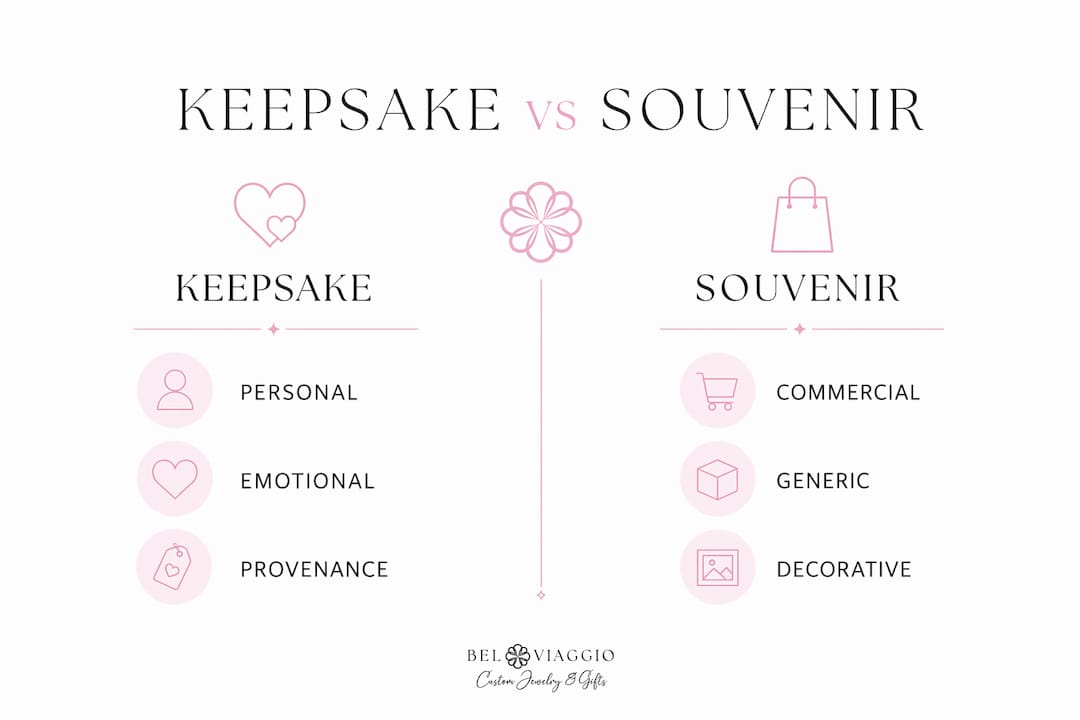
The word memento comes from the Latin imperative meaning “remember.” That etymology matters. A memento urges active remembrance of a significant experience, while a souvenir is often a passive reminder of a destination. Understanding these distinctions helps families make better decisions about what deserves preservation.
| Object Type | Origin | Primary Function | Emotional Depth |
|---|---|---|---|
| Keepsake | Personal relationship or milestone | Memory anchor and identity support | High: tied to specific people and events |
| Memento | Significant personal experience | Active remembrance of a life moment | High: tied to meaning and reflection |
| Souvenir | Geographic location or event | Reminder of a place visited | Low to moderate: often decorative |
| General memorabilia | Pop culture or public events | Collector interest or nostalgia | Variable: rarely personal |
Provenance is the factor that separates a meaningful keepsake from a decorative object. Keepsake value depends on provenance and emotional charge, not age or price. A simple silver ring worn by a great-grandmother carries more weight than an expensive antique with no family story attached. Handcrafted objects carry an additional layer of meaning because the time and skill invested in making them signals deliberate care. That is why handcrafted keepsake items consistently hold greater sentimental value than mass-produced alternatives across cultures and generations.
How does keepsake jewelry commemorate life events?
Jewelry is the most enduring form of keepsake across human history. It is wearable, portable, and built to last. More than any other object category, jewelry combines craftsmanship, material value, and personal story into a single piece that can be worn daily or passed down intact across generations.
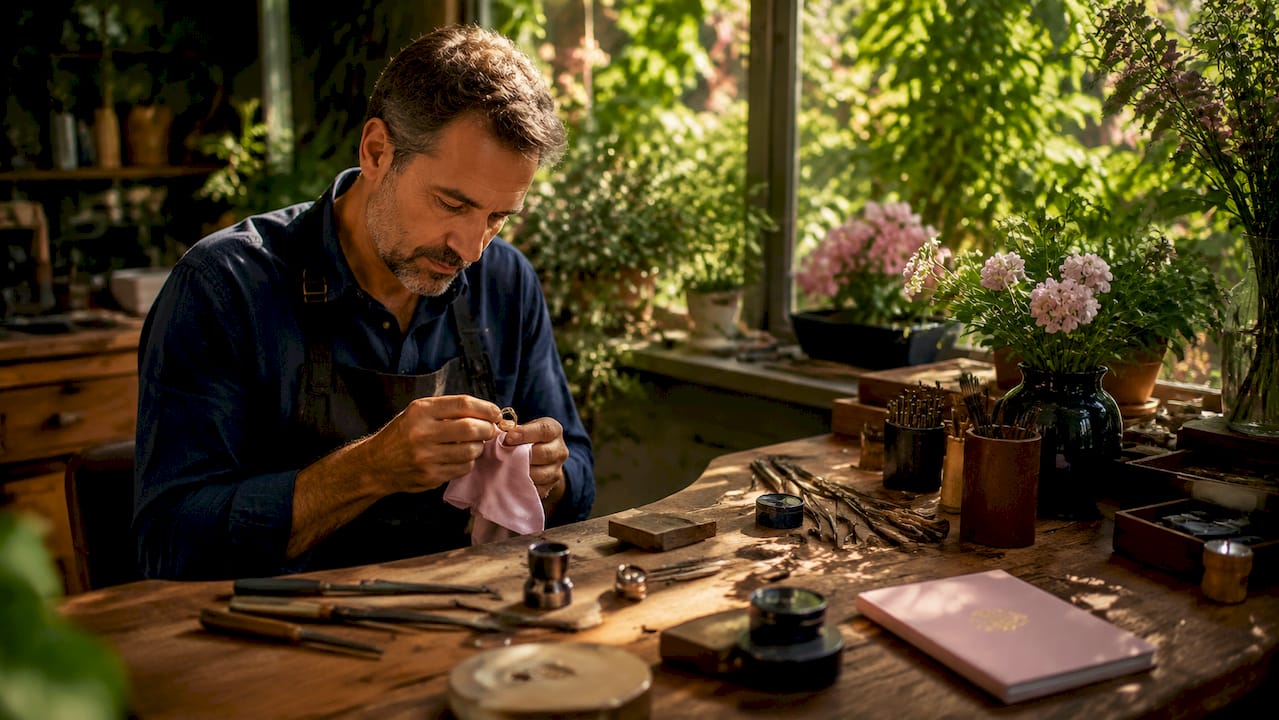
The most meaningful keepsake jewelry acts as a memory anchor by linking craftsmanship, story, and emotional milestone into layered, lasting narratives. A ring without a story is an accessory. The same ring with a documented history of who wore it, when, and why becomes a family heirloom. That transformation happens through intentional storytelling, not through time alone.
Custom and personalized jewelry intensifies this effect. When a piece is designed specifically to mark a milestone, its emotional charge is built in from the start. Common life events commemorated through keepsake jewelry include:
- Engagements and weddings: Rings and bands mark the beginning of a shared life and are among the most universally recognized keepsake forms.
- Birth of a child: Birthstone rings, engraved bracelets, and initial pendants mark the arrival of a new family member.
- Loss and memorial: Memorial jewelry incorporating ashes, hair, or fingerprints preserves a physical connection to someone who has passed.
- Graduations and achievements: Milestone rings or pendants mark years of effort and personal growth.
- Anniversaries: Eternity bands and anniversary rings mark the passage of shared time.
Personalized, handcrafted keepsakes chosen with attention to the recipient’s identity are more likely to be cherished long-term. Gifts that communicate “I see you” become woven into the recipient’s self-narrative. That is the standard worth holding when choosing keepsake jewelry for someone you love. Belviaggiodesigns approaches this standard through custom design options that let you build meaning directly into the piece from the first sketch. You can explore their approach to designing jewelry with meaning for a practical look at how intention shapes a finished piece.
How do you preserve keepsakes across generations?
Preservation is the most overlooked part of keepsake practice. Families invest in meaningful objects but rarely invest in the stories that give those objects their power. The most fragile element of any keepsake is the story, not the object itself. A ring can survive a century. The memory of who wore it and why can disappear within a generation if no one writes it down.
Children raised with strong family narratives anchored by tangible keepsakes show higher emotional resilience and connection to family history. That finding points to a practical responsibility. Preserving keepsakes is not just about storage. It is about documentation, conversation, and deliberate transmission.
Practical preservation starts with these steps. Label every significant object with a handwritten note or typed card that records the who, what, when, and why. Store jewelry in acid-free materials and keep it away from humidity. Photograph pieces alongside their documentation so digital records exist as backup. Organizing family archives is a proactive coping strategy for loss, ensuring stories and emotional connections endure beyond the original owners’ lives.
One critical nuance deserves attention. Objects kept from guilt or obligation rather than genuine connection may hinder personal growth. Not every object from a loved one needs to be kept. The ones worth preserving are those that actively support your identity and your family’s shared story, not those that create a burden of obligation.
Pro Tip: Record a short voice or video memo describing the story behind each significant keepsake. Attach a QR code linking to that recording directly to the object or its storage box. Future generations will have the story in your own words, not just a label.
Key takeaways
Keepsake pieces serve as memory anchors, identity supports, and intergenerational storytelling tools that require both deliberate selection and active preservation to fulfill their full emotional and cultural function.
| Point | Details |
|---|---|
| Keepsakes support self-continuity | They act as autobiographical memory triggers that reduce stress during major life transitions. |
| Provenance creates value | The story behind an object matters more than its age or monetary worth. |
| Jewelry is the strongest keepsake form | Wearable, durable, and customizable, jewelry combines craftsmanship and story into a lasting memory anchor. |
| Documentation preserves meaning | The story is the most fragile element; write it down, record it, and attach it to the object. |
| Keep with intention, not obligation | Objects kept from guilt rather than genuine connection can hinder growth rather than support it. |
Why keepsakes deserve more deliberate attention
I have spent years watching families navigate what to do with the objects left behind after a loss. The most common regret is not keeping too much. It is keeping things without knowing why, and losing the stories that made those things matter.
A client once brought in a simple gold band to be reset. She knew it had belonged to her great-aunt. She did not know the great-aunt’s name, the year the ring was made, or what occasion it marked. The ring was beautiful. But it had lost most of its power because the story was gone. We reset it into something she would wear, and she started a new story. That was the right call. But it was also a small loss.
What I find most compelling about keepsake jewelry specifically is that it does not require age to carry weight. A piece designed today, with a clear intention and a documented story, can become a genuine heirloom within one generation. The emotional charge is built at the moment of creation, not accumulated over decades. That shifts the responsibility to us, right now, to choose and document with care.
Object attachment is healthy and universal when it supports the person you are becoming. The question worth asking about any keepsake is not “Is this valuable?” but “Does this still tell a true story about who I am or who I come from?” If the answer is yes, keep it and protect the story. If the answer is no, consider a thoughtful release. That is not loss. That is good stewardship of memory.
— Stacy
Find keepsake jewelry built to last generations
The right piece of jewelry does not just mark a moment. It carries that moment forward for everyone who wears it next.
Belviaggiodesigns handcrafts personalized jewelry designed specifically for the milestones that define a life. From ethically sourced gemstone rings to custom engagement rings and memorial pieces, every design is built with the intention of becoming a lasting memory anchor. Each piece is made to order, ethically sourced, and designed to carry a story. If you are ready to create a keepsake with meaning built in from the start, explore the full collection at Belviaggiodesigns and find the piece that fits your milestone. You can also read their guide on selecting jewelry for milestones to understand how custom design choices shape long-term emotional value.
FAQ
What are keepsake pieces, exactly?
Keepsake pieces are tangible objects kept because of their personal, emotional, or cultural significance to a specific person, relationship, or life event. They differ from decorative objects by functioning as active memory anchors tied to autobiographical experience.
Why do keepsakes have such strong emotional value?
Physical keepsakes are potent psychological resources that improve mood, strengthen feelings of security, and support resilience by triggering detailed emotional memories. Their value comes from the story and relationship attached to them, not their material worth.
How is a keepsake different from a souvenir?
A keepsake is tied to a specific person or relationship with deep emotional significance, while a souvenir typically marks a place visited with lower personal meaning. The distinction lies in provenance and emotional charge, not the object itself.
How do you turn jewelry into a family heirloom?
Sharing stories with younger generations transforms a possession into a heirloom. Document the occasion, the person who wore it, and the meaning behind the design, then pass that story down alongside the piece itself.
Should you keep every keepsake you inherit?
No. Objects kept from obligation rather than genuine connection can hinder personal growth rather than support it. Keep pieces that actively contribute to your identity or your family’s shared narrative, and consider thoughtful release for those that no longer serve that purpose.