

TL;DR:
- Creating ethical keepsake jewelry involves careful planning, sourcing, and personalized design.
- Materials like recycled gold and lab-grown stones ensure ethical, meaningful, and durable milestones.
- Transparent handling and preservation techniques honor the emotional and historical significance of the piece.
Some milestones are too significant to mark with something ordinary. Whether you’re commemorating a wedding, honoring a loved one who has passed, or celebrating a child’s birth, the jewelry you choose to carry that memory should reflect not just the moment but also your values. The challenge most couples face is figuring out how to transform that emotional weight into a beautifully crafted, ethically made piece without losing the personal story along the way. This guide walks you through every step, from the first spark of an idea to caring for the finished heirloom.
Table of Contents
- Clarify your vision and key milestone
- Select your materials responsibly
- Gathering and preparing your keepsake elements
- Work with a jeweler to design and approve your piece
- Caring for your finished keepsake
- Why meaning and ethics matter more than ever in keepsake jewelry
- Start your bespoke keepsake jewelry journey
- Frequently asked questions
Key Takeaways
| Point | Details |
|---|---|
| Define the milestone | Clarifying which life event the jewelry marks is the foundation for its meaning. |
| Choose ethical materials | Select recycled, fairmined, or lab-grown stones and metals for beauty with a conscience. |
| Prepare your keepsakes | Safely gather heirloom items, ashes, or sentimental materials, and communicate clearly with your jeweler. |
| Collaborate with designers | Work closely with experts to align every detail with your story and values. |
| Preserve your piece | Proper care and documentation protect your keepsake for generations to come. |
Clarify your vision and key milestone
Before you talk to any jeweler or browse a single stone, you need to get clear on what you’re actually trying to commemorate. This sounds obvious, but many couples skip this step and end up with something beautiful that somehow doesn’t feel quite right. The jewelry should tell a specific story, not just look lovely.
Start by naming the milestone. Is this an anniversary piece marking twenty years together? A memorial ring that carries a grandmother’s spirit forward? A push present celebrating a new baby? Each occasion calls for a different emotional tone, and that tone should shape every design decision you make.
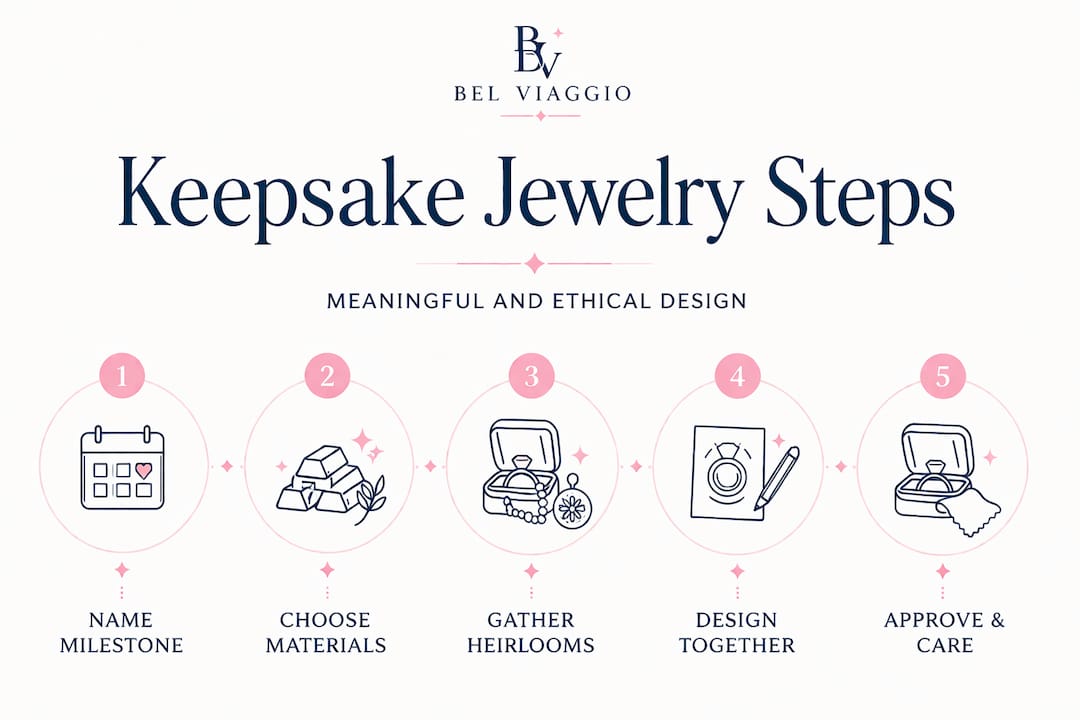
Next, think about whether there are existing heirlooms or family traditions worth honoring. A grandmother’s diamond set in a new band, a father’s gold watch melted down to create wedding rings, an engraving carried from one generation’s piece to another. These connections add layers of meaning that no amount of craftsmanship alone can replicate. As ethical design inspiration shows, the most memorable pieces often blend personal history with intentional, modern choices.
Here are the key questions to work through before your first design consultation:
- What life event is this piece meant to honor?
- Are there existing heirlooms, stones, or metals you want to incorporate?
- Are there symbols, colors, or materials that carry personal significance?
- What is your ethical commitment, and how should that show up in the materials?
- Who might eventually inherit this piece, and what story do you want it to carry for them?
Mixing old and new materials, such as heirloom engravings and recycled gold, helps retain both meaning and modern ethics. This approach means you’re not just creating a beautiful object. You’re building something that carries the weight of where it came from and the intention of where it’s going.
Pro Tip: Write out the story you want this piece to tell in two or three sentences before you meet with a jeweler. This narrative becomes your north star every time you face a design decision.
Select your materials responsibly
With your vision in place and a sense of what matters most emotionally, it’s time to compare your options for the materials that will actually form the piece. Ethical sourcing is not a niche preference anymore. It’s a core part of what makes a keepsake truly worthy of the milestone it represents.
For metals, your main options are recycled gold, Fairmined gold, and new ethically traced gold. Recycled gold is melted down from existing jewelry or industrial sources, keeping new mining demand low. Fairmined gold comes from artisanal miners certified for fair labor practices and responsible environmental behavior. Both are strong choices, and they can be mixed with new ethical additions for a layered result. Your ethical sourcing guide can help you navigate these distinctions before committing.
For stones, you have four main categories to consider. Each has distinct trade-offs:
| Stone type | Ethical profile | Durability | Price range | Best for |
|---|---|---|---|---|
| Lab-grown diamond | Conflict-free, low impact | Excellent | Mid to high | Milestone rings, anniversaries |
| Recycled/vintage gem | Zero new mining impact | Varies by condition | Variable | Heirloom redesigns |
| Traceable mined gem | Certified origin, fairer labor | Excellent | High | Those who value natural provenance |
| Moissanite | Lab-created, very low impact | Excellent | Lower | Budget-conscious ethical choice |
Refer to our ethical gemstone selection resource for detailed comparisons of these options, including which stones hold up best in certain settings and how each scores on environmental impact.
“The most ethical choice is rarely a single option. It’s the combination of sourcing decisions that, together, reduce harm and increase integrity across the entire piece.” This principle is especially true for keepsake jewelry, where multiple materials often come together from different sources.
If your keepsake design involves ashes, a lock of hair, or pressed flowers enclosed in resin, make sure your jeweler has specific experience with these elements. They require different handling, setting techniques, and sealing methods than conventional gemstones.
Gathering and preparing your keepsake elements
Once you’ve selected your materials, the next move is to safely prepare and bring together all your significant elements. This is where the practical and the deeply personal intersect, and getting the details right protects both the physical materials and the meaning they carry.
Follow these steps to prepare your elements before handing them off to your jeweler:
- Document everything first. Before anything leaves your possession, photograph heirloom pieces from multiple angles, including any engravings or markings. Note the weight in grams if possible. This record protects you and helps the jeweler understand exactly what they’re working with.
- Clean carefully. Use a soft cloth to remove dust or residue from metals. Do not use harsh chemicals on heirloom pieces, as these can damage older finishes or obscure hallmarks the jeweler will need to assess.
- Store and transport securely. Use separate padded pouches or small boxes for each item. Label them clearly. If traveling, keep everything in your carry-on bag, never in checked luggage.
- Prepare ash with care. Only about 1/2 teaspoon of ash is needed for inclusion in most jewelry pieces. Any unused portion should be returned to you by the jeweler. Ask about their process upfront.
- Brief your jeweler completely. Share the story behind each element. Explain which items are irreplaceable. Set clear expectations about whether originals should be preserved, returned, or incorporated fully.
The importance of transparency extends into this preparation phase. A trustworthy jeweler will welcome your questions about how each material will be handled, what happens to surplus, and how they document the process.
“Every heirloom piece that comes into a jeweler’s hands carries decades of meaning. The responsibility to treat it with care goes beyond craft. It’s about honoring what that object meant to someone.”
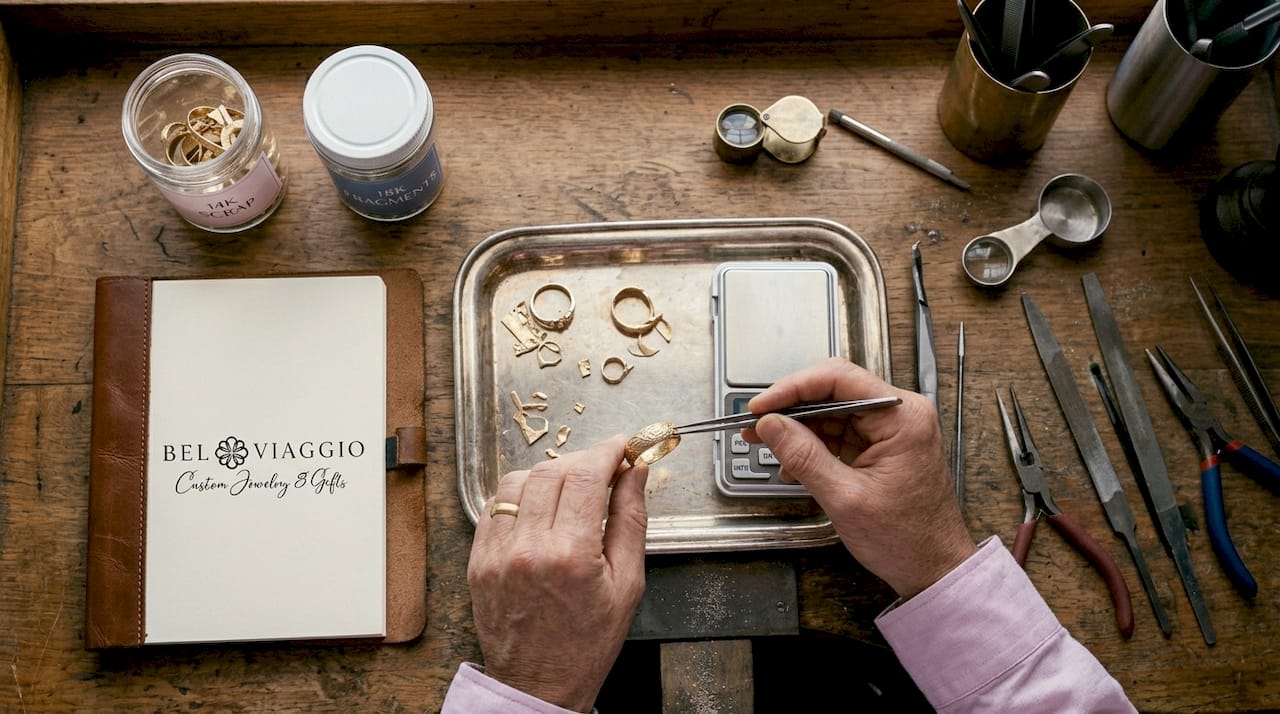
Ask your jeweler whether they use partial melting and casting techniques when working with heirloom metals. This approach can preserve engravings and original markings that would otherwise be lost in a full remelt, which matters enormously when those words carry someone’s name or a significant date.
Work with a jeweler to design and approve your piece
The path from preparation to reality lies in expert hands. Knowing how to collaborate effectively with a designer is what separates a keepsake that moves you from one that merely looks nice.
Use this numbered process to guide your collaboration:
- Share your written story. Bring the two or three sentences you wrote during the vision phase. This anchors every conversation and keeps the design focused on meaning rather than trend.
- Request sketches before any commitment. A skilled jeweler will produce hand-drawn sketches or digital renderings for your review. Push for at least two design directions before narrowing down.
- Review the CAD model. Most modern jewelers use computer-aided design (CAD) software to create a three-dimensional model of the piece. This lets you examine proportions, settings, and flow before any metal is cast.
- Approve a prototype or wax mold. Many jewelers offer a physical prototype in wax or resin. Holding it lets you feel the weight and size in a way no screen can replicate.
- Sign off before final production. Never allow work to proceed to final casting without your written or confirmed approval of the design. This checkpoint protects both parties.
The ability to preserve sentimental engravings through partial melting and casting is a specific technique worth asking your jeweler about early in the process, especially if an heirloom inscription is part of your story. For inspiration on design possibilities, our custom jewelry ideas collection shows the range of what’s achievable.
Pro Tip: Ask your jeweler for a written timeline with named checkpoints. Knowing when to expect sketches, the CAD model, prototype review, and final delivery removes anxiety and keeps the process moving.
Here’s a realistic timeline for a custom keepsake piece:
| Phase | Typical timeframe |
|---|---|
| Initial consultation and story brief | Week 1 |
| Sketches and design direction | Weeks 2 to 3 |
| CAD model review | Week 4 |
| Prototype approval | Week 5 |
| Final casting and setting | Weeks 6 to 8 |
| Quality check and delivery | Week 9 |
Our personalized buying tips resource offers additional guidance on what to ask at each stage to ensure your ethical standards stay central throughout production.
Caring for your finished keepsake
Now that your handcrafted piece is complete, the work of preservation begins. A keepsake that survives decades and generations intact is one that receives consistent, informed care from the moment it’s finished.
Key practices to keep your piece in its best condition:
- Clean gently and regularly. Use warm water, a drop of mild dish soap, and a soft-bristled brush for most metals and stones. Avoid ultrasonic cleaners for pieces that incorporate resin, ashes, or older heirloom settings, as the vibration can damage delicate inclusions.
- Store thoughtfully. Keep the piece in a fabric-lined box or pouch, away from other jewelry that could scratch it. Humidity and direct sunlight can degrade certain materials over time.
- Get it appraised and insured. A professional appraisal within the first year establishes value for insurance purposes. Update the appraisal every three to five years, since material values shift.
- Document its origin story. Keep a written or recorded account of what materials were used, where they came from, and why the piece was made. Future generations will treasure this context as much as the jewelry itself.
- Know the care needs of hybrid pieces. Pieces that mix heirloom and new materials can require special long-term care due to variation in metal composition or stone type. Ask your jeweler for specific written care instructions at delivery.
For more guidance, our smart ethical care tips cover practical maintenance habits that protect both the quality and the story of your piece over time.
Think about how you’ll pass this piece on. Will you write a letter to accompany it? Record a short video explaining its origin? These acts of intentional storytelling transform a beautiful object into a living heirloom.
Why meaning and ethics matter more than ever in keepsake jewelry
Here’s something the jewelry industry doesn’t say often enough: most people don’t actually need another beautiful object. What they need is an object that carries weight, that tells the truth about who they are and what they value. That’s a much harder thing to make, and it’s exactly why the ethical dimension of keepsake jewelry matters so deeply.
We’ve seen a shift in what couples prioritize when they commission a piece for a significant milestone. It’s no longer enough for a ring or pendant to look stunning. They want to know the gold didn’t fund conflict. They want to know the gemstone wasn’t pulled from the earth at the cost of someone’s safety. They want the story behind the object to be as clean as the design itself.
The uncomfortable truth is that many “custom” pieces are custom in appearance only. The materials behind them carry histories the buyer never sees. When you choose recycled metals, lab-grown stones, or certified ethical gems, you’re choosing a different kind of beauty. One that holds up under scrutiny. One you can explain to your children without hesitation.
There’s also a practical lesson here. When a keepsake is built on a foundation of transparency, from the sourcing of metals to the handling of ashes to the provenance of every stone, it’s more durable in meaning, not just in material. It becomes the piece you return to again and again, not because it’s shiny but because it’s honest.
Today’s couples are quietly reshaping what jewelry means in our culture. By demanding custom ethical engagement rings and handcrafted keepsakes with verifiable origins, they’re signaling that beauty and integrity are not trade-offs. They’re partners. That’s a tradition worth building on.
Start your bespoke keepsake jewelry journey
Inspired to create your own ethical keepsake? Here’s how you can begin.
At Bel Viaggio Designs, we make it straightforward to move from a heartfelt idea to a finished, handcrafted piece you’ll carry for a lifetime. Whether you’re starting with a clear vision or just a feeling, our team is built to help you translate what matters into something real and lasting.
Browse our ethical lab-grown diamonds collection for conflict-free stones that bring beauty without compromise, or explore our gemstone ring ideas to find the colors and materials that speak to your story. Every piece we create is handcrafted with ethically sourced materials and designed around the milestone that matters most to you. Reach out to schedule a design consultation and let’s build something that lasts.
Frequently asked questions
Can I mix new gold with family heirloom jewelry in one keepsake design?
Yes, jewelers can blend recycled gold from heirlooms with new, ethically sourced gold to create a single, cohesive piece that honors both the past and your current values.
How is ash safely included in keepsake jewelry?
Only about 1/2 teaspoon of ash is needed for most pieces, and any unused portion is returned to you with careful handling standards followed throughout the process.
What’s the advantage of lab-grown diamonds for keepsake pieces?
Lab-grown diamonds offer a conflict-free, ethically sound alternative to mined stones with identical physical and visual properties, making them an ideal choice when the integrity of your keepsake matters as much as its beauty.
Why do couples prefer ethically sourced jewelry for milestones?
Ethical sourcing ensures the story your jewelry tells is one you’re proud of, celebrating love and memory without environmental or social compromise attached to its origin.
Recommended
- How thoughtful design shapes ethical, unique fine jewelry – Bel Viaggio Designs, LLC
- How to create bespoke luxury jewelry gifts ethically – Bel Viaggio Designs, LLC
- Wedding jewelry guide: Meaning, sustainability, custom design – Bel Viaggio Designs, LLC
- Custom jewelry ideas for ethical engagement rings 2026 – Bel Viaggio Designs, LLC