

TL;DR:
- Heirloom jewelry symbolizes family history, love, and emotional legacy, transcending trends and value.
- It is defined by durability, craftsmanship, documented provenance, and adaptability across generations.
- Ethical sourcing, personalized care, and timeless styles ensure these treasured pieces remain meaningful and enduring.
When couples choose jewelry for an engagement or wedding, they often focus on cut, carat, and cost. But what is heirloom jewelry, really? It goes far beyond a ring that sits in a velvet box. Heirloom jewelry carries generations of memory, love, and quiet family history, becoming deeply emotional beyond gold and craftsmanship. For couples who care about where their jewelry comes from and what it will mean decades from now, understanding the heirloom jewelry meaning changes everything about how you shop, what you choose, and why it matters.
Table of Contents
- What defines heirloom jewelry? Understanding its enduring value
- The emotional and generational importance of heirloom jewelry
- Choosing and caring for heirloom pieces with ethical and sustainable values
- Popular heirloom styles and trends to consider for your engagement or wedding jewelry
- Documenting and personalizing heirloom jewelry: ensuring your story lasts
- Why heirloom jewelry is the ultimate symbol of love and legacy for modern couples
- Explore meaningful, ethically crafted engagement and wedding jewelry at Bel Viaggio Designs
- Frequently asked questions about heirloom jewelry
What defines heirloom jewelry? Understanding its enduring value
To grasp the special qualities of heirloom jewelry, let’s define what truly sets these treasured pieces apart.
The definition of heirloom jewelry is not simply “old jewelry.” A piece earns heirloom status when it combines timeless design, physical durability, documented history, and personal significance in a way that makes it worth passing down. Most trend-driven jewelry does not survive meaningfully past one generation. Pieces that do are rarely about fashion. As research confirms, jewelry that lasts generations is defined by timelessness and adaptability, carrying memory through changing forms.
An important piece of the puzzle is physical durability, which is not just about whether a ring scratches. It involves three distinct properties of the gemstones and metals involved:
- Hardness: Resistance to scratching, measured on the Mohs scale. Diamonds score a 10. Sapphires, 9. Softer stones like opals (5.5 to 6.5) require more careful handling.
- Toughness: Resistance to breaking or chipping under impact. A stone can be hard but brittle, like tanzanite, making it a riskier heirloom choice.
- Stability: How well a stone holds up against heat, light, and chemicals over decades of wear.
Beyond physical properties, an heirloom gemstone combines physical durability, quality craftsmanship, documented provenance, and personal meaning to be passed through generations. Provenance means the verifiable history of a piece: where the stone was mined or grown, who made the setting, who owned it, and when. That paper trail transforms a beautiful ring into a documented legacy.
Adaptability matters more than most people realize. A Victorian brooch reset into a modern pendant does not lose its heirloom quality. In fact, the ability to redesign a piece while preserving its original stones and story is part of what makes heirlooms durable across changing tastes. If you are designing meaningful keepsake jewelry from scratch, building in that adaptability from the start is one of the smartest decisions you can make.
The emotional and generational importance of heirloom jewelry
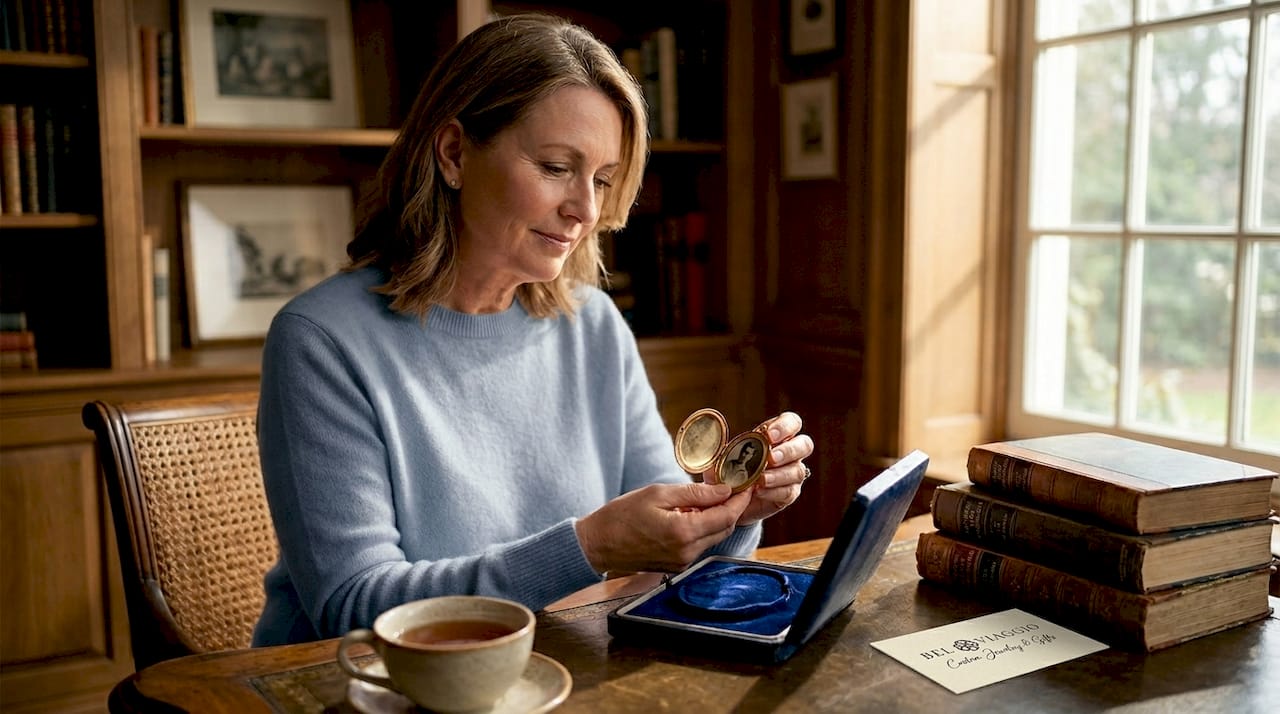
Having defined heirloom jewelry, it’s essential to appreciate the emotional stories and generational bonds these pieces carry.
Heirloom jewelry is not worn. It is inherited. That distinction matters because the emotional weight of a piece grows with each passing. A grandmother’s engagement ring carries her wedding day, her marriage, her children, and her loss. When it lands on a granddaughter’s finger decades later, it holds all of that and more.
“Heirloom jewellery gathers emotional residue over time, absorbing milestones, celebrations, grief, rituals, and silence, becoming deeply intimate.”
This is what separates heirloom pieces from expensive jewelry. Price is not the point. A modest gold locket worn every day by a beloved aunt carries more emotional charge than a designer necklace bought last year. The heirloom jewelry meaning comes from accumulation: of moments, of hands, of years.
For couples planning an engagement or wedding, this context reframes every decision. You are not just buying a ring for today. You are creating an object that might outlive you, that might mean something to people who have not been born yet. That is a genuinely different kind of purchase.
Here is what makes heirloom jewelry emotionally powerful across generations:
- It marks real milestones: engagements, marriages, births, anniversaries, losses.
- It stays physically close to the body, unlike art or furniture, making it intimate in a way no other object can match.
- It evolves with each generation’s personal style without losing its core identity.
- It represents resilience. Pieces that survive war, migration, financial hardship, and time carry proof that love and family endure.
Understanding why jewelry makes perfect gifts for significant occasions connects directly to this emotional logic. It is not sentimentality. It is the recognition that some objects carry weight no words can.
Choosing and caring for heirloom pieces with ethical and sustainable values
Now that you understand heirloom significance, let’s explore how to ethically choose and care for these treasured pieces.
Choosing heirloom jewelry today means thinking about more than aesthetics. For couples who care about where their materials come from, ethical sourcing is part of what makes a piece worth passing down. A ring with a murky supply chain carries a different kind of inheritance than one with a clear, ethical origin.
Here is a practical guide to choosing and caring for heirloom jewelry responsibly:
- Choose gemstones with transparent origins. Lab-grown diamonds offer physical properties identical to mined stones with transparent supply chains, aligning with social consciousness for ethical jewelry. They are chemically, optically, and physically the same as mined diamonds. The only meaningful difference is origin.
- Select settings in recycled metals. Recycled gold or platinum settings support sustainability. Vintage and estate jewelry offer both character and sustainability by reusing treasured pieces already in circulation.
- Store pieces properly. Keep jewelry in individual cloth pouches or lined compartments to prevent scratching. Harder stones scratch softer ones when stored together.
- Clean with care. Most fine jewelry benefits from warm water, mild dish soap, and a soft brush. Ultrasonic cleaners can loosen settings over time and should be used only when a professional recommends them.
- Schedule professional maintenance. Have prongs checked annually, especially on rings worn daily. A loose prong is the most common reason stones are lost.
Proper care and maintenance of heirloom jewelry prolongs its life and emotional significance. That page is worth bookmarking before your first piece even arrives.
There is also a sustainability argument for passing down pieces rather than always buying new. The most ethical piece of jewelry is often one that already exists.
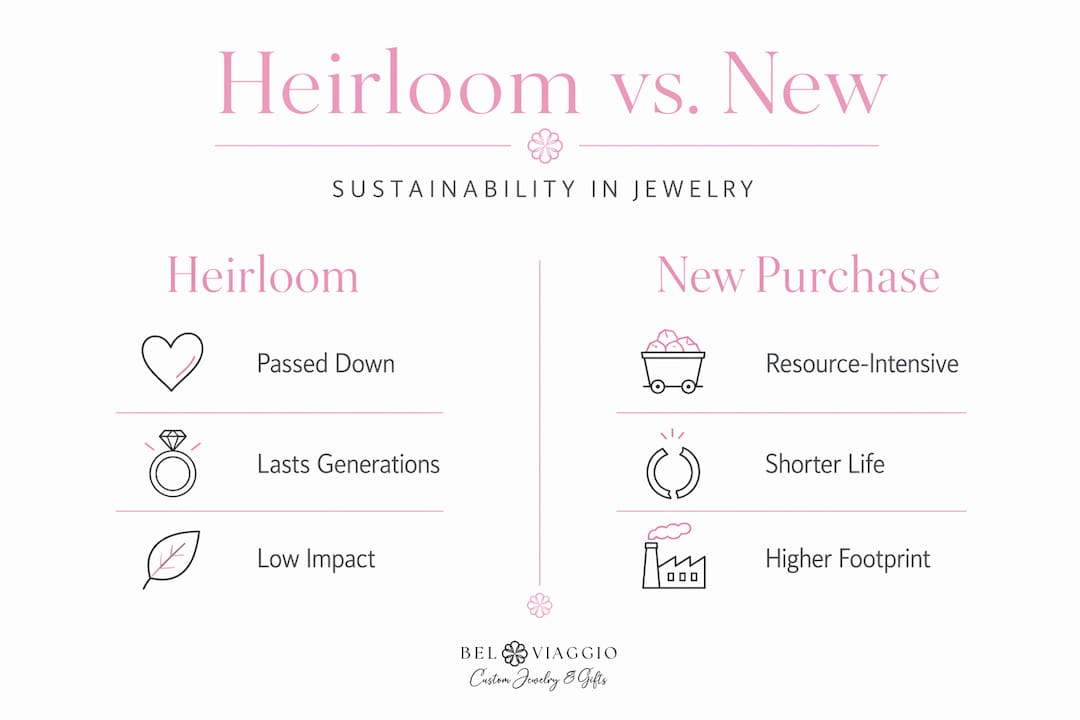
Pro Tip: When purchasing a new piece intended as a future heirloom, ask your jeweler for a gemological certificate, a metal purity stamp, and a written appraisal. Store these with the jewelry. That paperwork is part of the heirloom. Learn more about vintage-inspired jewelry ethics and design if you want to understand how historical styles translate into modern ethical choices.
Popular heirloom styles and trends to consider for your engagement or wedding jewelry
With ethical care and selection in mind, let’s look at the popular styles that make heirloom jewelry unforgettable for engagements and weddings.
Certain styles have survived centuries not because they are trendy, but because they are genuinely beautiful in a way that does not age. Understanding these styles helps you recognize what qualifies as a historical heirloom piece and what will become one.
Georgian era jewelry, with antique diamonds and rich colored gemstones, deserves a comeback for couples who want something with real historical weight. Georgian pieces (roughly 1714 to 1837) were made entirely by hand, often featuring hairwork, paste stones, and foiled backings that create a warm, candlelit glow unlike anything modern.
One of the most compelling arguments for antique-inspired heirloom jewelry is the cut of the stones. Antique-cut diamonds and gemstones have unique, imperfect beauty not found in modern cuts, adding soul to heirlooms. Old mine cuts and rose cuts reflect light differently than modern brilliant cuts, giving them character that reads as alive rather than perfect.
| Style era | Key characteristics | Best for |
|---|---|---|
| Georgian (1714 to 1837) | Handmade, foiled stones, hairwork, warm tones | History lovers, romantic aesthetics |
| Victorian (1837 to 1901) | Symbolism-heavy, mourning jewelry, colored gems | Sentimental meaning, narrative jewelry |
| Edwardian (1901 to 1910) | Platinum filigree, delicate lace-like settings | Elegant minimalists, white metal preference |
| Art Deco (1920s to 1930s) | Geometric lines, bold contrast, sapphires | Modern-leaning couples, graphic design lovers |
| Mid-century modern (1950s) | Yellow gold, large stones, architectural shapes | Bold personalities, color-forward choices |
Beyond rings, other heirloom-worthy pieces to consider include:
- Chandelier earrings: Regal, bold, and adaptable across formal occasions for decades.
- Bib necklaces: Statement pieces that photograph beautifully and layer well with simpler chains.
- Solitaire rings: The most proven heirloom setting. Its simplicity never dates. A classic solitaire with a well-documented stone is almost guaranteed to survive generations.
Pro Tip: If you love a particular era but want something made new, look at vintage-inspired jewelry styles designed with modern durability standards. You get the character of an antique without the fragility of one. And for couples who want color in their heirloom piece, gemstone rings and alternatives offer sapphires, emeralds, and other durable stones that hold their beauty across generations.
Documenting and personalizing heirloom jewelry: ensuring your story lasts
Finally, preserving and personalizing your heirloom jewelry ensures your story shines through future generations.
A ring with no paperwork is a mystery. A ring with a certificate, an appraisal, and a handwritten note is a story. That difference matters more than most people expect when jewelry eventually changes hands. Documentation like certificates, appraisals, and written histories transforms stones into documented heirlooms that can be insured and passed with clarity.
Here is what your heirloom documentation should include:
- Gemological certificate from a recognized lab such as GIA or IGI, confirming stone identity, quality grades, and origin.
- Metal appraisal stating purity and estimated replacement value, updated every three to five years.
- Purchase receipt or provenance record noting where the piece came from and when.
- Written personal history: a brief note explaining why the piece was chosen, who gave it, and what occasion it marked. This is the most overlooked document and the most irreplaceable.
- Photographs: images from the front, side, and back, stored digitally and in print.
Personalization and redesign are not threats to heirloom integrity. Modern heirs often redesign or style inherited pieces while preserving the original emotional core. A grandmother’s center stone reset into a contemporary band is still the grandmother’s diamond. The story travels with the stone, not the setting.
If you are creating a new heirloom piece, think about ethical personalized jewelry storytelling from the very beginning. Engrave a meaningful date inside the band. Choose a stone with a specific color associated with your family’s history. Commission a design that references something personal. These choices layer meaning onto the object before it has even been worn.
Why heirloom jewelry is the ultimate symbol of love and legacy for modern couples
Here is an opinion you might not expect: the couples best suited to heirloom jewelry are not those with the largest budgets. They are the ones who think longest about meaning.
Most jewelry advice focuses on specifications: the four Cs, metal purity, resale value. That framework is fine for commodity purchases. But heirloom jewelry operates on a different logic entirely. Its value is not extractable or resaleable in the traditional sense. A ring worth $3,000 at purchase might carry $300,000 worth of family meaning forty years later. That is not a number any appraisal can capture.
For today’s couples, heirloom jewelry also carries an ethical dimension that aligns with values most mass-produced jewelry cannot match. Choosing a piece with transparent origins, made by skilled hands, set in recycled metal, and designed to last is not a compromise. It is a statement. It says something about who you are and what you believe. Why invest in fine jewelry ethically is a question that answers itself when you hold a piece you know was made responsibly.
There is also something worth naming about the counterintuitive nature of heirloom thinking. The jewelry world often pushes novelty. New cuts, new styles, new collections every season. Heirloom thinking pushes in the opposite direction. It asks: will this still be beautiful in fifty years? Will someone be grateful I chose this? That question filters out a remarkable amount of noise and leaves you with something genuinely worth owning. Meaningful jewelry gifts are rarely the trendiest ones. They are the ones chosen with intention.
Explore meaningful, ethically crafted engagement and wedding jewelry at Bel Viaggio Designs
If you are ready to create your own heirloom-worthy piece, Bel Viaggio Designs offers handcrafted, ethically sourced engagement rings and wedding bands built to last generations. Every piece reflects the values that make heirloom jewelry worth owning: transparent sourcing, skilled craftsmanship, and personalized design that tells your story.

Browse standout options like the black diamond engagement ring, a bold 1.75 ctw piece that makes an unmistakable statement, or the green emerald diamond engagement ring, featuring rich color and brilliant diamond accents. For something timeless and luminous, the emerald cut aquamarine diamond ring pairs a serene blue stone with classic elegance. Custom design consultations are available for couples who want something made entirely their own.
Frequently asked questions about heirloom jewelry
What exactly makes jewelry an heirloom?
Jewelry becomes an heirloom when it combines timeless design, durable craftsmanship, documented history, and personal significance, making it worth passing down. As experts confirm, an heirloom gemstone earns that status through physical durability, quality craftsmanship, documented provenance, and personal meaning across generations.
How can I ensure the heirloom jewelry I choose is ethically sourced?
Choose pieces featuring stones with clear origins, such as lab-grown diamonds, or vintage jewelry set in recycled metals, and ask your jeweler for transparent supply chain documentation. Lab-grown diamonds deliver the same physical properties as mined stones while aligning with ethical and sustainable values.
Can heirloom jewelry be personalized for modern tastes?
Yes, and doing so is actually part of the tradition. Modern heirs redesign inherited pieces to reflect current preferences while preserving the original emotional meaning, keeping heirlooms alive and relevant without erasing their history.
What types of gemstones are best for heirloom jewelry passed down through generations?
Diamonds, sapphires, rubies, and spinels are among the most durable options for everyday-wear pieces intended as heirlooms. Softer stones like opals or pearls can still be heirlooms but require more careful storage and handling to survive intact.
How should I care for heirloom jewelry to preserve its value and meaning?
Gentle regular cleaning, individual storage to prevent scratching, and annual professional inspections of prongs and settings are essential. Professional valuations every three to five years are also critical for accurate insurance coverage and clear estate planning.
Recommended
- Discover Artisan Jewelry: Unique, Ethical & Custom – Bel Viaggio Designs, LLC
- Wedding jewelry guide: Meaning, sustainability, custom design – Bel Viaggio Designs, LLC
- What Is Fair Trade Jewelry? A Guide for Ethical Couples – Bel Viaggio Designs, LLC
- Vintage-inspired jewelry: design, ethics, and modern beauty – Bel Viaggio Designs, LLC