

TL;DR:
- A multistone engagement ring features two or more gemstones arranged intentionally to symbolize meaningful aspects of a relationship. Popular designs include three-stone, Toi et Moi, cluster, and halo styles, each offering unique symbolism and visual appeal. Selecting appropriate settings, gemstone combinations, and considering lifestyle factors ensure a durable, personalized ring that can be resized and maintained over time.
A multistone engagement ring is defined as any ring featuring two or more gemstones arranged to create a unified, intentional design. These rings stand apart from solitaires because every stone placement carries meaning, whether you choose a three-stone arrangement symbolizing your past, present, and future or a cluster of colored gems that reflects your shared personality. The industry term is “multi-stone” or “multi-stone setting,” and you will see it used interchangeably with multistone across jewelers and gemologists. Lab-grown and recycled diamonds from brands like VRAI have made these designs more accessible and more ethical than ever, opening the door to genuinely personalized rings at every price point.
1. What are the most popular multistone engagement ring designs?
The three-stone ring is the most recognized multistone ring design, and it carries one of the most resonant symbolic meanings in jewelry. Each stone represents a chapter of your relationship: who you were, who you are now, and who you will become together. The side stones are typically smaller than the center stone, but they can match in shape or contrast deliberately for visual drama.
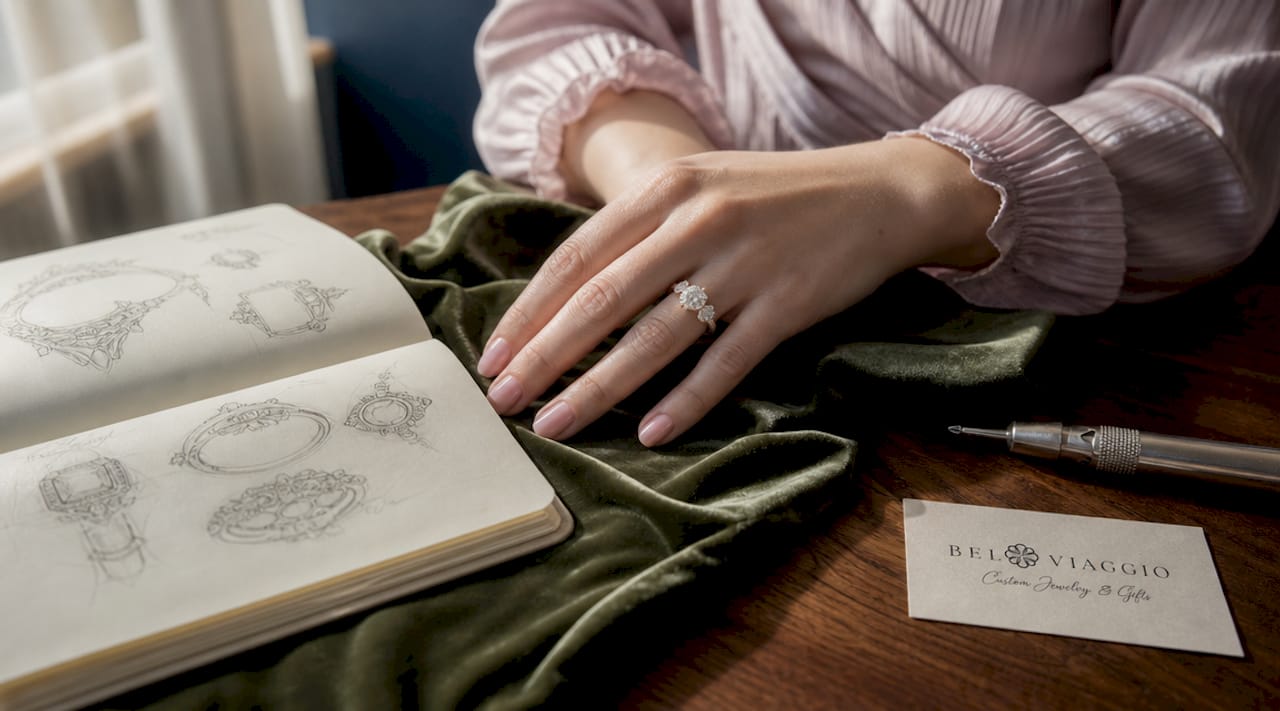
The Toi et Moi ring is a two-stone design with French roots, literally meaning “you and me.” Two stones of equal or contrasting size sit side by side, often in different cuts like an oval paired with a pear or a round paired with a marquise. This style has surged in popularity because it tells a story of two individuals choosing each other.
Side-stone rings enhance a center stone with smaller diamonds or gemstones along the band, creating a continuous flow of light rather than distinct individual accents. They balance visual weight beautifully and suit couples who want sparkle without the boldness of a three-stone design.
Cluster settings are emerging as one of the most artistic choices in modern ring design. Grouped stones form floral or geometric patterns, offering a bespoke aesthetic that looks nothing like a traditional engagement ring. If you want something that reads as wearable art, a cluster design is worth serious consideration.
Halo settings sit at the border of the multistone category. A single center stone surrounded by a ring of smaller diamonds creates the illusion of a much larger stone while adding significant sparkle. Halo rings are among the most requested styles at custom jewelers because they deliver maximum visual impact at a moderate price.
2. How setting types affect sparkle, durability, and maintenance
Choosing a setting is not just an aesthetic decision. It determines how your ring holds up to daily life, how often it needs professional care, and how safely your stones are protected over decades of wear.
| Setting Type | Sparkle Level | Durability | Maintenance Needs |
|---|---|---|---|
| Channel | Moderate | Highest | Low; stones protected inside metal walls |
| Pavé / Micro-pavé | Very High | Moderate | High; frequent prong checks required |
| Shared Prong | High | Moderate | Moderate; prongs exposed but fewer than pavé |
| Bar | Moderate | High | Low; metal bars protect stone sides |
| Bezel | Low to Moderate | Highest | Very Low; full metal surround |
Channel settings are the most durable choice for multistone rings because stones sit secured between two metal walls with no exposed prongs. This makes them ideal for active lifestyles, nurses, teachers, or anyone who works with their hands. The trade-off is slightly reduced light entry compared to prong-based settings.
Pavé and micro-pavé settings maximize shimmer through dozens of tiny diamonds held by small metal beads. The effect is breathtaking, but those tiny prongs require professional inspection every six to twelve months. Lotions, soaps, and everyday buildup collect in the dense clusters and dull the sparkle faster than any other setting type. Learn more about pavé care and design before committing to this style.
Shared prong settings expose more of each stone to light, which increases brilliance noticeably. The prongs are shared between adjacent stones, reducing metal bulk while keeping stones secure. They snag slightly more than channel settings but far less than individual prong settings.
Bar settings offer a geometric, architectural look where thin metal bars separate each stone. They protect the sides of each stone while leaving the top fully exposed to light. This style suits couples drawn to modern, minimalist aesthetics.
Pro Tip: Match your setting type to your daily routine before you match it to your style preferences. A pavé ring on an active hand will need professional cleaning two to three times per year to maintain its sparkle, while a channel or bar setting can go much longer between visits.
3. Unique gemstone combinations and shapes to consider
The most memorable multistone rings are built around deliberate stone pairings, not just whatever happens to be available. Your choice of shape, color, and cut combination tells a story that a single diamond simply cannot.
Round diamonds remain the most versatile accent stone because their symmetrical cut maximizes light return from every angle. They complement any center stone shape and never look dated. If you want your side stones to disappear into pure sparkle, rounds are the reliable choice.
Fancy shapes add personality and era-specific character. Baguettes bring a geometric, Art Deco quality that pairs beautifully with emerald-cut center stones. Pear-shaped side stones add a vintage softness to round or oval centers. Marquise accents elongate the finger and create a dramatic silhouette that reads as bold and intentional.
Colored gemstones open the design entirely. A blue sapphire flanked by white diamonds is a classic combination with royal associations. Emerald and diamond pairings feel lush and sophisticated. Aquamarine with pear-cut diamond accents creates a cool, ethereal palette that photographs strikingly. These combinations also allow you to incorporate birthstones, which adds a layer of personal meaning no catalog ring can replicate.
Matching the Four Cs across your center and side stones is the detail that separates a polished ring from one that looks assembled. Side stones should sit within one or two color grades of your center stone to avoid visible contrast. This is especially true when mixing white diamonds with near-colorless stones, where even a slight yellow tint in the accents will stand out.
Ethical sourcing matters here too. Lab-grown stones are physically and chemically identical to mined gems, and they allow you to choose larger or more vivid colored stones for the same budget. For couples who care about where their ring comes from, lab-grown and recycled options make the personalization process feel even more intentional.
4. How to choose the right design for your lifestyle and budget
The ring you love in a photograph has to work on your actual hand, in your actual life. These four considerations will help you narrow from inspiration to decision.
-
Assess your activity level first. If you exercise daily, garden, cook professionally, or work in healthcare, prioritize channel or bezel settings over pavé. A ring that snags or loses stones within the first year is not a cherished heirloom. It is a source of anxiety.
-
Decide between full and partial stone coverage on the band. Full eternity bands cannot be resized because stones run the entire circumference. A three-quarter or half-way setting leaves plain metal sections that allow a jeweler to adjust the size later without disturbing any stone placements. This matters more than most couples realize at the time of purchase.
-
Use side stones to stretch your budget. A smaller center stone paired with well-matched side stones can look more impressive than a larger solitaire at the same price. A 0.75-carat center with two 0.25-carat baguettes reads visually as a much larger ring. This is one of the most underused strategies in custom ring design.
-
Build in a maintenance budget. Pavé and micro-pavé rings require professional cleaning and prong checks. Channel and bar settings are lower maintenance but still benefit from annual inspections. Factor roughly $50 to $150 per year into your ring ownership cost depending on setting complexity.
-
Consider a custom design. Custom engagement rings let you control every variable, from stone size and shape to metal type and setting style. Many jewelers, including Belviaggiodesigns, offer custom design consultations that start with your budget and work outward to the best possible ring for your priorities.
Pro Tip: Bring photos of your lifestyle, not just your style inspiration, to a custom ring consultation. A jeweler who understands that you rock climb or work in a kitchen will steer you toward settings that stay beautiful for decades, not just for the proposal.
Key takeaways
The most durable and meaningful multistone engagement rings balance stone selection, setting type, and lifestyle needs rather than prioritizing aesthetics alone.
| Point | Details |
|---|---|
| Design variety is wide | Three-stone, Toi et Moi, cluster, halo, and side-stone styles each offer distinct visual and symbolic options. |
| Setting type drives durability | Channel settings protect stones best for active lifestyles; pavé maximizes sparkle but needs frequent upkeep. |
| Stone matching matters | Side stones within one to two color grades of the center stone create a polished, cohesive look. |
| Partial bands allow resizing | Full eternity settings cannot be resized; three-quarter or half-way bands preserve that option. |
| Custom design maximizes value | A smaller center stone with well-chosen accents often outperforms a larger solitaire at the same budget. |
Why I think most couples overlook the most important multistone decision
I have watched the cluster ring trend grow from a niche request into one of the most common inspirations couples bring to consultations, and I think that is genuinely exciting. Artistic groupings of mixed cuts and colors produce rings that feel like portraits of a relationship rather than jewelry store defaults. That shift toward meaning over convention is long overdue.
What I see couples underestimate, though, is how much the setting choice shapes the ring’s entire future. A stunning pavé design that loses a stone within two years of daily wear stops feeling like a symbol of love and starts feeling like a maintenance obligation. The ring settings guide at Belviaggiodesigns walks through this trade-off clearly, and I recommend reading it before you fall in love with a specific look.
My honest advice is to choose the setting for your life first, then let the aesthetic follow. A channel-set three-stone ring with a sapphire center and baguette diamonds is both durable and breathtaking. You do not have to sacrifice one for the other. The couples who end up most satisfied with their rings are the ones who thought about the ring at year ten, not just on the day of the proposal.
— Stacy
Find your perfect multistone ring at Belviaggiodesigns
Belviaggiodesigns handcrafts multistone engagement rings using ethically sourced gemstones and lab-grown diamonds, with custom design options that let you build a ring around your specific vision and budget.

The black diamond halo ring at 1.75 ctw is a striking example of how a multistone design can feel bold and timeless at once. For couples drawn to color, the green emerald and diamond ring at 1.87 ctw pairs vivid color with brilliant white accents in a design that photographs beautifully. Every piece is backed by Belviaggiodesigns’ commitment to craftsmanship, ethical sourcing, and personalized service from first sketch to final polish.
FAQ
What does a multistone engagement ring symbolize?
A multistone engagement ring uses multiple stones to represent specific meanings, most commonly the three-stone design where each stone stands for the past, present, and future of a relationship. Other arrangements, like Toi et Moi rings, symbolize two individuals united in one design.
Which gemstones work best alongside diamonds in multistone rings?
Sapphires, emeralds, and aquamarines are the most popular colored gemstone pairings with diamonds because their hardness (rated 8 to 9 on the Mohs scale) makes them durable enough for daily wear. Birthstones and lab-grown colored gems are also strong choices for couples who want personalized meaning.
Can a multistone engagement ring be resized?
Rings with stones only on the top portion of the band can be resized by a jeweler. Full eternity bands with stones running the entire circumference cannot be resized without removing and resetting stones, so a partial setting is the smarter choice if future resizing is a concern.
How often does a pavé multistone ring need professional maintenance?
Pavé settings require professional prong checks and cleaning every six to twelve months because the small metal beads holding each stone can loosen with daily wear. Buildup from lotions and soaps also dulls the dense diamond clusters faster than other setting types.
Are lab-grown stones a good choice for multistone rings?
Lab-grown diamonds and gemstones are physically identical to mined stones and offer the same brilliance and durability. They allow couples to choose larger or more vivid stones within the same budget, making them an excellent choice for multistone designs where multiple quality stones are needed.
Recommended
- Top Unique Engagement Ring Trends for Brides in 2025 – Bel Viaggio Designs, LLC
- Top Unique Engagement Ring Trends for Brides in 2025 – Bel Viaggio Designs, LLC
- Engagement Dress Ideas: Show Off Your Ring, Day to Night – Bel Viaggio Designs, LLC
- Engagement Ring Trends That Will Become Timeless Bel Viaggio – Bel Viaggio Designs, LLC