

TL;DR:
- Choosing an ethical, transparent jeweler ensures your ring aligns with your values and long-term happiness.
- Important questions include gemstone sourcing, certification, customization process, and sustainability commitments.
- Building a relationship with the jeweler by asking about future modifications and ongoing care safeguards your investment.
Choosing the right jeweler for a custom, ethical engagement ring is one of the most personal decisions you’ll make as a couple. Too many people walk into that conversation focused only on budget or sparkle, and they miss the questions that protect their investment, their values, and their long-term happiness. The ring you choose will be worn every single day, so the jeweler behind it matters just as much as the design itself. This guide gives you a clear, practical set of questions to ask before you commit, covering ethics, craftsmanship, gemstone authenticity, ongoing care, and the sustainability standards that truly reflect who you are.
Table of Contents
- Key criteria: What matters when choosing a jeweler
- Questions about gemstones: Ensuring authenticity and ethics
- Customization and craftsmanship: Navigating the creative process
- Care, maintenance, and warranty: Ensuring your investment lasts
- Sustainability and ethical standards: Beyond the beautiful surface
- A jeweler’s perspective: The questions most people forget (but shouldn’t)
- Ready to find your perfect ethical ring? Start with Bel Viaggio Designs
- Frequently asked questions
Key Takeaways
| Point | Details |
|---|---|
| Prioritize ethics and origin | Asking about sourcing and certifications ensures your jewelry aligns with your values. |
| Clarify customization steps | Understand the design process and checkpoints for a truly personalized piece. |
| Insist on aftercare info | Get clear on warranties, maintenance, and repair to protect your investment. |
| Verify sustainability claims | Probe for proof of ethical and green practices, not just marketing slogans. |
| Don’t skip future planning | Discuss resizing and style changes to ensure lifelong satisfaction with your ring. |
Key criteria: What matters when choosing a jeweler
Before you start comparing designs or pricing, get clear on what you actually value in a jeweler. Most couples instinctively care about price and aesthetics, but the jewelers worth your trust lead with something deeper: transparency. That means showing you where materials come from, how pieces are made, and what happens after you leave the store.
Ethical sourcing is a leading concern for modern ring buyers, and that concern is well-founded. Without the right questions, it’s impossible to know whether your ring was built on fair practices or not. The GIA gem buying advice portal is a useful reference for understanding what proper documentation looks like before you walk into any conversation.
Here are the core categories your questions should cover:
- Gemstone origin and certification — Can they prove where stones came from?
- Customization depth — How involved can you be in the design process?
- Sustainability commitments — Do they use recycled metals or responsibly sourced materials?
- Warranty and service plans — What’s covered, for how long, and at what cost?
- After-sale support — Can you resize, repair, or modify later?
Pro Tip: Never feel embarrassed asking for certifications or written documentation. A jeweler who discourages these questions is waving a red flag, not offering good service.
“The best jewelers don’t just sell rings — they earn trust through documentation, transparency, and a willingness to answer every question you have.”
When you explore resources like the ethical gemstone guide and tips for choosing ethical gemstones, you’ll quickly see that knowledge is your biggest advantage in this process.
Questions about gemstones: Ensuring authenticity and ethics
The gemstone is the heart of most engagement rings, and it deserves the most scrutiny. Your questions here should focus on two things: authenticity and ethics.
Here are the essential questions to ask about any gemstone:
- Where was this gemstone mined or grown, and can you show documentation?
- Is this a natural or lab-grown stone, and how does that affect price and certification?
- Do you provide a grading report from an independent lab like GIA or IGI?
- Can you show me the chain of custody for this stone?
- What is your policy if a stone has a quality defect after purchase?
Lab-grown diamonds are a sustainable and popular alternative to mined stones, and they carry the same optical and physical properties at a fraction of the environmental cost. Here’s a quick comparison to help you decide:
| Gemstone type | Origin | Eco impact | Typical price range |
|---|---|---|---|
| Natural diamond | Earth-mined | High | $$$$ |
| Lab-grown diamond | Controlled lab | Low | $$ |
| Moissanite | Lab-created | Very low | $ |
| Colored gemstone | Varies | Medium to high | $$ to $$$ |
Knowing how to identify ethical gemstones from a third-party source gives you context for evaluating a jeweler’s answers. If they can’t back up their sourcing claims with paperwork, keep looking. You’ll find detailed guidance in these conflict-free ring tips and the ethical gemstone selection resource.
Pro Tip: Ask the jeweler to explain any certification in plain language. If they can’t, that’s worth noting. A confident, ethical jeweler will walk you through a grading report without hesitation.
Customization and craftsmanship: Navigating the creative process
Once you’re satisfied with the gemstone story, shift the conversation to design. Custom rings are a collaboration, and a good jeweler should make you feel like an active partner in creating your piece, not just a customer placing an order.
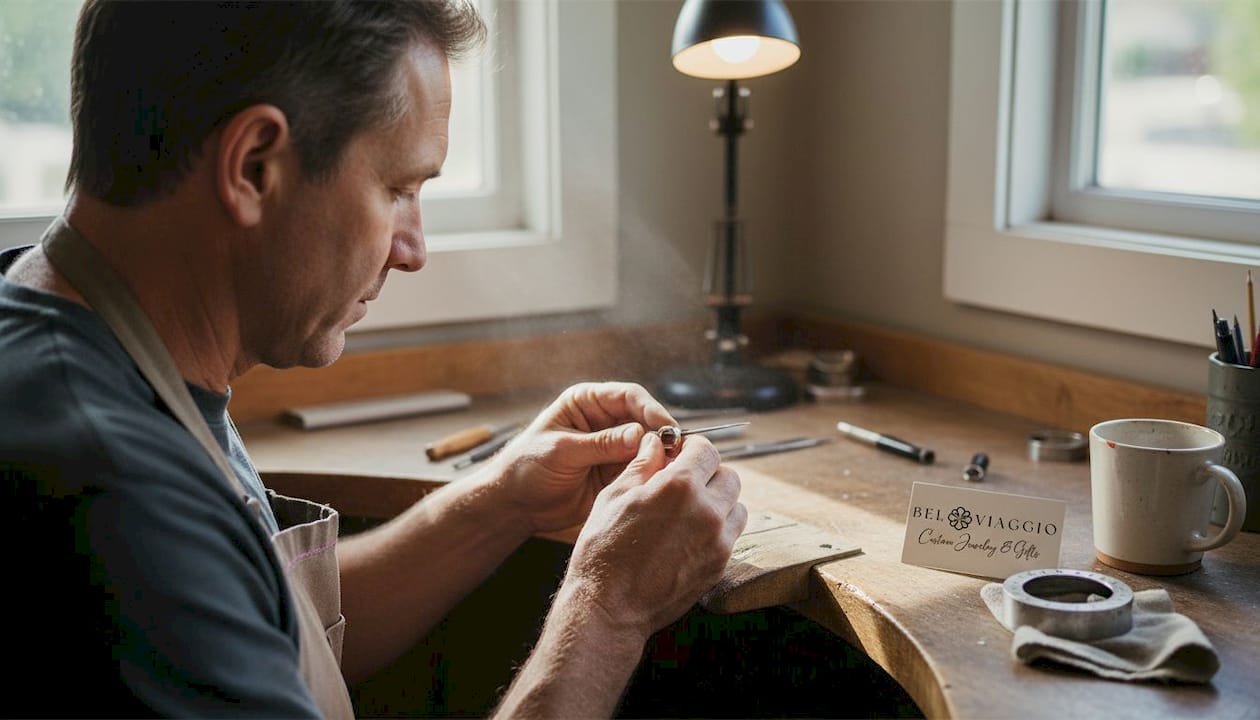
The custom jewelry process can vary significantly from one designer to the next. Some studios offer full design freedom with sketch reviews and wax models, while others work from a limited set of templates. Knowing the difference upfront saves enormous frustration later. According to the custom jewelry guide, design processes vary widely between jewelers, so asking the right questions early prevents misaligned expectations.
Here are the customization checkpoints you should confirm:
- Will I see a sketch or rendering before production begins?
- Is there a wax or resin model stage where I can approve the shape and proportions?
- How many revisions are included before additional charges apply?
- Can I bring my own inspiration images or request a specific metal alloy?
- Who physically makes the ring, and where is it made?
| Feature | Custom design | Ready-made ring |
|---|---|---|
| Personalization | Full control | Limited options |
| Timeline | 4 to 8 weeks | Immediate |
| Approval stages | Multiple checkpoints | None |
| Price | Varies widely | Fixed |
| Sentimental value | Very high | Moderate |
Skipping these questions is where couples run into trouble. You might receive a ring that looks similar to what you imagined but misses the personal detail that made it meaningful. Explore thoughtful design principles to understand how an ethical designer approaches the creative process from start to finish.
Care, maintenance, and warranty: Ensuring your investment lasts
A ring you’ll wear every day faces real wear. Prongs loosen, metals scratch, and settings shift over time. The questions you ask about aftercare before you buy will determine whether small issues get fixed easily or become expensive problems.
Industry experts widely recommend jewelry maintenance plans as a smart way to protect a significant investment. Here’s a checklist of care and warranty questions to cover:
- Does your warranty cover defects in the setting or metalwork?
- How long does the warranty last, and is it transferable?
- Is routine cleaning and inspection included, or does it cost extra?
- What is the turnaround time for repairs?
- Do you offer resizing services, and is the first resize free?
Pro Tip: Ask specifically whether prong retipping (rebuilding worn prong tips that hold the stone in place) is included in a service plan. Many couples discover this is a common need within the first five years, and it can cost $50 to $200 if not covered.
“Heirloom-quality rings aren’t just about the materials, they’re about the ongoing relationship with your jeweler that keeps them beautiful for generations.”
For a deeper look at what good aftercare looks like day-to-day, the jewelry warranty info resource breaks down what typical policies cover and what gaps to watch for.
Sustainability and ethical standards: Beyond the beautiful surface
A jeweler’s sustainability commitments should go beyond using a recycled metal here and there. Real ethical practice shows up in labor standards, sourcing partnerships, environmental policies, and transparency in their supply chain.
Sustainable practices now rank among the top considerations for jewelry buyers in 2026, and smart couples are asking harder questions than ever before. The ethical engagement rings guide from Brides provides solid external context for what genuinely ethical jewelers commit to.
Here are the green and ethical certifications to look for or ask about:
- Fairmined or Fairtrade gold — Verifies gold was responsibly sourced from artisan miners
- Responsible Jewellery Council (RJC) certification — A global standard for ethical business practices
- Recycled metal use — Reduces demand for new mining
- Carbon offset programs — Some jewelers offset their manufacturing footprint
- Conflict-free sourcing policy — A written, documented commitment, not just a verbal claim
Statistic callout: A 2026 survey found that more than 60% of millennial and Gen Z couples say a jeweler’s ethical sourcing policy influences their purchase decision. That’s a massive shift from just a decade ago.
Always ask for documentation. Any jeweler who claims to be sustainable should be able to hand you something in writing, whether that’s a supplier list, a published policy, or a third-party audit report. Visit these sustainable engagement ring tips to build your verification checklist before your next consultation.
A jeweler’s perspective: The questions most people forget (but shouldn’t)
Here’s something most buyers never ask: What happens if I change my mind about the style in five years? Life changes. Tastes evolve. The ring you love at 28 might feel different at 40. A great jeweler thinks beyond the sale.
At Bel Viaggio Designs, we’ve walked with hundreds of couples through this process, and the questions that protect long-term happiness are almost always the ones left unasked. People focus hard on the 4Cs and the price, which matters, but they forget to ask whether the ring can be modified later, whether stones can be upgraded, or whether the jeweler will still be a resource years down the road.
The uncomfortable truth is that choosing a jeweler is a relationship, not a transaction. The best studios welcome the hard questions because confident craftspeople have nothing to hide. If a jeweler gets defensive when you probe their sourcing or their process, that’s your answer. When you’re ready to start asking the right questions, finding the perfect ring is the natural outcome of asking all the right ones first.
Ready to find your perfect ethical ring? Start with Bel Viaggio Designs
Now that you know exactly what to ask, the next step is finding a jeweler who can answer every question with confidence, documentation, and genuine care.
At Bel Viaggio Designs, we specialize in custom rings with lifetime warranty support, built from ethically sourced materials and crafted by hand for couples who refuse to compromise. Browse our collection of loose lab grown diamonds or explore gemstone ring alternatives if you’re drawn to color and character. Every piece comes with transparent sourcing, a clear warranty, and a team that welcomes every question you bring. Your ring should be as intentional as your commitment.
Frequently asked questions
What documents should a reputable jeweler provide?
A reputable jeweler should provide gemstone certifications, a written appraisal, and a clear warranty policy. As outlined in conflict-free ring tips, every piece should be backed with service terms and certification.
How can I check if a jeweler practices ethical sourcing?
Ask about their sourcing partners, request third-party certifications, and look up their published supply chain policy. Traceability and ethics for all materials should be something any ethical jeweler can document on request.
Are lab-grown diamonds as durable as natural diamonds?
Yes, lab-grown diamonds are chemically and physically identical to mined diamonds and offer the same hardness, brilliance, and durability.
What is the difference between a warranty and a service plan?
A warranty generally covers manufacturing defects, while a service plan includes routine cleaning, inspection, and repairs. Understanding this distinction early helps you avoid unexpected costs down the road.
What should I know about resizing or modifying my ring in the future?
Ask your jeweler whether resizing is included, what the design limitations are, and whether the setting allows for future modification. Proactive resizing questions protect your satisfaction long after the purchase is complete.
Recommended
- Custom Jewelry Guide: Meaning, Magic & Your Perfect Ring – Bel Viaggio Designs, LLC
- Custom ring guide: step-by-step ethical luxury (2026) – Bel Viaggio Designs, LLC
- Custom jewelry ideas for ethical engagement rings 2026 – Bel Viaggio Designs, LLC
- Custom jewelry ideas for ethical engagement rings 2026 – Bel Viaggio Designs, LLC