

TL;DR:
- Creating meaningful luxury jewelry involves clear purpose, personalization, and ethical material sourcing.
- Ethically sourced metals and gemstones, including recycled gold and lab-grown diamonds, are essential.
- Presentation with quality packaging and storytelling enhances the gift’s emotional value and legacy.
Finding a truly meaningful luxury jewelry gift can feel paralyzing. You want something personal, beautiful, and responsibly made, yet the market floods you with vague claims, cookie-cutter designs, and murky sourcing. Whether you’re planning a surprise engagement ring, a wedding gift, or a milestone keepsake, you deserve a piece that carries both beauty and integrity. This guide walks you through every stage of creating a bespoke luxury jewelry gift, from shaping your initial vision to sourcing ethically certified materials and presenting the final piece in a way that leaves a lasting impression.
Table of Contents
- Define your vision: Purpose, personalization, and symbolism
- Select materials: Ethically sourced metals and gemstones
- Design and commission: Choosing a jeweler and finalizing details
- Luxury presentation: Packaging and the final gifting touch
- Why ethical luxury jewelry gifting isn’t just a trend, it’s a legacy
- Design your own luxury jewelry legacy with Bel Viaggio
- Frequently asked questions
Key Takeaways
| Point | Details |
|---|---|
| Clarify your vision | Determine the emotional significance, personalization, and design goals before starting your jewelry project. |
| Prioritize ethical sourcing | Choose recycled metals and certified stones with clear documentation for a responsible and beautiful gift. |
| Partner with experts | Select a certified jeweler, review all agreements in writing, and insist on transparency throughout the process. |
| Elevate presentation | Select luxury, sustainable packaging and add thoughtful touches to enhance the gifting moment. |
| Focus on legacy | Ethically crafted, personalized jewelry becomes a lasting heirloom imbued with meaning far beyond aesthetics. |
Define your vision: Purpose, personalization, and symbolism
Every extraordinary piece of jewelry begins with a clear intention. Before you browse designs or contact a jeweler, take time to ask yourself what this gift truly needs to say. Is it celebrating an engagement, marking a wedding anniversary, or honoring a personal milestone? The occasion shapes everything, from scale and style to the symbols and stones you choose.
Personalization is where a luxury gift becomes irreplaceable. Consider these meaningful design elements:
- Gemstone choice: Birthstones, favorite colors, or stones tied to a place or memory
- Initials or monograms: Engraved on the band, clasp, or hidden inside the setting
- Important dates: Roman numerals or coordinate engravings for added subtlety
- Nature or cultural motifs: Florals, celestial symbols, or heritage patterns
- Heirloom integration: Stones or metal from a family piece reworked into something new, preserving emotional history while updating the design
Heirloom reworking is one of the most underutilized options in luxury gifting. If a grandmother’s ring sits unworn in a drawer, a skilled jeweler can reset its stones into a modern band that carries the same sentimental weight with fresh beauty. Engraving adds another dimension, transforming a gorgeous piece into a personal artifact.
Pro Tip: Write down three words that describe the recipient and three words that describe the occasion. Bring that list to your first jeweler consultation. It gives the designer something real to work with instead of vague adjectives like “elegant” or “timeless.”
You’ll also want to decide whether the design leans contemporary or classic. A sleek bezel setting communicates modern minimalism, while a pavé halo setting echoes vintage glamour. Neither is wrong. Knowing your preference early saves revision rounds later. For guidance on making these choices responsibly, our ethical custom jewelry tips offer practical starting points, and you can also explore what defines luxury jewelry in today’s market.
Select materials: Ethically sourced metals and gemstones
With your design vision clarified, the next critical step is material selection, the foundation of every meaningful luxury jewelry gift. What your piece is made of tells a story before anyone even looks at the design.
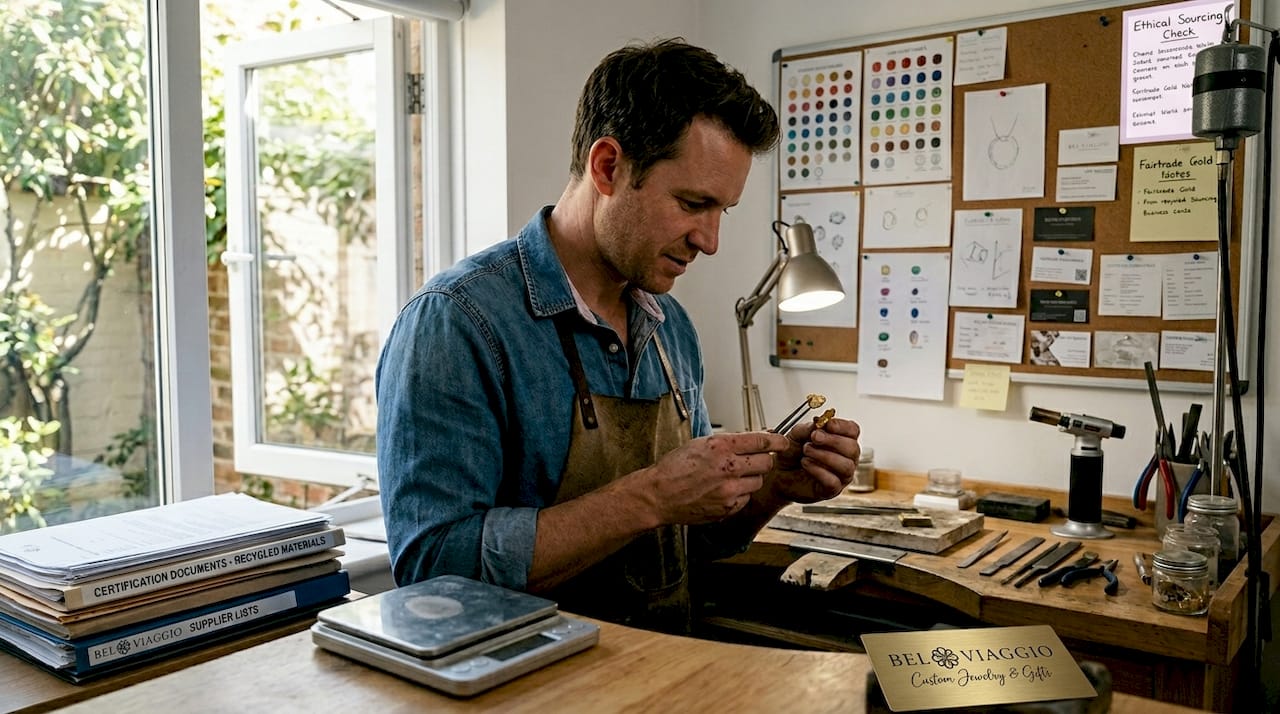
When it comes to metals, recycled gold and platinum are the gold standard for ethical sourcing. Both 9ct and 18ct recycled gold are available from responsible refiners. Fairmined and Fair Trade gold go further, certifying that small-scale miners were paid fairly and worked safely. These certifications are not marketing language. They are independently verified standards.
| Metal option | Ethical credential | Durability | Typical use |
|---|---|---|---|
| Recycled 18ct gold | Certified recycled chain | Very high | Engagement rings, bands |
| Fairmined gold | ASM miner-verified | Very high | Statement pieces |
| Recycled platinum | Certified recycled chain | Exceptional | Solitaires, fine bands |
| Sterling silver (recycled) | Certified recycled | Moderate | Fashion jewelry |
For gemstones, lab-grown diamond options have become one of the most popular ethical choices. Lab-grown stones are physically and chemically identical to mined diamonds, yet they carry a significantly lower environmental footprint and a more transparent supply chain. They also cost 50 to 70 percent less than comparable mined stones, which means you can opt for a larger or higher-quality stone within the same budget.
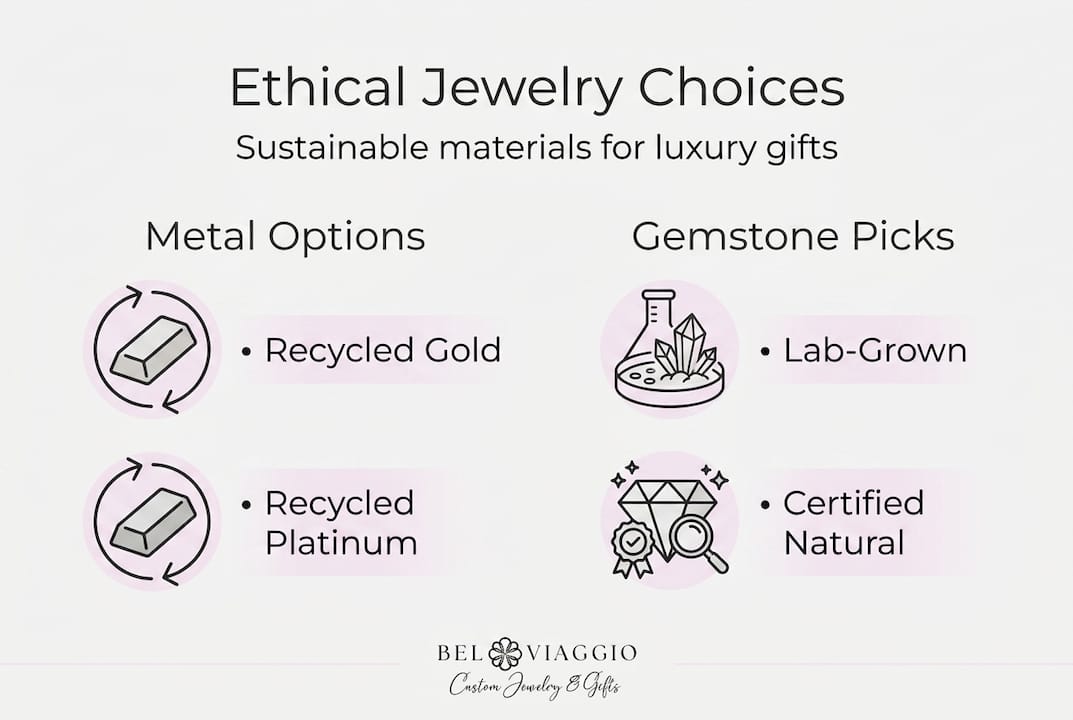
Natural gemstones remain beautiful and appropriate when they carry proper certification. Look for GIA, IGI, or AGS grading reports, plus RJC chain of custody documentation confirming responsible practices across the entire supply chain. The Kimberley Process applies specifically to conflict-free diamonds, though critics note it has limits, so pairing it with RJC certification strengthens credibility.
Pro Tip: Ask your jeweler for a copy of the stone’s origin documentation before signing anything. A jeweler who hesitates or gives vague answers about their sourcing is a red flag. Explore our ethical gemstone selection guide and ethical sourcing for weddings resource for deeper context.
Design and commission: Choosing a jeweler and finalizing details
With your materials secured, it’s time to bring your jewelry vision to life through collaboration with a skilled, ethical jeweler. Choosing the right person for this work is as important as the design itself.
Here is a step-by-step process for commissioning your piece:
- Research and shortlist: Review portfolios online. Look for RJC certification or equivalent ethical credentials displayed on their website or upon request.
- Initial consultation: Bring your design references, your three-word list, and any heirloom pieces. A strong designer will listen before they sketch.
- Review design sketches or digital models: Many jewelers now offer 3D renderings or wax models, which let you visualize and try on the design before any metal is poured.
- Heirloom integration discussion: If you’re incorporating a family stone, ask specifically how it will be handled, stored, and protected during the process.
- Agree on milestones: Confirm a written agreement that includes the deposit amount, milestone payment schedule, revision limits, and a final delivery date.
- Approve and communicate: Stay in contact at each production stage. A good jeweler welcomes check-ins and provides photos at key milestones.
“The best custom jewelry commissions are built on clear communication, written agreements, and mutual trust. Assume nothing in writing, confirm everything.”
| Commission stage | What to confirm |
|---|---|
| Consultation | Design intent, heirloom details, ethical sourcing proof |
| Design approval | Sketch or 3D model signed off |
| Production start | Deposit paid, materials confirmed |
| Mid-production | Photos shared, adjustments confirmed |
| Final delivery | Inspection, certification documents, packaging |
For additional insight into stone quality and sourcing, our ethical gemstone guide 2026 and our resource on lab-grown diamond truths are worth bookmarking during this stage. If you’re incorporating heirloom rework ideas, that resource provides inspiring examples of how family pieces are reimagined with modern artistry.
Luxury presentation: Packaging and the final gifting touch
After the perfect piece is crafted, how you present it elevates the entire gifting experience and reinforces your thoughtful choices. Packaging is not an afterthought. It is the opening chapter of the recipient’s experience with your gift.
The standard for luxury jewelry packaging includes:
- Rigid boxes: Sturdy, structured boxes that hold their shape and communicate quality before the lid is opened
- Velvet or suede inserts: Soft, tactile linings that cradle the piece and signal premium craftsmanship
- Magnetic closures: Smooth, satisfying closures that add a sensory element to the unboxing
- Embossing or foil stamping: Personalized branding or initials that make the package feel bespoke
- Sustainable materials: Luxury jewelry boxes made from FSC-certified board or recycled materials align with the values behind an ethically sourced piece
Thoughtful packaging also drives emotional resonance. A 2023 study found that premium unboxing experiences significantly increase perceived gift value and the likelihood of sharing the moment on social media. That ripple effect matters, especially for milestone occasions.
Pro Tip: Add a handwritten note on card stock inside the box, or tuck in a small “story card” that explains the origin of the gemstone, the ethical certifications, and the custom design choices. This transforms the gift from beautiful object into a narrative the recipient carries forward.
Common mistakes to avoid: a cheap box instantly undercuts even the most exquisite jewelry. Avoid single-use plastic trays, foam inserts that crumble, or generic packaging with no personal touch. For gemstone choices for luxury occasions, consider coordinating the box color or lining to complement the stone for an extra layer of intentionality.
Why ethical luxury jewelry gifting isn’t just a trend, it’s a legacy
Here is an uncomfortable truth most jewelry guides skip: the price of a piece has almost nothing to do with whether it becomes an heirloom. What makes a gift last across generations is the story woven into it, and that story starts with how the materials were sourced.
We’ve seen couples spend a fortune on a visually stunning ring only to feel hollow about it once they learned the stone’s origins were untraceable. Contrast that with a modestly priced piece made from Fairmined gold and a certified lab-grown sapphire, where every element came with a name, a place, and a verified chain of custody. That second piece becomes something the recipient is proud to pass on.
The hardest part of bespoke ethical luxury is the verification step. It requires asking uncomfortable questions and sometimes walking away from a jeweler who can not answer them. But that extra effort is precisely what separates a beautiful object from a legacy piece. Ethics and transparency are not just modern buzzwords. They are now the defining markers of genuine luxury, and shortcuts in this process quietly erode the emotional value of every gift you give.
Design your own luxury jewelry legacy with Bel Viaggio
Inspired to begin your own journey with a meaningful piece?
At Bel Viaggio Designs, every piece is handcrafted with ethical sourcing at its core, from our certified lab-grown stones to our recycled precious metals. Whether you’re drawn to a striking black diamond engagement ring or exploring our curated gemstone diamond alternatives, we bring the same commitment to craftsmanship, transparency, and personalization to every commission. Our team is ready to help you translate your vision into a piece that carries meaning long after the moment of giving. Browse our collections and start the conversation today.
Frequently asked questions
What are the most ethical gemstones for luxury jewelry gifts?
Lab-grown diamonds and Fair Trade gemstones with GIA or RJC certification are the most ethical options, offering verified supply chains and minimal environmental impact.
How can I verify that my jeweler sources materials ethically?
Request documentation such as RJC certification or GIA grading reports before committing. Jewelers who prioritize responsible sourcing standards will provide these without hesitation.
Is there a difference in quality between lab-grown and natural diamonds?
Lab-grown diamonds are chemically and visually identical to natural diamonds, and they offer significant ethical and cost advantages without any compromise to quality.
How should I present a luxury jewelry gift for maximum impact?
Use a rigid, velvet-lined box with a magnetic closure, and consider adding a handwritten note or story card that shares the piece’s origin and ethical credentials.
Recommended
- What is luxury jewelry: bespoke and ethical guide – Bel Viaggio Designs, LLC
- How thoughtful design shapes ethical, unique fine jewelry – Bel Viaggio Designs, LLC
- Custom jewelry ideas for ethical engagement rings 2026 – Bel Viaggio Designs, LLC
- Custom jewelry ideas for ethical engagement rings 2026 – Bel Viaggio Designs, LLC
- Designing Your Dream: How to Start Creating Your Own Bespoke Jewellery – blackwellonline