

A custom family ring is a personalized piece of jewelry designed to represent your family’s unique story through birthstones, engravings, heraldic symbols, or a combination of all three. Unlike mass-produced rings, each one is built around the specific people it honors, making it both a wearable keepsake and a lasting symbol of connection. Belviaggiodesigns specializes in exactly this kind of handcrafted personalization, bringing together ethical sourcing and thoughtful design for families who want something genuinely irreplaceable.
What makes these rings so enduring is their layered meaning. A custom birthstone family ring might hold a child’s January garnet next to a grandmother’s September sapphire, telling a generational story at a glance. Engravings add another layer, whether that’s a birth date, a set of coordinates, or a phrase only your family would recognize. The result is jewelry that connects generations rather than simply decorating a finger.
- Birthstones represent each family member by birth month, drawn from the standardized chart maintained by the Gemological Institute of America
- Engravings add names, dates, coordinates, or meaningful phrases within the band
- Heraldic symbols such as family crests or motifs connect the ring to ancestral heritage
- Stackable formats allow the ring to grow as the family does, adding a new band for each milestone
Where does the tradition of family rings come from?
Family rings trace their roots to signet rings used by European nobility as far back as the medieval period. These rings were pressed into hot wax to authenticate documents and seal correspondence, functioning as a portable stamp of identity and authority. Over centuries, the practice spread beyond courts and into merchant families, who used engraved crests to signal lineage and social standing.
The mother’s ring as we know it today has a more recent origin. The tradition gained momentum in the United States during the early 20th century, partly tied to the growing cultural significance of Mother’s Day, which the Smithsonian Institution traces to the early 1900s. Jewelers began marketing birthstone rings as gifts for mothers, and the concept of representing each child through a gemstone took hold quickly.
What shifted over time was the move from purely functional objects to deeply symbolic ones. The engraved crest that once sealed a letter now tells a story about where a family came from. The birthstone that once marked a single person now holds an entire family tree on one band.
- Signet rings originated as practical authentication tools for nobility
- Birthstone symbolism draws from ancient traditions linking gems to months and personal traits
- The modern mother’s ring emerged as a sentimental gift tradition in early 20th-century America
- Heraldic elements in rings evolved from functional seals into personal identity markers
What styles and customization options are available?
The range of personalized family ring options available today is wider than most people expect. You can go classic with a single band holding a row of birthstones, or build something more architectural with stacked rings, mixed metals, and layered engravings. The style you choose usually depends on how many family members you want to represent and how you plan to wear the ring day to day.
Birthstone rings remain the most popular format. Each stone corresponds to a family member’s birth month, and the arrangement can follow chronological order, color theory, or relationship tier. Arranging stones chronologically or by color creates better visual flow than random placement and tells a clearer story.
Stackable rings are the fastest-growing format in 2026. Thin bands, typically 1.5–2.5mm wide, stack comfortably on a single finger and can be added to over time. Stackable family rings are expandable by design, which makes them a natural fit for growing families who want a ring that evolves alongside them.
- Engraved bands: names, initials, birth dates, coordinates, or short phrases inside or outside the band
- Family tree motifs: branches set with birthstones or engraved names to reflect family structure
- Infinity designs: symbolize unbreakable bonds, customizable with stones or initials
- Cluster settings: multiple stones grouped together, ideal for larger families
| Style | Best for | Metal options | Expandable? |
|---|---|---|---|
| Birthstone row band | 2–6 family members | Gold, silver, platinum | No |
| Stackable thin bands | Growing families | All metals, mixed | Yes |
| Engraved signet | Heritage and ancestry | Gold, sterling silver | No |
| Family tree ring | Symbolic storytelling | Gold, rose gold | Limited |
| Infinity band | Couples or small families | All metals | No |
Metal choice matters more than most buyers realize. Gold alloys and platinum offer the best durability for daily wear, while sterling silver requires regular polishing to maintain its luster. Rose gold has become a dominant trend in stacked family rings because its warm tone flatters nearly every birthstone color.
Who do you include, and how do you choose the details?
There are no rules about who belongs in a family ring. Biological children, adoptive children, stepchildren, grandchildren, and even beloved pets are all valid inclusions. The most meaningful rings tend to reflect the family as it actually exists, not an idealized version of it.
Before you contact a jeweler, write down every person you want to represent alongside their birth month. This simple step often reveals that you need more stones than you initially assumed. Families with six or seven members frequently discover they need a larger setting or a stackable format to accommodate everyone comfortably.
Pro Tip: For blended families, choose a style where every stone or name carries equal visual weight. Infinity bands and cluster settings work especially well here because no single stone is centered above the others, which avoids any appearance of hierarchy among children.
Engraving space is limited on most bands, typically 25–30 characters, which accommodates roughly four or five short names or a meaningful date sequence. If your family is larger, consider engraving initials rather than full names, or use the inside of the band for dates and reserve the outside for a short phrase.
- List all intended family members and birth months before starting the design process
- Confirm the stone count with your jeweler early to choose the right setting size
- Use chronological or color-based stone arrangement for visual clarity
- Choose engravings that are specific to your family rather than generic phrases
How and where should you wear a family ring?
Placement is partly tradition and partly personal preference. Heirloom signet rings are traditionally worn on the little finger, a convention that dates back to European heraldic practice. Modern birthstone family rings and stackable bands, by contrast, most commonly go on the right ring finger, keeping the left hand reserved for engagement and wedding jewelry.
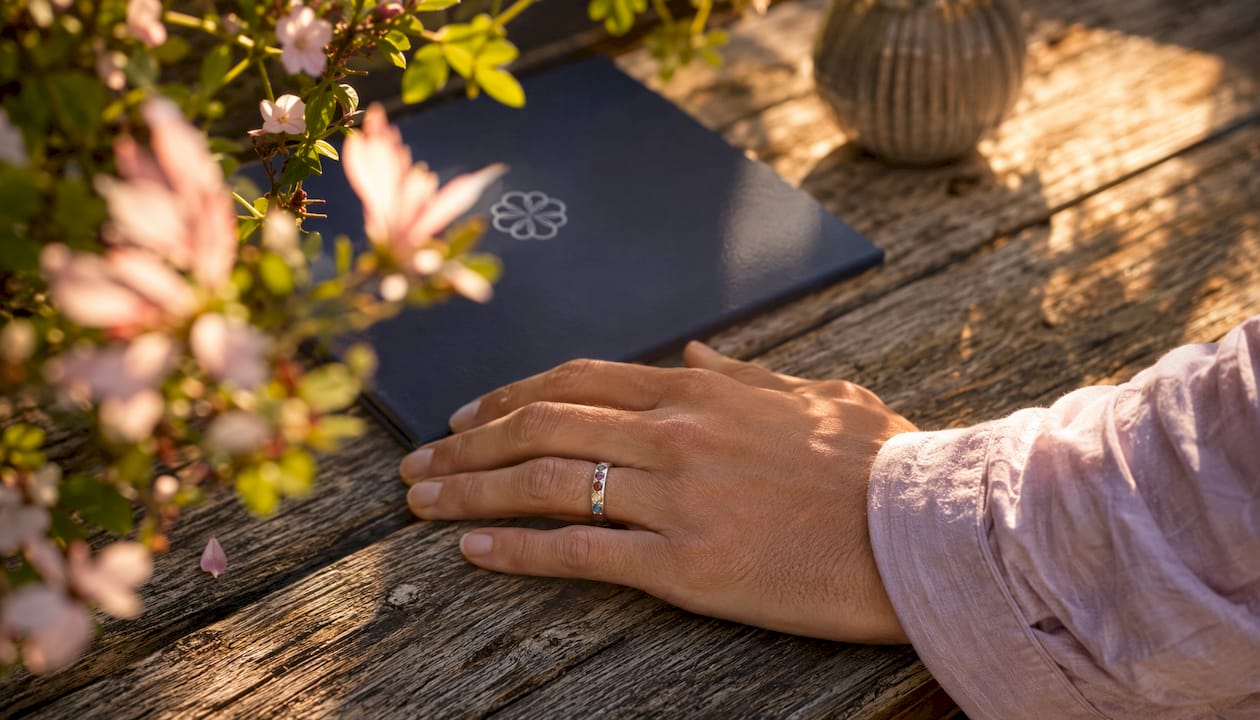
Stacking is where the real flexibility comes in. You can mix yellow gold, white gold, and rose gold bands in the same stack for a layered, modern look. Thin bands are comfortable enough for all-day wear, including cooking, typing, and other daily tasks that would make a bulkier ring impractical.
A few practical notes on fit and care:
- Finger size fluctuates with temperature, hydration, and weight changes; ordering a half-size larger than your current measurement gives you room to adjust
- Sterling silver requires monthly polishing and occasional replating to prevent tarnishing
- Gold and platinum need only occasional professional cleaning to stay bright
- Keep the total stack width to 8–12mm for average-size fingers to avoid bunching or discomfort
- Store rings separately in soft pouches to prevent scratching between bands
For heirloom pieces passed down through generations, having the ring inspected and cleaned by a jeweler every few years keeps stones secure and settings intact. This is especially relevant for heirloom jewelry that carries both sentimental and monetary value.
How heraldry deepens the meaning of a custom family ring
Heraldic elements take personalization to a different level entirely. A family crest engraved into a signet ring connects the wearer to ancestry in a way that a birthstone alone cannot. Family crest rings evolved from noble wax-seal rings into personal identity markers, and today they are available to anyone willing to research their family’s heraldic history.
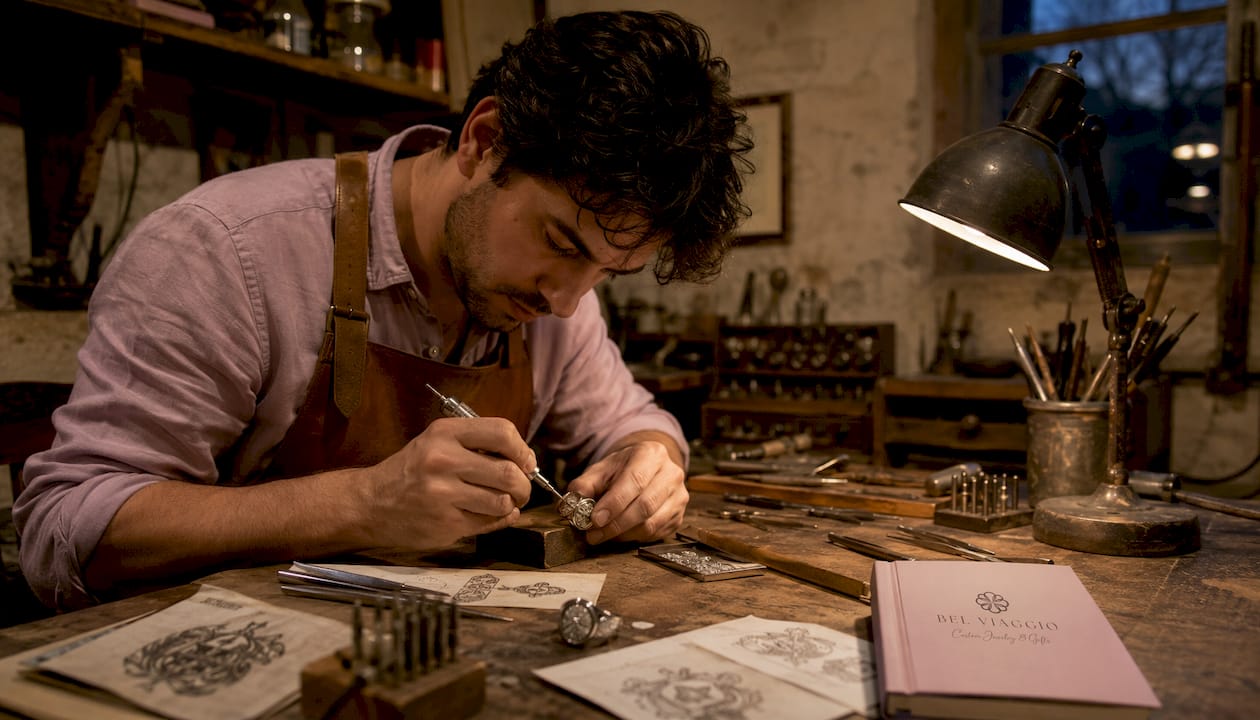
The process starts with genealogical research. Heraldic records, family archives, and databases maintained by organizations like the College of Arms in England or the Court of the Lord Lyon in Scotland can help verify whether a documented crest exists for your surname. If no official crest exists, a jeweler specializing in custom heraldic work can help you design original symbols that reflect your family’s values and story.
Modern heraldic rings often blend traditional motifs with contemporary design. A family motto engraved inside the band, a coat of arms on the face, and a birthstone set into the shank can coexist in a single piece without feeling cluttered, provided the jeweler has experience balancing these elements.
- Research heraldic records through genealogical databases before commissioning a crest ring
- Work with a jeweler who has specific experience in heraldic engraving for accurate detail
- Combine a crest with birthstones or a family motto for a layered, multi-generational piece
- Choose gold for heraldic rings intended as heirlooms, as it holds engraving detail best over decades
What does a custom family ring typically cost?
Pricing for custom family rings spans a wide range depending on metal, stone count, and complexity of design. Sterling silver birthstone rings start at an affordable price point, while gold and platinum options vary higher, especially for larger families with many stones.
The factors that drive cost upward most quickly are natural gemstones versus lab-created or cubic zirconia alternatives, the number of stones, and the complexity of any engraving or heraldic work. A simple name engraving adds relatively little to the price. A hand-engraved family crest on a gold signet ring is a different proposition entirely.
For families prioritizing durability and daily wear, 10K and 14K gold alloys represent the best balance of cost and longevity. Sterling silver costs less upfront but requires ongoing maintenance that adds up over time. Platinum is the premium choice for a ring intended to last generations without significant upkeep.
How do you design and order a custom family ring?
The design process is more straightforward than most people expect, especially when you come prepared.
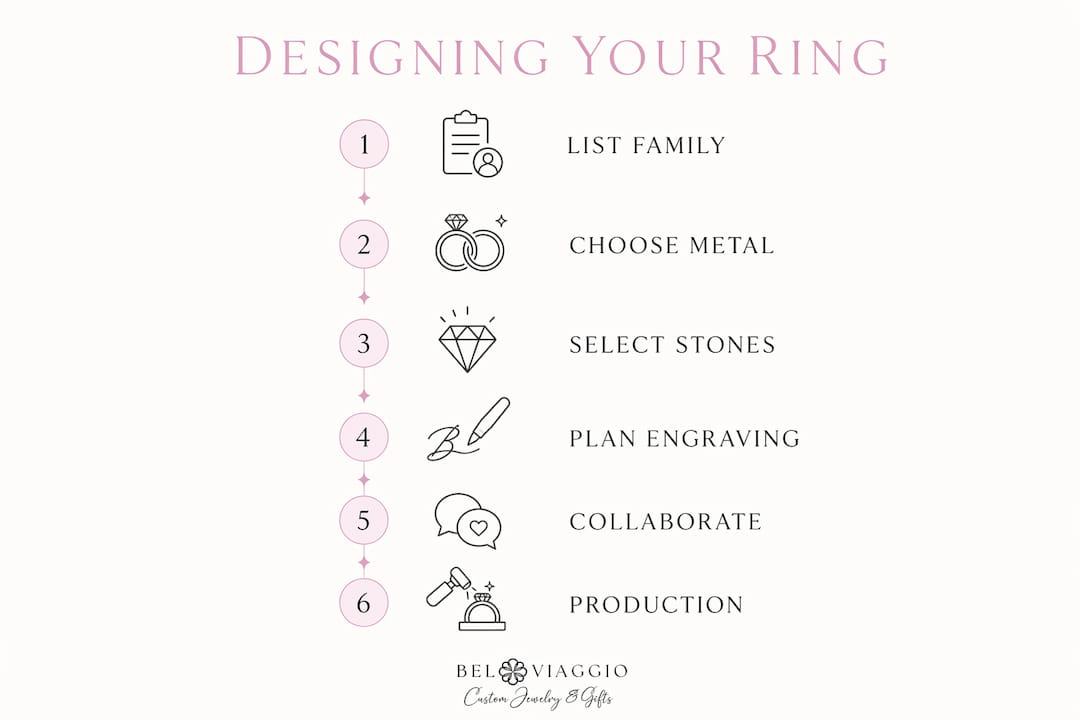
Step 1: List your family members and birth months. Write down every person you want to represent before you contact a jeweler. Include birth months so the jeweler can confirm stone availability and suggest appropriate settings.
Step 2: Choose your metal. Gold, silver, rose gold, and platinum each carry different maintenance requirements and price points. For a ring you plan to wear daily, 14K gold or platinum are the most practical choices.
Step 3: Decide on stone arrangement. Chronological order, color theory grouping, or relationship tier are all valid approaches. Avoid random placement, which creates visual confusion and weakens the storytelling.
Step 4: Plan your engraving. Keep it specific. Coordinates of a meaningful place, birth dates in a consistent format, or abbreviated names in birth order all carry more personal weight than generic phrases. Stay within the 25–30 character limit most bands allow.
Step 5: Work with a reputable jeweler. A jeweler experienced in custom ring design can translate your list of names and stones into a cohesive design, flag any practical limitations early, and provide a proof or rendering before production begins. Belviaggiodesigns offers this kind of guided custom process, combining ethical sourcing with detailed design consultation.
Step 6: Allow time for production. Custom work typically adds two to three weeks beyond standard shipping timelines. If the ring is a gift for a specific occasion, build that buffer into your order date.
Key Takeaways
A custom family ring is most meaningful when every design decision, from stone arrangement to engraving content, reflects the actual people and relationships it represents rather than a generic ideal.
| Point | Details |
|---|---|
| Start with a full list | Write down every family member and birth month before contacting a jeweler. |
| Match metal to lifestyle | 14K gold or platinum suits daily wear; sterling silver needs regular polishing. |
| Arrange stones intentionally | Chronological or color-based placement tells a clearer story than random order. |
| Keep engravings specific | Coordinates, birth dates, or initials carry more meaning than generic phrases within the 25–30 character limit. |
| Plan for growth | Stackable bands let you add a new ring for each new family member or milestone. |
FAQ
How do you read a family ring?
Read a family ring by identifying each stone’s birth month using a standard birthstone chart, then cross-referencing any engraved names or dates. Stones are typically arranged chronologically from oldest to youngest family member.
Who do you include in a family ring?
There are no strict rules. Biological children, adoptive children, stepchildren, grandchildren, and even pets can all be represented. The ring should reflect your family as it actually is.
What finger should you wear a family ring on?
Heraldic signet-style family rings are traditionally worn on the little finger, while modern birthstone stacks and stackable bands most commonly go on the right ring finger.
What are the four rings a woman is said to have?
The commonly cited four are an engagement ring, a wedding band, an eternity ring, and a personal statement ring such as a family or birthstone ring. The family ring typically fills the fourth role as a meaningful keepsake rather than a ceremonial piece.
How do you present a family ring as a gift?
Pair the ring with a short written note explaining each stone and the person it represents. For heirloom pieces, consider including a card that documents the family members honored, so the meaning is preserved for future generations. You can also explore heirloom gift wrapping traditions that add ceremony to the presentation.
Ready to create your own? Belviaggiodesigns brings together ethical sourcing, handcrafted quality, and genuine design expertise for families who want a ring built to last generations. Whether you’re drawn to a multi-stone gemstone ring or a custom piece built entirely around your family’s story, the process starts with a single conversation.
Explore Belviaggiodesigns’ full range of custom handcrafted rings and start designing a piece that carries your family’s story forward.
Recommended
- Ring settings explained: types, styles & custom options – Bel Viaggio Designs, LLC
- Custom Jewelry Guide: Meaning, Magic & Your Perfect Ring – Bel Viaggio Designs, LLC
- Ring Band Types: Your Complete Style Guide – Bel Viaggio Designs, LLC
- Custom ring guide: step-by-step ethical luxury (2026) – Bel Viaggio Designs, LLC