

TL;DR:
- Artisan jewelry is handcrafted with unique designs, personal stories, and ethical sourcing.
- Certification and transparency ensure the materials are ethically sourced and environmentally responsible.
- Authentic artisan pieces show subtle imperfections, maker marks, and craftsmanship details.
Most people assume that buying fine jewelry means choosing from a glass case full of identical rings, all stamped out by the same machine in the same factory. That assumption is exactly what artisan jewelry challenges. Artisan pieces are handcrafted by skilled makers who pour real technique, intention, and personal story into every detail. For couples planning an engagement or wedding, this distinction matters deeply. A ring that carries a maker’s fingerprint, an ethical sourcing story, and a design built around your relationship is something no factory floor can replicate. This guide will walk you through what artisan jewelry really is, how it’s made, and how to choose it with confidence.
Table of Contents
- What defines artisan jewelry?
- How artisan jewelry is made: Techniques and materials
- Ethical sourcing and certifications: What couples need to know
- How to recognize and select authentic artisan jewelry
- Why artisan jewelry is the modern heirloom couples deserve
- Discover your artisan engagement & wedding jewelry
- Frequently asked questions
Key Takeaways
| Point | Details |
|---|---|
| Handcrafted uniqueness | Artisan jewelry is carefully made by skilled artists, making each piece unique and meaningful. |
| Ethical sourcing matters | Look for certifications and transparent sourcing to ensure your piece supports responsible practices. |
| Personal stories shine | Customizable designs allow couples to express their values and memories in lasting heirlooms. |
| Recognize authenticity | Look for maker’s marks, accompanying stories, and certified materials to ensure true artisan quality. |
What defines artisan jewelry?
Artisan jewelry sits in a completely different category from the mass-produced pieces that fill most retail stores. The word “artisan” refers to a skilled craftsperson who creates objects by hand, using traditional or specialized techniques. In jewelry, this means every piece begins as a concept in a maker’s mind and ends as a one-of-a-kind object shaped by human hands.
The process, as described in jewelry-making resources, involves design sketching, material selection, and detailed handcrafting at every stage. This isn’t a shortcut process. It takes hours, sometimes days, to complete a single ring or pendant. The result is a piece that carries visible artistry, subtle variations, and a depth of character that machine-made jewelry simply cannot achieve.
Here’s what typically sets artisan jewelry apart:
- Handcrafted construction: Each piece is shaped, soldered, and finished by a person, not a machine.
- Unique design: No two pieces are exactly alike, even within the same collection.
- Intentional materials: Artisans often choose recycled metals, ethically sourced gemstones, or locally mined materials.
- Maker’s story: Every piece has a creative origin, a concept, a reason it looks the way it does.
- Heirloom quality: Built to last generations, not seasons.
“Artisan jewelry blends artist vision with artisan technique to create heirlooms. Its ethical edge comes from traceability, with standards like RJC Chain of Custody reducing waste compared to mass production.”
For couples, this matters on a personal level. An engagement ring or wedding band is not just jewelry. It’s a symbol worn every day for the rest of your life. Choosing a piece rooted in thoughtful design in jewelry means choosing something that reflects your values, your story, and your commitment, not just a trend.
Artisan jewelry also tends to age beautifully. The handcrafted details, the slight texture variations, the intentional choices in metalwork, these qualities deepen over time rather than fade.
How artisan jewelry is made: Techniques and materials
Understanding the creation process helps you appreciate what you’re actually buying. Artisan jewelry doesn’t start on a screen with a mass-order template. It starts with a sketch.
Here’s a simplified look at how a handcrafted piece typically comes to life:
- Design sketching: The artisan draws the concept, considering proportions, stone placement, and overall form.
- Material selection: Metals like sterling silver, recycled gold, or platinum are chosen alongside ethical gemstones.
- Forming and shaping: Metal is forged, bent, or worked using techniques like metal clay modeling or traditional smithing.
- Stone setting: Gemstones are carefully set by hand, whether bezel, prong, or pavé style.
- Finishing: The piece is polished, textured, or oxidized to achieve the final look.
- Quality check: Each piece is individually inspected before it leaves the studio.
This step-by-step process is what separates artisan work from factory output. Mass-produced jewelry skips most of these stages by using molds and automated casting, which creates uniformity but sacrifices character.
| Feature | Handcrafted artisan | Machine-made || |—|—|—| | Uniqueness | Every piece is one-of-a-kind | Identical across batches | | Finish quality | Hand-polished, detailed | Uniform, often generic | | Material control | Artisan-selected, traceable | Supplier-determined | | Time investment | Hours to days per piece | Minutes per unit | | Customization | Highly flexible | Limited or none |
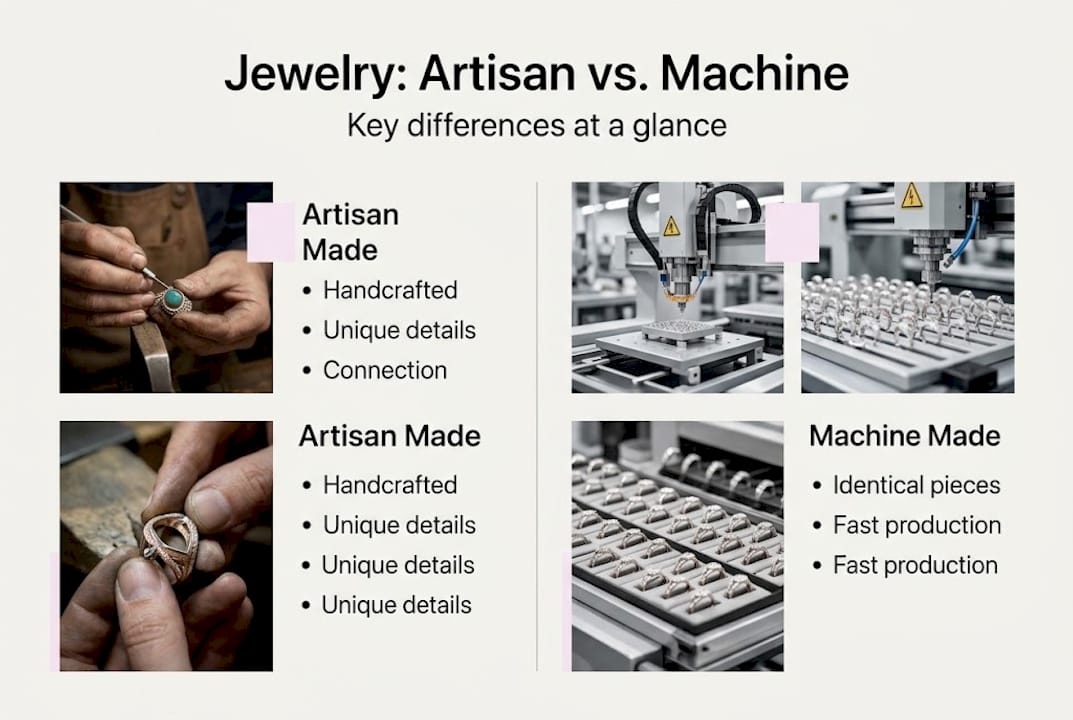
Pro Tip: When shopping for artisan jewelry, turn the piece over and look at the back. Hand-finished pieces often show subtle tool marks, slight asymmetry in settings, or a maker’s hallmark stamp. These are signs of authenticity, not flaws.
For couples exploring custom engagement ring ideas, understanding these techniques helps you ask better questions and make smarter choices. A good custom ring guide will walk you through each decision point so nothing feels overwhelming.
Ethical sourcing and certifications: What couples need to know
Creativity and craftsmanship are only part of the artisan jewelry story. Where the materials come from matters just as much as how they’re shaped.
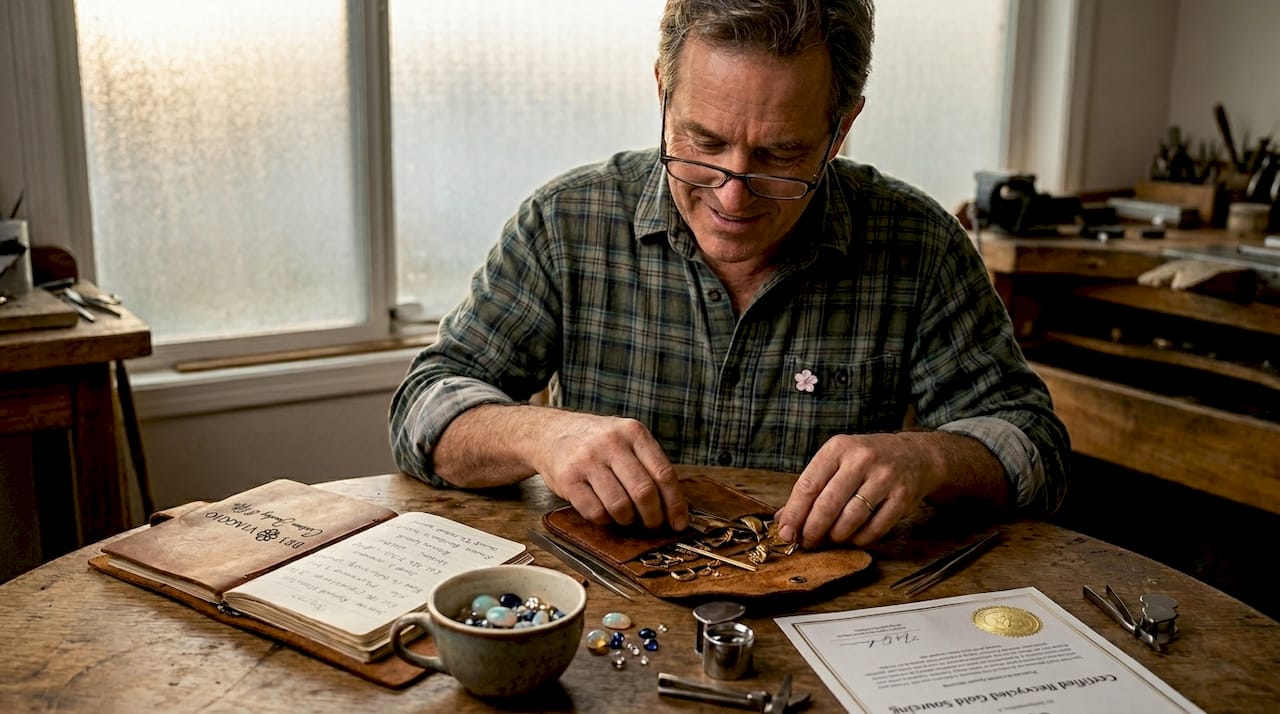
Ethical sourcing means that the metals and gemstones used in your jewelry were obtained without causing harm to people, communities, or the environment. This covers everything from how miners are treated to whether profits fund conflict. For couples who care about the meaning behind their rings, this isn’t a small detail.
Key certifications to look for include:
- RJC Code of Practices: Covers 45 provisions across human rights, labor rights, environmental impact, and business ethics.
- Kimberley Process: Certifies that diamonds are conflict-free at the point of export.
- Fairmined and FAIRTRADE Gold: Ensures miners receive fair premiums and work in safe conditions.
- OECD Due Diligence: A framework for responsible mineral supply chains.
Here’s a quick reference for what each certification covers:
| Certification | Focus area | Best for |
|---|---|---|
| RJC Code of Practices | Full supply chain ethics | Diamonds, gold, platinum |
| Kimberley Process | Conflict-free diamonds | Diamond buyers |
| Fairmined | Artisanal gold mining | Gold jewelry |
| FAIRTRADE Gold | Fair wages, safe conditions | Gold and silver pieces |
The numbers back this up. 88% of millennials say they prefer to buy from brands that align with their values, and that preference extends directly into jewelry buying decisions.
When you shop, ask your jeweler directly: Where does this metal come from? Can you trace this gemstone? Do you hold any certifications? A maker committed to ethical jewelry sourcing will answer these questions without hesitation. You can also explore an ethical gemstone guide to understand which stones carry the lowest environmental and social risk.
Beyond certifications, artisan jewelers often work with local suppliers, support small mining communities, and use recycled materials to reduce their footprint. Choosing artisan is, in many ways, a vote for a better industry. Learn more about traceability in jewelry to understand how supply chains are tracked from mine to maker.
How to recognize and select authentic artisan jewelry
Not everything labeled “handmade” or “artisan” actually is. The term has become popular enough that some mass producers use it loosely. Here’s how to tell the real thing from an imitation.
Follow these steps when evaluating any piece:
- Look for natural imperfections. Handcrafted pieces have subtle variations in texture, prong placement, or surface finish. Perfection is actually a red flag for machine production.
- Find the maker’s mark. Authentic artisan jewelry typically carries a hallmark or maker’s stamp, often on the inside of a band or the back of a pendant.
- Ask for the sourcing story. A genuine artisan can tell you where the metal came from, who set the stone, and why specific design choices were made.
- Request documentation. Certifications, receipts from ethical suppliers, and appraisals all support authenticity.
- Check for RJC-certified benchmarks. These verify that the maker meets recognized ethical and craft standards.
Pro Tip: Ask the jeweler to show you photos or video from the making process. Authentic artisan studios are proud of their work and happy to share it. If a seller can’t explain how a piece was made, that’s a signal to keep looking.
Understanding why handcrafted rings matter helps you recognize the real investment you’re making, not just financially, but emotionally and ethically. When you’re ready to shop, use these custom jewelry selection tips to guide every conversation with a jeweler.
Avoid the temptation to judge purely by price. Some mass-produced pieces are expensive, and some genuine artisan work is surprisingly accessible. The quality is in the details, the story, and the integrity of the maker.
Why artisan jewelry is the modern heirloom couples deserve
Here’s a perspective most jewelry guides won’t offer: the rise of artisan jewelry isn’t really about aesthetics. It’s about a generation of couples who refuse to accept meaningless objects for meaningful moments.
Mass-market jewelry was built for convenience and volume. It was never designed to carry a story. But when you choose a ring that was sketched by a human hand, shaped from ethically sourced metal, and finished with care, you’re not just buying jewelry. You’re commissioning an object that will outlast trends, outlast fashion cycles, and potentially outlast you.
That’s what a real heirloom is. And that’s exactly what artisan jewelry offers. The ethics and value of online fine jewelry are increasingly central to how couples define luxury. It’s no longer about the biggest stone or the most recognizable brand. It’s about provenance, intention, and craft. Artisan jewelry is where all three live.
Discover your artisan engagement & wedding jewelry
You’ve learned what makes artisan jewelry worth choosing. Now comes the part where you find your piece.

At Bel Viaggio Designs, every ring in our collection is handcrafted with ethical materials and designed to be as individual as the couple wearing it. Whether you’re drawn to the deep drama of black diamond artisan rings, the lush color of emerald and diamond engagement rings, or the full range of our artisan gemstone rings, you’ll find pieces that combine modern design with timeless technique. Browse our collections and discover a ring that tells your story from the very first look.
Frequently asked questions
What makes artisan jewelry different from regular jewelry?
Artisan jewelry is handcrafted by skilled makers using ethical materials and unique designs, rather than being mass-produced through automated factory processes. Each piece carries individual character, a maker’s story, and craftsmanship that machine production cannot replicate.
How do I know if artisan jewelry is ethically sourced?
Look for recognized certifications like RJC Code of Practices or Fairmined, ask the maker directly about material origins, and prioritize retailers who offer full supply chain transparency. Genuine artisan jewelers are always willing to share their sourcing story.
Is artisan jewelry suitable for engagement rings?
Absolutely. Artisan engagement rings offer personalization, ethical sourcing, and craftsmanship that make them ideal for one of the most meaningful purchases of your life. They’re built to last and designed to reflect your unique relationship.
What questions should I ask an artisan jeweler before buying?
Ask about the specific techniques used, where the metals and gemstones were sourced, and whether the maker holds any RJC or Fairmined certifications. Request provenance documentation and, if possible, photos from the creation process.
Recommended
- How thoughtful design shapes ethical, unique fine jewelry – Bel Viaggio Designs, LLC
- Custom jewelry ideas for ethical engagement rings 2026 – Bel Viaggio Designs, LLC
- Custom jewelry ideas for ethical engagement rings 2026 – Bel Viaggio Designs, LLC
- Custom Jewelry Guide: Meaning, Magic & Your Perfect Ring – Bel Viaggio Designs, LLC