

Most engagement rings worth more than about $2,500, or any ring you wear daily, should carry dedicated coverage. Your fastest path is either a standalone specialty policy through an insurer like Jewelers Mutual or BriteCo, or a scheduled rider on your homeowners policy. The comparison below shows which route actually fits your ring and your budget.
TL;DR:
- Ring value above $5,000 generally justifies standalone coverage due to broader protections and lower deductibles compared to homeowners riders.
- Insurance costs typically range from $30 to $60 annually for a $3,000 ring, with higher-value rings costing proportionally more based on insurer rates and local crime data.
- Specialty insurers usually offer replacement coverage with faster claims processing, while homeowners riders are cheaper but limit coverage and impose higher deductibles.
- Starting the insurance process at the time of purchase ensures proper documentation and simplifies future claims, especially for custom or high-value rings.
- Claims require prompt reporting and thorough documentation, with replacement policies often providing more value and speed than cash payout options.
Table of Contents
- How Do The Top Engagement Ring Insurance Options Compare?
- How Much Does Engagement Ring Insurance Cost?
- Standalone Policy, Homeowners Rider, or Scheduled Endorsement?
- How Do You Insure An Engagement Ring, Step By Step?
- What Happens When You File A Claim?
- Why We Tell Buyers To Sort Insurance Out At Purchase
- Buying The Ring And Getting Insurance-Ready Paperwork In One Step
- Sources
- FAQ
How Do The Top Engagement Ring Insurance Options Compare?
Six providers dominate the U.S. jewelry insurance market, and they split into two camps: specialty insurers built entirely around jewelry, and the homeowners rider you add through your existing home or renters policy. The specialty insurers tend to win on deductibles and claims speed. The rider tends to win on simplicity, if you already have a policy you like.
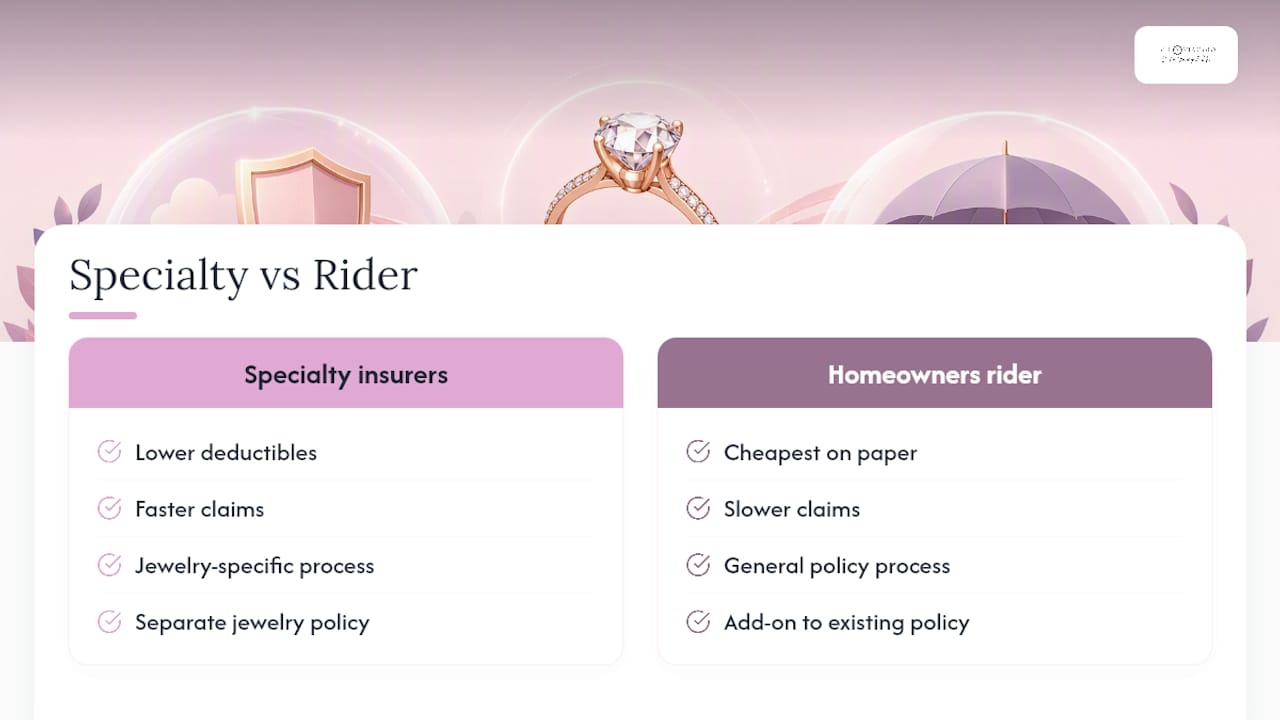
Jewelers Mutual has the longest track record in the category and a claims process built specifically around jewelry, which matters if you’ve never filed a claim before and want a company that isn’t guessing at what “like kind and quality” replacement means. BriteCo is the one to quote first if price and a fast online experience matter most. Lavalier fits custom or antique pieces where valuation is trickier. Zillion shines when you’re buying the ring in person and want same-day coverage from the counter. GemShield works well if you’re only insuring one specific piece rather than a whole jewelry box. The homeowners rider is cheapest on paper but comes with real trade-offs covered below.
How Much Does Engagement Ring Insurance Cost?
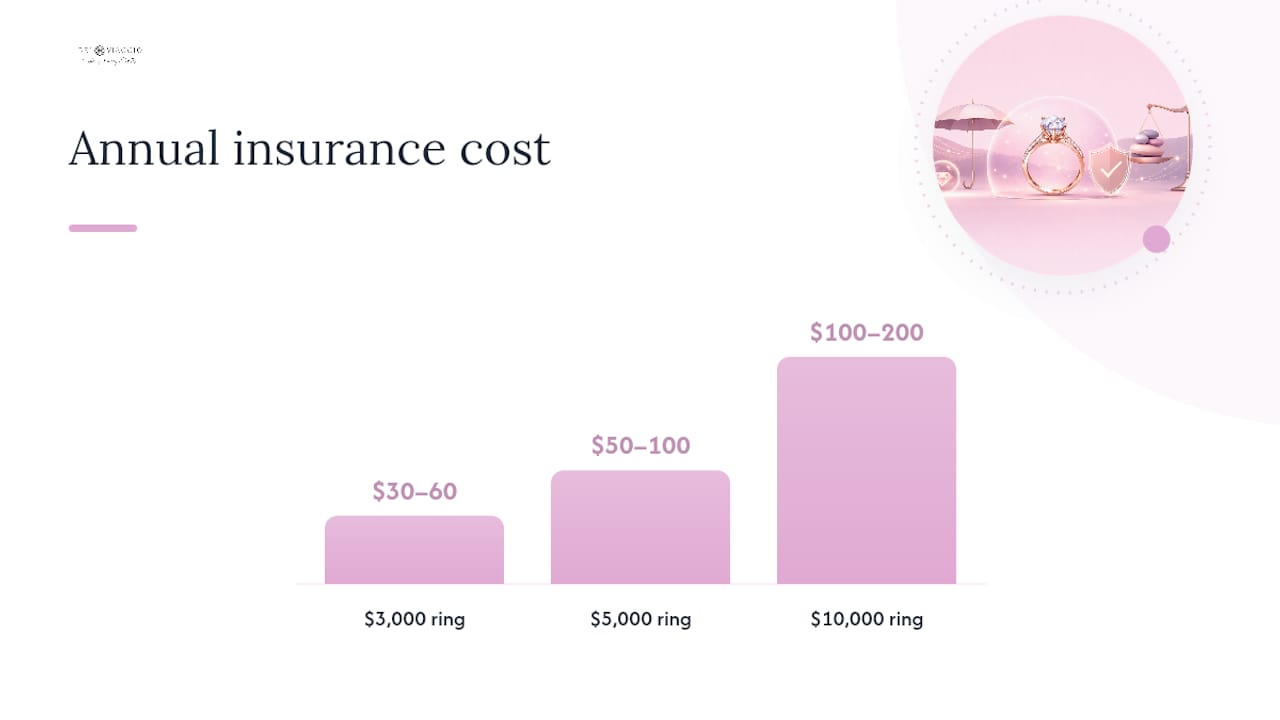
Specialty jewelry insurers typically charge 1% to 2% of the ring’s value per year. A $3,000 ring lands around $30 to $60 annually, a $5,000 ring runs closer to $50 to $100, and a $10,000 ring can cost $100 to $200, depending on the insurer, your deductible choice, and where you live.
Several factors move that number up or down:
- ZIP code and local crime rates. Higher theft and burglary rates in your area push premiums up, based on FBI crime data insurers reference when pricing risk.
- Metal and stone type. Platinum and larger center stones cost more to replace, so they cost more to insure.
- Deductible choice. A $0 deductible policy costs more upfront but pays out in full.
- Policy type. Agreed-value policies tend to price slightly higher than actual cash value coverage.
Pro Tip: Watch for jewelers or appraisers who inflate a ring’s stated value to make it sound impressive. A higher appraisal raises your premium every year without actually increasing what you’d receive in a claim, since insurers pay based on real replacement cost, not ego numbers.
Standalone Policy, Homeowners Rider, or Scheduled Endorsement?
The core trade-off comes down to what each option actually covers and who eats the deductible. A standalone jewelry policy generally covers accidental loss, mysterious disappearance, and worldwide travel, often with a $0 deductible. A homeowners rider usually excludes mysterious disappearance and inherits your home policy’s deductible, which can run $500 to $2,500. That gap matters more than the sticker price.
Run through this checklist before deciding:
- Ring value. Above roughly $5,000, the price difference between a rider and a standalone policy shrinks relative to what you’d lose in a bad claim.
- How often you wear it. Daily wear means higher odds of loss, damage, or a stone falling out, which favors broader standalone coverage.
- Deductible tolerance. If a $1,000 deductible on a homeowners claim would sting, a $0-deductible standalone policy closes that gap.
- Claim impact. Filing through your homeowners policy can affect future premiums and renewal terms; standalone claims typically don’t touch your homeowners record at all.
Pro Tip: A rider looks like the bargain option until you actually file a claim. The premium savings rarely offset a homeowners deductible plus the risk of a rate hike on your entire home policy.
How Do You Insure An Engagement Ring, Step By Step?
Start with an independent appraisal, not one from the store where you bought the ring. An unbiased appraiser documents carat weight, cut, clarity, color, metal, and any unique identifiers, and you should refresh that appraisal every two to three years as values shift.
Gather these documents before you apply:
- Original sales receipt or invoice
- Independent appraisal report
- Clear photos from multiple angles
- Measurements and any engraved serial numbers
- Certificate from the diamond or gemstone grading lab, if provided
When you fill out the application, you’ll choose between agreed value (a fixed payout amount both sides agree on upfront) and actual cash value (current market value at time of loss, which can be lower). You’ll also pick a deductible and decide whether you need worldwide coverage if you travel with the ring.
Pro Tip: Insure the ring at purchase or immediately after you receive it. Waiting even a few weeks creates a gap where an accident leaves you with nothing to claim.
What Happens When You File A Claim?
For theft, insurers ask for a police report, typically filed within 24 to 48 hours of discovery. For damage, they want repair estimates from a licensed jeweler along with your original appraisal. For loss, expect a detailed statement of when and where you last had the ring.
Claims get denied or delayed for predictable reasons:
- Reporting the loss weeks after it happened instead of right away
- Paperwork that doesn’t match, like an appraisal listing a different stone cut than your receipt
- An independent appraisal that looks inflated compared to the original purchase price, which triggers extra scrutiny
Specialty insurers typically offer replacement (a comparable ring sourced through their network) rather than a straight cash payout, since replacement usually preserves more value for you than a check calculated at actual cash value. Providers that market $0 deductible options and dedicated jewelry claims teams tend to move faster than general insurers handling jewelry claims as a side item.
Why We Tell Buyers To Sort Insurance Out At Purchase
Most people treat insurance as an afterthought, something to handle after the ring’s already on a finger and the excitement’s worn off. That’s backward. The best time to think about coverage is the same week you buy, while every document is fresh and easy to pull together.
When customers buy jewelry, they walk away with a detailed invoice, product photos, and, for custom pieces, a deposit receipt that spells out exactly what was made and from what materials. That paperwork is precisely what an insurer wants to see when setting an agreed value. Skipping that step and trying to reconstruct it a year later, after a stone’s been reset or a ring resized, makes the whole process harder than it needs to be.
— Stacy
Buying The Ring And Getting Insurance-Ready Paperwork In One Step
Jewelers Mutual, BriteCo, Lavalier, Zillion, GemShield, and Chubb Masterpiece Valuables Jewelry Insurance all write the coverage. We don’t sell insurance, and won’t pretend to. What we offer is a cleaner starting point: ethically sourced, custom-made engagement rings with detailed invoices and product specifications already built into every order, so you’re not scrambling for documentation when you sit down to get quotes.
Every lab-grown diamond ring comes with clear pricing and material details on the product page itself, and custom orders include a design deposit receipt that lays out exactly what was made. That’s the kind of paper trail an insurer wants for an agreed-value policy, without you having to request it after the fact. Compare quotes across two or three specialty insurers before you commit, since rates vary more than most buyers expect. If you’re still shopping for the ring itself, browse the lab-grown diamond collection and get the paperwork sorted from day one.
Sources
For a deeper look at coverage gaps in homeowners policies, see Jewelers Mutual’s breakdown of what homeowners insurance actually covers. NerdWallet’s jewelry insurance guide offers sample pricing across providers. Coverage Classroom explains the standalone-versus-rider trade-offs in detail. The FBI’s crime data tables show why your ZIP code shows up on insurance quotes at all.
This article is general information, not a substitute for advice from a qualified financial advisor. Consult a qualified financial professional about your own circumstances before acting on anything here.
- NerdWallet — How to Find the Best Jewelry Insurance
- Coverage Classroom — Standalone jewelry insurance vs homeowners rider
- FBI UCR — Crime in the U.S., table data
FAQ
How much is insurance on a $3,000 engagement ring?
Expect to pay roughly $30 to $60 per year through a specialty insurer, based on the standard 1% to 2% of value pricing used across the industry.
Which insurance company is best for engagement rings?
There’s no single best option for everyone. Jewelers Mutual stands out for its long track record and dedicated jewelry claims process, BriteCo for fast, competitively priced online quotes, and GemShield for owners who want to schedule just one high-value piece.
How much is a protection plan for a $5,000 engagement ring?
A standalone specialty policy typically costs $50 to $100 a year, while adding it as a scheduled item on a homeowners policy usually costs less upfront but leaves you exposed to the home policy’s deductible if you file a claim.