

TL;DR:
- Modern jewelry combines digital fabrication with artisanal craftsmanship and ethical sourcing practices.
- Trends favor sculptural settings, recycled metals, lab-grown stones, and personalized designs.
- Transparency, certification, and the creation journey are key to meaningful, responsible jewelry.
Most people assume modern jewelry design is just about following trends or swapping out traditional diamonds for something flashier. That assumption misses almost everything that matters. Today’s modern jewelry represents a genuine shift in how pieces are conceived, made, and sourced, combining digital fabrication tools with hands-on artistry, certified ethical practices, and deep personal meaning. Whether you’re choosing an engagement ring or a wedding band, understanding what’s actually happening in design studios right now will help you make a choice you’ll feel proud of for decades. This guide walks you through the techniques, trends, process, and values that define modern jewelry in 2026.
Table of Contents
- Defining modern jewelry design: Techniques and philosophy
- Current trends in modern jewelry: Styles, settings, and stones
- The design process: From vision to handcrafted masterpiece
- Making it truly yours: Personalization, ethics, and value
- What most overlook about modern jewelry design
- Find your perfect modern engagement ring
- Frequently asked questions
Key Takeaways
| Point | Details |
|---|---|
| Ethics meet style | Modern jewelry blends contemporary designs with certified ethical practices and materials. |
| Personalization matters | Custom options and unique touches transform modern jewelry into meaningful heirlooms. |
| Hybrid techniques | Today’s art combines digital innovation with traditional craftsmanship for lasting, expressive pieces. |
| Transparency is vital | Look for certification proof and direct communication about origins when choosing a modern piece. |
Defining modern jewelry design: Techniques and philosophy
Modern jewelry design is not a single aesthetic. It’s a way of working. At its core, it fuses architectural thinking, digital precision, and hands-on craftsmanship into a single creative process. A designer might sketch a concept by hand, model it in 3D software, print a prototype, and then hand-finish the final piece in precious metal. That back-and-forth between digital and physical is what sets contemporary studios apart.
The philosophy behind this approach matters just as much as the technique. Parametric craftsmanship shows how digital-physical feedback loops allow designers to iterate quickly without losing artisanal quality. A design can be tested, refined, and adapted to a wearer’s specific proportions before a single gram of gold is committed. This level of precision was simply not possible with traditional methods alone.
Ethics are not an afterthought in this world. They are built into the foundation. Certifications like the Responsible Jewellery Council (RJC), Fairtrade, and Fairmined exist to verify that metals and stones were sourced without exploiting workers or damaging ecosystems. Understanding ethical jewelry sourcing is increasingly essential for couples who want their ring to represent their values, not just their taste.
Here are the core principles that define modern jewelry design today:
- Expressiveness: Each piece should reflect the wearer’s identity, not a catalog template
- Ethical impact: Sourcing decisions are transparent and certified wherever possible
- Enduring craftsmanship: Longevity matters more than trend cycles
- Digital-physical integration: Technology enhances, not replaces, the maker’s hand
- Scalable individuality: Studios can offer bespoke work without sacrificing consistency
“The real innovation in modern jewelry isn’t just the tools. It’s the mindset: that a ring can be simultaneously precise, personal, and responsible.”
This philosophy is reshaping what couples expect when they walk into a design consultation. You’re not just picking a style. You’re choosing a process, a set of values, and a maker whose methods align with your own.
Current trends in modern jewelry: Styles, settings, and stones
With a solid grasp of the concept, it’s essential to see how these principles appear in real-world styles and materials. The range of what’s available in 2026 is genuinely exciting, and the best choices are ones that balance visual impact with personal meaning.
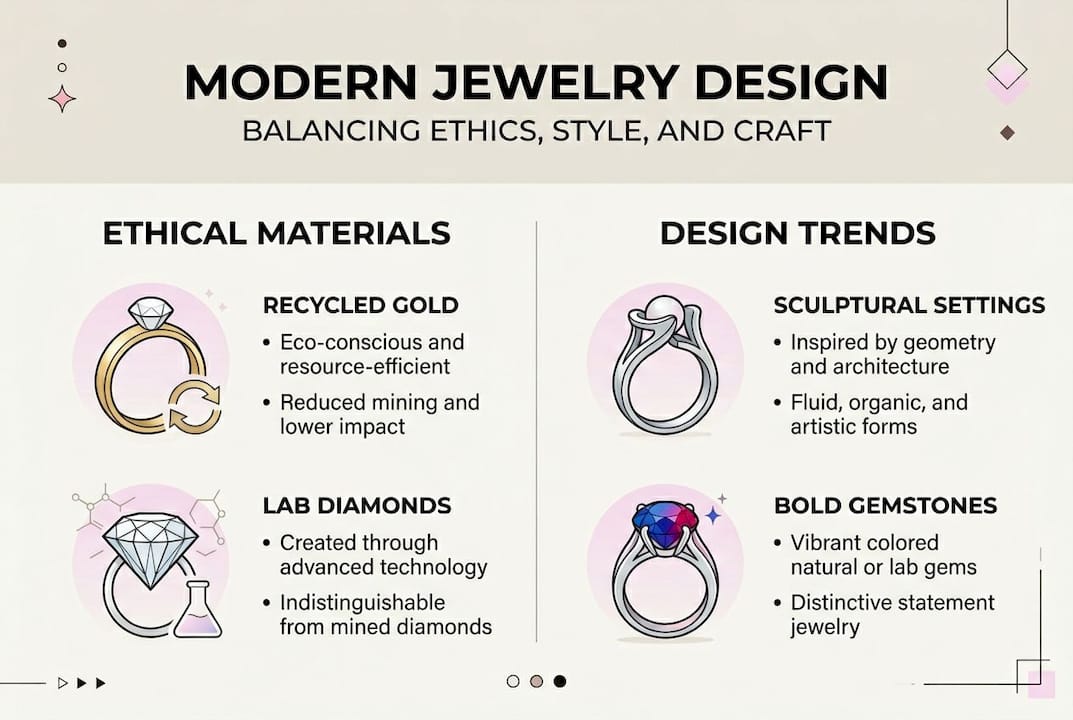
Setting styles have evolved dramatically. Sculptural settings treat the metal itself as an artistic element, wrapping stones in organic or architectural forms. Bezel settings enclose the stone fully in metal, offering a sleek, modern look with excellent protection. Cluster arrangements group smaller stones to create visual drama without requiring a single large center stone. These unique ring trends reflect a broader move away from the single-solitaire default.
Materials are shifting too. Ethical sourcing via RJC and Fairtrade now covers recycled gold, Fairmined gold, lab-grown diamonds, and colored gemstones. Each of these options carries a different story and a different price point.
| Feature | Traditional design | Modern design |
|---|---|---|
| Metal sourcing | Mined gold, limited traceability | Recycled or Fairmined certified gold |
| Center stone | Mined diamond, standard cuts | Lab-grown diamond or colored gemstone |
| Setting style | Prong solitaire | Bezel, cluster, sculptural |
| Design process | Handcraft only | Digital modeling plus handcraft |
| Customization | Limited | Extensive, from concept to finish |
Here’s a practical numbered guide to choosing your modern ring elements:
- Decide on your metal first. Recycled gold and Fairmined gold are both excellent choices with different certification pathways.
- Choose your stone type. Lab-grown diamonds offer identical physical properties to mined stones at a lower price and environmental cost.
- Select your setting style. Think about your lifestyle. Bezel settings protect stones better for active wearers.
- Consider colored gemstones. Sapphires, morganites, and aquamarines are increasingly popular for their individuality and color.
- Review your designer’s certifications. Ask specifically about RJC or Fairtrade credentials before committing.
Pro Tip: If you’re drawn to colored stones, review an ethical gemstone guide before your consultation. Knowing the sourcing questions to ask will save you time and ensure you get the answers that matter.
Stay current with engagement ring trends but use them as inspiration rather than a checklist. The best ring is one that feels right for your life, not just the moment.
The design process: From vision to handcrafted masterpiece
Understanding the popular elements, let’s follow the journey of a modern ring from dream to reality. The process is more structured than most people expect, and knowing what happens at each stage helps you collaborate more effectively with your designer.
Every piece begins with a conversation. A good consultation is not just about showing pictures. It’s about understanding how you live, what you value, and what you want to feel when you look at your hand. Designers who work in the modern tradition will ask about your lifestyle, your aesthetic preferences, and your ethical priorities before touching a design tool.
After the consultation, digital modeling begins. Software allows designers to build precise 3D representations of your ring, adjusting proportions, stone placement, and metal weight in real time. Bespoke processes from consultation to handcrafting typically take 3 to 6 weeks, depending on complexity. That timeline reflects the precision required, not inefficiency.
| Stage | What happens | Typical timeframe |
|---|---|---|
| Consultation | Vision, lifestyle, and values discussion | Day 1 |
| Digital modeling | 3D design and client feedback | Week 1 to 2 |
| Material sourcing | Certified metal and stone selection | Week 2 |
| Prototype review | Wax or resin model for fit and proportion | Week 2 to 3 |
| Handcrafting | Casting, setting, finishing by artisan | Week 3 to 5 |
| Final delivery | Quality check and presentation | Week 5 to 6 |
Sustainable material selection happens early, not as an afterthought. Understanding sourcing jewelry ethically means knowing that your designer should be able to tell you exactly where your gold and stones came from, with documentation if needed.
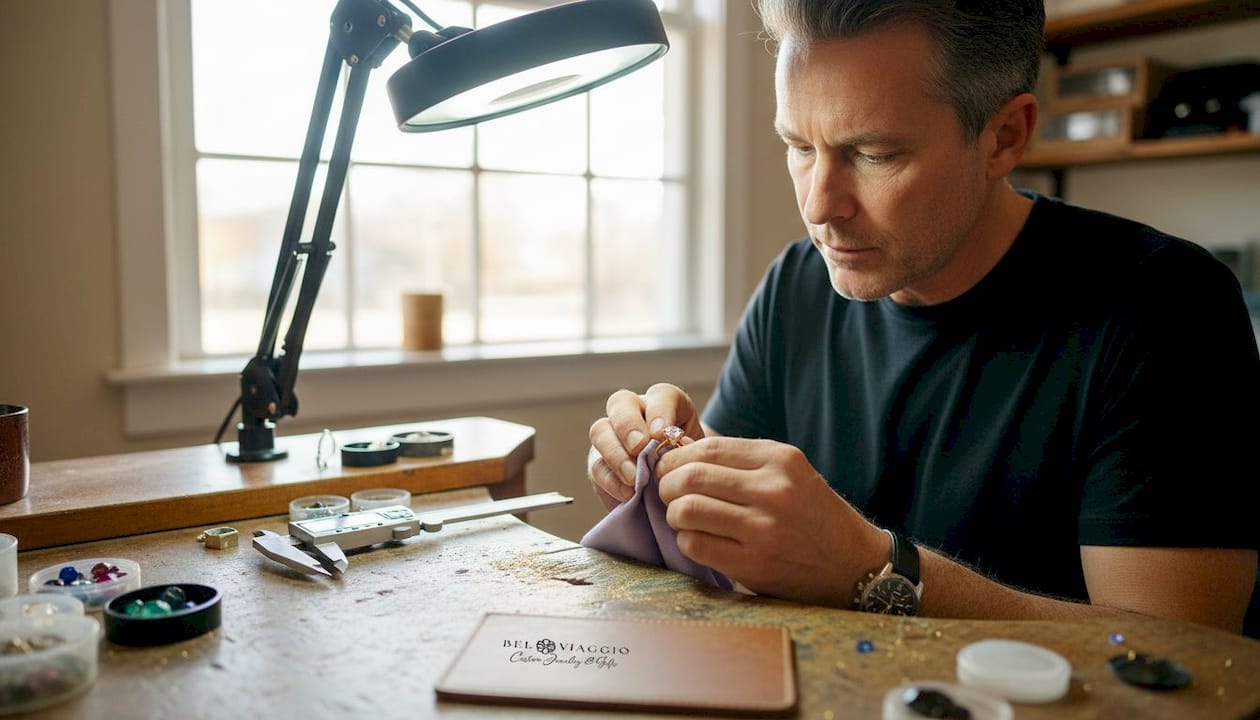
Handcrafting is where the digital precision meets human skill. A skilled artisan takes the approved model and brings it to life in metal, setting each stone by hand, refining surfaces, and adding any custom details like engraving or milgrain edging.
Pro Tip: Ask your designer to show you the 3D model before any materials are ordered. This is your best opportunity to catch proportion issues or request changes without adding cost or time to the project.
Making it truly yours: Personalization, ethics, and value
With the process understood, the final layer is what truly makes a piece unique: your story, your values, and your choices. Personalization in modern jewelry goes far beyond picking a font for an engraving.
You can influence almost every element of a modern ring. Stone arrangement, metal texture, profile shape, and even the way light interacts with the setting are all variables a skilled designer can adjust to suit you. Here are the most meaningful personalization options available today:
- Custom engraving: Dates, coordinates, initials, or phrases that carry private meaning
- Stone choice and arrangement: Birthstones, heirloom stones, or unusual cuts like kite or hexagon
- Metal combination: Two-tone designs using white gold and rose gold together
- Textured finishes: Hammered, brushed, or granulated surfaces that catch light differently
- Profile design: Comfort-fit interiors, knife-edge profiles, or sculptural exteriors
Certifications are not just marketing. They are proof. Hybrid traditional-digital workflows enable studios to scale their output while maintaining artisanal standards, and certifications like RJC and Fairtrade verify ethical sourcing at every stage of the supply chain. When you ask for documentation, a reputable designer will provide it without hesitation.
“A ring that carries certified ethical sourcing is not just beautiful. It’s a statement about what you believe the world should look like.”
Emotional significance and long-term wearability are deeply connected. A ring that reflects your actual values and aesthetic will feel right ten years from now, not just on the day you receive it. Explore ethical engagement gems to understand how stone choice contributes to both the look and the legacy of your piece.
What most overlook about modern jewelry design
Most conversations about modern jewelry focus on what it looks like. That’s understandable. Visual appeal is immediate and easy to share. But the real shift happening in the industry is about transparency, process, and proof.
For years, the jewelry industry operated with almost no supply chain accountability. You bought a ring, and the story behind it was largely invisible. What’s changed is not just the aesthetics. It’s the expectation that designers can and should explain exactly how a piece was made, where every material came from, and what standards were applied.
Couples who ask these questions don’t just end up with a more ethical ring. They end up with a deeper connection to it. The ring becomes a record of decisions made with intention, not just a beautiful object. That’s a different kind of value, and it doesn’t depreciate.
We believe the most overlooked part of modern jewelry design is the creation journey itself. Understanding timeless trend insights helps you separate what will matter in twenty years from what’s just popular right now. The couples who engage with the process, who ask questions and make informed choices, consistently report feeling more connected to their jewelry over time.
Find your perfect modern engagement ring
At Bel Viaggio Designs, we build every ring around your vision, your values, and your story. Our collections feature customizable, ethically certified designs crafted by skilled artisans using lab-grown diamonds, colored gemstones, and responsibly sourced metals.

Whether you’re drawn to the bold drama of a black diamond halo ring or the soft elegance of an aquamarine diamond ring, we have options that reflect both modern design principles and your personal style. Every piece comes with transparent sourcing information and the option for one-on-one consultation to bring your exact vision to life. Start the conversation with us today.
Frequently asked questions
What materials are used in modern jewelry design?
Modern jewelry uses recycled or Fairmined gold, lab-grown diamonds, and ethically sourced colored gemstones, all selected with traceability and certification in mind.
How long does it take to create a custom engagement ring?
Most bespoke rings move through consultation to handcrafting in 3 to 6 weeks, with timeline variations based on design complexity and material availability.
Are lab-grown diamonds considered modern?
Yes, lab-grown diamonds represent both advanced manufacturing technology and a meaningful step forward in ethical sourcing within modern jewelry design.
How do I ensure my jewelry is ethically sourced?
Look for RJC or Fairtrade certifications and ask your designer for documentation. Sustainability via certifications is now a verifiable standard, not just a claim.
Recommended
- How thoughtful design shapes ethical, unique fine jewelry – Bel Viaggio Designs, LLC
- Why choose fine jewelry online: value, ethics, and design – Bel Viaggio Designs, LLC
- What is luxury jewelry: bespoke and ethical guide – Bel Viaggio Designs, LLC
- Wedding jewelry guide: Meaning, sustainability, custom design – Bel Viaggio Designs, LLC