

TL;DR:
- Carat measures a diamond’s weight, while clarity assesses the visibility of inclusions and blemishes. Buyers should prioritize cut and eye-clean clarity within their budget and consider buying just below key carat thresholds to maximize value. A well-cut, eye-clean diamond at slightly lower weight often offers better appearance and savings than larger or flawless stones with poor cut or visible flaws.
Carat is defined as the weight of a diamond, and clarity is the measure of its internal inclusions and external blemishes. These two qualities are the most misunderstood factors in explaining carat vs clarity to first-time buyers. One carat equals 200 milligrams, and a 1-carat round brilliant diamond measures approximately 6.5 mm in diameter. Clarity grades, established by the Gemological Institute of America (GIA), run from Flawless (FL) to Included (I3). Both qualities affect price and appearance, but they do so in completely different ways.
How is carat measured and what does it mean visually?
Carat measures weight, not physical size. This distinction trips up more buyers than any other concept in diamond shopping. A 1-carat princess-cut diamond looks noticeably smaller face-up than a 1-carat oval or marquise, because different shapes distribute weight differently across the stone.
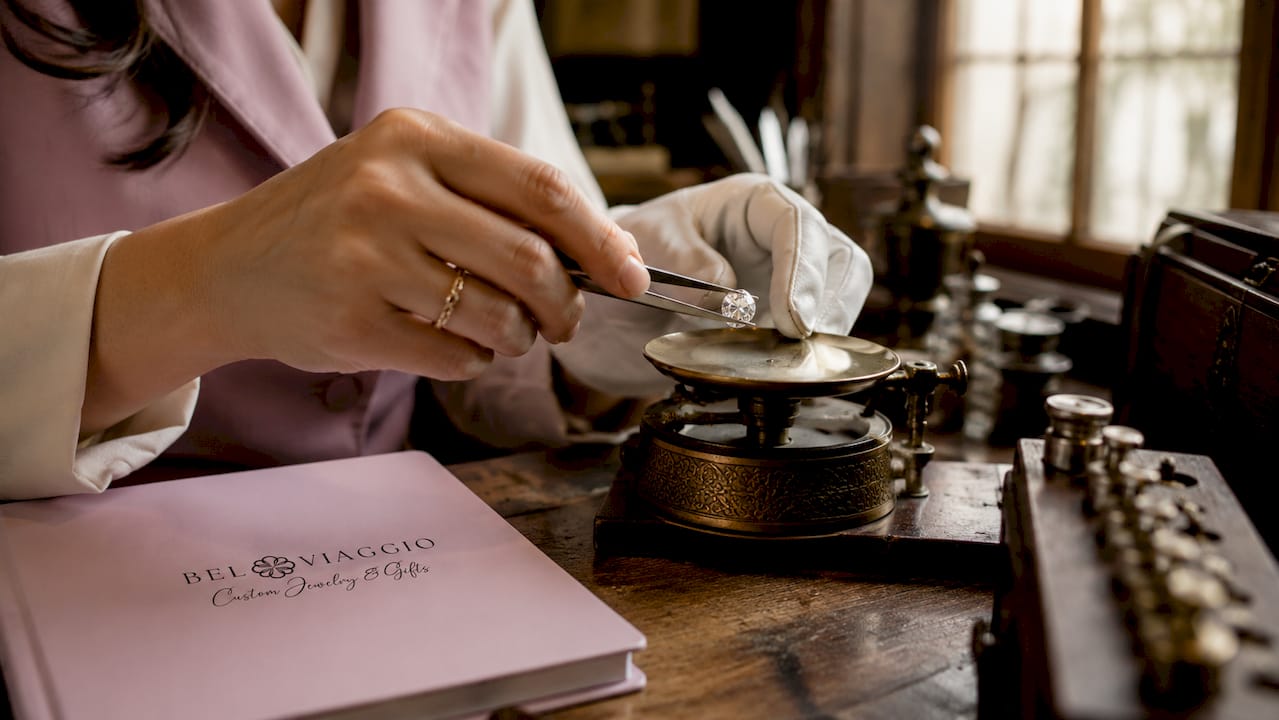
Carat weight correlates closely with size, but cut and shape influence how large a diamond actually appears on the finger. A well-cut 0.9-carat round can look nearly identical to a 1-carat round with a poor cut. That is a fact most retailers do not volunteer.
Here is a quick reference for round brilliant diamonds by carat weight:
| Carat Weight | Approximate Diameter |
|---|---|
| 0.50 ct | ~5.1 mm |
| 0.75 ct | ~5.9 mm |
| 1.00 ct | ~6.5 mm |
| 1.50 ct | ~7.4 mm |
| 2.00 ct | ~8.1 mm |
Price does not scale evenly with weight. Diamond prices increase exponentially at popular thresholds like 0.5, 1.0, and 1.5 carats. Buying just below these numbers, say a 0.9-carat instead of a 1.0-carat, can save 15–20% with almost no visible difference in size.
Pro Tip: Search specifically for diamonds in the 0.9–0.95 carat range. You get the look of a 1-carat stone at a fraction of the premium price.
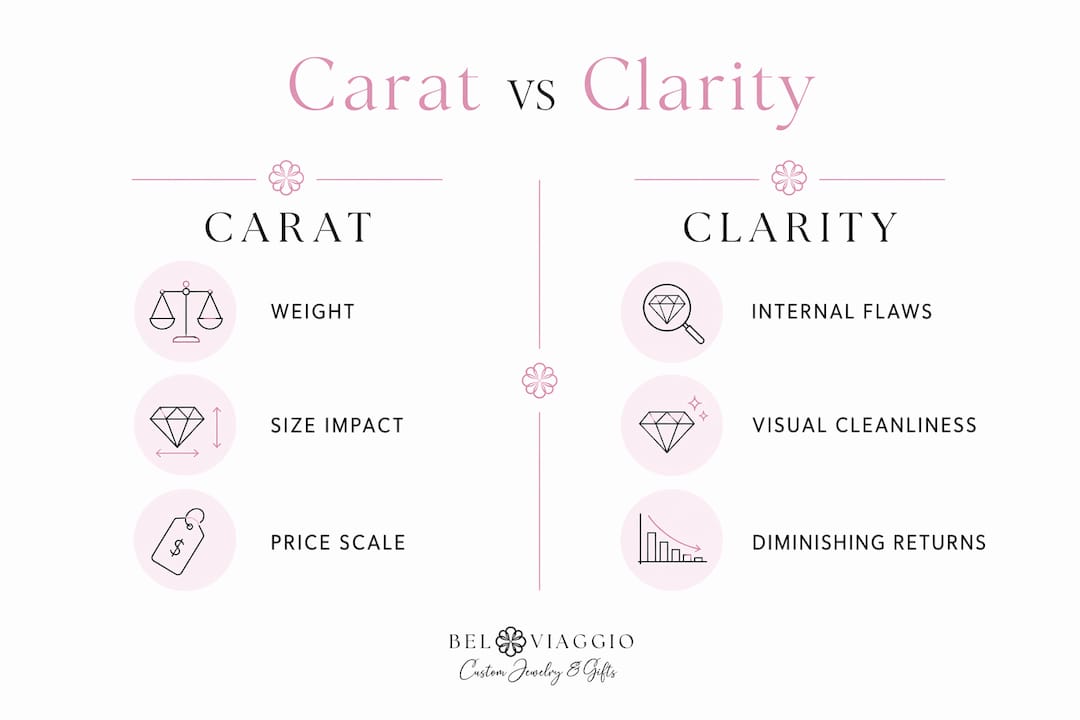
Understanding the 4Cs of diamonds together gives you a much clearer picture of how carat interacts with cut, color, and clarity to determine real-world value.
What does clarity measure and how is it graded?
Clarity grades quantify how many inclusions and blemishes a diamond contains, and how visible they are. The GIA clarity scale is the industry standard used by graders worldwide. Clarity grades range from Flawless (FL) to Included (I3), with each step reflecting a meaningful difference in the number and visibility of flaws.
Here is the full GIA clarity scale from top to bottom:
- FL (Flawless): No inclusions or blemishes visible under 10x magnification.
- IF (Internally Flawless): No inclusions; only minor surface blemishes.
- VVS1 / VVS2 (Very Very Slightly Included): Inclusions extremely difficult to see under 10x magnification.
- VS1 / VS2 (Very Slightly Included): Inclusions minor and difficult to see under 10x magnification.
- SI1 / SI2 (Slightly Included): Inclusions noticeable under 10x magnification; often invisible to the naked eye.
- I1 / I2 / I3 (Included): Inclusions visible to the naked eye and may affect brilliance.
Clarity affects light performance by influencing how cleanly light passes through the stone. A heavily included diamond scatters light rather than reflecting it, reducing brilliance. Higher clarity grades command premium prices because truly flawless stones are genuinely rare.
The practical reality for most buyers is this: many VS2 and SI1 diamonds are eye-clean, meaning their inclusions are invisible without magnification. Paying for VVS2 or FL grades rarely produces a visible difference in everyday wear.
Pro Tip: Always request a 360-degree video of any diamond before buying online. Inclusions that look minor in a grading report can be more visible in certain lighting conditions, and video reveals what a static photo hides.
For a deeper breakdown of the grading system, Belviaggiodesigns has a thorough diamond clarity guide that walks through each grade with visual examples.
How do carat and clarity affect diamond value differently?
Carat and clarity both drive price, but through completely different mechanisms. Understanding the carat clarity differences here is what separates smart buyers from overspending ones.
Carat weight drives exponential price increases. A 2-carat diamond does not cost twice as much as a 1-carat diamond of equal quality. It costs three to four times more, because larger rough diamonds are far rarer in nature. Size is visible from across a room, which is why carat weight carries so much emotional weight in the buying decision.
Clarity, by contrast, has diminishing returns above the eye-clean threshold. Clarity grades above VS2 often yield no visible benefit for everyday wear. The price premium for VVS1 over VS2 can be substantial, yet both stones look identical to the naked eye.
| Factor | Drives Price | Visual Impact | Diminishing Returns? |
|---|---|---|---|
| Carat Weight | Exponentially | High (size on finger) | No |
| Clarity | Significantly | Moderate (brilliance) | Yes, above VS2 |
| Cut Quality | Moderately | Highest (sparkle) | No |
Cut quality sits above both carat and clarity in terms of visual impact. A poorly cut larger diamond looks duller than a smaller, well-cut stone. This is the single most counterintuitive fact in diamond buying, and it changes how you should allocate your budget.
Key points to keep in mind when comparing these two qualities:
- Carat weight is the primary driver of a diamond’s perceived size and its price premium.
- Clarity above VS2 adds cost without adding visible beauty for most buyers.
- Cut grade controls how much light the diamond returns to your eye, which is what creates sparkle.
- Shape affects how large a given carat weight appears, making elongated shapes like oval and marquise appear larger face-up.
How to prioritize carat and clarity when choosing a diamond
Balancing carat and clarity comes down to knowing which qualities actually show up in real life. This carat vs clarity guide works best when you follow a clear decision order.
-
Fix your cut grade first. Always choose Excellent or Very Good cut before adjusting carat or clarity. Cut quality has the greatest impact on beauty and sparkle, more than any other factor. A lower-carat, well-cut diamond outperforms a larger, poorly cut one every time.
-
Set your minimum clarity at eye-clean. For most buyers, VS2 or SI1 is the right stopping point. SI1 and SI2 grades often provide excellent value and free up budget for a better cut or slightly larger stone. Use a 360-degree video to confirm the stone is truly eye-clean before committing.
-
Buy just below carat thresholds. A 0.9-carat stone saves 15–20% compared to a 1.0-carat stone with nearly identical visual size. The same logic applies at the 1.5-carat and 2.0-carat marks. This is one of the most reliable buying diamonds tips professionals use themselves.
-
Verify with a grading report. GIA and AGS certificates confirm carat weight, clarity grade, and cut quality independently. Never rely on a retailer’s verbal description alone. Diamond certification removes guesswork and protects your investment.
-
Consider the setting. A bezel or halo setting can make a smaller diamond appear larger, effectively adding perceived size without the carat premium. This is a practical way to stretch your budget without sacrificing visual impact.
Common misconceptions about carat and clarity
The biggest myth in diamond buying is that a higher carat weight always looks better. A 1.5-carat diamond with a mediocre cut can look smaller and duller than a 1.0-carat diamond with an Excellent cut. Size on paper does not equal size on the finger.
The second myth is that Flawless clarity is necessary for a beautiful diamond. Flawless diamonds represent a tiny fraction of the market and carry a steep price premium. For the vast majority of buyers, that premium buys nothing visible. Buyers frequently over-prioritize carat weight when cut quality has a far greater impact on the diamond’s actual sparkle and beauty.
- Larger carat weight does not guarantee a bigger-looking diamond. Shape and cut matter more.
- Flawless clarity is not required for brilliance. Eye-clean SI1 stones perform beautifully.
- The “magic number” carat weights like 1.0 and 1.5 carry artificial price premiums. Buying at 0.9 or 1.4 carats saves real money.
- Inclusions show up differently depending on stone size. A small inclusion invisible in a 0.5-carat stone may be noticeable in a 2-carat stone of the same clarity grade.
“The best diamond is not the biggest or the most flawless. It is the one that balances cut, clarity, and carat in a way that maximizes beauty within your budget.”
Relying on a GIA or AGS grading report is non-negotiable. Personal inspection, whether in person or via high-resolution video, confirms what the report describes. The eye-clean standard depends heavily on diamond size, so always view the actual stone before buying.
Key takeaways
The most effective approach to buying a diamond is to prioritize cut quality first, target eye-clean clarity grades, and buy just below popular carat thresholds to maximize size and value.
| Point | Details |
|---|---|
| Carat measures weight, not size | A 1-carat round diamond is approximately 6.5 mm, but shape and cut affect perceived size. |
| GIA clarity scale runs FL to I3 | VS2 and SI1 are the sweet spots for eye-clean quality without overpaying. |
| Cut quality outranks both factors | An Excellent cut maximizes sparkle more than higher carat or clarity grades. |
| Buy below carat thresholds | Choosing 0.9 ct over 1.0 ct saves 15–20% with nearly identical visual impact. |
| Verify with certification and video | GIA or AGS reports plus 360-degree video confirm quality before you commit. |
Why cut should always win the budget battle
I have spent years helping people think through diamond purchases, and the same mistake comes up constantly. Buyers walk in fixated on hitting a round carat number, say exactly 1.0 carat, and they are willing to drop to a mediocre cut grade to get there. That trade-off almost always produces regret.
The stone that catches light from across a dinner table is not the heaviest one. It is the best-cut one. A 0.9-carat round with an Excellent cut from GIA will outshine a 1.1-carat stone with a Good cut every single time. The difference is visible, immediate, and permanent.
On clarity, I think the industry does buyers a disservice by marketing VVS grades as aspirational. For everyday jewelry, VS2 is more than sufficient. I have seen SI1 stones that looked cleaner in person than some VS1 stones, simply because of where the inclusion was located. The grade is a starting point, not the final word.
My honest advice: fix your cut grade at Excellent or Very Good, set your clarity floor at VS2 or a verified eye-clean SI1, and then spend whatever is left on carat weight. Buy at 0.9 or 1.4 carats instead of the round numbers. You will get a better-looking ring for less money, and you will not be able to tell the difference. Neither will anyone else.
For anyone considering lab-grown vs natural diamonds, the same carat and clarity logic applies. Lab-grown stones follow identical grading standards, and the value math often works even more in your favor.
— Stacy
Find your perfect balance at Belviaggiodesigns
Understanding carat and clarity is the foundation of a confident diamond purchase. Belviaggiodesigns applies these exact principles across every piece in its collection, pairing certified diamonds with expert craftsmanship and ethical sourcing.
Whether you are drawn to a bold solitaire or a detailed halo design, each ring is built to maximize beauty across cut, clarity, and carat. The Black Diamond Engagement Ring Halo Setting is a standout example, featuring 1.75 ctw of certified stones in a setting designed to amplify light return. For something with color and character, the Green Emerald and Diamond Ring at 1.87 ctw shows how carat and clarity work together across gemstone varieties. Every piece ships with full certification and a quality guarantee.
FAQ
What is the main difference between carat and clarity?
Carat measures a diamond’s weight (1 carat = 200 milligrams), while clarity grades the number and visibility of internal inclusions and external blemishes on the GIA scale from Flawless to Included.
Does higher clarity always mean a better-looking diamond?
No. Clarity grades above VS2 rarely produce a visible difference to the naked eye. Many VS2 and SI1 diamonds are eye-clean and offer the same visual quality as VVS or Flawless grades at a significantly lower price.
How does carat weight affect diamond price?
Diamond prices increase exponentially at popular carat thresholds like 0.5, 1.0, and 1.5 carats. Buying just below these weights, such as 0.9 carats instead of 1.0, can save 15–20% with almost no visible size difference.
Which matters more for sparkle, carat or clarity?
Neither. Cut quality has the greatest impact on a diamond’s sparkle and brilliance. A well-cut smaller diamond consistently outperforms a larger, poorly cut stone in light return and visual beauty.
How do i know if a diamond is eye-clean before buying?
Request a 360-degree high-resolution video of the stone. The eye-clean standard varies by diamond size, so inclusions invisible in a smaller stone may be visible in a larger one of the same clarity grade.
Recommended
- What is diamond clarity? A 2026 guide to quality – Bel Viaggio Designs, LLC
- What is diamond clarity? A 2026 guide to quality – Bel Viaggio Designs, LLC
- Understand the 4Cs of Diamonds: Make Informed, Ethical Choices – Bel Viaggio Designs, LLC
- Ideal Cut Diamonds: What Every Buyer Must Know – Bel Viaggio Designs, LLC