

TL;DR:
- Artisanal craftsmanship involves skilled manual creation that preserves tradition, culture, and sustainability, offering cultural and economic advantages mass production cannot match. Consumers value handmade goods for their emotional resonance, authenticity, and ethical sourcing, which sustains communities and preserves heritage. Supporting artisan industries promotes economic growth, gender empowerment, and environmental benefits, emphasizing the importance of valuing true production costs over price.
Artisanal craftsmanship is the skilled manual creation of goods that embodies tradition, culture, and sustainability, standing in direct contrast to mass-produced items built for speed and volume. The term “artisanal value” describes the layered worth these goods carry: cultural identity, maker expertise, ethical production, and emotional resonance. Research published in 2026 by F1000Research and Small Business Economics confirms that craftsmanship drives long-term economic resilience for artisan communities, not just aesthetic appeal. For consumers, crafters, and enthusiasts, understanding why artisanal craftsmanship matters is the foundation for making purchasing decisions that align with both personal values and global sustainability goals.
Why artisanal craftsmanship matters for business sustainability
Artisanal craftsmanship creates what researchers call “acculturative isolating product advantage,” a form of competitive protection that mass production simply cannot replicate. A 2026 quantitative study of 109 Samarinda woven sarong artisans in Indonesia found that creativity and innovation directly strengthen long-term sustainability when rooted in cultural distinctiveness. This means a handwoven sarong carrying regional motifs is not just beautiful. It is strategically defensible in ways a factory-made equivalent never could be.
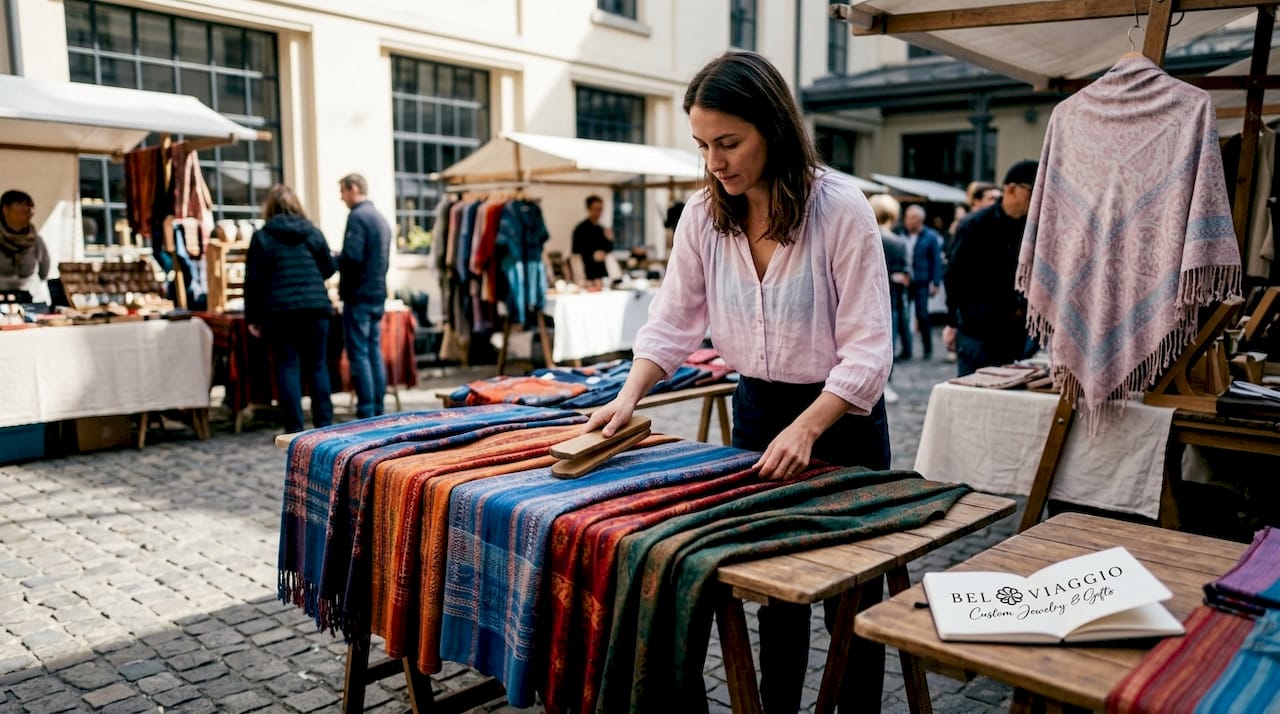
The same research confirms that craftsmanship functions as socio-cultural capital, anchoring community identity while enabling economic sustainability. When artisans preserve inherited techniques, they are not simply honoring tradition. They are building a market position that competitors cannot easily copy. Cultural uniqueness, when legible to consumers, translates directly into business durability.
Innovation does not threaten this advantage when applied thoughtfully. Artisans who introduce new color combinations, updated silhouettes, or sustainable materials while retaining core techniques tend to expand their markets without diluting authenticity. The challenge is generational transfer. When younger craftspeople leave traditional industries for urban employment, the knowledge chain breaks, and with it, the cultural asset that gave the product its value.
Pro Tip: If you are an artisan or small craft business owner, document your techniques through video or written records. This protects your methods from being lost and creates compelling storytelling content for marketing.
| Challenge | Impact on artisan sustainability |
|---|---|
| Generational knowledge transfer | Loss of inherited techniques reduces cultural distinctiveness and competitive advantage |
| Limited technology adoption | Restricts market reach but preserves authenticity that defines product value |
| Underfunding and formalization gaps | Prevents scaling without compromising craft integrity |
| Consumer price sensitivity | Undervalues handmade goods relative to their true production cost |
What makes consumers choose handmade goods?
The “handmade effect” is the primary psychological driver behind consumer preference for artisanal products, and it is powered by perceived love. Four controlled studies cited by Sleeknova’s consumer research demonstrate that consumers assign higher value and uniqueness to handcrafted items even when the materials are identical to machine-made versions. The perception that a human being invested care and intention into an object changes how that object feels to own.
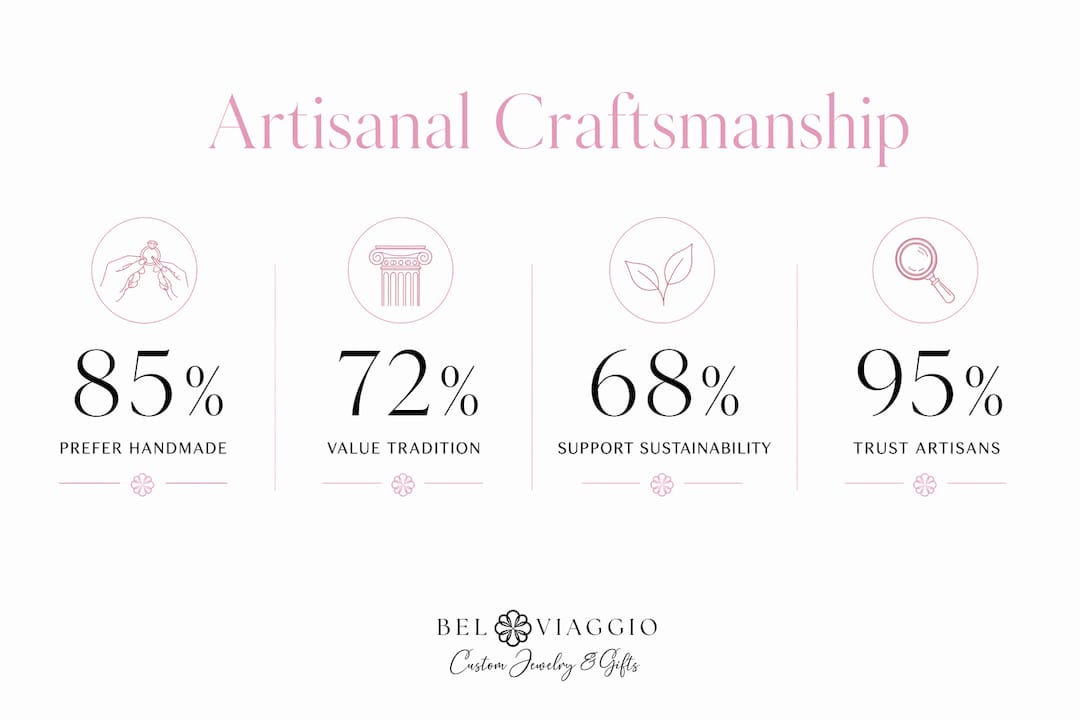
This effect is especially strong in gift-giving contexts. When you give someone a handmade ring, a woven textile, or a hand-thrown ceramic piece, the gift signals thoughtfulness in a way that a mass-produced item cannot. The benefits of handmade goods extend beyond aesthetics into emotional communication, which is why artisanal products consistently command price premiums in research studies.
Ethical considerations reinforce this preference. Consumers who understand where their goods come from and who made them are more likely to pay fair prices and return to the same makers. This is the foundation of why supporting local artisans is both a personal and a systemic act. Every purchase from an independent craftsperson keeps a skill alive, funds a household, and signals to the broader market that quality and ethics are worth paying for.
Key motivations consumers report for choosing artisanal goods include:
- Uniqueness: No two handmade pieces are identical, which satisfies the desire for individual expression
- Quality: Skilled makers inspect and refine each piece in ways automated production cannot match
- Ethical sourcing: Handmade goods are more likely to involve transparent supply chains and fair labor
- Cultural connection: Artisanal products carry stories, regional identity, and maker history
“Sustainable competitiveness hinges on market legibility of cultural distinctiveness, meaning products must signal authenticity clearly to consumers to translate craftsmanship into business durability.” — F1000Research, 2026
How artisanal craftsmanship and sustainable innovation coexist
The 2026 Small Business Economics study on Indonesian batik SMEs reveals a clear pattern: digital tools for marketing are widely adopted, but advanced production technologies are approached with deliberate caution. Batik makers use Instagram and e-commerce platforms to reach global buyers while keeping hand-stamping and natural dye processes intact. This selective adoption is not technophobia. It is a strategic choice to protect the authenticity that makes the product worth buying in the first place.
Community associations play a decisive role in this balance. The same study found that community-led norms influence sustainable innovation more than government incentives do. When artisan guilds and cooperatives set shared standards for materials, techniques, and ethical practices, individual makers benefit from collective credibility. A batik cooperative that certifies natural dye use, for example, gives every member a market signal that individual certification would be too costly to achieve alone.
The Living Lab model offers another framework for this balance. The Madeback Circular Fashion Festival, running from May to November 2025, operated as a cultural infrastructure for sustainability, bringing together co-design, repair workshops, and textile exchange events. Participants did not just learn circular fashion principles. They practiced them in community, normalizing behaviors like mending and upcycling that extend the life of handmade goods. Sustainable artisan products like an eco-friendly tote bag from makers integrating upcycled materials represent exactly this kind of innovation in practice.
Pro Tip: Artisan businesses that separate their digital marketing strategy from their production process protect authenticity while expanding reach. Use social media to tell the story of your craft. Keep the craft itself unchanged.
| Approach | Effect on authenticity | Effect on market reach |
|---|---|---|
| Digital marketing adoption | No impact on craft process | Significant expansion to global buyers |
| Advanced production tech adoption | Reduces handmade distinction | Moderate efficiency gains |
| Community association membership | Reinforces shared craft standards | Collective credibility boosts buyer trust |
| Living Lab participation | Deepens sustainability values | Connects makers with ethical consumer networks |
The social and economic impact of supporting artisan communities
Supporting artisanal craftsmanship is not a lifestyle preference. It is an economic intervention with measurable outcomes. Creative industries contribute 4.5% of GDP and 10% of formal employment in Sierra Leone, with women making up a large share of the textile workforce. This figure means that consumer choices in wealthy markets have a direct line to household incomes in craft-producing regions.
The World Bank’s creative economy accelerator program in Sierra Leone produced concrete results. Within six months, 24 entrepreneurs doubled their staff and improved financial practices after receiving training and formalization support. This is the multiplier effect of artisan investment: one skilled maker, properly supported, creates employment, transfers knowledge, and anchors a local economy.
Gender equity is inseparable from this picture. UNESCO research on Yucatan embroidery communities shows that empowering women artisans through capacity-building and financial education improves income, social status, and community resilience. The same research flags the persistent risks of undervaluation and plagiarism, where traditional designs are copied by industrial producers without compensation or credit. Buying directly from artisans or certified artisan retailers addresses both problems at once.
The broader social returns of artisan support include:
- Job creation at the local level: Craft enterprises generate employment that stays within communities rather than flowing to distant factories
- Cultural preservation: Active production keeps traditional techniques alive in ways that museum archiving cannot
- Gender empowerment: Women dominate many craft sectors globally, meaning artisan investment disproportionately benefits female-led households
- Environmental benefit: Small-batch, skill-intensive production typically generates less waste than industrial manufacturing
- Community identity: Artisan traditions define regional character and attract cultural tourism, creating secondary economic benefits
The importance of artisanal skills, then, is not confined to the workshop. It radiates outward into employment, gender equity, environmental outcomes, and cultural continuity. Choosing artisan jewelry or any handcrafted good is a decision that touches all of these dimensions simultaneously.
Key takeaways
Artisanal craftsmanship matters because it creates culturally distinctive, emotionally resonant goods that sustain communities, preserve heritage, and give consumers a direct connection to ethical production.
| Point | Details |
|---|---|
| Cultural distinctiveness drives competitiveness | Artisan products carry identity that mass production cannot replicate, creating durable market advantage. |
| The handmade effect is real and measurable | Consumers assign higher value to handcrafted goods due to perceived emotional investment by the maker. |
| Selective digital adoption protects authenticity | Craft SMEs that use digital tools for marketing while preserving manual production maintain both reach and integrity. |
| Artisan industries power local economies | Creative industries contribute measurable GDP and employment, especially for women in developing regions. |
| Buying handmade is an ethical act | Every purchase from an artisan supports fair labor, cultural preservation, and sustainable production practices. |
Why I think we underestimate what handmade actually costs
Most people who buy artisanal goods understand they are paying more. Fewer understand what they are actually paying for. After years of working in and around the fine jewelry space, I have come to believe that the real value of craftsmanship is almost always invisible to the buyer at the moment of purchase.
What you see is a ring, a textile, or a ceramic bowl. What you are actually buying is the accumulated knowledge of a maker who spent years developing a skill that cannot be downloaded or automated. You are buying the time it took to source ethical materials, the community relationships that keep traditional techniques alive, and the cultural story embedded in every design choice. That is not a premium. That is the actual cost of making something well.
The misconception I encounter most often is that artisanal goods are expensive because they are luxury items. They are expensive because they are honest. The price of a mass-produced alternative does not reflect what it costs to make something properly. It reflects what it costs when labor is undervalued, materials are sourced without scrutiny, and speed is prioritized over skill.
If you are on the fence about spending more on a handcrafted piece, consider what you are opting out of when you choose the cheaper alternative. You are not just buying a different object. You are casting a vote for a different kind of production. That vote has consequences that extend far beyond your own home.
— Stacy
Discover handcrafted jewelry made with intention at Belviaggiodesigns

Belviaggiodesigns applies every principle discussed in this article to its collections. Each piece is handcrafted using ethically sourced materials, designed to carry personal meaning, and built to last far beyond the trends of any given season. The Black Diamond Halo Engagement Ring is a striking example of artisanal quality in fine jewelry, combining skilled craftsmanship with ethical sourcing in a design that is genuinely one of a kind. For those seeking a bespoke wedding band, the men’s white and yellow gold band demonstrates how traditional metalworking techniques translate into modern, wearable art. When you choose Belviaggiodesigns, you are choosing the kind of production this article is about.
FAQ
What is artisanal craftsmanship, exactly?
Artisanal craftsmanship is the skilled manual production of goods using inherited techniques, cultural knowledge, and individual expertise. It differs from industrial production in that each piece reflects the maker’s judgment and skill rather than a standardized automated process.
Why do handmade goods cost more than mass-produced alternatives?
Handmade goods cost more because they reflect the true cost of skilled labor, ethical materials, and time-intensive production. Research confirms that consumers recognize this value through the “handmade effect,” assigning higher worth to artisan items even when materials are identical to factory-made versions.
How does buying artisanal products support local communities?
Purchasing from artisans keeps income within local economies, funds skill preservation, and supports employment. In Sierra Leone, creative industries account for 4.5% of GDP and 10% of formal employment, demonstrating the direct economic link between consumer choices and community livelihoods.
Can artisan businesses use technology without losing authenticity?
Yes. The 2026 Small Business Economics study on batik SMEs shows that craft businesses successfully adopt digital marketing tools while deliberately limiting production technology to protect the handmade qualities that define their products.
What role does gender play in artisanal craftsmanship?
Women make up a significant share of artisan workforces globally, particularly in textiles and embroidery. UNESCO research shows that investing in women artisans through training and financial education improves household income, social standing, and community resilience.
Recommended
- How thoughtful design shapes ethical, unique fine jewelry – Bel Viaggio Designs, LLC
- Why buy handcrafted rings? Unique value & lasting quality – Bel Viaggio Designs, LLC
- How visual storytelling elevates ethical, personalized jewelry – Bel Viaggio Designs, LLC
- How to design keepsake jewelry with meaning and ethics – Bel Viaggio Designs, LLC