

TL;DR:
- Most jewelry marks reveal the metal’s purity and origin, but do not guarantee ethical sourcing. Verifying chain-of-custody documentation and certifications ensures the claims are genuine and align with your values. Ultimately, prioritizing transparency and personal ethics guides you to the jewelry that reflects your true priorities.
Most couples spend weeks agonizing over the stone in an engagement ring, then spend about five minutes thinking about the metal beneath it. That gap is a real problem. The stamps and titles on a ring, things like “14K,” “PT950,” or “925,” tell a story about purity, durability, origin, and sometimes ethical accountability that no sales description fully captures. Understanding what those marks actually mean, and knowing how to verify the ethical claims that often accompany them, puts you in control of one of the most significant purchases you’ll ever make.
Table of Contents
- What do jewelry metal titles and marks actually mean?
- Gold, platinum, and silver for rings: Key differences in durability, looks, and care
- Ethical claims decoded: How to verify recycled, traceable, and certified metals
- How to match your values and lifestyle: Framework for couples choosing jewelry metals
- What most guides miss: Only your priorities make sense of metal titles
- Find your perfect ethical ring metal with Bel Viaggio Designs
- Frequently asked questions
Key Takeaways
| Point | Details |
|---|---|
| Understand metal marks | Metal hallmarks like 14K or 925 tell you about purity, composition, and value. |
| Pick the right ring material | Gold, platinum, and silver each offer pros and cons for everyday wear and style. |
| Demand ethical documentation | Insist on certifications, chain-of-custody, and recycled content proof—not just marketing claims. |
| Use a couple’s framework | Work through priorities together for a ring that suits your values, lifestyle, and budget. |
| No one-size-fits-all answer | Your best jewelry metal choice is personal and should be backed by real evidence, not trends. |
What do jewelry metal titles and marks actually mean?
Walk into any jewelry store and you’ll see tags bearing karats, fineness numbers, and abbreviations. They feel like industry jargon, but each one communicates something specific about what you’re actually buying.
Metal purity basics are expressed through a few systems. In the United States, gold is most commonly described in karats: 10K, 14K, 18K, or 24K. Pure gold is 24K, but it’s far too soft for daily wear. So goldsmiths blend it with harder metals like silver, copper, zinc, or palladium. A 14K ring contains 14 parts gold out of 24, or about 58.3% pure gold. An 18K ring contains 75% gold. The rest is alloy.
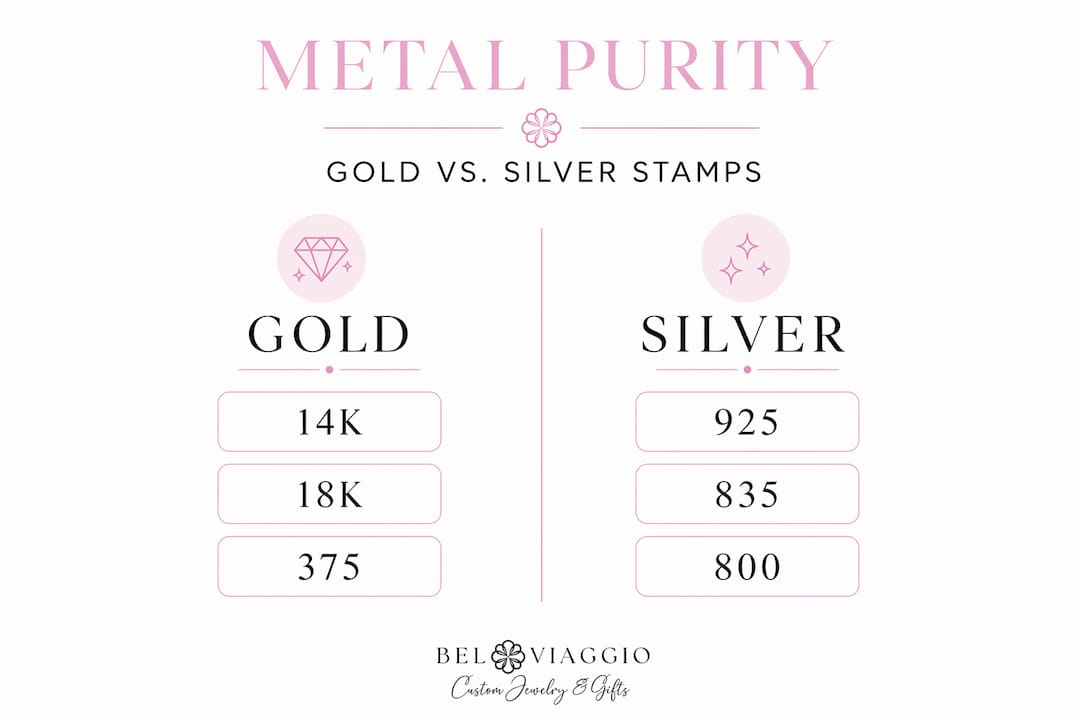
Europe uses millesimal fineness instead. That “750” stamped on a European ring equals 18K. The “925” on your grandmother’s silver bracelet means 92.5% pure silver, which is sterling silver. Platinum is typically marked as “PT950” or “950 Plat,” meaning 95% pure platinum. As Understanding Metal Purity explains, these hallmarks and karat grades exist precisely because gold jewelry mixes pure gold with harder alloy metals to reach wearable durability.
Common purity marks at a glance:
- 375 = 9K gold (37.5% pure)
- 585 = 14K gold (58.5% pure)
- 750 = 18K gold (75% pure)
- 925 = Sterling silver (92.5% pure)
- 950 = Platinum (95% pure)
- PT950 or PLAT = Platinum hallmark in the US
One persistent myth is that higher karat always means better. For rings, that’s not true. Higher karat gold scratches and deforms more easily because the alloy percentage is lower, giving the gold less structural reinforcement. This is exactly why 14K and 18K are the sweet spot for engagement and wedding rings.
“The purity mark tells you what the metal is made of, but it doesn’t tell you where it came from or how it was obtained. That’s a separate and equally important question.”
Pro Tip: Always ask for written documentation confirming the metal composition alongside any stamp. Stamps can be faked. A reputable jeweler will back their marks with paperwork, and a responsible jewelry guide can help you understand what to look for when evaluating ring credentials.
| Mark | Metal | Purity % |
|---|---|---|
| 375 | Gold | 37.5% |
| 585 | Gold | 58.5% |
| 750 | Gold | 75% |
| 925 | Silver | 92.5% |
| 950 | Platinum | 95% |
Also look into ring certification explained to learn how formal certification goes beyond a simple stamp to verify the ring’s complete composition and sourcing history.
Gold, platinum, and silver for rings: Key differences in durability, looks, and care
Knowing what a stamp means is one thing. Knowing how that metal behaves on your finger every single day is another. Let’s get practical.
Best Ring Material for Everyday Wear makes a clear distinction: 14K and 18K gold alloys balance durability with visual appeal, while platinum stands out for wear resistance and naturally maintains a bright white color without the ongoing maintenance that white gold requires.
Comparison of major ring metals:
| Metal | Durability | Maintenance | Hypoallergenic | Relative cost |
|---|---|---|---|---|
| 14K yellow gold | Good | Low | Mostly yes | Moderate |
| 18K yellow gold | Moderate | Low | Mostly yes | Higher |
| White gold (rhodium plated) | Good | Medium | Varies | Moderate |
| Platinum | Excellent | Low | Yes | High |
| Sterling silver | Low | High | Mostly yes | Low |
White gold deserves special attention here because it’s one of the most misunderstood choices. White gold is not naturally white. It’s yellow gold alloyed with white metals like palladium or nickel, then coated in rhodium, a bright, reflective platinum-group metal, to give it that crisp silver finish. Over time, that rhodium layer wears off and the ring takes on a slightly yellowish tone. Replating costs typically range from $50 to $150 depending on the jeweler and the complexity of the setting. That’s a cost many couples don’t account for when choosing white gold over platinum.
Platinum, on the other hand, develops a patina over time rather than losing color. Some people love this look; others prefer the bright finish restored through polishing. The key difference is that platinum actually moves metal when it scratches rather than losing it, so the ring retains its material mass longer. This makes metal durability comparison a worthwhile exercise before committing to a metal.
Sterling silver is beautiful and affordable but genuinely not ideal for everyday engagement ring wear. It tarnishes, scratches easily, and requires more consistent cleaning to keep looking its best. It works wonderfully for occasion jewelry or bands, but for the ring you’ll wear every day for decades, gold or platinum offers far more longevity.
Step-by-step framework to narrow your metal choice:
- Clarify skin sensitivity. If you or your partner have nickel allergies, eliminate alloys containing nickel (some white gold alloys) and consider platinum or palladium-based options.
- Assess your lifestyle. Active work with hands, frequent exposure to chemicals, or outdoor hobbies favor higher-durability metals like platinum or 14K gold.
- Set a realistic maintenance budget. Factor in rhodium plating if you love white gold, or professional polishing if you choose platinum.
- Match the metal to your stone. Softer metals can loosen prongs over time. If you’re setting a larger or heavier stone, consult your jeweler about the setting style and metal pairing.
For more detail on pairing metal with the right stone, the guide on choosing metals for rings walks through the key considerations in depth.
Pro Tip: Some couples underestimate future maintenance costs. Before you commit, ask your jeweler directly: “What will upkeep cost over ten years?” A good jeweler will be honest rather than dismissive.
Ethical claims decoded: How to verify recycled, traceable, and certified metals
This is where jewelry marketing gets murky. Terms like “conflict-free,” “responsibly sourced,” and “recycled” appear on countless product descriptions, but they don’t all mean the same thing and some of them mean very little without documentation.
Recycled gold refers to gold that has been melted down from existing products (think old jewelry, electronics, or industrial byproducts) rather than newly mined. It avoids the environmental and social costs of new extraction. However, RJC certification FAQs clarify that the Responsible Jewellery Council’s chain-of-custody standards include specific requirements for how recycled inputs are categorized, tracked, and verified. Without that chain-of-custody documentation, a brand’s “recycled” claim is simply a marketing statement, not a verifiable fact.
Responsibly mined or Fairmined gold takes a different path. Rather than avoiding new mining entirely, these frameworks certify that the mining operation meets specific labor, environmental, and community standards. They don’t eliminate mining but raise the floor of acceptable practice.
Conflict-free is perhaps the loosest term of all. It typically refers to metals not sourced from conflict zones, but verification practices vary enormously and the term carries no universal certification standard on its own.
“Vague language without documentation is not an ethical claim. It’s a marketing choice.”
According to ethical jewelry checks, brands with genuinely ethical sourcing recommend asking for specific proof: certifications, chain-of-custody documents, and traceability records rather than relying on broad labels alone.
What to ask and what to demand:
- What percentage of recycled metal is in this piece, exactly?
- Can you provide chain-of-custody documentation for this metal?
- What certifying body verified your claims?
- Is the recycled metal blended with newly mined sources, and if so, what standards apply to both?
- Are your suppliers audited, and how frequently?
If a jeweler can’t answer these questions with documentation, treat their ethical claims cautiously. Solid guidance on what genuine sourcing looks like is available through resources like sourcing ethical jewelry and ethical gold mining. Both give you the vocabulary to ask the right questions without relying on brand promises alone.
How to match your values and lifestyle: Framework for couples choosing jewelry metals
You now have the knowledge. Here’s how to put it to work together as a couple.
No single metal is universally right. The choice that serves you best is the one that honestly maps to your priorities, not the one with the most impressive marketing language. Research on Best Ring Material for Everyday Wear supports a structured approach: map your needs first, then verify the material, then scrutinize the sourcing, then assess ongoing costs.
Four-step decision methodology:
-
Map your priorities together. Write down what matters most: durability, skin sensitivity, color preferences, ethical sourcing, budget. Rank them. This removes arguments later and keeps the decision grounded in your shared values rather than in-store pressure.
-
Verify metal and purity. Once you’re interested in a piece, confirm the exact composition via hallmarks and documentation. Don’t assume. If a jeweler says “platinum,” ask what the stamp reads. If it says “white gold,” ask about the alloy composition, especially regarding nickel content.
-
Verify ethical sourcing with evidence. Ask for chain-of-custody documents, certifications, or specific sourcing disclosures. Cross-reference claims against what you now know about recycled versus mined standards.
-
Ask about ongoing maintenance costs. White gold needs rhodium replating. Platinum may need occasional polishing. Silver needs regular care. All of this has a financial and time cost. Get realistic numbers before you decide.
Decision framework summary:
| Priority | Best metal choice | Key question to ask |
|---|---|---|
| Durability | Platinum, 14K gold | What is the prong replacement policy? |
| Ethical sourcing | Recycled/Fairmined gold | Can you provide chain-of-custody proof? |
| Low maintenance | Platinum, yellow gold | How often does this need servicing? |
| Budget-conscious | 14K gold | What is the full ownership cost over 10 years? |
| Skin sensitivity | Platinum, palladium | Does this alloy contain nickel? |
The guide on transparency in jewelry sourcing offers a helpful standard against which you can measure the answers you receive. Use it as a benchmark, not just a reading resource.
What most guides miss: Only your priorities make sense of metal titles
Here’s the part most articles skip: there is no universal ethical gold standard that every credible jeweler or certifier agrees on. That sounds unsettling, but it’s actually freeing once you sit with it.
The recycled-only crowd argues that new mining can’t be ethical by definition. The Fairmined community argues that responsible new mining supports vulnerable artisanal mining communities who depend on that work for survival. A perspective worth considering comes from a Recycled vs Fairmined Gold analysis, which shows that brands may genuinely disagree on what constitutes the best ethical benchmark, meaning couples should judge by specific evidence: the standards cited, the traceability offered, and how a brand handles blending or verification in practice.
What that means for you: the couple who demands Fairmined gold is making an ethical choice. So is the couple who prioritizes fully recycled metals. Both are right, given their own reasoning. The couples who get it wrong are those who accept a label without asking what backs it up.
We’ve seen many couples chase the headline metal, the one getting attention in sustainability press, only to find the jeweler behind it couldn’t produce a single page of sourcing documentation. The label was borrowed marketing, not earned accountability. Looking into a ethical gemstone selection framework teaches you the same discipline for stones that applies equally to metals: ask for evidence, evaluate it critically, and trust your reasoning.
Your story is not someone else’s ethical rubric. The ring you wear for the next fifty years should reflect your values as you actually hold them, documented and chosen with clear eyes.
Find your perfect ethical ring metal with Bel Viaggio Designs
Ready to put this knowledge into practice? At Bel Viaggio Designs, every piece is handcrafted with full transparency around metal sourcing, purity, and customization options to match the priorities you’ve just mapped out.

Whether you’re drawn to the drama of a black diamond engagement ring set in ethically sourced gold, or you’re ready to explore the full gemstone rings collection to find a stone and metal combination that speaks to your story, the process is designed to be transparent and personal from start to finish. Expert designers are available to guide you through metal choices, ethical sourcing documentation, and completely custom ethical rings tailored to your values and lifestyle. This is where your framework meets your future ring.
Frequently asked questions
What does the number stamped inside my ring mean?
The number is a hallmark indicating the metal purity of the piece, such as “750” for 18K gold (75% pure) or “925” for sterling silver (92.5% pure). It tells you the metal composition at a glance, though documentation should always back it up.
How do I know if my ring is made from recycled or ethical metal?
Ask your jeweler for chain-of-custody documentation or certifications, since RJC standards require specific verification of how recycled inputs are categorized and tracked. A vague claim without paperwork is not sufficient proof.
Is higher-karat gold always better for rings?
No. Higher-karat gold is actually softer and more prone to scratching. 14K and 18K golds are preferred for engagement and wedding rings because they balance visual beauty with the strength needed for daily wear.
How can I check if a jeweler’s ethical claims are real?
Request certifications, traceability records, and sourcing disclosures rather than accepting broad labels. As guidance from ethical jewelry sourcing confirms, documented proof is what separates genuine ethical practice from marketing language.
Recommended
- How to design keepsake jewelry with meaning and ethics – Bel Viaggio Designs, LLC
- How thoughtful design shapes ethical, unique fine jewelry – Bel Viaggio Designs, LLC
- Why Invest in Fine Jewelry: Ethical, Valuable & Lasting – Bel Viaggio Designs, LLC
- How education empowers couples in ethical jewelry shopping – Bel Viaggio Designs, LLC